April 26, 2024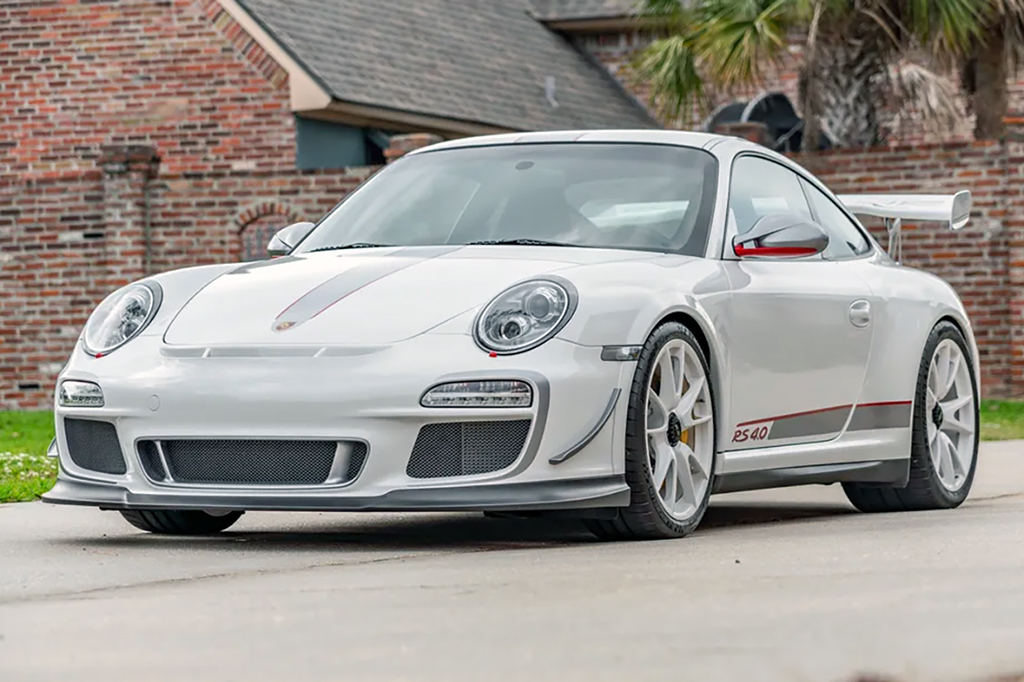
2011 Porsche 911 GT3 RS
The 997.2-generation 911 GT3 RS 4.0, limited to a mere 600 units worldwide, was one of the greatest and most exclusive Porsche models ever. With its naturally aspirated 4.0-liter flat-six engine, it delivered 500 hp and 339 lb-ft of torque, making it the most powerful non-turbocharged engine ever fitted to a road-going 911 at its release. Carbon fiber reinforced plastic (CFRP) is extensively utilized throughout the bodywork, reducing weight while enhancing rigidity. The front splitter, rear wing, and side skirts work in harmony to generate substantial downforce, ensuring exceptional stability and cornering grip even at high speeds. The GT3 RS 4.0 also features a specially tuned suspension system, wider front and rear tracks, and lightweight forged aluminum wheels wrapped in high-performance tires. This 2011 Porsche 911 GT3 RS 4.0 has spent its entire life under the care of a single owner, always kept in a climate controlled setting, and now showing only 920 miles. № 005 out of 600 total units, this is one of the earliest production examples remaining in private hands, making an already highly coveted collectible all the more rare and desirable. Custom-ordered in Carrera White over a bespoke black and red leather interior, it is highly optioned with Porsche Ceramic Composite Brakes (PCCB), directional lighting (PDLS), PCM 3.0 W/Extended DVD Navigation, XM Radio, Additional Extended Carbon Package, Sport Chrono Plus, Carbon Rear Center Console, Leather PCM Package, and more. This one owner, 920-mile 911 GT3 RS 4.0 is now offered with original factory accessories, including a genuine prototype piston display, an accident-free Carfax report, a third-party inspection report, and a clean title here on SOMO (formerly Sotheby’s Motorsport), where bidding closes in 12 days.
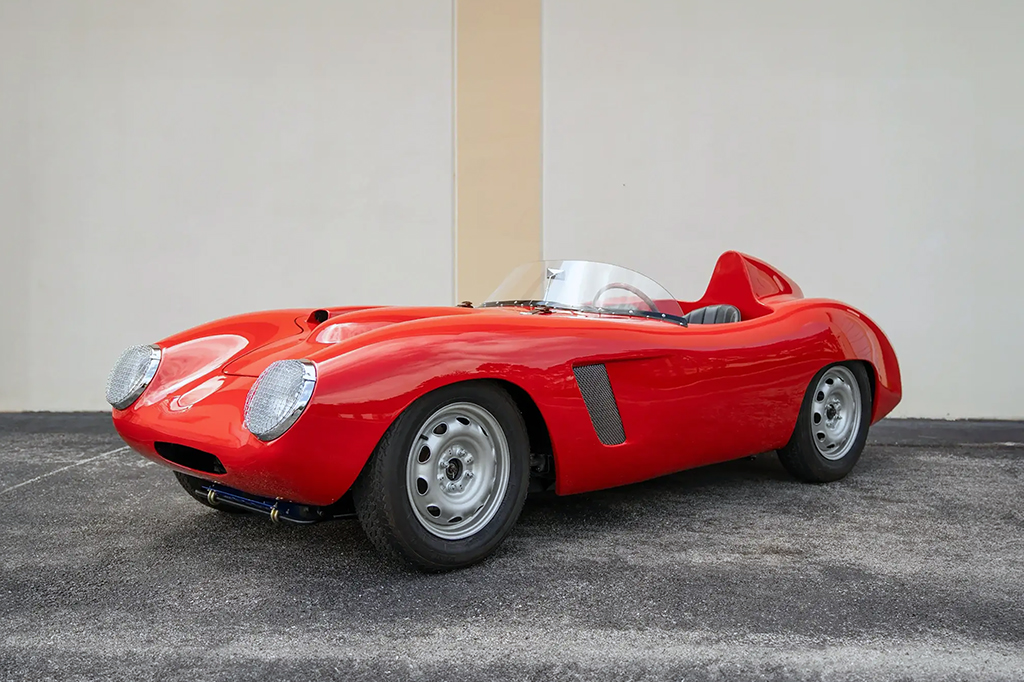
1957 Triumph Microplas Mistral
This 1957 Triumph began life as a TR3 and was almost immediately converted with a Microplas Mistral body kit. Created by Microplas of England in 1955, the fiberglass Mistral body kit was designed by former RAF fighter pilot, MG employee, and amateur racing driver Bill Ashton. It was used on many race cars throughout the 1950s including Frazer Nash, TVR, and Buckler. Shortly after its conversion, a friend of the original owner bought the car and used it for SCCA events and local club racing in Georgia and South Carolina used for SCCA events and local club racing in Georgia and South Carolina before it was sold and eventually rediscovered by the seller’s mechanic in a scrap yard many years later. The bodywork of this Triumph has been restored and refinished in red. Equipment includes a rear center-fill gas lid, a custom windscreen, a headrest fairing, chrome wire headlamp grilles, a hood scoop, leather hood straps, a side-exit exhaust pipe, and silver 15” steel wheels dressed in Vredestein Sprint Classic tires (2012). The cockpit features grey-painted aluminum floorboards and kick panels with black leather upholstery on the custom dashboard, transmission tunnel, and bucket seats. Accessories include a wood-rimmed three-spoke steering wheel, a polished handbrake, lap belts, a dash-mounted rearview mirror, analog Smiths gauges, toggle switches, and a Wilwood pedal assembly. The seller notes the odometer was reset upon completion of the restoration with only eight miles clocked since. The motor was swapped for a 2,138 cc inline-4 from a TR4 that has been rebuilt with a decked block, a resurfaced lightweight flywheel, and an upgraded camshaft. A claimed output of 130 HP is sent to the rear wheels through a 4-speed manual transmission. Other equipment includes slotted and cross-drilled Wilwood front disc brakes, stainless-steel brake lines, a front sway bar, an ATL fuel cell, a Rimmer Bros telescopic rear shock conversion, and an upgraded aftermarket steering rack. Receipts accompany the sale, along with instructions on aftermarket parts. It’s being offered on PCARMARKET out of Jupiter, Florida with 5 days left to bid.
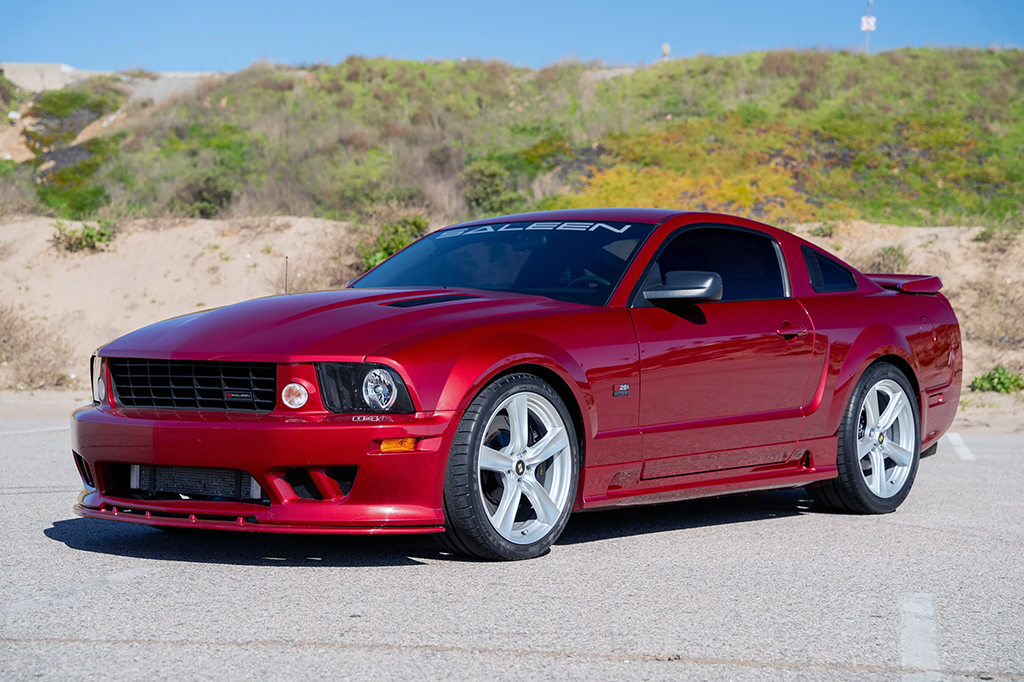
2006 Saleen S281
Introduced in 1996, the Saleen S281 was a high-performance variant of the fourth-generation Ford Mustang. By the time the fifth-generation S197 Mustang was launched in 2005, Saleen had become an original equipment manufacturer rather than just a company that modified existing Ford vehicles. The S281 Extreme Coupe featured a supercharged 4.6-liter V8, putting out 550 hp and 500 lb-ft of torque in stock form, along with suspension upgrades and unique Saleen styling. This 2006 Ford Mustang Saleen S281 Extreme Coupe, finished in Redfire with a Dark Charcoal interior, has had two owners since new. It is equipped with a 6-speed gearbox, a Saleen MaxGrip differential, a high-performance clutch, 15″ front brakes, Racecraft suspension, a Saleen body kit, leather upholstery, a Saleen close-ratio shifter, air conditioning, a Shaker sound system, and more. Modifications include a Kenne Bell Mammoth supercharger kit, a recalibrated mono chip, a bar and plate intercooler, an intercooler pump, 36-lb fuel injectors, and 20″ Saleen 5-spoke wheels. Now showing 13,432 miles, it has had a recent (October 2023) oil service and ready for its third owner, with its original window sticker and owner’s manual, along with one key and two fobs. It’s a new listing on Cars & Bids out of Los Angeles.
Other finds
- 65,100-mile 1988 Renault Alpine GTA original paint – $22,500
- Two-owner 2001 Ferrari 360 Modena 13,722 miles – $88,500
- № 354 of 810 1996 Chevrolet Corvette Grand Sport 31,800 miles – $32,000
- 31 years owned 1962 Jaguar XKE OTS 70,892 miles – $115,000
- Black-plate 1968 Volvo 122S 69,300 miles – $18,900
- Highly original 1966 Mercedes-Benz 230 Automatic recent service – $6,700
- 25+ years owned 1963 Ford Ranchero Dagenham 4-speed – $5,500
- One-owner 1990 Mazda MX-5 Miata 51,000 miles – $19,500
- Mostly original 1967 Triumph Spitfire Mk3 4-speed overdrive – $19,999
- № 400 of 461 1978 Porsche 911 Turbo 3.3 71,000 miles – $133,000
- 77,000 km JDM 1998 Nissan Elgrand Highway Star Texas title – $12,500
Earlier finds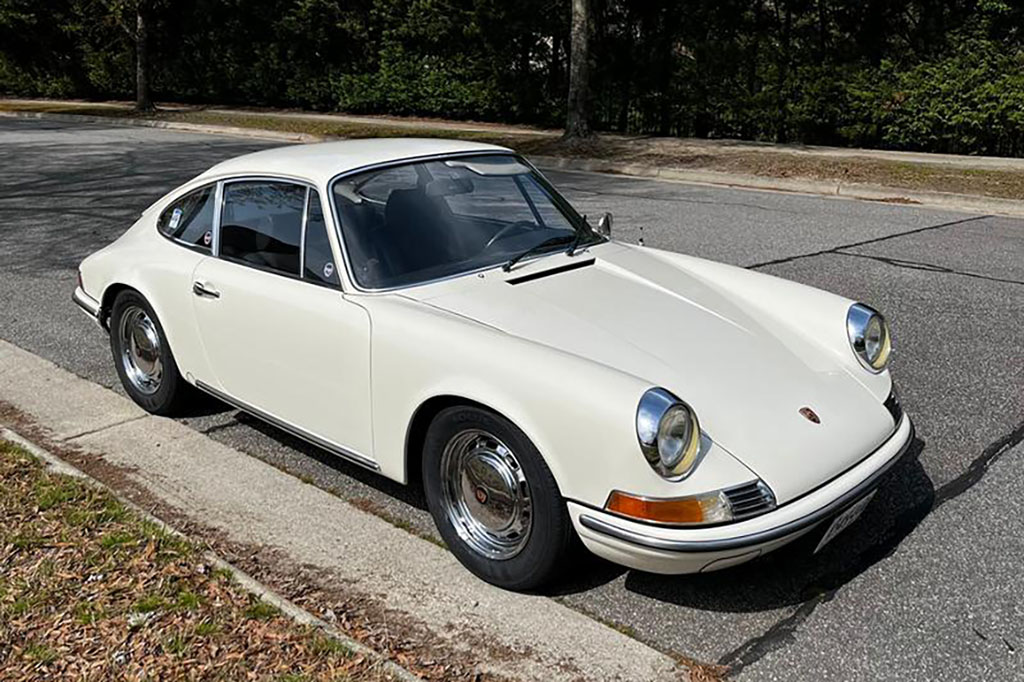
1969 Porsche 912
1969 saw some significant changes to the Porsche 911/912, enough to warrant an internal B designation (not unlike the 356 B nine years earlier). To improve handling without penalizing ride, the rear wheels were moved back by 2½ inches (hence, “long wheelbase” or LWB), with no change in overall vehicle length. Wider wheel flares, which could accommodate wheels as wide as 6 inches, were another visible change. It was also a transition year for the 912. With the introduction of the 911 T, and its more “911-like” six-cylinder motor (albeit detuned), the 356-based 912 would cede its place as entry-level, while an entirely new four-cylinder was in the works, in partnership with VW (the 914). In its phasing out, less than 5,000 long-wheelbase 912s were made (reportedly 3,913 coupes and 801 Targas). Aside from its relative rarity, the 1969 912 is also acclaimed for its more balanced handling, with its longer wheelbase and lighter weight—particularly in its rear bias—compared to the 911. This 912 coupe was delivered new on April 21, 1969 at Kashouty Volkswagen in Hampton, Virginia. It retains its factory options: a five-speed gearbox, chrome plated wheels with Porsche crest hubcaps, and a Blaupunkt Frankfurt with antenna, while factory Recaro sport seats from a ’73 911 S were later fitted. Its first owner, a 55-year PCA member, stored the 912 for many years before selling to its second and current owner. An engine rebuild followed. More recent work includes new Weber carbs, a new fuel tank and sending unit, new electric fuel pump, new battery, new tires, new shocks, and new brakes. It is now said to run well with no smoke. All maintenance documents accompany the sale, along with manuals and the original window sticker. The 1969 Porsche 912 Coupe is a new listing here on The Mart (Porsche Club of America classifieds) out of Virginia Beach with an asking price of $62,500.
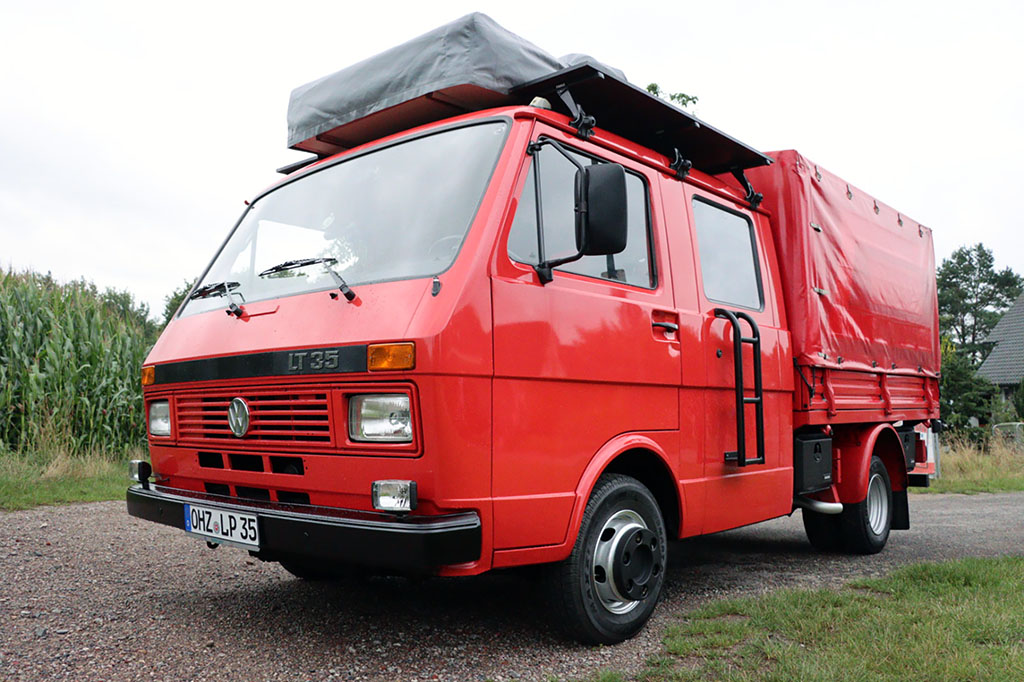
1991 Volkswagen LT 35
With the increasing development of cross-country roads and highways across the globe, so too was the need for transporters capable of carrying increasingly heavy loads. The venerable Volkswagen Type 2 Transporter, introduced in 1950 (which we refer to in broad terms as the VW Bus), was getting outpaced by the lading. Volkswagen needed a new heavier cargo solution an thus the LT (Lasten-Transporter) was introduced in 1975 in three gross vehicle weights, from 2.8 to 3.5 tons (LT 28, LT 31, LT 35), with two wheelbases, two roof options, and with bodywork options as a panel van, a compact, a platform vehicle, and a chassis cab combination. Though we never saw them here in the US, they were successful in other parts of the world, selling just under 500,000 over a 21-year span. This 1991 Volkswagen LT 35 originated in the European market as a double chassis-cab fire truck and was imported to the United States later in life prior to the seller’s ownership. Finished in red over a gray and tan vinyl interior, its features include auxiliary lighting, a side-mounted ladder, a roof-top tent, fold-out bed sides, VW-branded rear mud flaps, and a European-style trailer hitch. The cargo area is set up as a modular living space and is enclosed by a tubular framework and vinyl flaps. Climate control is provided by a diesel-powered heater. The cabin is appointed in a mix of gray and tan vinyl bucket seats up front, a bench in the rear, and gray door panels and carpeted floor mats. Features include aluminum door step plates, manual-crank windows, a radio, and a back-up camera feed integrated into the rearview mirror. The cargo area contains a mattress on a platform; the wooden bed floor has been stained and treated. The LT 53 is powered by a carbureted 2.4-liter inline-6 mated to a five-speed manual transmission. Power disc brakes up front and drums in the rear handle the stopping. Its now open for bidding here on AutoHunter out of Portland, Oregon with five days left in the auction.
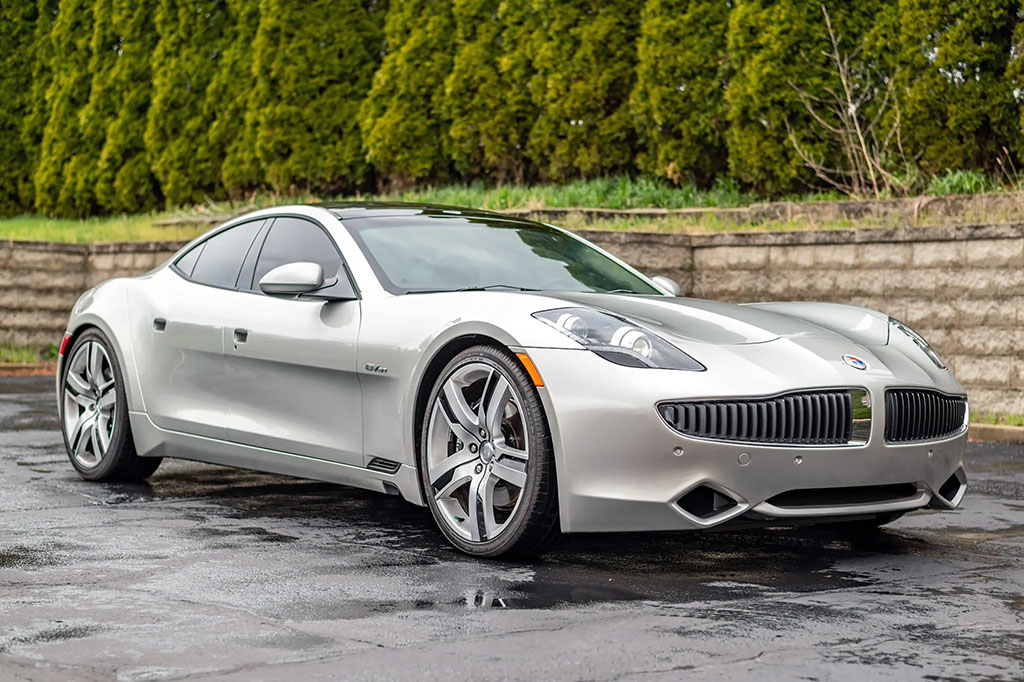
2012 Fisker Karma
It’s a Tucker-esque tale of a car and a car company that were perhaps too ahead of their time. Founded in 2007 by Danish automobile designer Henrik Fisker (BMW Z8, Aston Martin DB9 and V8 Vantage, Tesla Model S…) and well funded by significant private and public investment, including a $529 million loan from the federal government, it set forth in building what it predicted—accurately as it turns out—to be the luxury car of the future, a plug-in hybrid electric vehicle with a futuristic-looking exterior design, a luxurious interior, and a relatively powerful drivetrain that used a 2.0-liter engine as a generator. This was the Fisker Karma. Problems arose, however, after its sole battery supplier went bankruptcy. Unable to source another supplier—this is late 2012—along with the loss of 346 Karmas to Hurricane Sandy, Fisker was forced into bankruptcy itself. The resale market was no kinder. After an initial MSRP of around $110,000, they began turning up at auctions within the first year and hammering at around half of that. Today, with buyers more open to electric vehicles and far better infrastructure (the Fisker brand itself has returned, albeit under the Chinese auto parts conglomerate, Wanxiang Group), the Fisker Karma is now something of a bargain—and a relatively rare one at that with 2,450 made between 2011 and 2012, . This example is all the more rare, as it is Signature Edition № 46, made for the first 100 people to make deposits on the Karma. It is further distinguished by its low mileage: 4,099. It was well equipped from the factory with 22″ wheels, Brembo brake calipers, a solar roof panel, bi-xenon headlights, LED tail lamps, front and rear parking sensors, wood interior trim, leather upholstery, heated and power-adjustable front seats, heated rear seats, LED interior lighting, a rearview camera, and a 10.2″ infotainment system touchscreen with navigation. Its only modification is the addition of paint protection film. The car was first registered in Illinois and has remained registered in the state through the current owner’s acquisition in October 2017. It reportedly sustained damage to its rear earlier that year after hitting a parked vehicle. A scuff on the driver’s side rear wheel is also noted, as is a check-engine light. Recent service includes replacement of a 2-volt battery, an engine oil and filter change, and repair to the heat and air conditioning. It’s now ready for more miles on Cars & Bids, selling at no reserve.
Other finds
- 25,407-mile 1991 Ferrari Testarossa recent engine-out – $187,500
- Two-owner 1974 Volkswagen Karmann Ghia 25,000 actual miles– $24,000
- 35+ years owned 1958 Buick Roadmaster 48,439 miles – $39,500
- Restored genuine 1963 MG MGB 54,041 miles – $13,000
- One-owner 1989 Chevrolet Camaro RS 40,745 miles – $13,900
- 9,800-mile 2000 Pontiac Trans Am rare WS6 6-speed – $35,000
- 77,048-mile 1991 Volkswagen Corrado G60 Neuspeed mods – $17,300
- Well sorted 1972 Mercedes-Benz 280 SE 4.5 two owners – $26,000
- Original owner 1989 Ford Probe GT Turbo 82,000 miles – $4,650
- 21,000-mile 2004 Dodge Ram SRT/10 6-speed – $44,900
- One family owned 1971 Chevrolet Corvette all original docs – $42,500
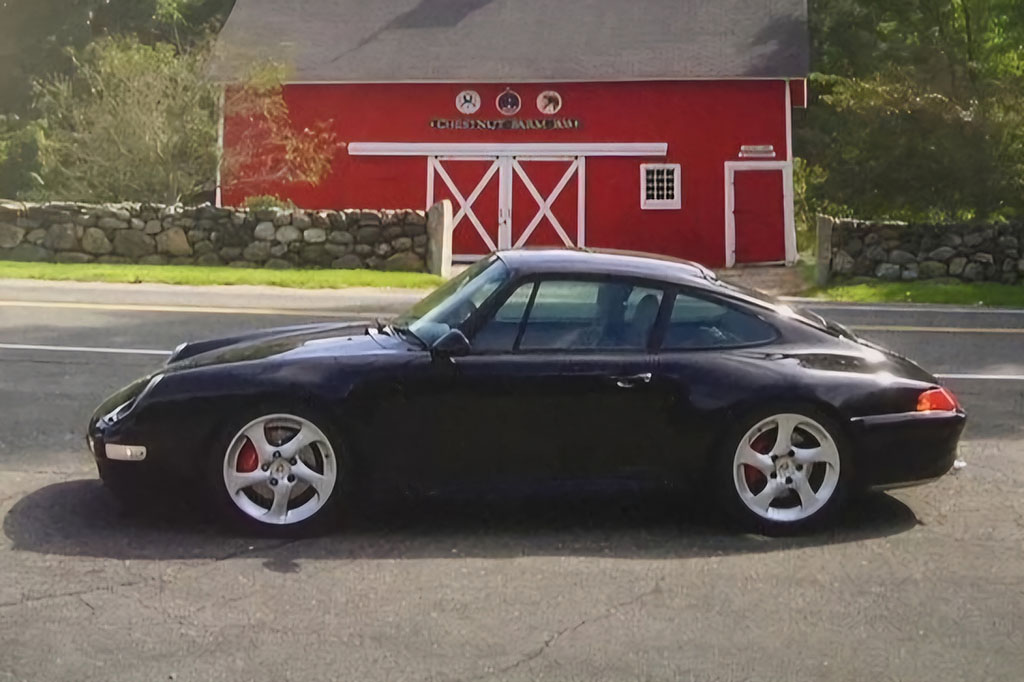
1997 Porsche 911 Carrera 4S
The 993-generation Porsche 911 continues to fortify itself as a blue-chip collectible: the last of the air-cooled 911s but with an entirely modern driving attitude. The widebody Turbo and Carrera 4S (which uses the Turbo’s body) in particular have seen steady double-digit growth year-to-year in the post-pandemic era, and there’s no reason to believe that will taper anytime soon. That’s especially true with examples that are club-show presentable, but don’t shy away from what they were intended for, that is, to be driven. This 1997 911 Carrera 4S is a nice example of that. Its Black over Cashmere is a timeless combination that appears to be in excellent condition inside and out though (no readings or details are given on repaint or touch-up). It comes from a 20-year ownership and said to have been driven sparingly in the last five years. It has otherwise been garage kept, well cared for, and well maintained with records dating back to its delivery at Suncoast Porsche. It’s well appointed with factory options like the desirable Motor Sound Package, along with power 8-way seats, a CD changer ( upgraded sound system), and deviated 2-tone interior. Tasteful and sympathetic modifications include Bilstein shocks, H&R lowering springs, a strut bar, a front protection bar, a Euro Turbo front bumper with driving lights, clear corners, and bumperette delete, as well as a new steering wheel and gear shifter. The oil and both filter were changed every November, regardless of mileage, before winter storage. Recent maintenance includes a new battery, spoiler wall, and A/ C recharge. It was treated to an engine overhaul less than 4,000 miles ago (new cams, rockers, valves, pistons, cylinders, timing chain/tensioner, oil pump, gaskets, cam gear, and more). With 82,000 miles, it’s a 993 that wears its miles well but ready and able to put more on. Find it here on The Mart (Porsche Club of America classifieds) with an asking price right at the current average of $135,000
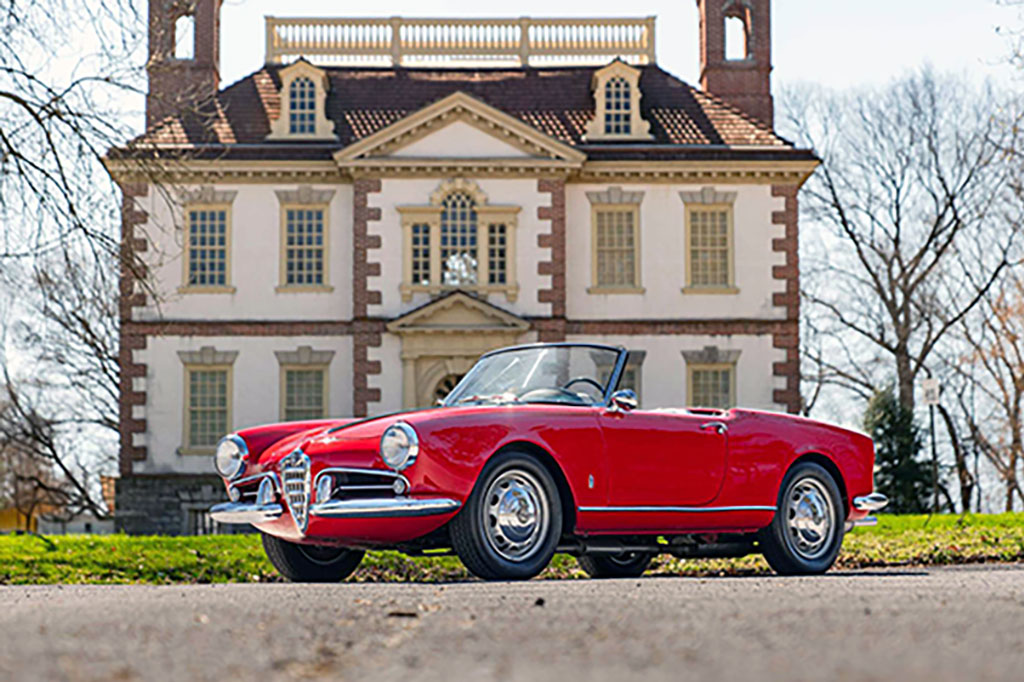
1957 Alfa Romeo Giulietta Spider
From the time of introduction in 1955 the Alfa Romeo Giulietta Spider has epitomized la dolce vita, combining style and sportiveness with open-air indulgence. This 1957 Giulietta Spider, finished in Alfa Red over a black leather interior with red piping and carpets, retains its matching numbers 1.3-liter Twin Cam inline-four. It was treated to a thorough mechanical refresh by the highly reputable Canepa of Scotts Valley, California in 2017, with the work totaling nearly $68,0000. This included rebuilding the engine (sublet to Cardelli Motorsports of San Mateo, California), rebuilding the 4-speed gearbox, rebuilding the carburetors, overhauling the fuel system, overhauling the brake system, installing a new soft top, installing new Koni shocks, repairing the heater blower motor, relining the brake shoes, and re-arching the brake drums. The chrome bumpers and trim were replated a year later. With eligibility for use in numerous events, rallies, and tours, including the California Mille, this 1957 Alfa Romeo Giulietta Spider promises to be a wonderful example for use on tours and rallies. It’s now open for bidding on Hagerty Marketplace, with the auction closing tomorrow.
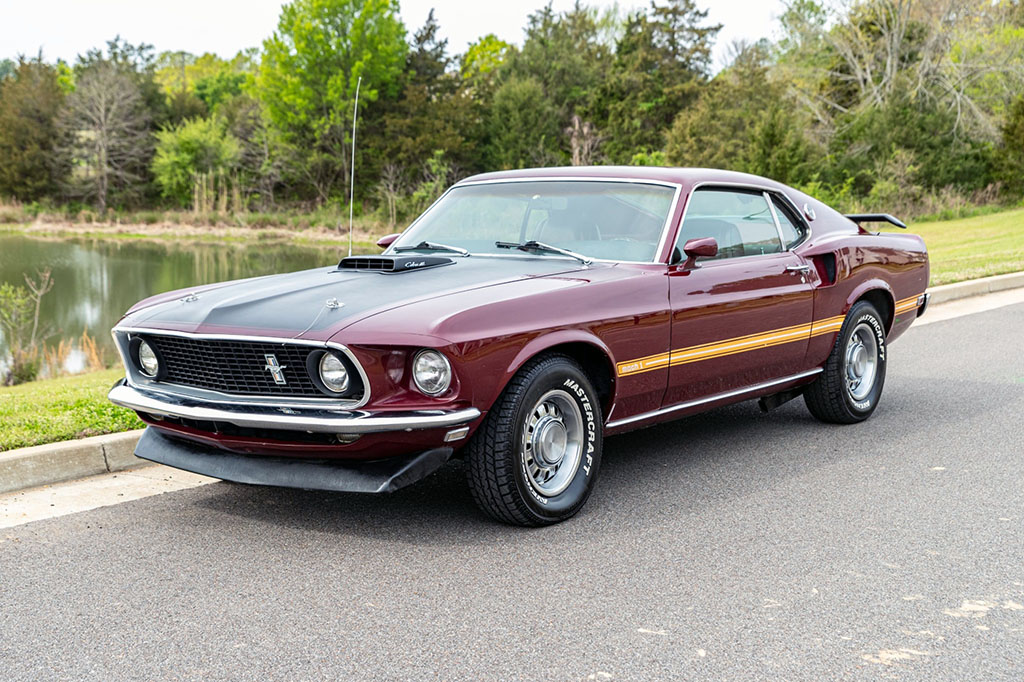
1969 Ford Mustang Mach 1
Back in 1969, if you ordered a high-performance Mustang from your local Ford dealer you had a choice of six different models (GT, Boss 302, Boss 429, Shelby GT350, Shelby GT500, and the Mach 1). The Mach 1 was positioned as a Bossier GT but more road-friendly than the Boss 302. Three engine choices were available with the Mack1: the new-for-1969 351 Windsor; the 390 FE big-block, sometimes called the Thunderbird V-8; or the top-of-the-heap, 1968 NHRA Winter Nationals-winning 428 Cobra Jet. It used the Mustang’s updated body design, though, like the Boss, only in SportsRoof (fastback) form. Included in the Mach 1’s $3,271 base price were the obligatory matt-black hood, side and rear body stripes, NASCAR-style bonnet pins, a ‘Rim Blow’ steering wheel, Hi-Back bucket seats and a liberal spreading of simulated wood appliqué throughout the cabin. This 1969 Ford Mustang Mach 1 is impressive in its mostly original unmodified condition, with its numbers-matching R-Code 428 and C6 automatic gearbox. The Royal Maroon paint is believed to be original aside from a few touch-ups. The body is said to be rust-free throughout. The R-Code engine option includes the desirable Shaker Hood, a functional hood scoop (the Mach 1 was otherwise equipped with a non-functional hood scoop). The interior is also believed to be original, with wear in line with a 55-year-old car that shows 79,000 miles on the odometer. The Mach 1 is being offered by its second owner, who bought the car from the family of the original owner after it was stored for over 13 years. A comprehensive mechanical refurbishment followed that included both an engine and transmission rebuild. Work was done by a shop that specializes in building high-performance engines. It is now well sorted and ready to be driven and/or shown. Find it on Barn Finds Auctions out of Memphis with a day left to bid.
Other finds
- 19,800-mile 1970 Chevrolet Corvette LT-1 NCRS Bow Tie winner – $75,500
- One of 500 1975 Stutz Black Hawk 70,141 miles – $39,950
- 34 years owned 1967 Jaguar E-Type Roadster 43,000 miles – $120,000
- One of 358 1970 Oldsmobile Pace Car Convertible one owner – $39,900
- 33 years owned 1991 BMW 525i 79,033 miles – $11,600
- Original owner 1970 Mercedes-Benz 280 SL 42,913 miles – $85,000
- 43,000-mile 1988 Alfa Romeo Alfasud Sprint GA title – $15,500
- Original 1954 Mercury Monterey Woodie Wagon 64,750 miles – $34,000
- One owner 1997 Volvo 960 61,508 miles – $11,000
- 19,000-mile 1977 Ford Mustang II 302 4-speed – $18,000
- One-owner 1972 Triumph Spitfire 41,000 miles – $30,000
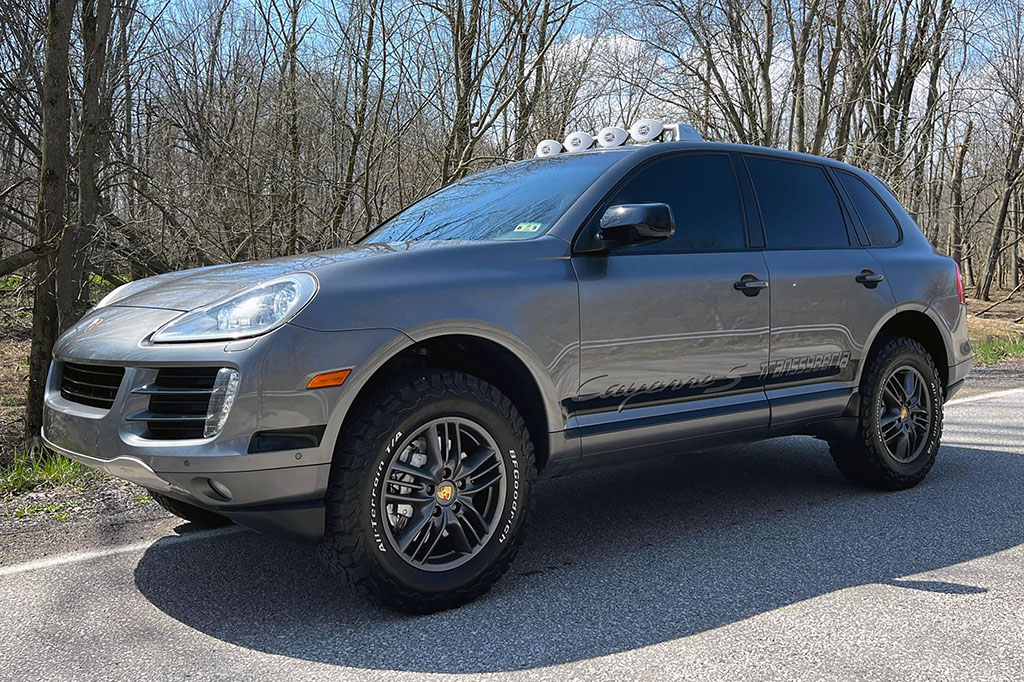
2010 Porsche Cayenne S Transsyberia
In 2006 a Porsche entered and won the grueling 4,460-mile Moscow-to-Ulan Bator rally, known as Transsyberia, with a race-prepped Cayenne. Then, in 2007, Porsche returned to prove the outstanding competitiveness of a production-based Cayenne S in heavy terrain, finishing the rally first, second and third. A year later, the rally vehicle optimized to an even higher standard not only scored its third overall victory in the Transsyberia Rally, but clinched all leading positions from 1 – 6. As a tribute to its success, Porsche produced a limited number of Cayenne S Transsyberia editions (285 copies, with 119 coming to North America). Like the robust rally model, the road-going version was also based on the Cayenne S, only with the naturally-aspirated 4.8-litre V8 power unit from the Cayenne GTS, developing 405 bhp and 369 lb-ft of torque. This 2010 Cayenne S Transsyberia was sold new from Hennessy Porsche in Atlanta. It is one of 28 finished in Meteor Grey, and despite its competition origins, this Transsyberia comes heavily optioned with Extended Leather, Power Steering Plus, BOSE® sound, Navigation Package, heated front/rear seats, XM radio, and more. Its first owner kept it 2½ years then traded it back in to Hennessy where it was then purchased by an NHL player in Texas, who later moved to California in 2015, then kept it at his home in British Columbia. Service records, spanning a good part of North America, are said to be fairly complete. Recent work includes fresh K02 tires, new front brakes (pads and rotors), new battery, new OEM (from Porsche) roof lights (not yet hooked up), drive belt replacement, oil pan reseal (common issue on gen 1 Cayennes), paint correction/ceramic coating, and refinishing of all four wheels (by Porsche), along with replacement of center caps. Described as the tightest, freshest, nicest one of the “many” 955/957 Cayennes the seller (JCars Inc) has owned (“it drives better than my ’04 Turbo with 9,000 miles”), this 79,850-mile Cayenne S Transsyberia is now for sale on Rennlist Marketplace in London, Ontario (though still with a US title), asking $66,500.
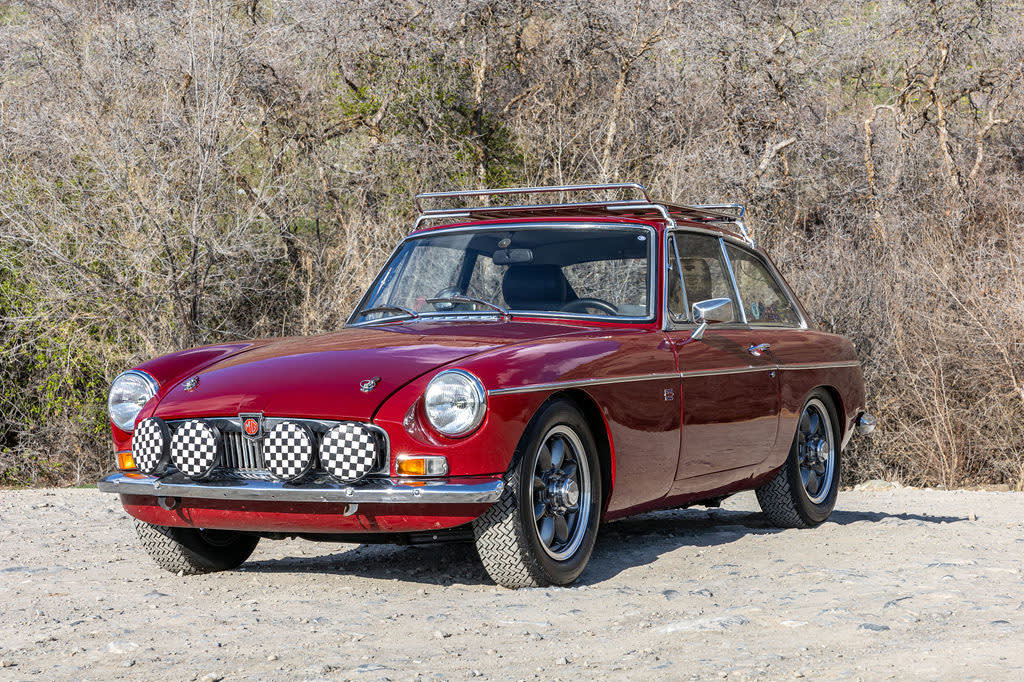
1969 MG MGB GT
Staying with the rally theme, this 1969 MG MGB GT was purpose-built for competing in Time Speed Distance (TSD) rallies. It was outfitted with auxiliary lights, a rally computer, a Helphos spotlight, an adjustable interior map light, a custom stainless steel and mahogany roof rack, a custom rear storage compartment, and adjustable interior fans. The car was completely rewired, while the suspension was upgraded with Nitron shocks, front and rear. Frontline disc brakes and aluminum radiator with an electric fan were also installed. The headliner and carpeting were recently replaced and its 15″ Minilite-style wheels have been dressed in 185/70 Pirelli Cinturado CN36 tires. Otherwise it retains its stock 1.8-liter “B-series” inline-four with dual SU carburetors coupled to a 4-speed gearbox with desirable overdrive. Its current owner bought the B-GT in the Netherlands two years ago before bringing it home to Pleasant Grove, Utah. It has covered 2,000 miles since (true mileage unknown), some of which were clocked in SCCA Road Rally events in California, the Glenwood Springs Rally in Colorado, and the Lewis and Clark Rally in Oregon. A documented competition history accompanies the sale along with a toolset, tools for adjusting Frontline disc brakes and suspension, a spare wheel, Coco mats, and a first aid kit. Ready to continue its rally streak or simply enjoy the scenery in spirit, this 1969 MG MGB GT is now listed on Hemmings Auctions with 13 days left to bid.
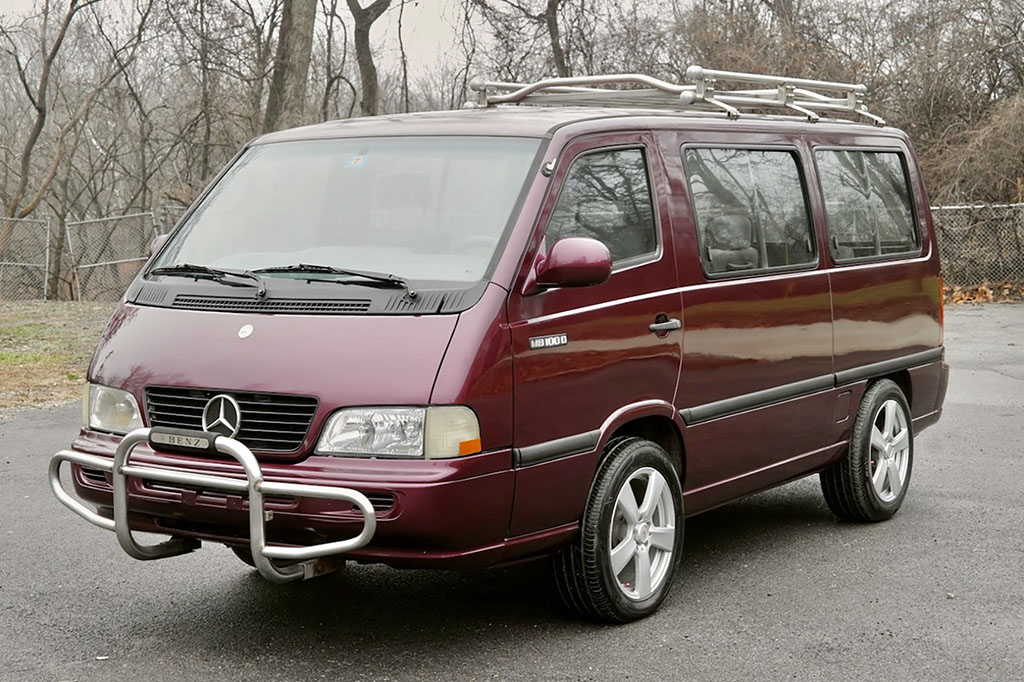
1997 Mercedes-Benz MB100 D
When we think of Mercedes-Benz, we might conjure a luxurious Autobahn cruiser. Or maybe a high-performance AMG model comes to mind. A more unlikely image, at least in the US, is a bare-bones minivan. Yet, with roots dating back to 1963, the Mercedes-Benz MB100 was in production between 1980 and 2003, across three generations. They were primarily commercial vehicles, but, spurred by the then popularity of minivans, a passenger “people carrier” was also offered. This one, a third-generation MB100 D from 1997, was sold new in Japan and imported to the United States in 2023. It is finished in Nobility Red (3640) and features a branded front brush guard, a rear ladder, a heavy duty roof rack, and a tow hitch. The paint is reportedly original and in good condition along with the body. All glass remains original and free from cracks. Its 18″ 5-spoke wheels are dressed in Achilles tires measuring 235/55 at all four corners. Braking is handled by discs up front and drums in the rear and a spare wheel is mounted under the rear of the vehicle. The cabin is trimmed in Gray cloth and offers seating for 7 passengers. All the side windows feature sliding openings for passengers and each seat includes a seatbelt. It is appointed with power front windows and air conditioning with roof vents throughout the cabin. An aftermarket Alpine head unit with Bluetooth has been added. Normal wear can be seen throughout the cabin with all features reportedly working as intended. Power comes from a capable 2.9-liter 5-Cylinder diesel and is mated to a 5-speed manual transmission. The engine is rated by the factory for 105 horsepower and 136 ft-lbs of torque. This MB100 has reportedly been serviced regularly under previous ownership and more recent service records accompany the sale. In addition, the selling dealer has inspected the vehicle. Currently showing 98,190 km (~61,000 miles) this 1997 Mercedes-Benz MB100 D is now being offered on The MB Market out of Columbus, Ohio with a clear Texas title.
Other finds
- 42,182-mile 2000 Ferrari 360 Modena gated 6-speed – $109,360
- Comprehensive resto 1969 Ford Mustang Mach 1 Marti Report – $95,995
- Two-owner 2003 Acura CL 3.2 Type S 45,000 miles – $10,000
- Blue plate 1961 Chrysler 300 G 53,000 miles – $83,900
- 19 years owned 1974 Alfa Romeo GTV 2000 records to 1981 – $27,000
- One of 33 1967 Intermeccanica Omega Holman & Moody resto – $75,000
- Blue plate 1976 Ford-Mercury Capri mostly original – $12,750
- 24 years owned 1997 Dodge Viper GTS 1,667 actual miles – $120,000
- Meridian Metallic/Boxster Red 2001 Porsche 911 Turbo – $75,000
- 53,900-mile 1996 Ford Probe GT Inspected – $10,000
- Two-owner 1992 Mercedes-Benz 300 TE 69,700 miles – $30,000
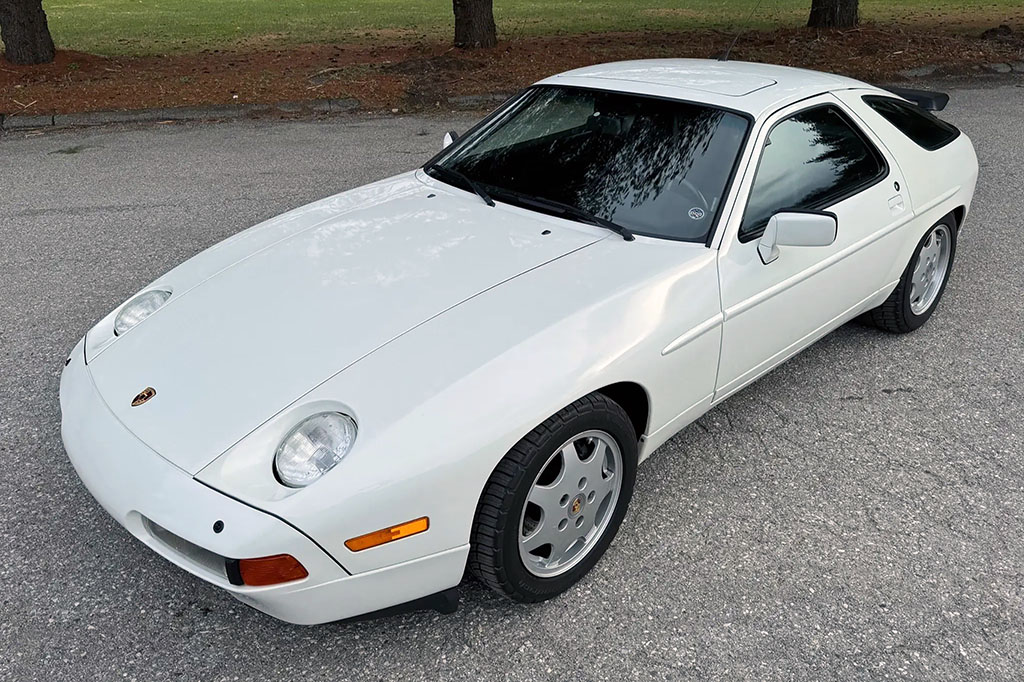
1991 Porsche 928 GT
The first true sport-focused variant of the Porsche 928, the GT was produced between 1989 and 1991. It featured a 5.0-liter V8 engine producing 326 hp and 317 lb.-ft of torque, mated to a standard 5-speed manual transaxle and paired with a variable PSD limited-slip differential. This 928 GT is finished in Grand Prix White with desirable 16” Design 90 wheels dressed in new BF Goodrich G-Force Comp2 tires. The cabin features Black leather upholstery with matching carpets and headliner. Accessories include power-operated front bucket seats, individual rear bucket seats, leather-wrapped four-spoke steering wheel, power windows and mirrors, automatic climate control, cruise control, rear seat air conditioning, a central locking system an analog clock, a digital odometer, and a Porsche CDR-210 stereo. Despite higher mileage (around 85,000), there appears to be very little wear and none of the typical warping and cracking seen on many 928s. Many common maintenance issues have been reportedly been addressed and a detailed service history will accompany the sale. With fewer than 1,000 sold in the US between 1989 and 1991, the 928 GT is a grand tourer that feels at once oldskool and entirely modern with ample power and the engagement of a standard 5-speed (most 928s sold in the US after 1981 were automatics). Find this one on PCARMARKET out of Gaylordsville, Connecticut with 4 days left to bid.
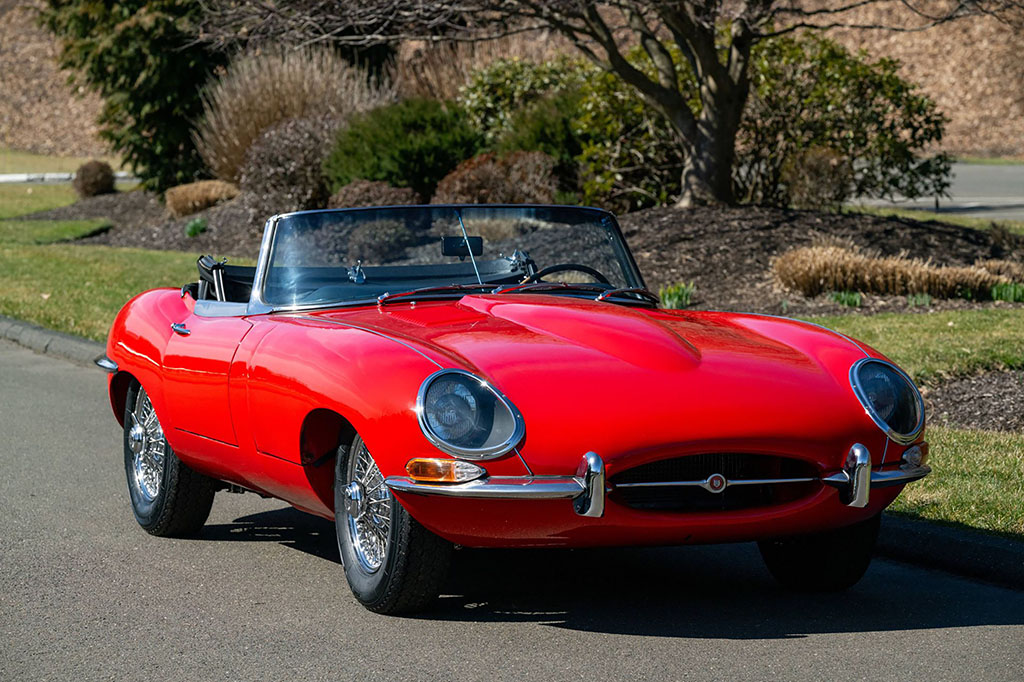
1962 Jaguar E-Type OTS
1962 Jaguar E-type Series I Open Two-Seater, one of 2,000 Series I Roadsters sold in 1962, was originally exported to Rhodesia and later imported to the U.S. Its original Carmine Red was refinished in the 1990s and continues to present very strongly, still with all its luster, no swirls, and no dents. All brightwork appears to be complete and highly polished. The black convertible top is newer and in proper working order, while all seals are in great condition, with no known leaks. All lights are said to be functioning. The cosmetic refurbishment of the 1990s also included re-trimming of the black leather interior. The early Series I shell seats display “minimal typical wear,” while the carpets are described to be in “extremely nice condition.” Interior trim, including the etched aluminum panels unique to the earliest E-types, is complete and period correct. All instruments and controls are said to work, including the heat. The 3.8-liter inline-6 and 4-speed gearbox are original to the car, per the Heritage Certificate. The E-Type was treated to a mechanical refurbishment in 2019. At that time, the engine was disassembled and resealed; the transmission was resealed; and an electronic ignition, aluminum radiator, new clutch and clutch hydraulic cylinders were installed. Approximately 4,000 miles have been driven since. Currently showing 38,669 miles, believed to be original, this early E-Type is now listed on Hemmings Auctions, where bidding closes tomorrow.
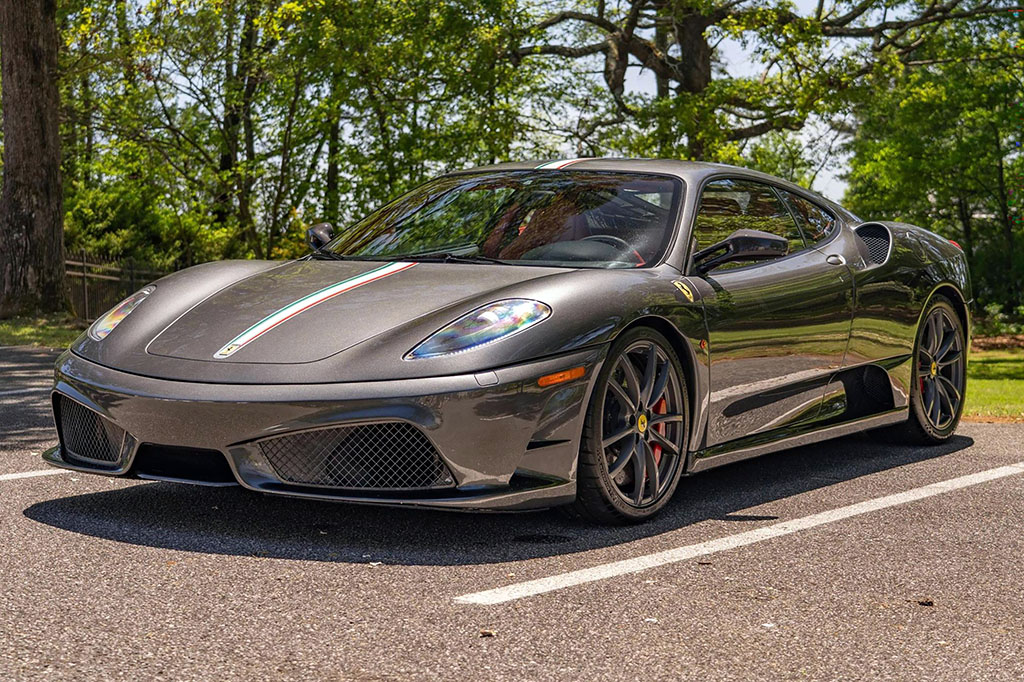
2009 Ferrari F430 Scuderia
Following a tradition that began with the 348 Serie Speciale and continued through the F355 Serie Fiorano and 360 Challenge Stradale, Ferrari produced a limited-series road-going varaint of their F430 Challenge Series competition car, the F430 Scuderia. With design input from seven-time Formula 1® world champion Michael Schumacher, the F430 Scuderia featured a revised engine setup (now putting out 503 hp), more extreme bodywork (including a different front bumper, rear diffuser, and rear lip spoiler), 19″ wheels, a carbon ceramic braking system, an electronically-controlled rear differential, carbon fiber air boxes, Scuderia shields, a racing stripe, sport seats, carbon fiber interior trim, carbon fiber door panels, Challenge front and rear grilles, carbon fiber mirrors, and an F430 Challenge-style rear exhaust system. This Ferrari F430 Scuderia, with its striking Grigio Silverstone over Red, was appointed with over $30,000 worth of options including Leather, Red Brake Calipers, Racing Stripe, Special Features (bespoke customer order), Special Stitching, and a Colored Steering Wheel, bringing its sticker price to $3,13,244 (about $456,180 today). The application of paint protection film is its only modification. It was previously owned by YouTube content creator Ed Bolian of VinWiki, where his time with the car is well recorded. It’s been driven less than 1,000 miles since. That said, with 43,700 miles, it’s no garage queen. This Scud has spent its life doing what it was meant for: driving. Recent service includes replacement of valve cover gaskets and spark plug tubes in addition to an oil service in preparation of the sale. No records are given to show the recommended major service (every 12,500 miles), an issue that should be addressed. A Lemon Squad inspection report does however, accompany the sale. It’s now on Cars & Bids with four days remaining.
Other finds
- 7,779-mile 2003 Ferrari 575M Maranello Rare Grigio Ingrid – $119,900
- Two-owner 1997 BMW 318ti 47,030 miles – $12,000
- Black plate 1967 Chevrolet Camaro RS/SS 47,856 miles – $54,500
- 58,000-mile 2004 Honda S2000 two owners – $30,000
- Highly original 1971 MG MGB GT 47,000 miles – $8,500
- 48,000-mile 2014 Porsche Panamera GTS CPO warranty – $48,500
- Original rust-free 1978 Land Rover Series III 109 Santana LHD – $30,000
- 41,529-mile 1971 Chevrolet Corvette LT-1 4-speed – $36,500
- Original rust-free 1975 Toyota Land Cruiser FJ40 extensive docs – $34,000
- One-owner 2001 Volkswagen Eurovan MV Weekender – $25,000
- 30,563-mile 1990 Ford Mustang GT 7-Up Edition two owners – $10,500
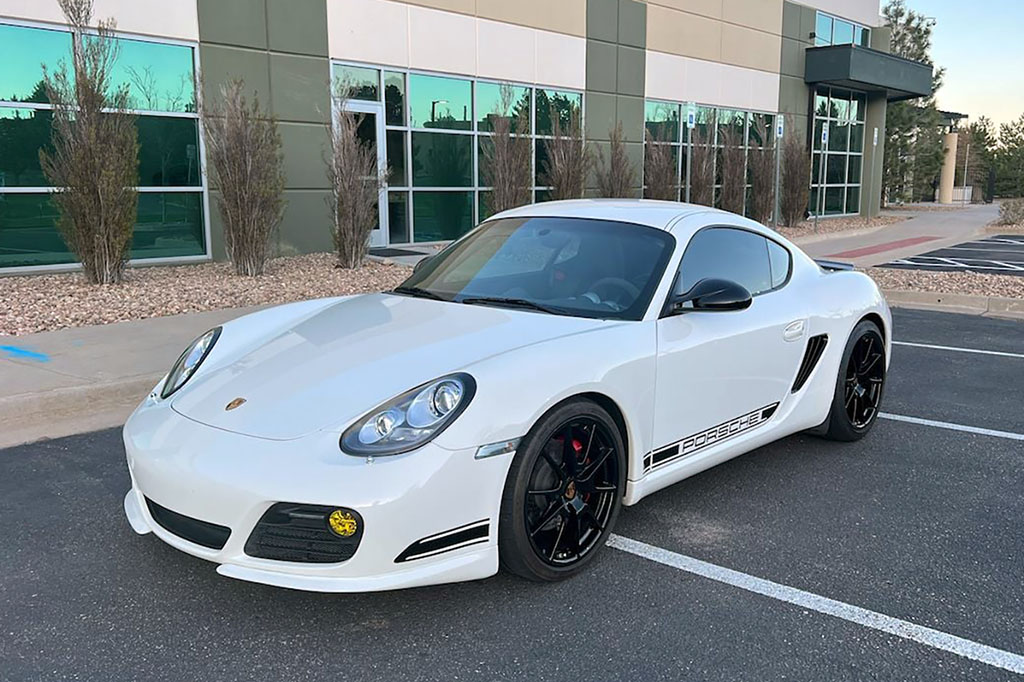
2016 Porsche Cayman R
This 2012 Cayman R is one of 1,421 987-gens made worldwide, with 563 of those landing on US soil. While only 10 horsepower more than a comparable Cayman S model, when combined with its lighter weight (121 lbs., gained by swapping metal door handles for canvas pull straps, no steering wheel controls, lightweight sport seats, and aluminum doors) and 20-millimeter lower ride height, the Cayman R makes for the kind of driving purity that many felt had been lost in the 911’s evolution. In addition to the standard features of the R (19” Spyder wheels, Sport Chrono, carbon bucket seats, bi-Xenon headlamps, front splitters, and a fixed rear wing), this desirable 6-speed Cayman R has the added AC and radio options (at no-cost, otherwise deleted to save weight). Modifications noted are a Titanium Remus exhaust (stock exhaust included), as well as PPF on hood, fenders, stone guards. Showing just 18,600 miles at the time of listing, this 2012 Porsche Cayman R can be found on the Rennlist Marketplace out of Golden, Colorado with an asking price of $77,250.
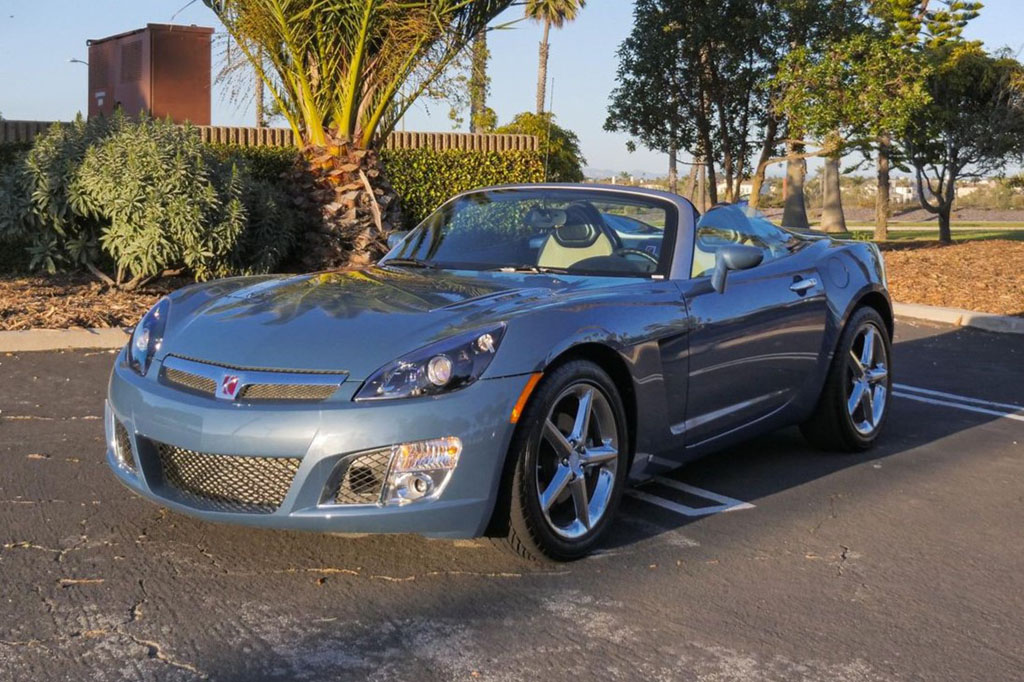
2008 Saturn Sky Red Label
The idea of a “different kind of car company” seemed like a brilliant one at first. Saturn was a division of GM that operated more or less independently, with their own plant, own dealer network, own development, etc. The thinking was that a well-made sensible car could compete with the imports by offering consumers a different way to buy. Long before Tesla, it placed showrooms close to malls and featured “no haggle” pricing, not unlike going into a JC Penny and buying a pair of socks. It was, initially, a theory proven successful, offering a small, midsize and two-door sport coupe that were on par with Japanese offerings of the day. In practice though, “different” created friction with GM’s establishment. Things began to fall apart when sales of their other domestic offerings took the hit. Soon enough, pressure from dealers forced Saturn to cut its development and turn to badge engineering and more traditional sales methods. No longer as appealing to buyers, Saturn ended production in October 2009, and ended outstanding franchises a year later. There were however some notable highlights that came from those final years, mostly as rebadged Opels, but also this: the Sky roadster. It shared its platform and much of its styling (based on the Opel Speedster) with the Pontiac Solstice (as well as the Opel GT in other markets). The Red Line trim was especially appealing as it featured a 260-hp 2.0-liter turbocharged engine, along with a sportier suspension, 18″ wheels, standard limited-slip differential, and a revised front fascia. This 2008 Saturn Sky Red Line is all the more appealing in its Bluestone finish with a tan soft top and a black and tan leather interior. Most appealing though is that it has covered a mere 2,815 miles. Though some flaws are noted, it is otherwise in the kind of condition one would expect from a car that is still in its break-in period. There has been little occasion to service the car, however fluids have been recently changed and, other than riding on its original tires, is ready for open-sky motoring. It’s selling at no reserve on Cars & Bids out of Santa Rosa Valley, California.
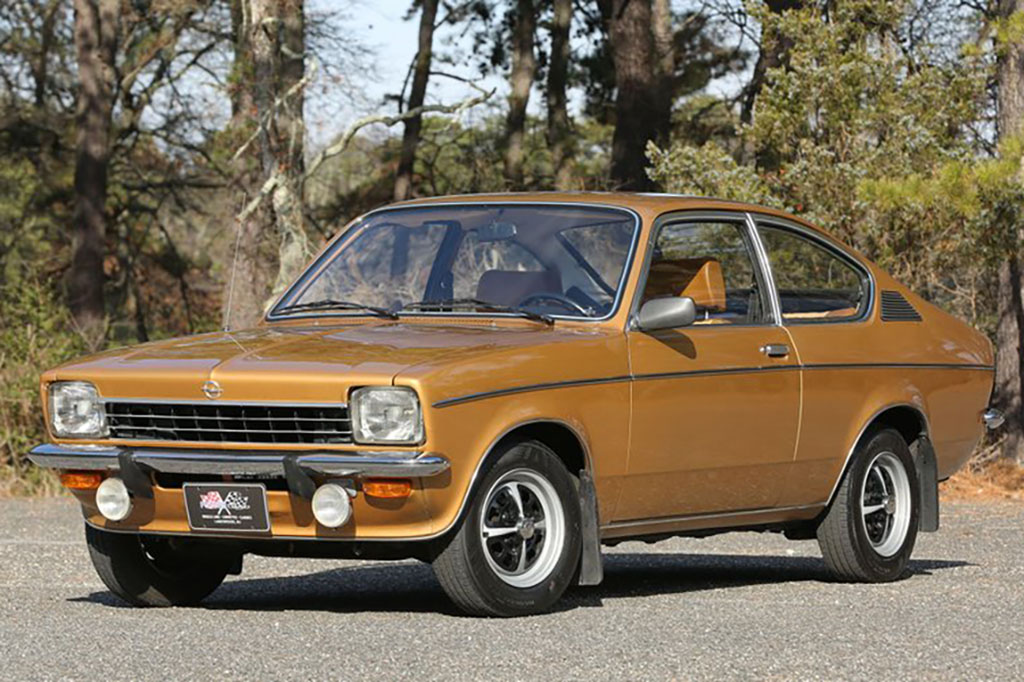
1976 Opel Kadett C
While on the subject of Opel, the Opel Kadett C, produced from 1973 to 1979. was the last small Opel to feature rear-wheel drive and despite being out of mainstream production since 1979, the Kadett C retains something of a cult following in Europe, largely due to its popularity in the sport of drifting. With that often comes extensive modification and the Kadett C, in particular, was susceptible to easy upgrades with engines from larger Opel cars. Finding one that has been unmolested is increasingly challenging. This 1976 Opel Kadett C was delivered new in Germany, finished in Bernstein Gold exterior with a two-tone interior. Options included power disc brakes, AM/FM radio, front and rear bumperettes, mud flaps, and front fog lights. It was brought over from Germany by its original owner around 2002. Aside from tires, battery, wipers, and the usual items, it remains highly original. It is believed to be one of only two German Kadett’s in the US, equipped with a 1.2-liter engine and coupled with a 4-speed gearbox. The odometer reads 87,817 kilometers (54,566 miles). The original owner’s manual and brochures accompany the sale, along with a 1st Place award from the 2021 Carlisle Nationals and a Wheels and Wings Top 50 award. It’s now being offered at ACC Auctions out of Lakewood, New Jersey with six days left to bid.
Other finds
- One of 50 LHD 1954 Benley R-Type Extensively documented – $45,000
- One-owner 1976 Dodge Charger 49,621 miles – $7,500
- Fully restored 1966 Toyota Land Cruiser FJ40 78,380 miles – $31,000
- Rebuilt original 1920 Ford Model T Speedster Fronty conversion – $16,500
- Highly original 1976 Chevrolet el Camino 51,725 miles – $19,100
- 30 years stored 1973 Jaguar XJ6 Series I 38,000 miles – $6,900
- 90% restored 1936 BMW 319 well documented – $63,000
- 31,000-mile 1991 Porsche 944 S2 Cabriolet one of 1,702 – $32,000
- Two-owner 1982 Peugeot 505 Diesel 72,000 miles – $12,950
- № 38 of 500 1994 Pontiac SLP Firebird Firehawk 21,100 miles – $18,000
- 29,300-mile 2002 Maserati Spyder GT 6-speed manual – $29,500
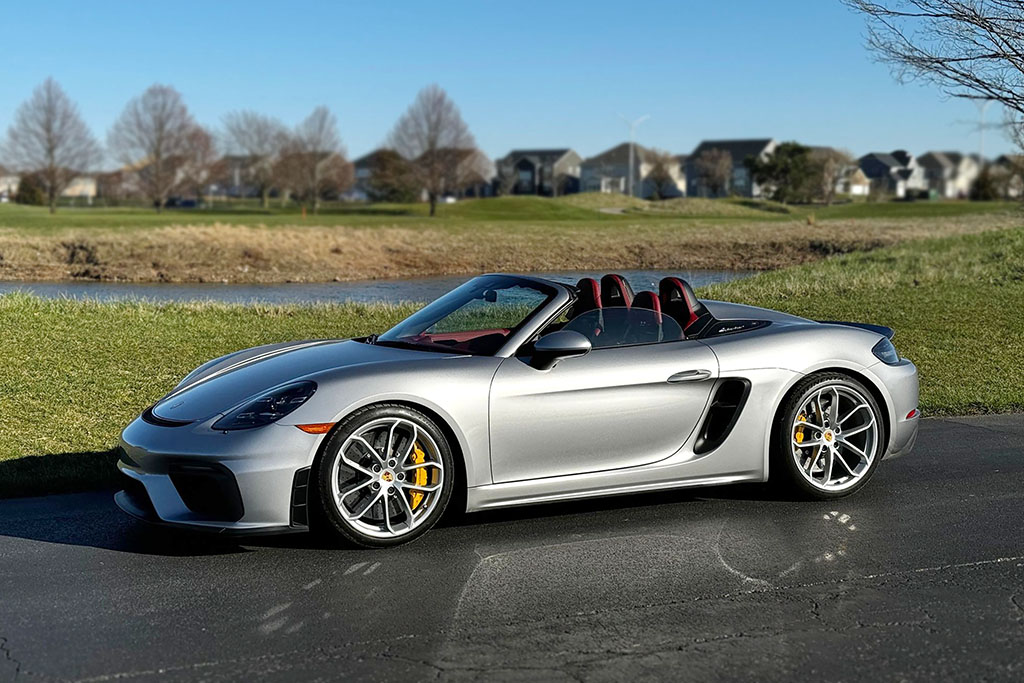
2020 Porsche 718 Boxster Spyder
Introduced 20 years after the first Boxster (986), the 982-generation 718 Boxster evoked Porsche’s past racing successes with light cars that outmaneuvered competitors with larger and more powerful engines (’718’ a nod to the sports-racing Porsche 718, which won the Targa Florio race in 1959 and 1960). As if to belabor the point, the Spyder (a name associated with past legends like the 550 Spyder and RSK Spyder) debuted two years later as the highest echelon of 718 Boxster. Sharing many of the components of the track-oriented Cayman GT4, including its naturally aspirated 414-hp 4.0-liter flat-6, capable of a top speed of 187 mph. The front suspension and brakes were borrowed from the 911 GT3, and the adaptive dampers, ABS and stability-control programming are shared with the 911 GT3 RS. This 2020 Porsche 718 Boxster Spyder was sold new by Champion Porsche in Pompano Beach, Florida and came highly spec’d in GT Silver Metallic over the Spyder Classic Interior Package (leather and Alcantara® in two-tone Bordeaux/Black, GT Silver Metallic trim), along with ceramic brakes (PCCB), directional lighting (PDLS), full bucket seats, BOSE® Surround Sound, navigation, and much more adding up to a total of $30,470 above the $96,300 base. It has been driven sparingly at 13,680 miles, but consistently maintained and inspected, including a recent pre-purchase inspection showing no faults. A few minor flaw are reported including some chips on the front end and some creases on the driver’s seat bolster. With two keys, owner’s manual and window sticker, it is now offered on Cars & Bids through a dealer out of Naperville, Illinois.
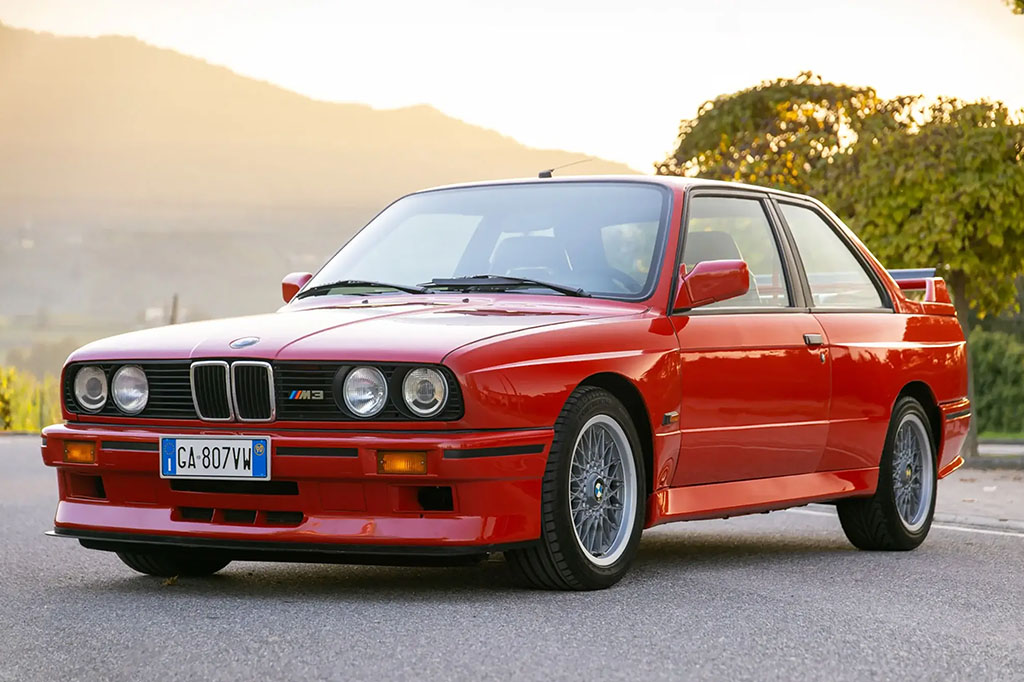
1990 BMW M3 Sport Evolution
BMW’s original M3, based on the E30 3-Series, continues to be coveted by both collectors and enthusiasts for its boxed fender flares and a high-revving S14 DOHC inline-four engine. The ultimate version of the M3 was introduced in 1990 as the Sport Evolution (Evo 3), a lighter and more powerful model with a limited production run of 600 units in total. This example is said to be one of only 204 to have been factory-finished in Brilliant Red (Brilliantrot, 308) and comes equipped with an optional electric sunroof. It was first registered at the Autodepping dealer in Detmold, Germany, on May 23, 1990, before moving to Madrid, Spain, where it remained with the same owner until 2018. The car changed hands with a dealer before it was purchased by the current owner in 2020. The seller notes it was treated to a respray roughly 5-6 years ago. Other features include body-colored mirrors, front brake ducts, quad headlamps, twin exhaust outlets, a roof-mounted antenna, an M3 grille badge, and factory 16” basketweave wheels. The cabin features a pair of black leather Recaro bucket seats with a matching dashboard and door panels. Accessories include a three-spoke M-Tech II steering wheel, red seatbelts, M3-branded door sills, an M Sport shift knob, an M-specific instrument cluster, power windows, air conditioning, a sound system, a BMW Bavaria C Business stereo, and a Sport Evolution badge mounted on the center console. The seller notes the A/C compressor is currently non-functional. The most powerful E30 M3, the Sport Evolution features a 2.5-liter S14B25 inline-four engine with dual overhead camshafts and an output of up to 238 hp and 177 lb.-ft of torque. The rear wheels are driven through a close-ratio Getrag G265 5-speed manual transmission and a limited-slip differential. This example also features an optional adjustable suspension. Accompanied by an ASI Gold Plate certificate and documentation confirming matching drivetrain numbers. Currently located in Tuscany with free shipping to New York, it is now on PCARMARKET with six days left to bid.
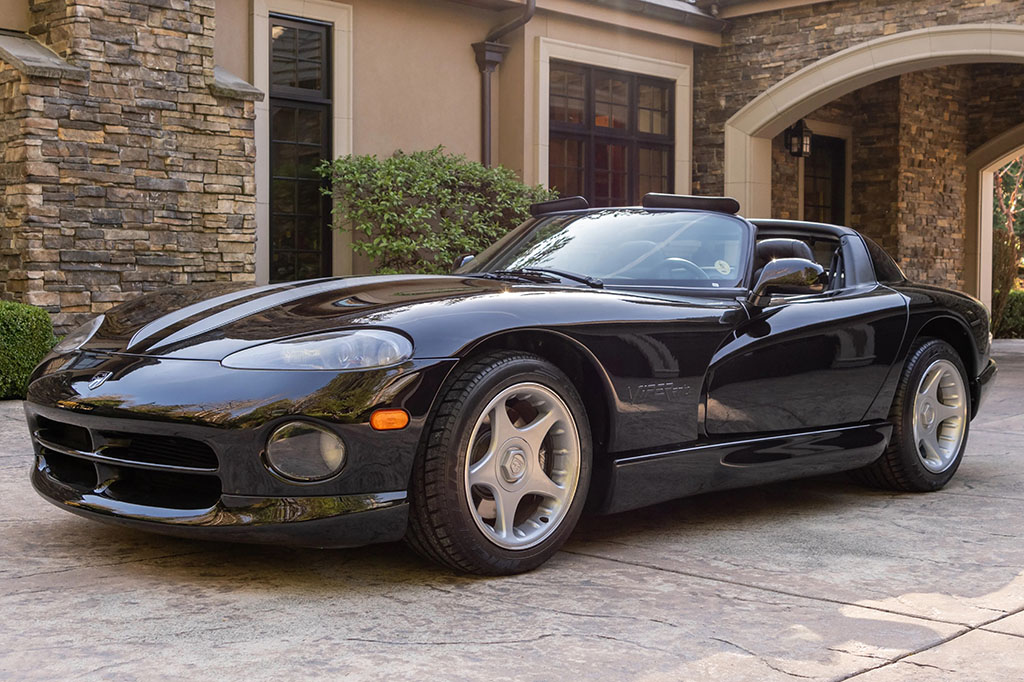
1996 Dodge Viper RT/10
Released for model year 1992, the first-generation Dodge Viper packaged power and handling like few before it. Its first facelift (SRII), arrived throughout 1996 with iterative improvements. Tri-spoke wheels were traded for a contemporary 5-spoke design and rear center exhaust replaced the original’s side-exit system, yielding a 15-horsepower bump in output. This single-owner 1996 Dodge Viper RT/10 Roadster, finished in Black w/Silver center stripes over Black leather, is in time-capsule condition coming from the personal collection of its original selling dealer. The well-bolstered two-seat cabin features optional air conditioning and appointments that include a leather-wrapped steering wheel, handbrake, and shift knob, plus AM/FM/Cassette audio. The 415-hp V10 is coupled with a Tremec six-speed manual gearbox and a limited-slip differential turning 17” aluminum wheels wearing Michelin Pilot SX tires over four-corner ventilated disc brakes. It retains both its removable body-color hardtop and folding soft-top with side windows and a removable rear window. Showing an odometer reading of just 1,757 miles, this 1996 Viper RT/10 on Sotheby’s Motorsport, where bidding closes tomorrow.
Other finds
- 33,450-mile 2016 Alfa Romeo 4C Spider highly optioned – $55,900
- One of less than 2,500 1979 Hurst/Olds Cutlass 72,000 miles – $14,600
- All original 1976 Datsun 280Z 31,800 miles – $22,850
- Frame-off restored 1984 Citroën 2CV Charleston fresh import – $30,000
- One of five hardtop 1964 Dodge Polara 500 19,250 miles – $155,000
- 66,853-mile 1989 Pontiac ASC McLaren Grand Prix 3.1 Turbo – $8,000
- One of 39 LHD 1998 Bentley Turbo RT Mulliner 22,000 miles – $15,000
- Refreshed 1971 Nissan Patrol LG60 82,000 miles – $24,000
- Two-owner 1969 Fiat 124 Sport 27,368 km – $24,999
- Frame-off restored 1971 Triumph GT6 65,773 miles – $20,000 CAD
- 51,000-mile 1996 Ford Bronco Eddie Bauer thorough restoration – $29,000
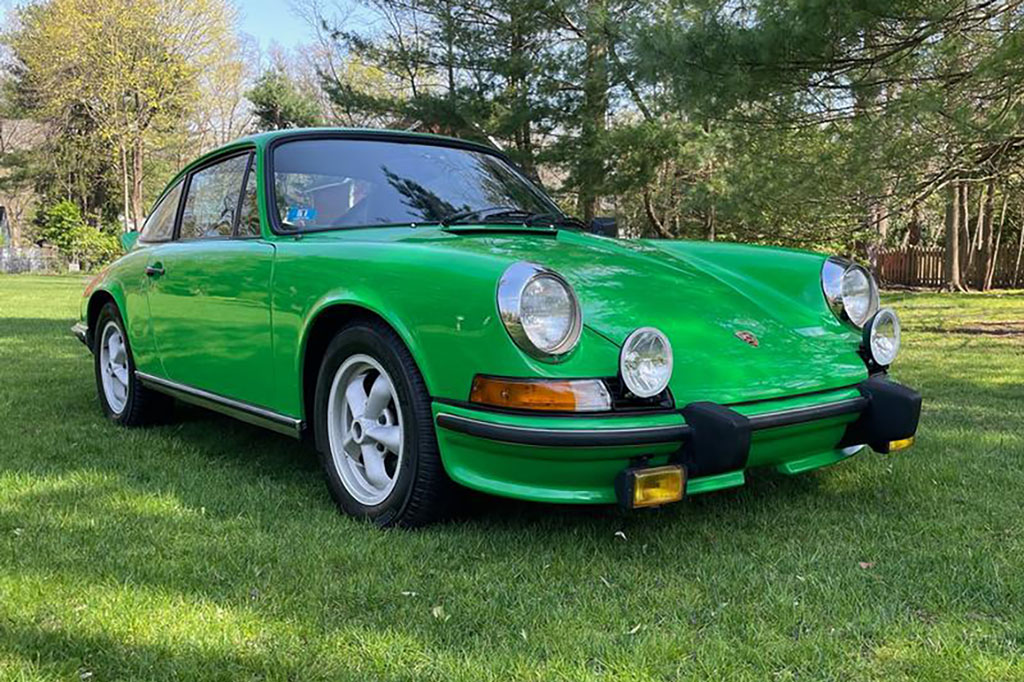
1973 Porsche 911 T
The Porsche 911 T was introduced in 1969 as the entry level 911, effectively replacing the 912. It sat below the two other models in the 911 lineup, the mid-level 911E and the high-spec 911S. In 1972, like the E and S variants, Porsche upgraded the 911T to a new, larger 2,341 cc engine, commonly known as the 2.4, and mid-way through 1973 (often referred to as 1973.5 or 911 T/E), US models of the 2.4 T were given Bosch CIS fuel injection (from the 911 E), bringing power output to a respectable 140 hp. This 1973.5 Porsche 911 T comes from having been owned by a single owner for 47 years. Its current owner purchased the car from the original owner’s son a year ago. It was delivered new by Automaster Motor Company of Burlington, Vermont, and was well appointed with a 5-speed transmission, 15″ Fuchs Alloy wheels, front and rear stabilizers, tinted glass, and Appearance Group (wider rubber deco trim on bumpers; bright aluminum rocker panel moldings; aluminum sill covers; velour carpet; S gauges; and S front spoiler). The car had been dormant for the past 15 years, although the son had a shop rebuild the fuel system and brakes. The seller continued its refresh with more tuning to the engine and “tidying things up.” The 911 T was originally a relatively rare Metallic Green , but was given a bare-metal color change to Viper Green in the 70’s, which has held up very well with some minor patina “here and there.” At the time, its original owner was auto crossing, DE-ing, and road rallying the car. He had a ducktail fitted, which is believed to be a factory ’73 RS, built on a steel frame. The floors, rockers, chassis were undercoated some time ago and the car is said to be entirely rust-free. The car reportedly starts well, runs well, shifts well, and pulls very strong with only a slight puff of smoke if the car has been sitting for a while. A set of black center Fuchs 15×7’s with old tires and the factory license panel that the owner had painted with black textured paint will accompany the sale. It’s here on The Mart (Porsche Club of America classifieds) for $85,000.
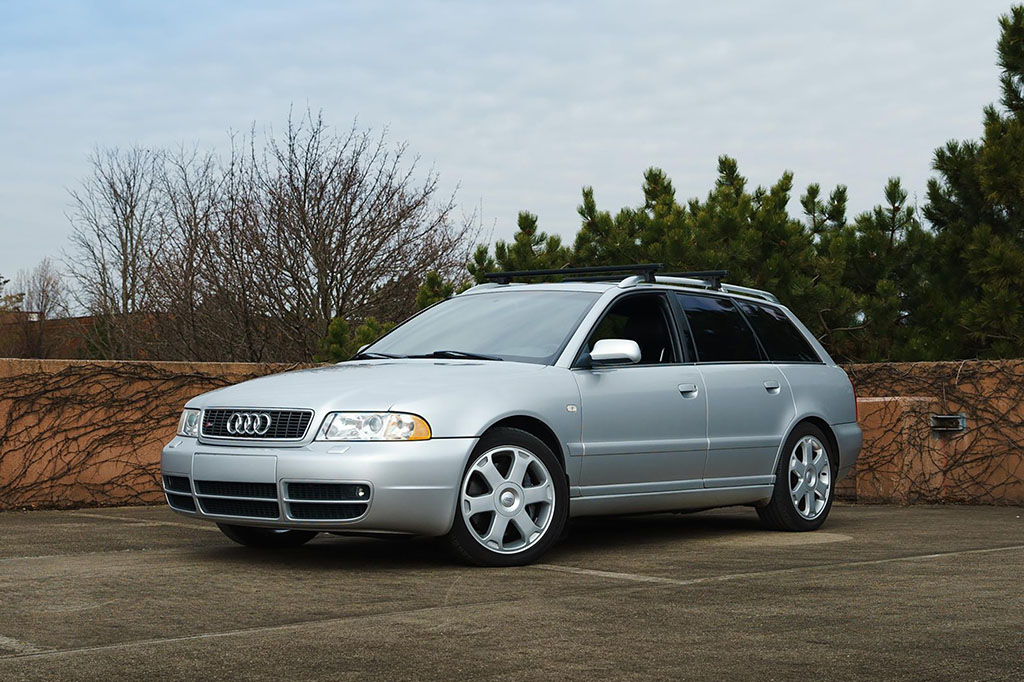
2001 Audi S4 Avant
Released in Europe in 1997, the second-generation S4 brought Audi much closer to the performance mainstream. It wore a relatively subtle design, but it offered enthusiasts a powerful turbocharged engine, correspondingly big brakes, and all-wheel-drive. It received rave reviews from the press when it landed in America for the 2000 model year. Audi dubbed the Avant variant as “the sports sedan with a fanny pack.” Power comes from a 2.7-liter twin-turbocharged V6, rated at 250 horsepower and is sent to all four wheels via Audi’s Quattro permanent all-wheel-drive system. This 2001 Audi S4 Avant, finished in Silver Metallic with an Onyx interior, is equipped with the desirable 6-speed manual transmission and is well appointed with the Premium Package, sport suspension, Silk Nappa leather upholstery, heated and power-adjustable front sport seats, a Bose sound system, and more. Modifications have been limited to a stick-on spot mirror. It has had two owners since new. While it shows higher mileage (121,000), it has a thorough service history. The body shows its age with some minor chips, scratches and dings, but is accident free and looks to be wearing its original paint in otherwise nice condition. Likewise the interior has some typical age and mileage related wear, but presents well. While these factors may deter some, they also make for an engaging and practical but carefree daily driver or summer road trip candidate. It’s selling at no reserve on Cars & Bids three days remaining in the auction.
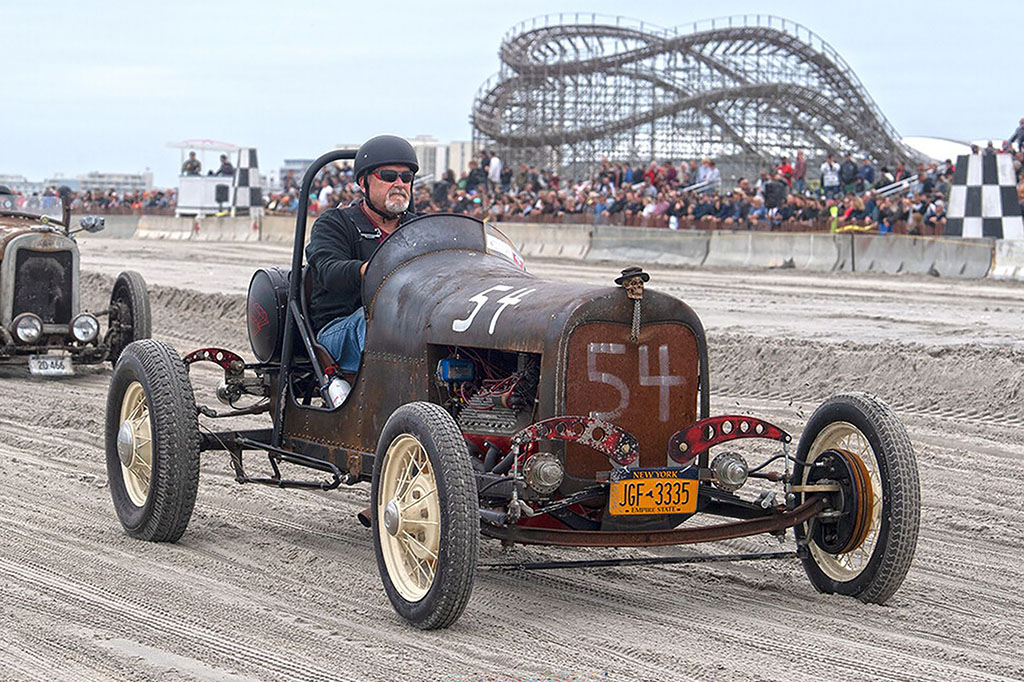
1925 Ford Model T Speedster
This 1925 Ford Model T Speedster was hand-built in 2019 for participation in that year’s running of The Race of Gentlemen (TROG) with the intent of recalling a Model T-based race car from the earliest days of American motorsport. The Speedster’s body is bare steel with no blemishes and only surface corrosion that forms part of the car’s patina. A side-mount spare tire with mirror flanks the side while a hood and cowling lay ahead of and a fuel tank and roll hoop sit behind the driver. All lights are said to be in proper working order. The underside appears to be clean, with minimal surface corrosion. The metal seat, with black leather cushioning and a safety harness, was custom built and looks to be in good overall condition. Its bare floors appear solid. All instruments are reported to be new. The burled-wood dashboard shows no apparent damage. Power comes from a non-original Ford 239-c.i. L-head V8, sourced from a 1949 Ford and built by Flathead Sales & Service of Churchville, New York to reach 286 c.i. Upgrades include a Scat stroker crankshaft, dual Stromberg carburetors, Offenhauser cylinder heads, Iskenderian camshaft, and a new clutch and pressure plate. The transmission is a Borg-Warner T-11 three-speed manual with overdrive that is presently not connected. No operational issues and no powertrain leaks are cited. The friction shock absorbers have been “made new,” with the ride height lowered by seven inches. The manual steering is described as “tight” and the Model T has been fitted with all new hydraulic brakes. As New York does not issue titles for vehicles of this age, the seller states that this vehicle will be sold on the proper document in his name for transfer of ownership. Most receipts associated with the build will be provided as well. Ready for another run at TROG or a crowd at cars & coffee, this 1925 Ford Model T Speedster is now open to offers on Hemmings Make Offer after failing to meet reserve through auction. It’s listed with a buy-now price of $10,000.
Other finds
- Highly original 1963 Buick Riviera 53,000 original miles – $28,500
- Three-owner 1999 Rolls Royce Silver Seraph 66,000 miles – $36,500
- 16,500-mile 1966 Land Rover Series IIA corner-window pickup – $29,000
- Original 1965 MG 1100 LHD 4-door – $6,000
- Complete original 1993 Cadillac Allanté 72,000 miles – $9,500
- 25,214-mile 1996 Chevrolet Corvette Collector Edition 6-speed – $30,000
- 800-mile 2024 Tesla Cybertruck Foundation Series title in hand – $149,999
- Freshly serviced 2018 Ferrari GTC4 Lusso 11,806 miles – $199,800
- 79,232-mile 1967 Jaguar S-Type 3.4 three-owner care– $27,000
- One-owner 1983 Volkswagen Rabbit Convertible 74,070 miles – $4,800
- 49,200-mile 1996 Nissan Hardbody 4×2 XE one owner – $10,500
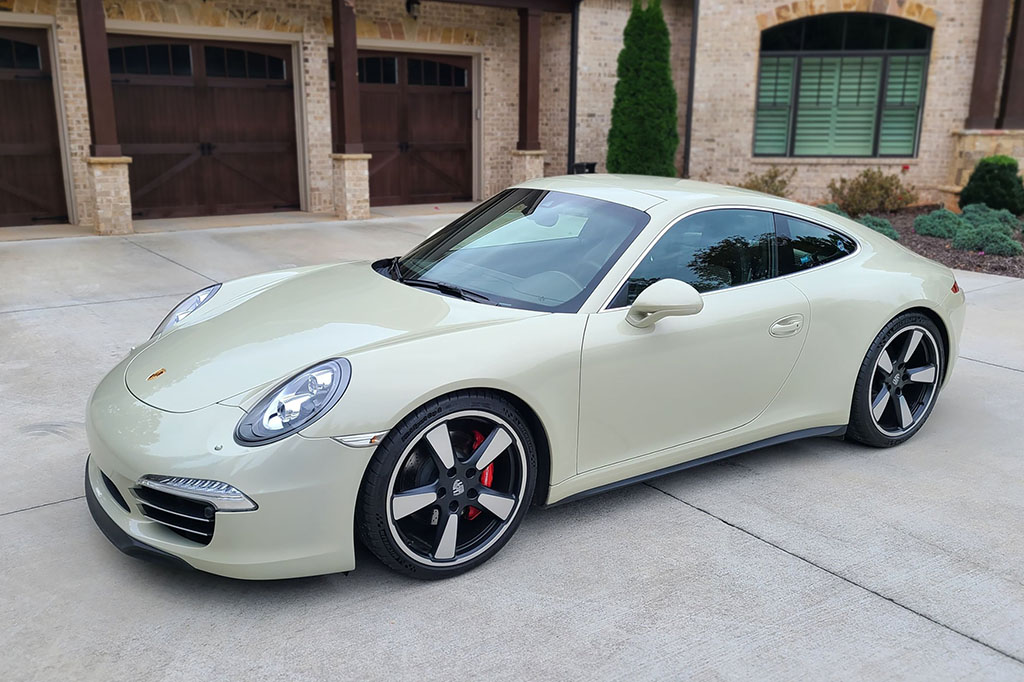
2014 Porsche 911 Carrera S 50th Anniversary Edition
Porsche presented the 911 Carrera S 50th Anniversary (“911 50”) at the 2013 Frankfurt Auto Show (IAA), 50 years after presenting the original 911 at the same venue. As in the early 911s, the instruments featured green labelling with white pointer needles and silver caps on the instrument pivot pins, while the side windows featured chrome trim. The 20″ wheels reinterpreted the classic Fuchs wheels with a modern flourish. Another notable update was the wide body normally reserved for the 4S and Turbo. Full leather or nostalgic Pepita houndstooth cloth inserts covered the seats. The special edition from Zuffenhausen was limited to 1,963 units, a nod to the year of the 911’s launch. № 276, presented here in Geyser Gray Metallic (one of three colors available along with Graphite Gray and Black), is appointed with the quintessential Pepita inserts. The PDK-equipped car is highly optioned with PASM, PDLS, Porsche Entry and Drive, Adaptive 18-way sport seats, Park Assist, and a number of other desirable features. It is described as “impeccable” with no needs and recent maintenance which included a new battery, brakes and tires. Showing 36,325 miles with a CPO warranty good through August 31, 2025, Porsche 911 50th Anniversary № 276 is listed on Rennlist Marketplace in Oakwood, Georgia for $139,950.
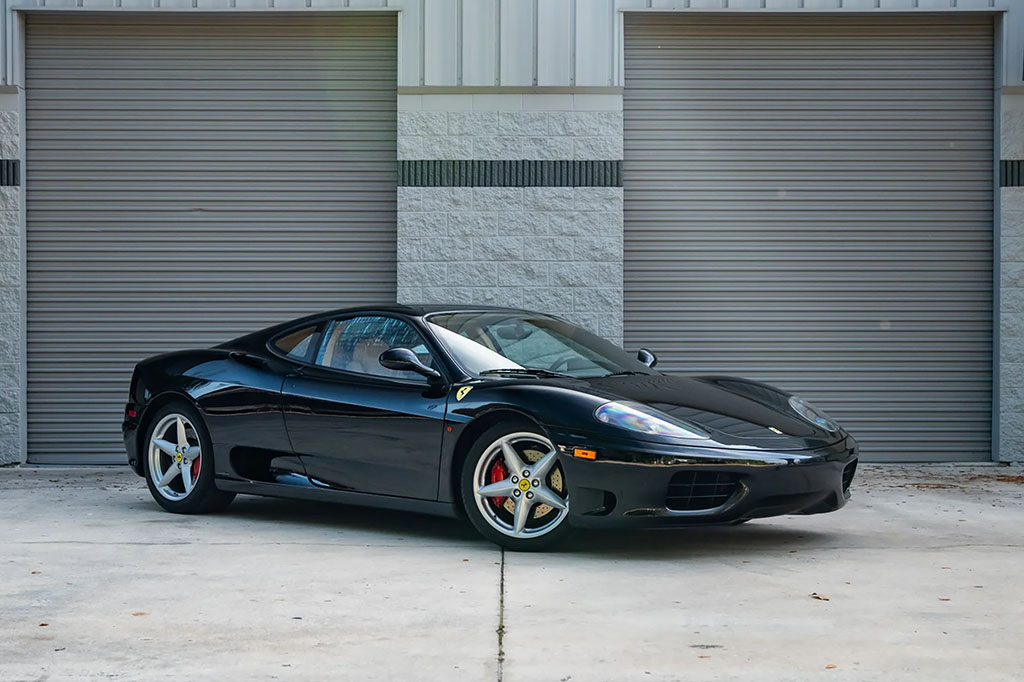
2001 Ferrari 360 Modena
Revealed in spring 1999 at the Geneva motor show in berlinetta form, the 360 Modena was much more than an evolution of the 355. Gone was the 355’s chiselled delicacy, in its place something bigger and bolder, the Pininfarina curves more generous and voluptuous. Gone, too, were the pop-up lights that could be traced back to the 308 GTB. Its main structure and its outer body panels were entirely aluminum, resulting in a bigger, more refined and noticeably roomier car that was considerably stiffer and more crash-worthy, yet only 40 kg heavier. Mechanically, the 360 was very much an evolution of the F355. The capacity of the flat-plane-crank 90-degree V8 had increased from 3.5 to 3.6 liters but it retained the same basic architecture, including the five-valve heads, and variable valve timing. Peak power was up (from 375 hp to 394 hp), as was torque, which built much lower in the rev-range, giving the 360 a more muscular feel. This 1999 360 Modena is a true one owner car from new. It was primarily serviced at Ferrari. It is said to be all original with no modifications and original paint. This 360 is a sought-after factory 6-speed car (not a swap). Notable options include Daytona Seats with power, Scuderia Shields, Red Brake Calipers, and Leather Rear Shelf. Recent maintenance includes a fresh timing belt service with oil change. Sticky buttons have been taken care of as well. This 36,025-mile example has not been abused and is said to drive exceptionally well. It’s now for sale at Collective Auto Group in Longwood, Florida with an asking price of $134,990
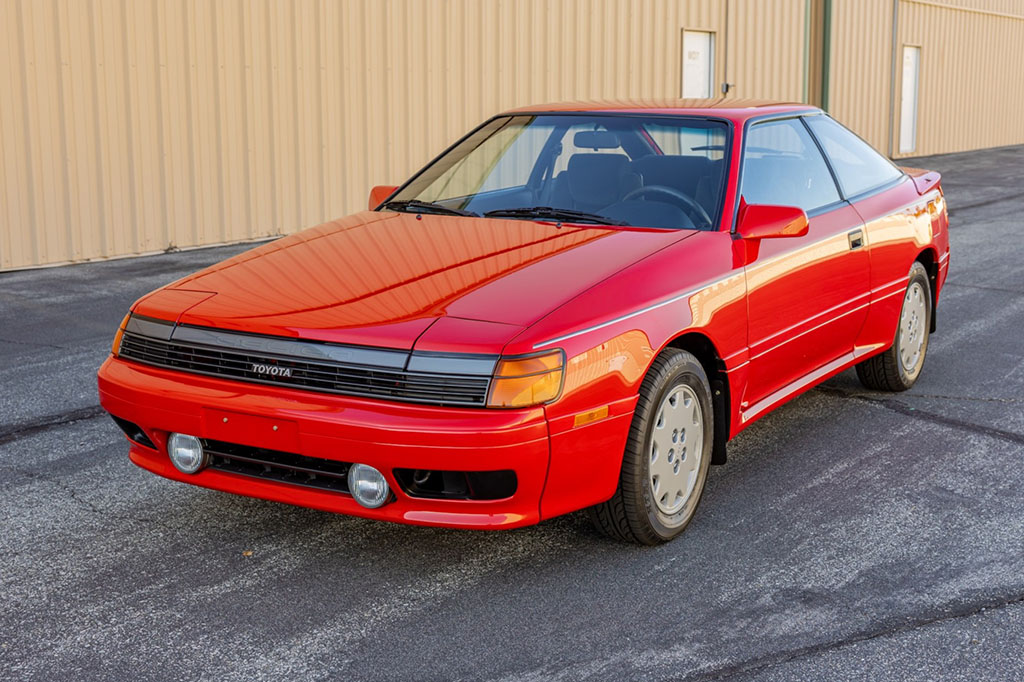
1988 Toyota Celica All-Trac Turbo
Toyota introduced the Celica GT-Four (ST165) to the Japanese market in October 1986. With full-time all-wheel drive, including an electronically controlled central locking differential, and a turbocharged version of the GT-S 2.0-liter engine (3S-GTE) making 190 hp, it was the “ultimate Celica” and gave the sporty and stylish but unassuming coupe World Rally cred. It immediately took its place as the flagship of the Celica range and became the official Toyota rally car for all years of production. It made its World Rally debut in the 1988 Tour de Corse and finished 6th. The first victory came in 1988 Cyprus (non-WRC), and the first WRC victory in 1989 Rally Australia. The GT-Four, with a revised viscous coupling central locking differential, began export in 1987 (1988 U.S. model year) and marketed in North America as the All-trac Turbo. Only 9,767 were built altogether and it’s believed that fewer than 3,000 were sold in the US, making the Celica All-Trac Turbo a relatively rare find. Rarer still is finding one with 15,687 miles and in the kind of condition one would expect from a well-kept two-owner car (“fantastic,” “immaculate,” and “impressive” a few of its descriptors). Its preservation includes the original window sticker, owner’s manual, and additional documents from new. It’s being offered here on Barn Finds Auctions where bidding closes tomorrow.
Other finds
- Original owner 1997 BMW 850ci 68,210 miles – $47,000
- 35 years owned 1979 Mazda RX-7 GS all original 78,00 miles – $13,000
- One of 337 1961 Chrysler 300G Convertible restored – $159,000
- 42 years owned 1981 Datsun 280ZX Turbo 22,731 miles – $16.999
- Highly original 1966 Buick Riviera 23,000 miles – $20,000
- One-owner 1996 Volvo 960 71,035 miles– $4,750
- 12,670-km 1968 Simca 1100 5CV highly original – $16,500
- Two-owner 1980 Chevrolet Camaro Z28 77,000 miles – $19,950
- 78,000-mile 1972 Toyota Corona Deluxe JDM museum display– $25,000
- Matching №s 1969 Ford Mustang Mach 1 full resto – $50,000
- Black-plate 1968 Triumph GT6 MK1 highly original – $23,999
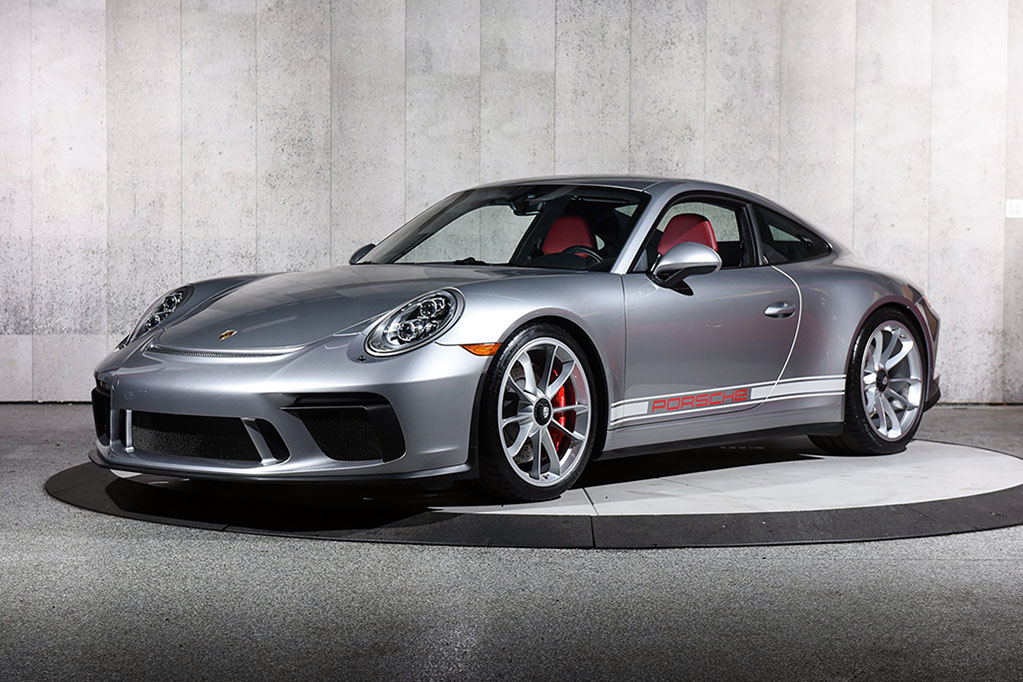
2018 Porsche 911 GT3 Touring
When introduced in 2018, the Porsche 911 GT3 Touring hit a sweet spot among enthusiasts: the same 500-hp 4.0-liter engine found in the track-focused GT3, but with a speed-activated rear spoiler in place of the fixed wing, giving the Touring a more sedate, stealthy mien. A 6-speed manual gearbox was the only choice offered in the Touring as well, emphasizing its roadgoing driver engagement. This Porsche 911 GT3 Touring, equipped with the Black Package, is one of approximately 370 to have landed in North America in the 2018 model year, and is of one of an estimated 63 to have been specified in GT Silver Metallic. Additional touches include white side stripes with red “PORSCHE” insignia and red brake calipers. It’s properly spec’d with a front axle lift system, Porsche Dynamic Light System (PDLS), dashboard trim in leather, full bucket seats, and Sport Chrono with the Porsche Track Precision App. Its cabin features Red leather with classic Pepita cloth inserts, as specified with the Exclusive Manufaktur option. Showing 9,332 miles at the time of listing, is being offered by Ryan Friedman Motor Cars in Glen Cove, New York for $275,000.
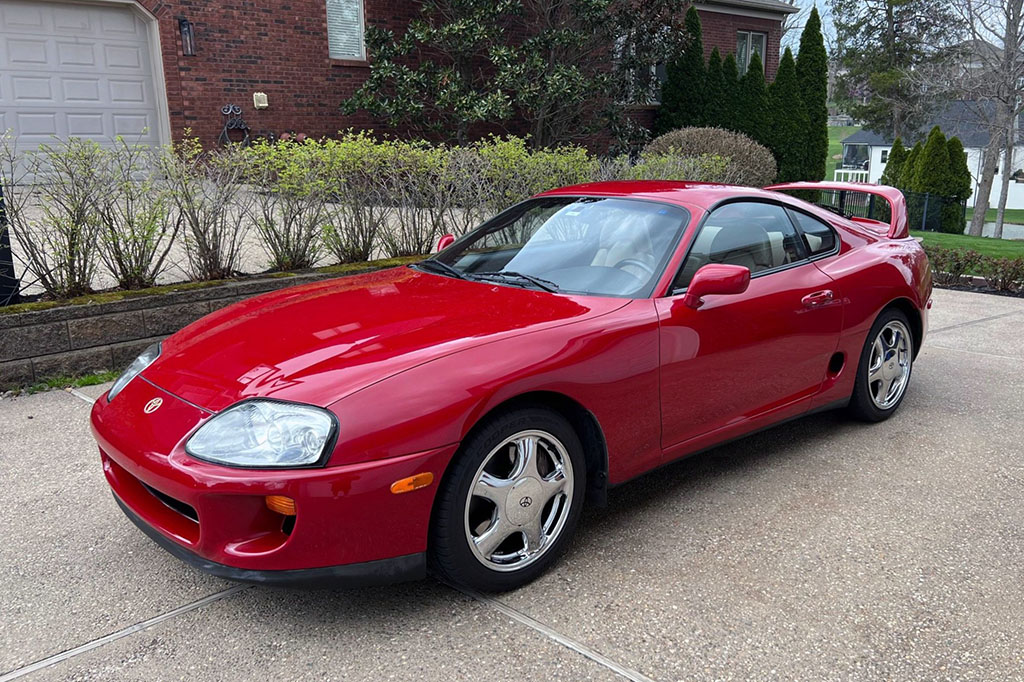
1994 Toyota Supra Turbo
The fourth-generation A80 Supra, introduced in 1993, marked a significant departure from its predecessor with an emphasis on performance. Generous use of aluminum brought the weight down by 200 lbs. while a 320-hp twin-turbocharged engine was introduced for the Turbo model. The Supra Turbo was not only formidable competition with Mazda’s FD RX-7 and even Acura’s NSX, but gave potential buyers Porsche’s 968 and 928 something to think about. It remains highly sought-after among car enthusiasts, many calling it “peak Toyota.” The A80 Supra Turbo was particularly sought after by the Fast & Furious set so finding one that’s largely unmodified is becoming increasingly rare This particular Supra Turbo is such an example. It’s only modifications are 17″ OEM style chrome wheels, Euro-style glass headlights, and a Viper alarm system. Furthermore it’s been in the care of its current owner since 1997 — an equally rare occurrence. It’s finished in Renaissance Red with the unmistakable rear spoiler. Some chips, scuffs, dings, and scratches have been noted, as well as exterior fading paint on top of driver’s side front quarter panel and a blemish on the driver side rear wheel. It’s otherwise a well preserved original body. Meanwhile the cabin is upholstered in Ivory Leather (la00) and is appointed with power-adjustable front seats, automatic climate control, a CD/Cassette player, and power-operated windows, locks, and mirrors. The drivers seat shows some cracking along with normal wear on both seats. The ”O/D OFF” light will flash intermittently in dash cluster, but the seller reports no mechanically related issue. The odometer shows nearly 93,000 miles, however it comes with an extensive service history. The higher mileage and 4-speed automatic gearbox will undoubtedly keep this Supra Turbo from reaching any 6-figure numbers, but should nevertheless give its next owner plenty of driving excitement with Toyota reliability. It’s a new listing on Cars & Bids out of Louisville, Kentucky.
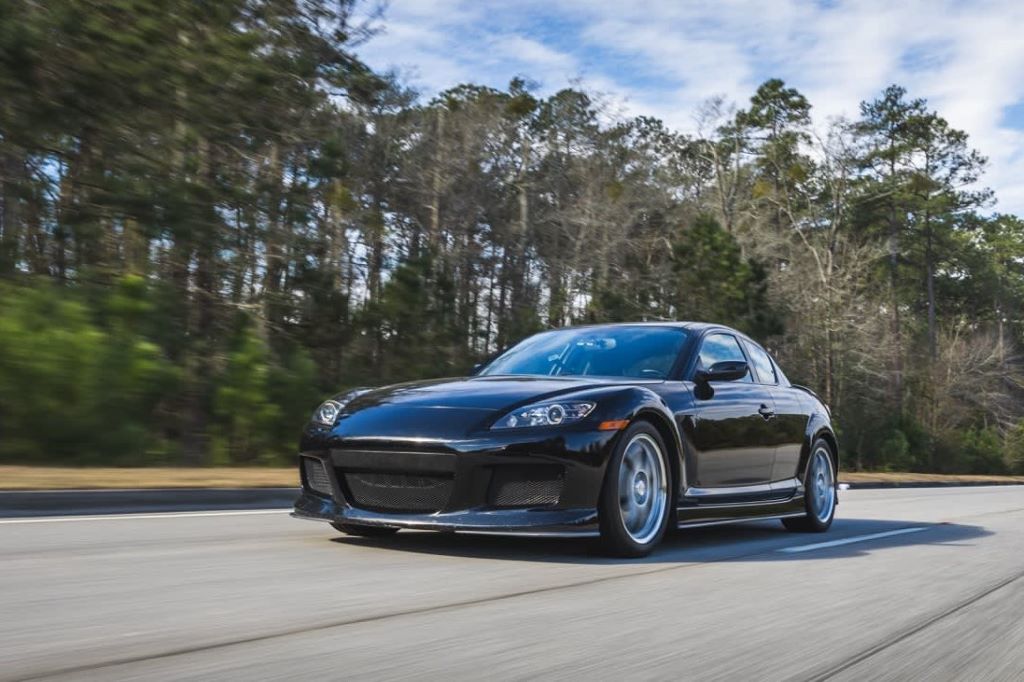
2004 Mazda RX-8
Let’s get this out of the way: The Mazda RX-8 is no RX-7. But it was never meant to be. In the same way that the RX-7 had little in common with the econo-sport RX-3, the RX-8 lets the RX-7 keep its place as the true sports car in the rotary-powered lineup, while still guided by the “zoom-zoom” principle of Mazda at the time. The RX-8’s twin-rotor rotary engine delivered an exceptional rev range and an impressively high redline. Its compact design allowed for less weight and a lower center of gravity, contributing to superior handling and balanced weight distribution. The RX-8 further set itself apart with its unconventional “freestyle” four-door coupe body style, providing practicality without sacrificing its sporty nature. It was driven by its rear wheels to achieve anear-perfect 50/50 weight distribution, which translated to remarkable agility and cornering precision. This example, finished in Brilliant Black over a black leather interior, was delivered highly optioned with a Rear Wing Spoiler, Grand Touring Package (self-levelling Xenon HID headlights, fog lights, DSC with traction control, limited-slip differential, 18″ inch wheels and tires, larger front brakes, sport-tuned suspension, 300 Watt Bose® nine-speaker audio system, power sliding glass moonroof, auto-dimming mirror with Homelink system, leather-trimmed upholstery, eight-way power driver’s seat, heated front seats with power lumbar support, heated mirrors). Taking inspiration from the Speed Source Race Engineering-built RX-8s, its first owner modified this RX-8 with a genuine Mazdaspeed body kit with factory wing, Tein Flex coilover suspension, SSR Comp H 18×8 wheels dressed in Michelin PS2 245/40 tires, Mazdaspeed rear strut brace, Mazdaspeed/Mazcare custom billet front strut brace, Mazcare custom adjustable rear swaybar, ACT Prolite Flywheel, Racing Beat Revi intake duct, Racing Beat Revi catback exhaust, and Indigo pulleys. Showing a modest 49,674 miles, this highly engaging 2004 Mazda RX-8 is listed on Hagerty Marketplace with 10 days left to bid.
Other finds
- 27,446-mile 1982 Ferrari 308 GTSi Azzuro/Cuoio, recent service – $85,999
- Highly original 1978 Porsche 911 Turbo 72,000 miles – $155,050
- 39 years owned 1985 Chevrolet Corvette 23,650 miles – $14,500
- One of 821 1975 Jaguar XJ12C light project – $20,000
- 754 actual miles 1989 Cadillac Coupe De Ville all original – $29,995
- One of four in US 1975 Lancia Beta Montecarlo 54,000 miles– $33,995
- Highly original 1961 Fiat 1200 Cabriolet 66,000 miles – $15,000
- Black-plate 1963 Plymouth Valiant Wagon two owners – $12,500
- 67,846-mile 1994 Porsche 968 Cabriolet extensive service history– $26,800
- One-owner 1976 Ford Elite 71,315 miles – $13,900
- 77,000-mile 1980 Chevrolet Camaro Z/28 two owners – $19,950
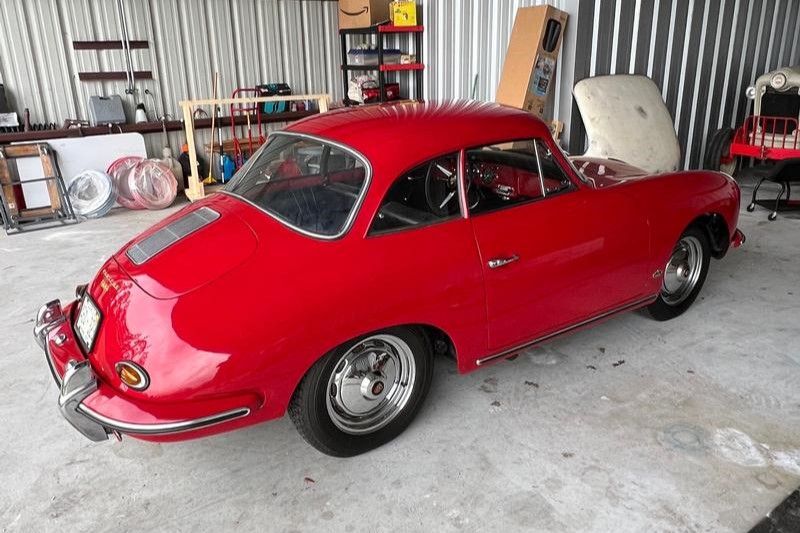
1962 Porsche 356 Karmann Hardtop
The Porsche 356 Karmann Hardtop or “notchback” as they are commonly referred to, were built by Karmann for Porsche for only two years during the 1961 and 1962 model years and are an interesting part of 356 history. The two model years are actually quite different with the 1961 model, built on the T5 chassis, starting from a Reutter cabriolet with a hardtop permanently welded to the body. The 1962 T6 models were built as coupes and received their roof structure during production of the rest of the body. This 356 Karmann Hardtop comes in between: titled as a 1962, but based on the T5 Cabriolet. It also comes with a great story. It starts with a couple of USAF airmen stationed in Germany. They bought two cars and after tooling around for a bit, shipped them back home to one of the airmen’s father, who registers them both and drives them until the airmen return home, eight months or so later. They collect their cars. One of them hangs onto his for 60 years before his passing a few months ago. It’s left to his son, who cannot drive the car due to a motorcycle racing accident that had left him handicapped. It’s now being listed for sale here on The Mart (Porsche Club of America classifieds) by a friend of both father and son, as well as being a longtime Porsche enthusiast himself. It’s said to be rust free and “lovely, clean and solid.” It’s had a repaint some years ago, but is otherwise original and unrestored, with a numbers-matching 1600 Super motor. With a documented 75,000 miles from new, it is accompanied by extensive service records and a Certificate of Authenticity. The 1962 Porsche 356 Karmann Hardtop is located in Palm Coast, Florida with an asking price of $200,000.
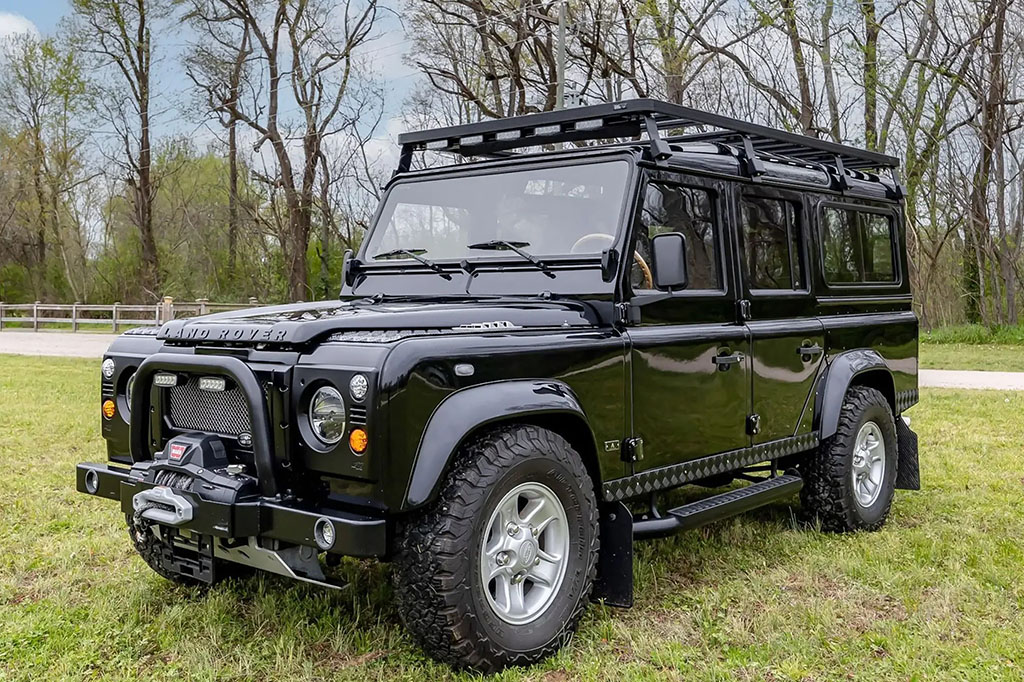
1984 Land Rover Arkonik 110
Located in Somerset, England, and Arkonik is highly regarded as one of the foremost Land Rover restorationists in the world. Upon being delivered to Arkonik, this inaugural year 1984 Land Rover 110 was completely disassembled before the original steel frame was put on a custom jig, carefully inspected, realigned, shot-blasted, fitted with a new cross member, etch-primed, and Raptor-coated for maximum longevity and durability. New body panels were then fabricated to exacting specifications and finished in Santorini Black. It features custom paint-matched wheel arch extensions, black diamond-plate trim, side steps, a KBX grille, headlight surrounds, and fender vents. Additional equipment includes a brush guard, a Warn winch, LED lighting, a front skid plate that covers the steering system and front differential, a Front Runner roof rack and ladder, rear parking sensors, black mudflaps, and an NAS-style rear bumper. It rides on 16″ Land Rover Boost wheels wrapped in BF Goodrich All-Terrain T/A KO2 tires. The cabin is is upholstered in Chestnut Brown leather and features full black carpeting and rubber floor mats, aftermarket diamond-stitched front and rear seats, inward-facing rear seats, a 3-spoke wood-rimmed steering wheel, and a black suede-style headliner. Amenities include front seat heating, an air conditioning system, a locking center console with USB ports, a Pioneer touchscreen head unit with a backup camera, a JL Audio amplifier, and a 500W inverter. The seller states to have replaced the gauges, the driver’s seat belt, heated seat switches, ignition lock and door lock assemblies, and USB ports in 2021. Arkonik SVO replaced the 110’s 3.5-liter V8 with a 430+ hp 6.2-liter LS3 taken from a sixth-generation Chevrolet Corvette, and is coupled with a GM 6L80 6-speed automatic transmission and a 2-speed transfer case. Additional equipment includes a custom air intake system, a custom exhaust, Old Man Emu suspension components, a Wilwood brake booster and calipers, Tarox brake rotors, and upgraded steering components. A POR-15 rust treatment was reportedly applied to parts of the underside in 2021 and the front pinion seal was replaced in May of 2021 as well as the rear pinion transfer case seal. Additionally, an oil change is said to have been performed in preparation for the sale. Fully sorted, it’s now open for bidding on PCARMARKET out of Lugoff, South Carolina with five days remaining in the auction.
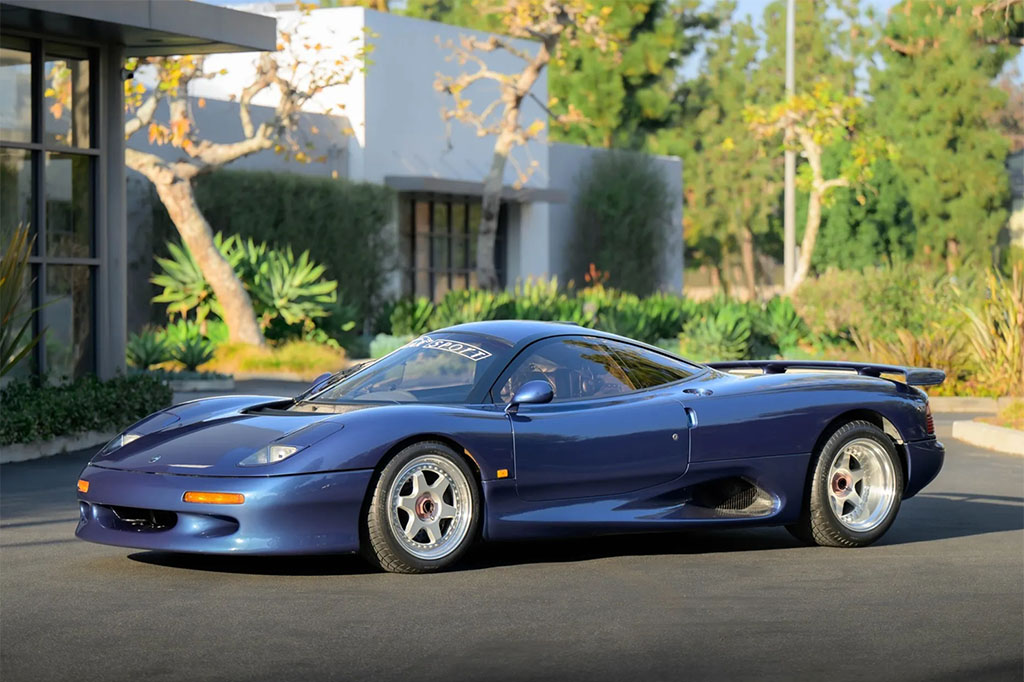
1991 Jaguar XJR-15
By the mid-to-late 1980s, Jaguar had honed the performance credentials of its XJR prototype racecar platform through various model iterations. This culminated with the XJR-9 and XJR-12, which won the 1988 and 1990 editions of the 24 Hours of Le Mans. This monumental success on the track would form the building blocks for what followed from Jaguar. Demand for a roadgoing version of the XJR-9 was apparent, and so the thundering, ground-breaking XJR-15 was birthed with development by JaguarSport. Employing a heavily tuned 6-liter, 450-horsepower version of the same V12 engine that brought Jaguar its recent victories, and with an approximately 2,300-lb curb weight, the XJR-15 possessed a race-bred power to weight ratio that outclassed all supercars of the era. The body was designed by Peter Stevens, who was also responsible for the McLaren F1, and was constructed with a unique carbon fiber and Kevlar composite. Notably, this was the world’s first roadgoing car to use carbon fiber in the construction of its body and tub. After undergoing development tests through 1990, the car was officially launched in November of that year, built by JaguarSport in a specialized facility in Oxfordshire. In a production run that would last until 1992, Jaguar Sport would build 50 production examples of the XJR-15. This 1991 Jaguar X-15, Serial number 008, is one of the 27 XJR-15s constructed for road use. It old new in Japan to respected collector Miura Shoji, where it was kept in a meticulously preserved state until being acquired by an American collector in 2018. After being imported to the United States in December 2018, the car is said to have been sent to Fast Cars Limited of Redondo Beach, California for a full fluid change and general mechanical checkup. The consignor acquired the car in 2022 and, in July 2023, treated it to another complete fluid change by Fast Cars Limited. Currently displaying just 78 miles, this meticulously maintained XJR-15 is available for private sale through RM Sotheby’s in Culver City, California
Other finds
- Longtime family owned 1989 Lotus Turbo Esprit 37,400 miles – $36,500
- 58,000-mile 1989 Mercedes-Benz 420 SEL highly original – $14,750
- One-owner 1997 Mitsubishi Eclipse GS-T Spyder 59,560 miles – $11,500
- Two-owner 1964 Chevrolet Corvette Convertible rare Saddle Tan – $61,900
- 34 years owned 1986 Porsche 944 Turbo 63,509 miles– $29,500
- One-owner 53,000-mile 1990 Jaguar XJS Convertible – $19,800
- 22,335-mile 1975 Chevrolet Cosworth Vega one of 2,061 – $15,999
- One of 400 1992 Lancia Delta Integrale Evo I under 4,000 miles – $259,000
- Single family owned 2008 Porsche Cayenne GTS 78,000 miles– $59,500
- Highly original 1978 BMW 320i two owners – $12,800
- Black-plate 1968 Volkswagen Type 3 Squareback 48,000 miles – $15,000
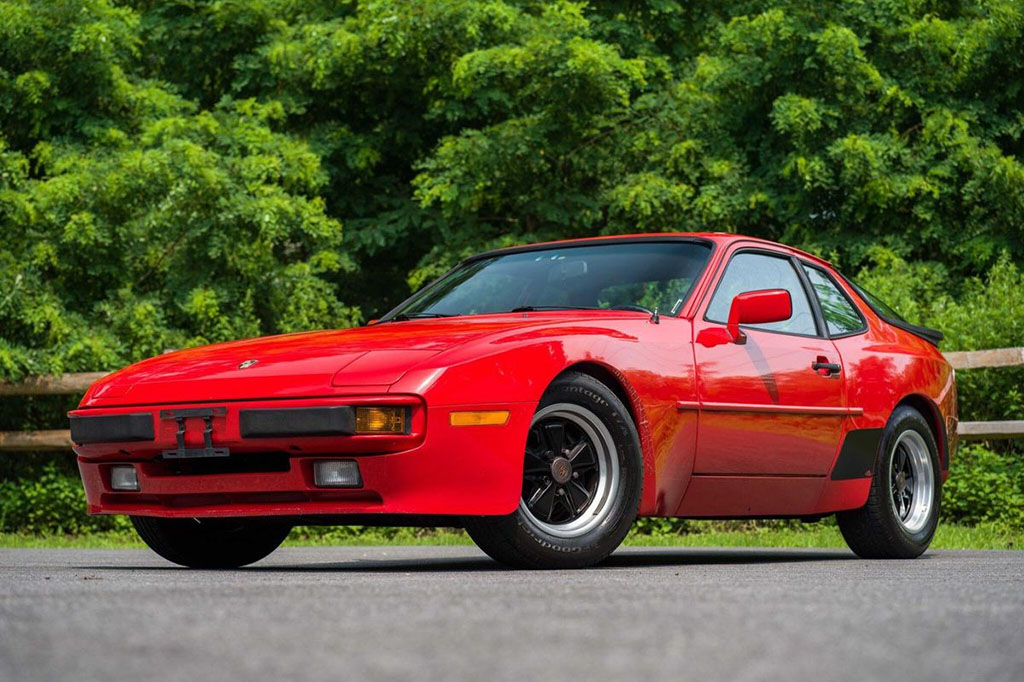
1984 Porsche 944
Although the body of the 944 was based on that of the 924, it was fitted with a 2.5-litre in-line four-cylinder engine developed by Porsche itself. This made the 944 a “real” Porsche in the eyes of customers. They were also hailed for their superb handling, aided by the lighter weight of the early models, and continue to be cited as one of—if not the best handling car ever. This 1984 Porsche 944, finished in its original Guards Red, was purchased on November 23, 1984 from Schneider+Nelson Porsche+Audi in Oakhurst New Jersey. It has covered a modest 21,623 miles by its one and only owner. Its Guards Red paint is said to be entirely original, kept in a climate control garage where it served as the “sports car” amid a larger collection. The cabin features the desirable sport seats in black leather. Other options include a 4-spoke steering wheel, 15” Fuchs wheels and side moulding. The 944 has been meticulously maintained with a documented history and is accompanied by service records from new as well as the window sticker and original manufacturer literature. Recent services include timing belts, balance shaft belts, water pump, spark plugs, and any additional essential components, conducted by technicians at a reputable franchise Porsche dealership. It’s now sorted and ready for its next driver or collector here on Craigslist in Deal, New Jersey with an asking price of $27,995.
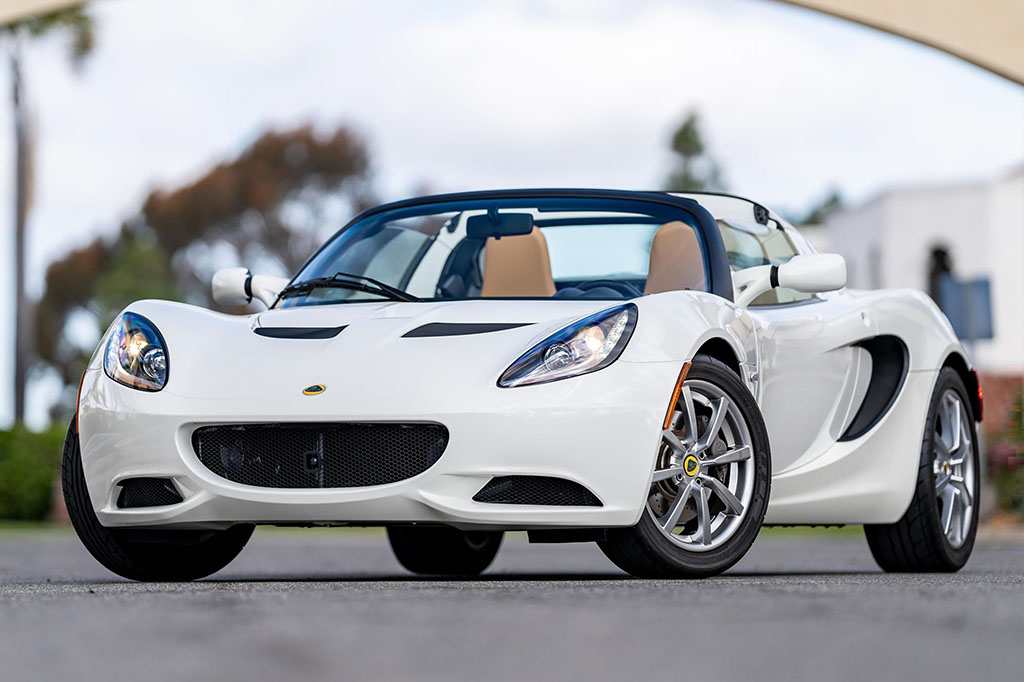
2011 Lotus Elise R
Introduced to the public in the Fall of 1996, the Lotus Elise firmly adheres to Gordon Murray’s “Simplify and Add Lightness” principle. It was designed as a pure driver’s car with an exceptionally balanced chassis along with only a handful of comfort and convenience features to keep weight minimal. Power comes from a reliable and rev-happy 190-hp 1.8-liter Toyota engine and is mated to a 6-speed manual transmission. This 2011 Lotus Elise R is a facelifted Series 3 coming from the final year that the Elise was offered here in the U.S. It’s finished in Aspen White over Biscuit and it features some nice equipment like the Touring Pack (leather upholstery, insulated soft top, additional sound insulation, carpet set), staggered alloy wheels (16″ front, 17″ inch rear), and air conditioning. It’s fitted with two desirable upgrades: a Lotus Sport exhaust system and a TRD high-flow air box. It was purchased new in April of 2012 and has remained with that buyer since, having covered only 4,300 miles, remarkable for such a driver-oriented car. In that time, it’s been maintained with a scheduled oil service as well as a replacement of its headlights, door sill plate/trim, and most recently a new battery. It’s now being offered on auction at Cars & Bids out of Newport Beach, California.
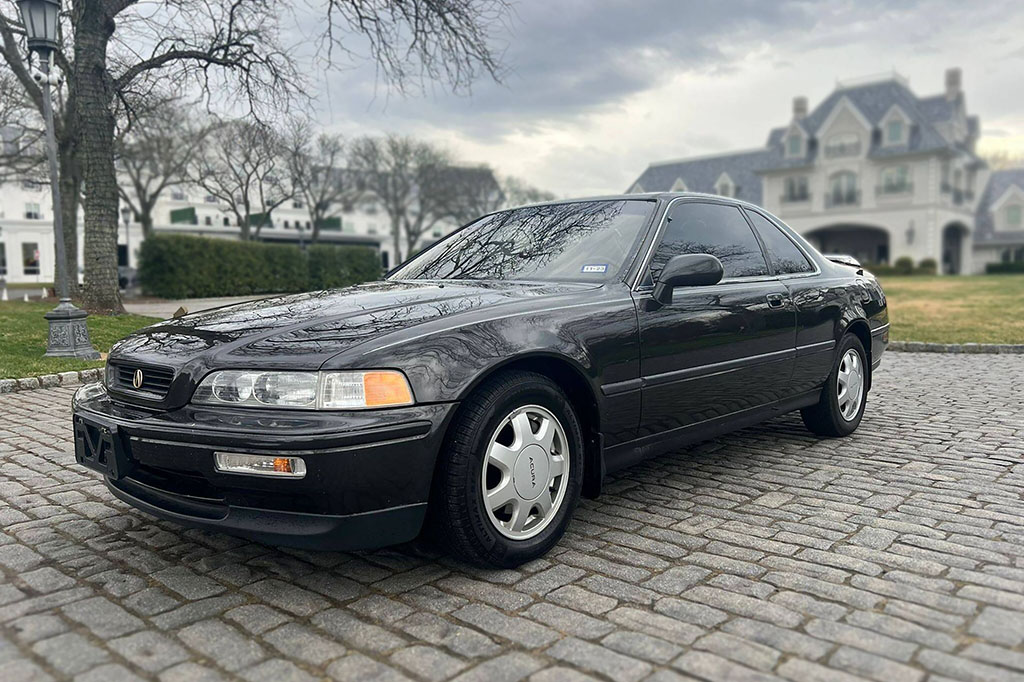
1991 Acura Legend Coupe
Honda introduced the Legend Sedan in North America for the 1986 model year as the flagship for its new Acura brand. A stylish two-door coupe came the following year. The second generation Legend Coupe (KA8) was larger and more streamlined. It offered a host of features seen on luxury cars of today including dual front driver & passenger airbags, speed-sensitive steering, hands-free telephone, automatic climate control, heated leather seats, heated mirrors, four-wheel ABS disc brakes, seatbelt pretensioners, and electric soft-close doors. This 1991 Acura Legend Coupe was built in January of 1991 and is finished in in Charcoal Gray Metallic paint. Minor dings, scratches, and paint chips are disclosed but is otherwise in very presentable original condition. The cabin is upholstered in Cream Ivory leather and appear to be in very good condition, as is the carpeting and headliner. The original audio system has been replaced by a Sony head unit with Bluetooth and Sirius XM but is otherwise highly original. Power comes from its original 202-hp 3.2-liters C32A SOHC V6 and is coupled with a 4-speed automatic gearbox. Recent service includes a new timing belt, a set of new spark plugs, and new struts. New axles were installed previously. Showing 82, 071 miles at the time of listing, this 1991 Acura Legend Coupe is open to bids at Hemmings Auctions with three days remaining.
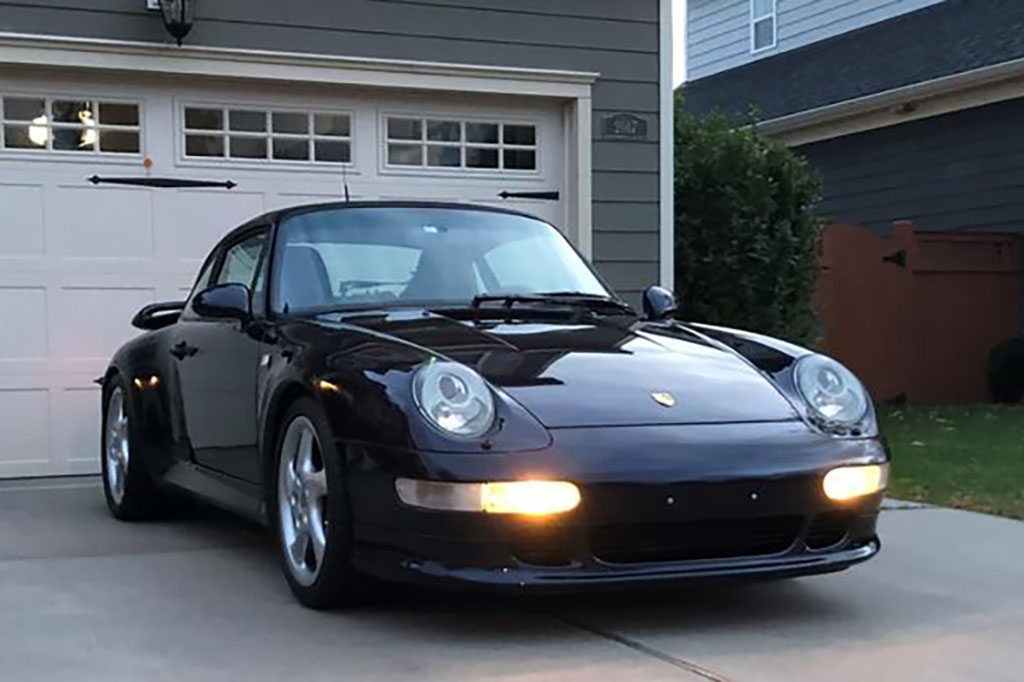
1996 Porsche 911 Turbo
The 993-generation 911 Turbo is considered one of the greatest supercars of all time, representing the last of the air-cooled Porsches. Delivering over 400 hp and nearly as much torques, combined with all-wheel-drive and road-holding aerodynamics in stock trim, the 993 Turbo could reach 60 mph in around 3½ seconds and lap the Nürburgring in just over eight minutes. But for some, that wasn’t quite enough. This 1996 Porsche 911 Turbo X50 was ordered with the X50 Power Kit as well as Aerokit front and rear spoilers, finished in Midnight Blue Metallic Pearl Effect over Black leather. After it was acquired by the second owner in 2000, it was shipped to RUF Automobile GmbH in Germany, where its twin-turbocharged 3.6L flat-six was fitted with the RUF Turbo R kit (larger RUF turbochargers, a RUF exhaust system, RUF ECU, and RUF camshafts). Horsepower is now bumped to over 500. The engine was overhauled by former RUF engine builder, Ali Acarsoy, in 2020. It has only been driven 350 miles since. Additional work done to the vehicle includes refurbished brakes, suspension, and wheels. In addition to the X50 Power Kit and Aero spoilers, this RUF Turbo R (Porsche VIN) has 19 Exclusive (formerly Sonderwunsch or Special Wishes) options including dark rootwood trim, extensive leather accents, heated seats with lumbar support for the driver, cruise control, sun/moonroof, and a Nokia DSP (Digital Sound Processing) audio system. Coming out of long-time ownership, this 66,700-mile 1996 Porsche 911 Turbo is now for sale here on The Mart (Porsche Club of America classifieds) at an asking price of $225,000.
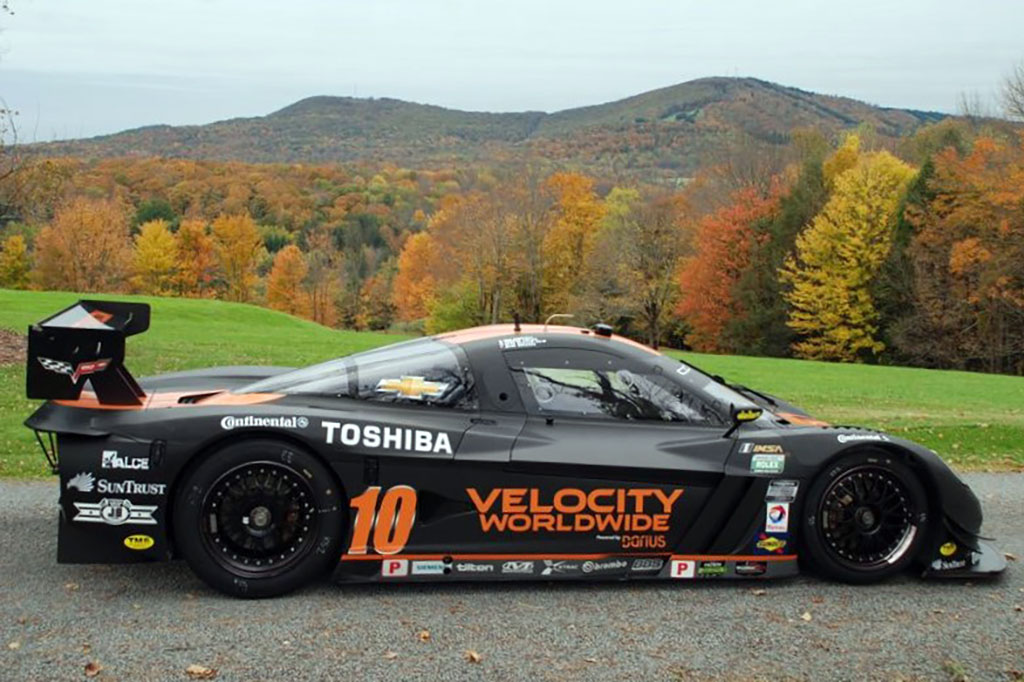
2013 Chevrolet Corvette Daytona Prototype
In Jaunary 2013, Wayne Taylor Racing, along with newly signed sponsor Velocity Worldwide, unveiled the № 10 Velocity Worldwide Corvette DP to compete in the Rolex Series that year. The season began with the the 51st running of the Rolex 24 at Daytona. In one of the storied race’s most exciting finishes, № 10 would go on to claim 2nd overall after being passed on lap 706 by Ganassi Racing’s BMW-Riley driven by Juan Pablo Montoya for the outright win. The Corvette DP remained strong throughout the Series, with five wins including the final race at Lime Rock Park, in which it beat Ganassi by 14 seconds for the championship. Today it continues to race with lap times in the lower mid 1:40s at Watkins Glen, equal to the race-winning times run by Max Angelelli / Wayne Taylor Racing in 2013. A large amount of information, photos, period press publicity including the Press Release Brochure in 2012 of the Pratt & Whitney design, development and construction of the DPi race car, as well as a substantial spare parts group accompany the sale. Initial transport, introduction, track support and operational instruction by an IMSA PRO Silver Rated driver / Instructor will also be provided. Find the original mid-engine Corvette here on Hemming’s Make Offer with a buy-now price of $585,000.
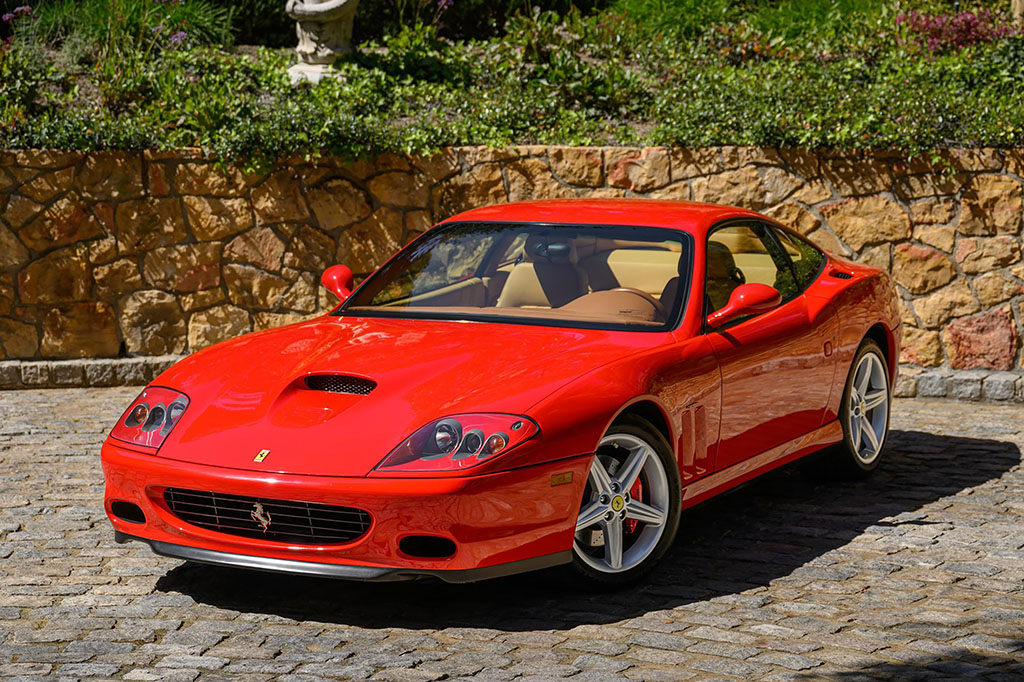
2003 Ferrari 575 Maranello
Introduced in 2002, the Ferrari 575M Maranello is a distinguished successor to the 550 Maranello, showcasing Ferrari’s dedication to both performance and luxury. With its potent V12 engine, it offers exhilarating acceleration and an impressive top speed, solidifying its status as a coveted classic among enthusiasts. Renowned for its timeless design, refined handling, and remarkable performance, the 575M Maranello continues to captivate automotive aficionados worldwide. This particular example touts just 12,800 miles and is finished in traditional Rosso Corsa with a beige interior. It also has some desirable factory equipment — like Daytona seat inserts — and it touts a sought-after Capristo muffler. According to service documents in the gallery, this 575M also benefits from a recent major service, which included a timing belt replacement, new tires, and “de-sticky-ing” of the interior plastics, among other items. It also has a recent smog certification and a clean, accident-free Carfax report showing warm-weather Southern and Western ownership since new. It’s a new listing on Cars & Bids out of Los Angeles.
Other finds
- Racer/mechanic-owned 1994 Porsche 968 6-speed 82,168 miles – $30,000
- 52,000-mile 1965 Chevrolet El Camino Protect-o-Plate – $26,500
- Highly original 1981 Toyota 4WD SR5 Black Special Edition – $21,500
- 52,564-km 1992 Citroën AX GTi Washington title – $9,500
- 44 years owned 1976 Ford Mustang II Cobra 26,184 miles– $30,000
- 55,600-mile 1996 Jeep Grand Cherokee ZJ 100% original – $12,500
- 45 years owned 1966 Porsche 912 Coupe everything original – $34,000
- 15,000-mile 1994 Dodge Viper RT/10 Series I – $44,000
- Frame-off resto 1959 Austin-Healey 100-6 rare BN6– $59,500
- 60,930-mile JDM 1998 Nissan Skyline R34 Sedan Florida title – $21,999
- Original owner 1967 Alfa Romeo Giulia Super 68,000 miles – $69,000
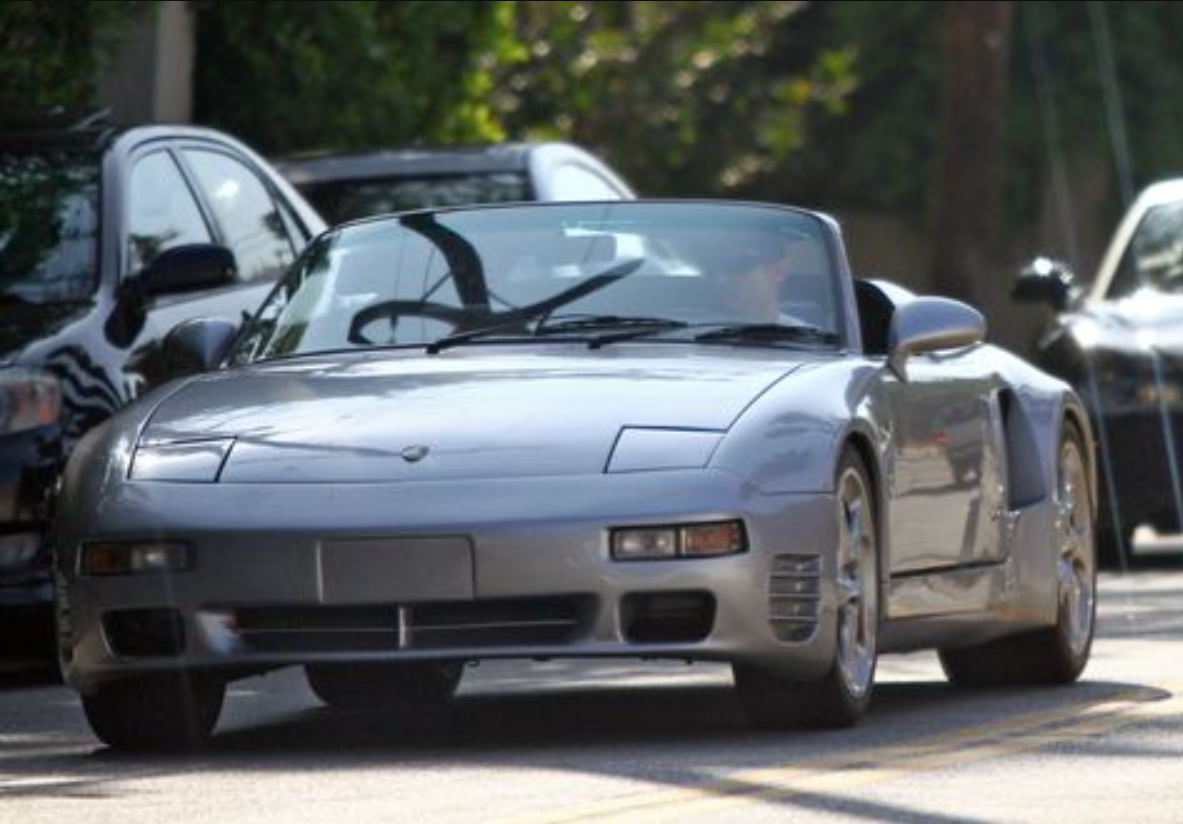
1991 Beach Boys Racing Monterey Speedster
No relation to Brian Wilson and company, Beach Boys Racing (BBR) was the endeavor of Bob Farnham, who raced Porsche 914 GTs in IMSA, and Venice Body Shop, both of Venice Beach, California. Beach Boys Racing harkened to a time when speed shops let loose their imagination and craftsmanship. That time, at least for BBR, will no longer be as Mr. Farnham retired in 2018 at the age of 78 in the face of advancing cancer before passing in November 2023. His Monterey Speedster (named for its debut venue in 1990) featured hand-formed all-steel bodywork, so no two were the same. 160 were slated to be built but only six are said to exist. One of them was customized for the actor (and collector of a reputed 200+ cars and trucks, and buses) Jeremy Renner over the course of nearly a decade. Starting with a rust-free 1973 Porsche 914 chassis, power comes from a 350 c.i. small-block Chevy V8 mounted amidship, breathing through dual 4-bbl carburetors, and mated to a 5-speed gearbox. 18″ Twist-style wheels are dressed in 225/40ZR18s in front and 295/30ZR18s in back. The interior features cloth and leather racing seats with 5-point harnesses, a MOMO steering wheel, and a RennShift (no relation) shifter. The car was bought by an assistant to Mr. Renner in 2019. A new radiator, tires, starter, shift linkage bushings, and alternator have been attended to under his stewardship. Citing room for new toys, this BBR Monterey Speedster has been listed for sale on Facebook Marketplace in Reno, Nevada with an asking price of $26,500.
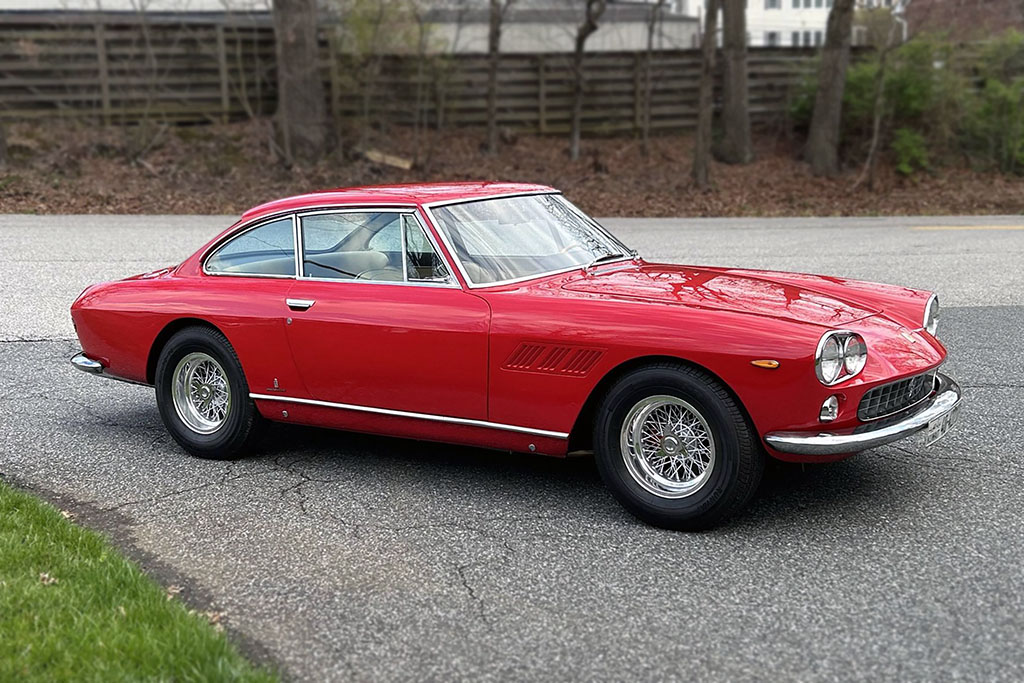
1964 Ferrari 330 GT 2+2
The 330 GT 2+2 was presented at the annual Ferrari competition pre-season press conference in January 1964 and unveiled later that year at the 1964 Brussels Motor Show. It replaced the 250 GTE, which ended its run with the 330 America, identical to the 250 GTE but with a larger 4.0-liter powerplant. The 330 GT 2+2’s distinctive Pininfarina design was influenced by the American market, where dual headlamps were de rigeur in the early ’60s. Its dual headlamps were canted with 7″ outers and 5″ inners. Perhaps looking too American, the dual headlamps were controversial and for the Series II cars, resorted to a single headlamp. The Series I 330 GT 2+2 thus had a relatively short lifespan, from 1963 to 1965. According to the marque expert Marcel Massini, only 503 were built. It was powered by the 296-hp Tipo 209 3,967cc SOHC V-12 Colombo engine carried over from the 330 America, coupled with a 4-speed synchromesh gearbox with electronic overdrive. Stopping power came from Dunlop disc brakes while a front independent suspension with coil springs and rear live axle with semi-elliptical leaf springs handled the bumps and curves. This 330 GT 2+2 car was delivered new in 1964 to Garage Francorchamps, in Brussels. It was purchased and imported to Los Angeles, California in 1973. It crossed the Atlantic again in 2018 and was treated to a comprehensive restoration by its owner in Kuwait. The current owner purchased the car earlier this year, bringing it back to Crownsville, Maryland. With the import and registration process completed, offers are now being accepted on Hemmings Make Offer, or buy it now for $245,000.
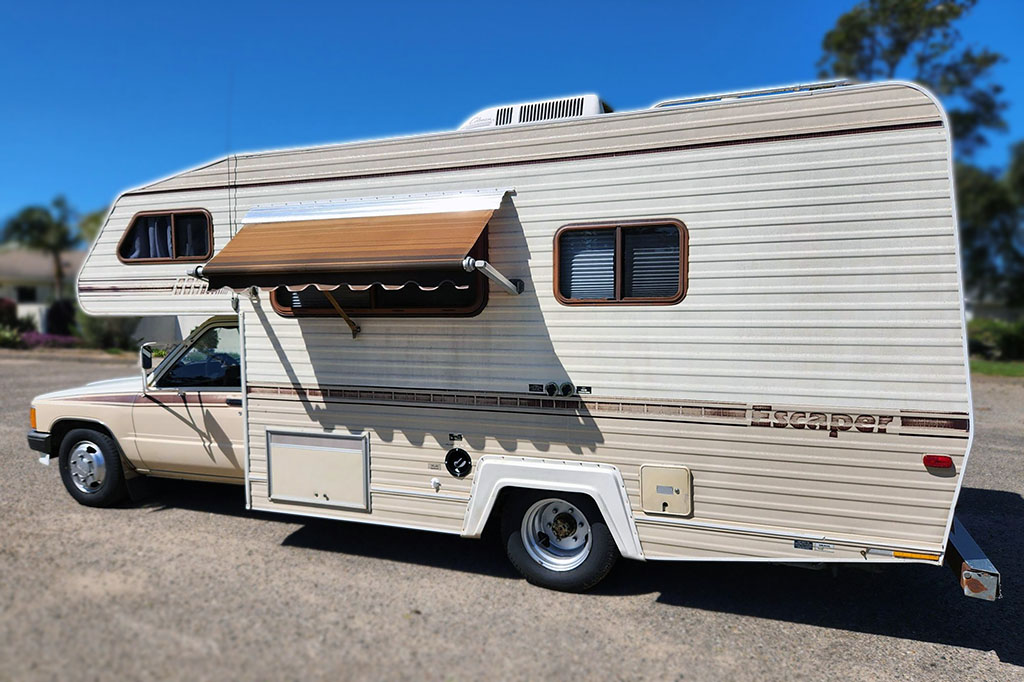
1987 Toyota Escaper
Responding to the growing market for recreational vehicles in the ’80s and ’90s—particularly in the US—Toyota offered a cab-chassis version of their pickup (Hilux) to RV manufacturers and in some cases offered them through select dealers. Many may be familiar with the pop-top Chinook, but there were full-sized campers as well, among them the Escaper, built by Damon Industries. Powered by the legendary 2.4-liter 22R 4-cylinder, the Escaper was far more economical than many of its domestic counterparts while its full aluminum frame construction kept it light enough (under 3,500 lbs,) to cruise highways and explore byways without holding up traffic. Its compact size (L: 16′2″ W: 6′4″ H: 8′6″) also made it manageable to park and maneuver in city traffic. A 4-speed automatic transmission was standard, as was in-dash air conditioning, power steering, and cruise control, along with many other “Damon Industries features you have to come to know.” How many of those features were retained in this 1987 Toyota Escaper, we may never come to know. It was completely gutted and remodeled in a very tasteful, modern way while maintaining its vintage appeal on the outside, an aftermarket exterior awning and a roof-mounted solar panel the only significant updates. Inside however, we find plush leather seating, a custom-made bar, aftermarket faucets, wood flooring, a Vizio television, a Pioneer touchscreen, a KICKER subwoofer, and a VDC Electronics battery condition indicator. Quality cabinetry, chic tilework, and rich upholstery combine for a small but spacious RV that’s appointed better than a lot of Manhattan apartments. Much of the work was done in June 2023. This Escaper was also relatively reserved in its escaping, having covered a modest 63,800 miles. Three cab door keys, two camper door keys, and one external storage compartment key accompany the sale, along with camper accessories like a coffee machine and kitchen utensils. This 1987 Toyota Escaper is ready to flee, however contacting the seller is advised regarding its California Planned Non-Operational (PNO) registrations status. Find it on Cars & Bids with five days remaining in the auction.
Other finds
- $42,500 in maintenance 2003 Porsche 911 Carrera 4S Fabspeed – $42,000
- Two-owner 1969 Mercury Cougar XR7 R Code 428 4-speed– $61,000
- One of 1,450 2002 Mercedes-Benz SL 500 Silver Arrow – $18,900
- 29,180-mile 1992 Chevrolet Corvette ZR-1 Street Skinner – $32,000
- One family owned 1992 Subaru SVX unmodified 64,700 miles – $12,500
- 30 years owned 1967 Fiat Dino 2000 Coupe $18,000 refresh – $46,995
- 28,827-mile 1985 Jeep CJ7 highly original– $37,500
- Two-owner 1967 Mercedes-Benz 250 SE 83,000 miles shown – $60,000
- 34,141-mile 1977 Cadillac Seville Triple Yellow – $29,900
- One family owned 1974 Datsun 260Z mostly original – $28,500
- 54,970-mile 2015 Porsche Cayenne Diesel warranty to 8/25 – $37,500
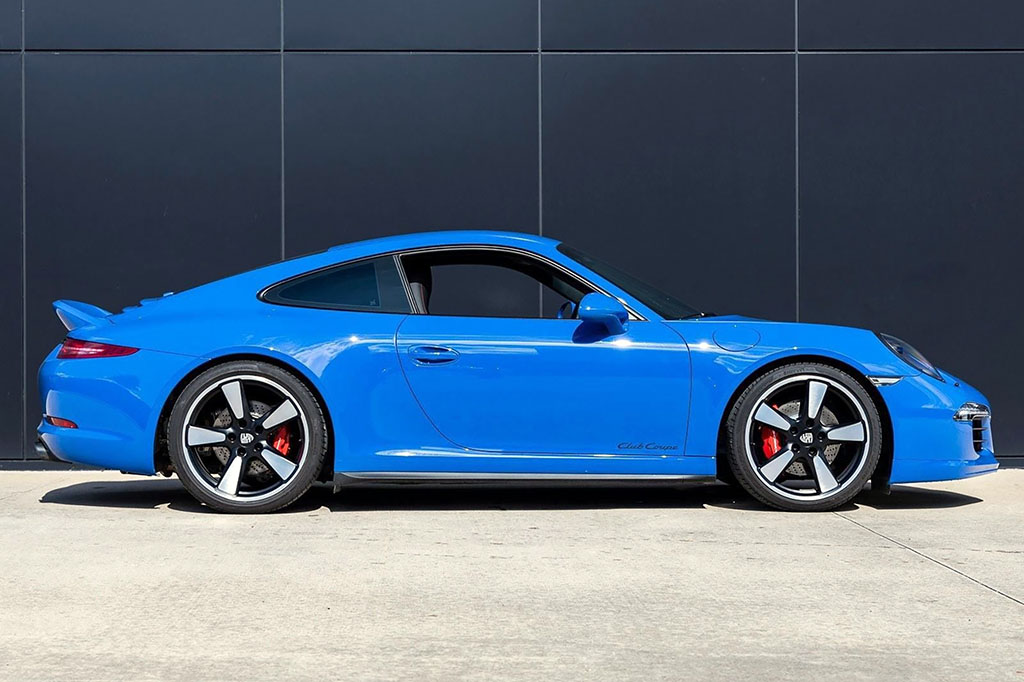
2016 Porsche 911 Carrera GTS Club Coupe
To commemorate the 60th anniversary of the Porsche Club of America (PCA), Porsche Cars North America (PCNA) ordered 60 units of the 991-generation Carrera GTS Coupes, just as they had with the 997 ten years prior to mark 50 years (with 50 cars). These are known as the Club Coupes. Starting with the driver-oriented GTS package (430-horsepower 3.8-liter flat-six, Sport Chrono, PASM, Sport Exhaust, Dynamic Engine Mounts, and Porsche Torque Vectoring), the Club Coupes received a few unique touches by Porsche Exclusive, like the special “Club Blau” paint, 20″ Sport Classic wheels, “Club Coupe” decals on the doors. Inside, the stitching, seat belts, and rev counter are in contrasting Carmine Red, while the dashboard trim strips, door trim and center console are finished in carbon fiber. The steering wheel has a Red 12 o’clock marker and two-tone stitching in Carmine Red and Blue. “GTS Club Coupe” is engraved door sills, the number “60” is embossed on the armrest cover, and the dashboard trim is personalized with “GTS Club Coupe 60 Years Porsche Club of America.” Being a 991, the Club Coupe is also among the last of the naturally aspirated 911s. This example has been admirably held to 1,139 miles when listed. Nevertheless, it has also been meticulously maintained with the 30,000-mile service complete. Modifications have been limited to PPF on the front surround and high impact areas as well as window tint, a back-up camera, and a PCM conversion to Apple CarPlay. It’s fitted with a proper 7-speed manual gearbox and optioned with a personalized indoor car cover. This 2016 (build date November 2, 2015) Porsche 911 Carrera GTS Club Coupe is now for sale on Rennlist Marketplace out of Chester Spring, Pennsylvania for $163,000.
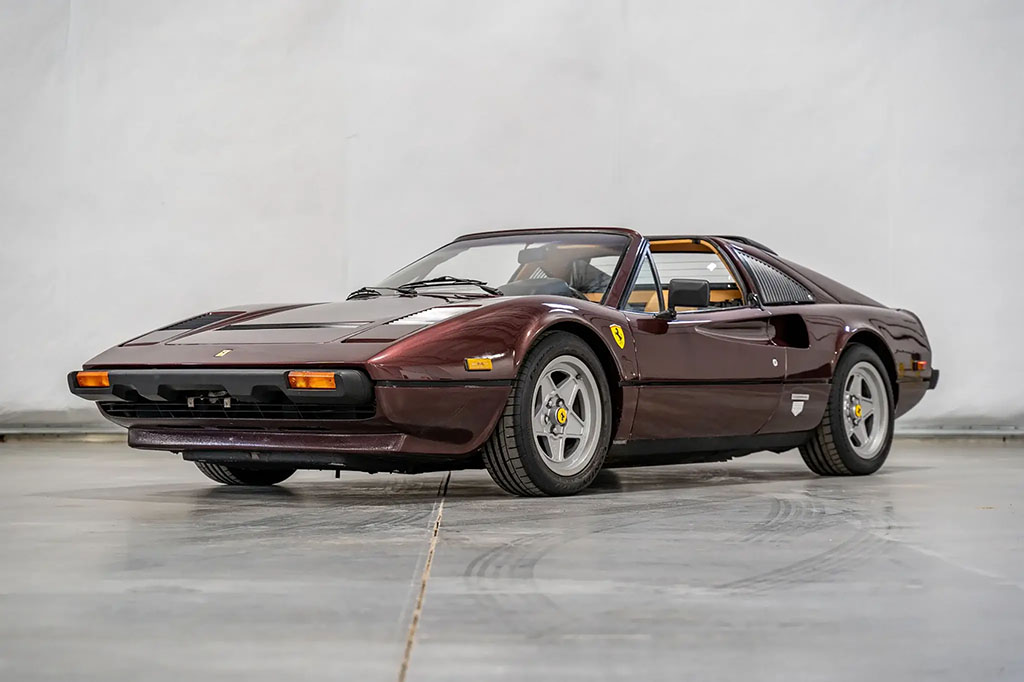
1985 Ferrari 308 GTS Quattrovalvole
The 308 GTS remains one of the most quintessential and popular Ferraris of all time. Over 12,000 were sold, the most of any Ferrari in the pre-Montezemolo era. They are supercars that aren’t super-fast like a contemporary Porsche 930, or super-deft like the 944, but that was hardly the point. Looking great and sounding great is where the 308s always shined and they continue to do so. Most it seems were the Magnum P.I. Rossa Corsa over tan, which adds to the iconic image, but also makes other more striking colors stand out that much more. Case in point, this 1985 Ferrari 308 GTS Quattrovalvole (QV) finished in stunning Prugna (Plum). It is said to be one of only 19 US-market Prugna examples that year. As a 1985, its body panels have been coated in Zincrox for better rust protection, while its side mirrors were reshaped and exhaust shrouded. It was optioned with air conditioning, though it reportedly fails to blow cold. Other flaws noted are some light scratches and blemishes, along with one small spot of spider cracks on the corner of the rear driver’s side quarter panel and a dimple on the front hood, a result of being pressed on the hood support. Inside, the tan leather shows very well, however some clouding is noted in the center console clock as well as a gap in the carpet/trim near the passenger door and a small tear in the edge of the vinyl cover for the Targa top. It promises to be mechanically fit, with a major engine-out service completed shortly before the previous owner’s purchase in 2019, which included new timing belts and tensioners, an alternator belt, a water pump belt, fuel lines, coolant pipes, and breather hoses. Previous service included all new shocks and springs. The current owner performed an additional major service in November 2021 which included fluid changes and attention to the transmission selector shaft seal, exhaust gaskets, spark plug wires, ignition rotor, tensioner bearings, and engine belts and bearings. A new water pump and a new rubber gasket and struts for the trunk were also installed. A year later, a new temperature sender and fuel injectors were installed, followed by new fuel hoses, all performed by a marque specialist. With one set of keys, a toolkit, a spare tire, a car cover, the original suspension, a straight mid-pipe, a replacement light kit, a fire extinguisher, and an auxiliary frunk light, this 1985 Ferrari 308 GTS QV is a new listing on PCARMARKET out of Denver.
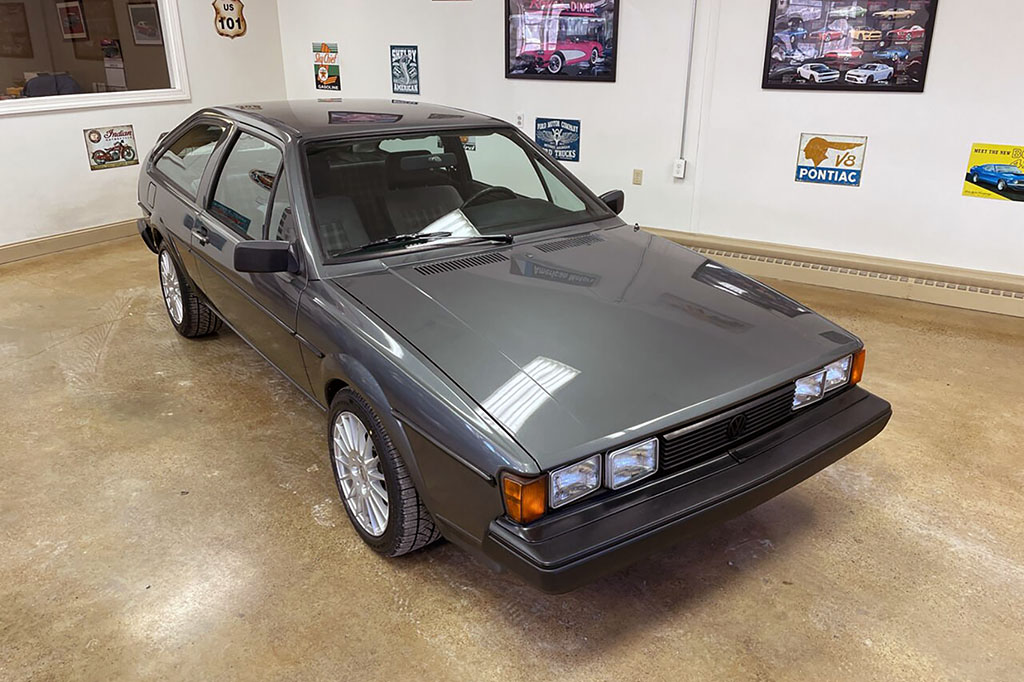
1982 Volkswagen Scirocco
Since its introduction, the Volkswagen Scirocco, named after a Mediterranean wind, has swept journalists and enthusiasts off their feet. Its fun-to-drive aspect way beyond expectations from what was essentially the Karmann-Ghia’s front-wheel-drive successor. Crisp handling, precise steering, and a low center-of-gravity put in a league with contemporary Alfa Romeos and Lancias, not to mention the Porsche 924, initially co-developed by Volkswagen to assume the slot of “sports car.” The Mk2, introduced in 1981 for the 1982 model year, carried on that spirit in a sleeker, more rounded Guigiaro-penned and Karmann-built body. This 1982 Volkswagen Scirocco has been owned by a single family and driven 92,079 miles since new. It’s finished in a timeless Cirrus Grey Metallic showing only minor blemishes. Aftermarket 15″ Rial wheels are dressed in fresh-looking 195/50 Falkens. Power is provided by its original fuel-injected 74-hp 1.7-liter 8-valve motor (no 16V swap) mated to a five-speed gearbox. It has received a new timing belt, water pump, spark plugs, and fuel filter within the last 5,000 miles. This 1982 Volkswagen Scirocco is now offered by the selling dealer on Auto Hunter with an owner’s manual, service manuals.
Other finds
- By appointment to QEII 1967 Daimler Sovereign 34 years owned – $10,000
- 29 years owned 1984 Alfa Romeo GTV 6 2.5 97,931 miles– $29,000
- Two-owner 1988 Ford Thunderbird Turbo Coupe 41,245 miles – $11,800
- Highly Original 1959 Edsel Villager 66,000 miles – $22,500
- Handcrafted 1923 Peerless 66 Speedster illustrious history – $59,500
- One of 3,913 1969 Porsche 912 Coupe refurbished, big bore – $55,000
- One-owner blue-plate 1979 Peugeot 504 Diesel – $9,000
- Two-owner 1978 Ford Pinto 63,347 miles – $9,500
- Highly original 1971 Jaguar XKE Roadster 19,950 miles shown – $90,000
- 33 years owned 1971 Chevrolet Corvette 350 Turbo-fire 4-speed – $26,500
- 39,200-mile 1995 Mitsubishi 3000 GT SL 6-speed– $19,995
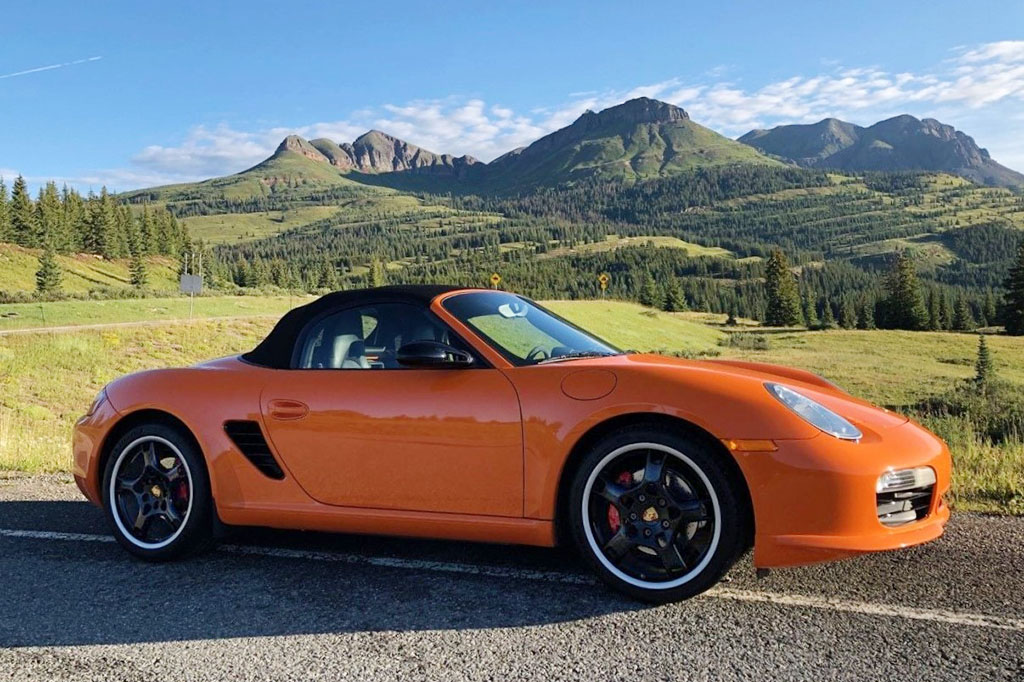
2008 Porsche Boxster S Limited Edition
At the 2007 New York Auto Show, a design exercise created by Splashlight Studios captivated press and public visiting the Porsche Lounge (remember when Porsche, Rolls-Royce, and even Volkswagen all had lounges at the auto show?). The design exercise featured a 987 Boxster S bathed in bright orange paint (previously found on the 997 GT3), complemented by a black top, black side mirrors, black air inlets, and silver-lipped black 19″ 5-spoke wheels. So favorable was the response, Porsche made the decision to put the car into limited production for the 2008 model year. 250 were made in base trim and 250 in S trim. Both featured standard items like the SportDesign package (a front spoiler extension, a redesigned automatically extending rear spoiler, and a modified rear undertray with an integrated diffuser), a sport exhaust, and safety bars (painted orange). The interior meanwhile was kitted with the three-spoke steering wheel from the GT3 RS, clad in Alcantara, as were the seats inserts and parking brake, and, naturally, trimmed in orange. This example is № 147 of the 250 Boxster S Limited Edition models. It is said to be immaculate inside and out, showing around 21,000 miles, 3,000 of which have been clocked by the current owner since 2021. Modifications have been limited to a Softronic software tune (bumping max power to 315 hp , while increasing torque to 268 lb-ft.) and recent PPF applied to the hood and rockers. Maintenance is said to be up to date, with service records dating back to 2010. New Michelin Pilot Sport 4S rubber replaced the car’s original tires at 18,300 miles. This 2008 Porsche Boxster S Limited Edition is ready to be enjoyed (and undoubtedly seen) here on The Mart (Porsche Club of America classifieds) for $48,500.
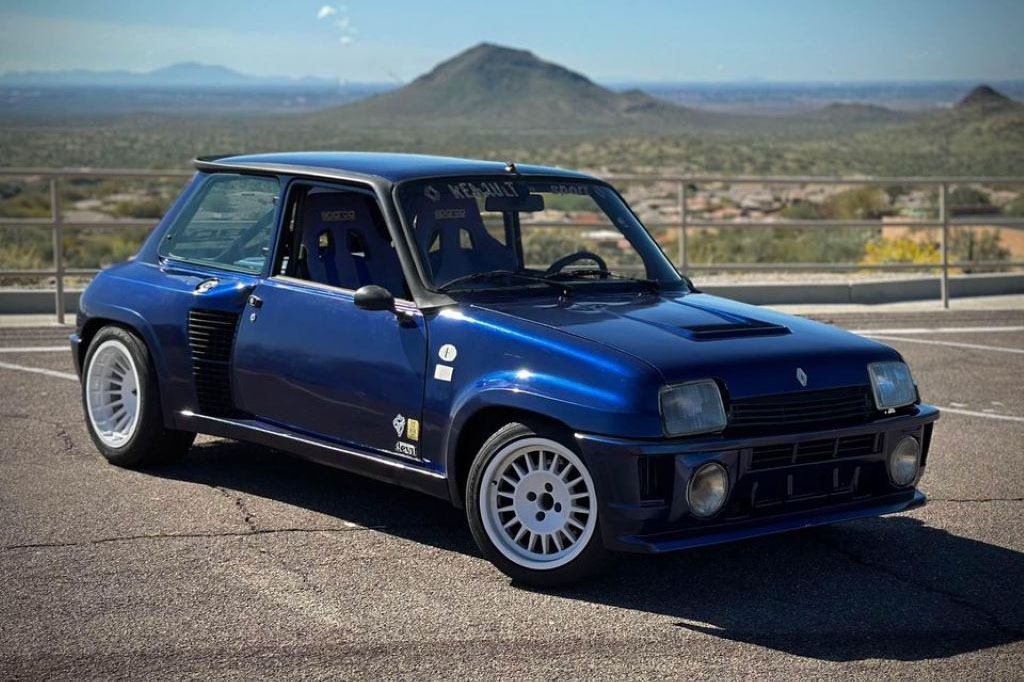
1984 Renault R5 Turbo 2
The Renault 5, introduced in 1972, was on its own turf a stylish and quirky, albeit innovative, little hatch. With 5.5 million sold between 1972 and 1986, it remains France’s most popular car. But in the face of a relatively small dealer network and broader competition from the Volkswagen Rabbit and Japanese makes like the Honda Civic and Toyota Corolla, the R5 didn’t fare so well when it was brought to the US in 1976. Renaming it “LeCar” a year later did little in allowing it to be taken seriously. It’s no surprise then that the US was snubbed when the R5 Turbo—a homologation special with a turbocharged 1.4-liter engine stuffed into where the rear seats would have been—was introduced to other markets in 1980. The R5 Turbo was unanimously described as bonkers. It was intended for expert rally drivers, winning the 1981 Monte Carlo rally on its first outing. But, as with other homologation specials like the Porsche 911 Turbo Carrera, it would unapologetically send more lay drivers into ditches, trees and other misfortunes. Even so, it remains an automotive legend and always nice to see on the market. This 1984 Renault Turbo 2 (the second-generation, only slightly more refined than the first) was imported from Japan in 2022. Originally a red car, it was repainted in its current dark metallic blue, but is said to be “not the best respray.” It has been fitted with a roll cage and has the Renault Sport 185-hp turbo upgrade kit. The electrical system has been refinished, with new rear lights. Group B-style wheels have been added and dressed in fresh tires. Currently showing 26,500 kms (~16,500 miles) it is reported to drive “great” and the listing’s video supports that. A new fuel pump and air filter were recently installed, however the fuel level indicator is disclosed to be inoperable. Now titled in Arizona, it’s for sale on Facebook Marketplace for $75,000.
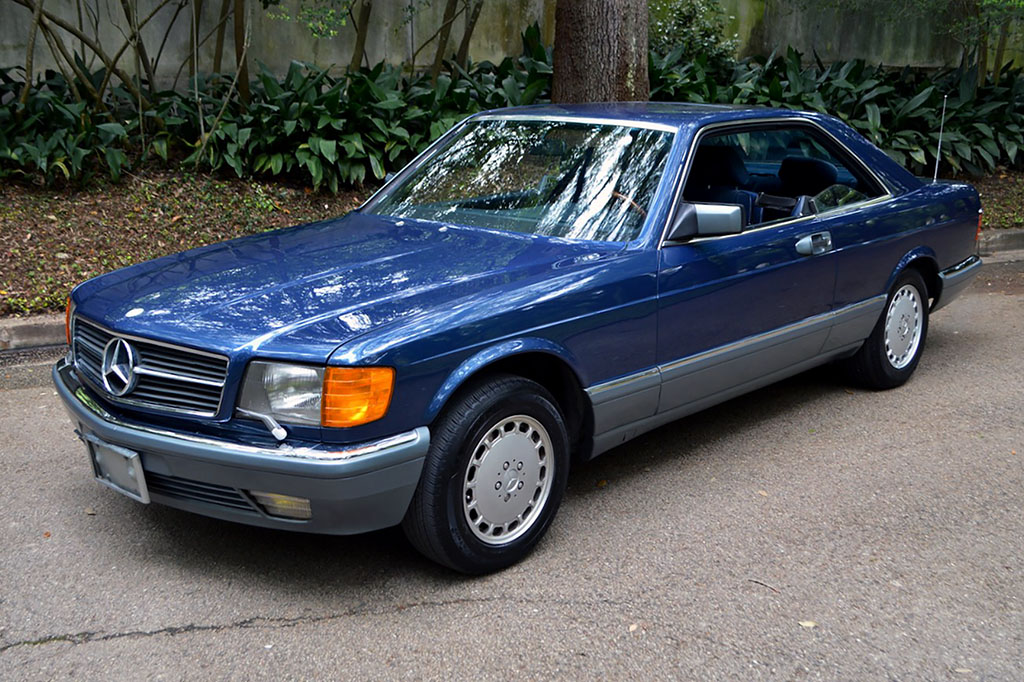
1986 Mercedes-Benz 500 SEC
There are few cars that have aged as gracefully and elegantly as the 126-bodied Mercedes-Benz S-Class. Particularly the sleek SEC coupé, equally at home valet parked in front on a Saturday night as it is on a drive to the country the following day. The styling follows a onetime Mercedes-Benz ethos that their car were built—overbuilt in many cases—to last, the unmistakable thunk of the SEC’s big doors closing. An alluring color makes it all the more enduring and the Nautical Blue Metallic of this example is very alluring. It’s complemented by a Blue (972) interior, and as a European-market 500 SEC, it is upholstered in rich velour (US 560s of the same era were leather or on rare occasions MB-Tex). The 500 SEC is also powered by the unrestricted 5.0-liter M117, one of the most sought after engines with power on par with US 560s while 300 lbs lighter. This 1984 500 SEC was ordered new for the Spanish market before export to the United States in 1987. It was acquired by the seller from the original importing family in 2018. Since importation, the car has remained registered and driven in Texas. Equipment includes original gullideckel wheels, automatic climate control, a power sunroof, heated front seats, JVC head unit, and cruise control. Fresh service includes a new battery, spark plugs, distributor cap and rotor, fuel pump, EHA valve, an oil service, and full dry ice detail of the undercarriage. Prior service included a transmission rebuild in 2023, replacement of AC control unit and AC recharge in 2022, and a new headliner in 2020. The original tool roll, original steering wheel, original radio, and a spare wood shift knob accompany the sale. Showing 66,091 miles at the time of listing, its on The MB Market out of Houston with eight days left to bid.
Other finds
- 64,683-mile 2004 BMW 330ci 6-speed – $20,000
- Freshly serviced 1998 Ferrari 456 GTA 12,800 miles– $82,000
- Two-owner 1994 Lexus SC 400 38,567 miles – $22,000
- Highly Original 1965 Volkswagen Beetle rare Sea Blue – $21,950
- Jack Carter’s (Jimmy’s son) 1986 Rolls-Royce Silver Spur – $33,000
- 63,242-mile 1962 Morgan Plus Four well preserved – $39,950
- 1972 Honda Z600 1,000 miles since resto – $18,000
- Two-owner 1993 Mazda RX-7 38,000 miles – $65,000
- 1 of 2,500 1983 Pontiac Trans Am Daytona pace car 44,978 miles – $14,000
- 71,000-mile JDM 1996 Nissan Rasheen factory AC – $10,000
- 1 of 801 1969 Porsche 912 Targa soft-window, second to last 912– $65,000
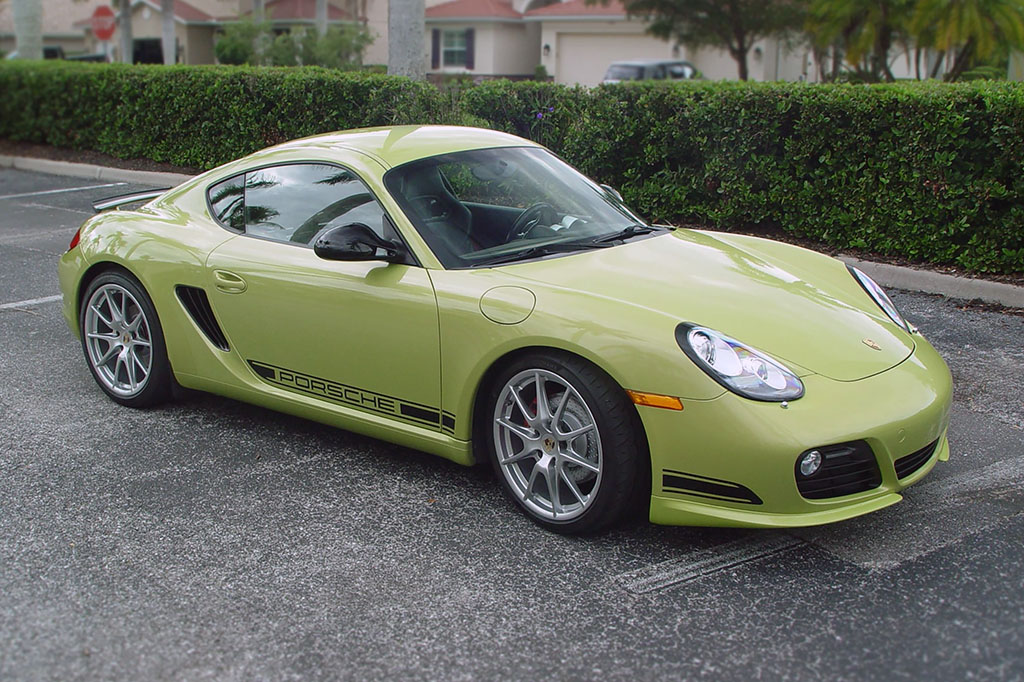
2012 Porsche Cayman R
The recent announcement from Porsche that after a 28-year run (second only to the 911), the Boxster and Cayman will no longer be sold in Europe (for cybersecurity reasons) will no doubt fan the flames of those with a burning desire to categorize the mid-rear-engined sports cars as collector’s items. The market, so far anyway, has remained flat, save for a few outliers like the recent sale of a highly modified Carrera GT-inspired 986 with unknown mileage fetching $22,500 plus fees (a six-month high according to the Stuttgart Market Letter). What has remained consistent is that premium value lies in spec. This 2012 Cayman R is one of 1,421 987-gens made worldwide, with 563 of those landing on US soil. While only 10 horsepower more than a comparable Cayman S model, when combined with its lighter weight (121 lbs., gained by swapping metal door handles for canvas pull straps, no steering wheel controls, lightweight sport seats, and aluminum doors) and 20-millimeter lower ride height, the Cayman R makes for the kind of driving purity that many felt had been lost in the 911’s evolution. It’s finished in Peridot Metallic, one of the Cayman R’s marquis colors and, love it or hate it, it stands out. In addition to the standard features of the R (19” Spyder wheels, Sport Chrono, carbon bucket seats, bi-Xenon headlamps, front splitters, and a fixed rear wing), this Cayman R has the added AC and radio options (at no-cost, otherwise deleted to save weight). The radio has since been replaced with an aftermarket unit that includes navigation and a backup camera. Other modifications noted are a Carnewal exhaust and GT3 master Cylinder. Showing just under 37,000 miles at the time of listing, this 2012 Porsche Cayman R can be found on the Rennlist Marketplace out of North Fort Meyers, Florida with an asking price of $71,490. Optimistic perhaps for a PDK example, but maybe a bargain looking back 10 years from now.
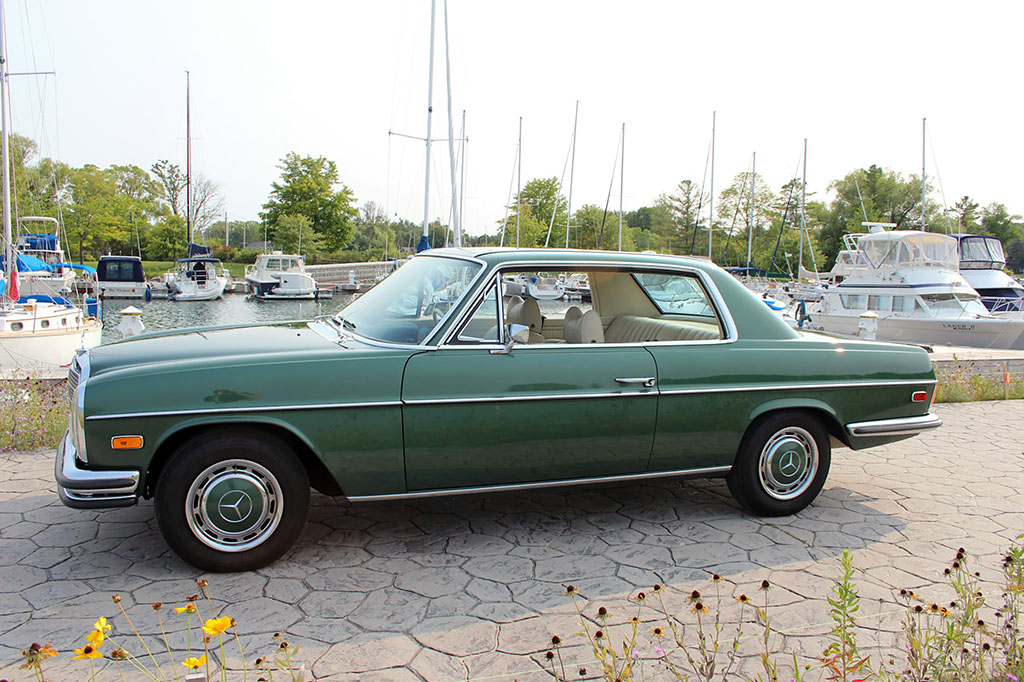
1969 Mercedes-Benz 250 CE
The Mercedes-Benz W114, generally regarded as the first E-Class, remains an icon for its durability and engineering. They were among the first Mercedes-Benz models to drive beyond a million miles. The 250 CE is a coupe variant of the W114, produced from 1968 to 1972, replaced by the facelifted 280 CE in 1973 (the model that began the Mercedes-Benz tradition of a midlife facelift). A total of 21,787 examples of the 250 CE were built. This one, from 1969, is believed to be a German market example, fitted with desirable cathedral headlamps and rear fog/parking light. It is finished in an exceptionally well preserved Moss Green Metallic (934), showing only minor flaws in the original paint, with matching wheel covers on 14” steel wheels dressed in proper XAS Michelins, dated 2019. The Parchment MB-Tex interior shows no rips, tears or crackling. The headliner has no sags and looks new. The optional power sunroof was upgraded with a new drive motor and operating cable. The 280 CE retains its original Becker Grand Prix radio with the optional power antenna, as well as the factory Ivory steering wheel. Every switch, button, factory-installed lever, and instrument is said to work as original, save for the clock which has been replaced with a correct VDO tachometer. It’s powered by a 150-hp 2.5-liter M114 inline-six-cylinder with Bosch D-Jetronic fuel injection (the first Mercedes-Benz to feature electronic fuel injection), mated to a rare and highly desirable 5-speed gearbox. Currently showing 111,614 km (~69,000 miles), this Mercedes-Benz 280 CE is said to have been stored for winters and used as a daily during the summer. It’s now for sale here on Hagerty Marketplace for a reasonable $23,000.
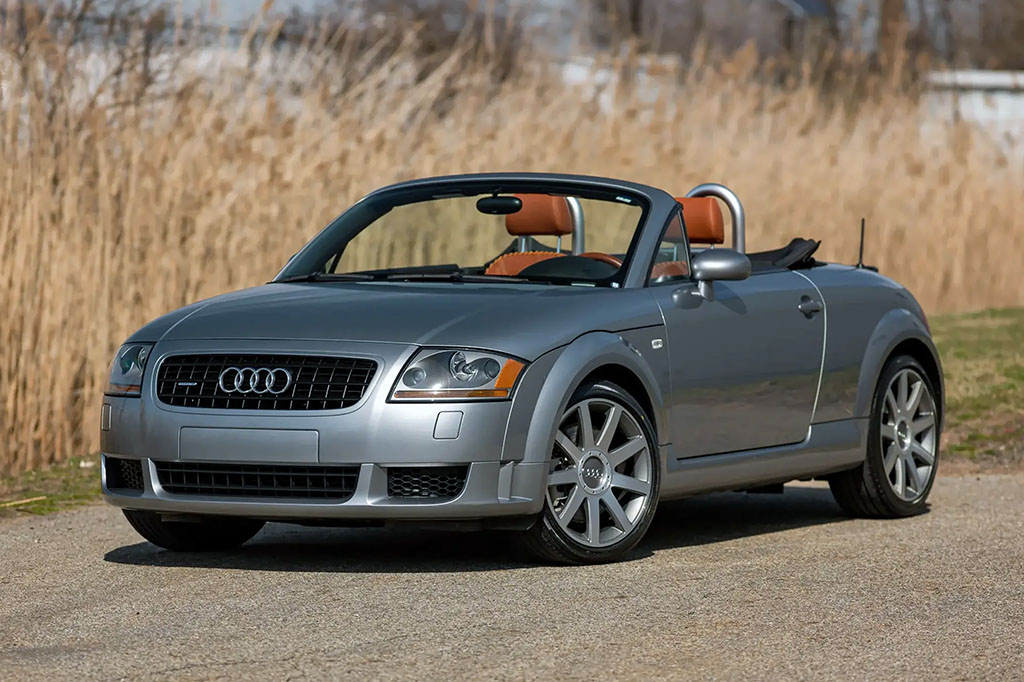
2006 Audi TT Roadster Special Edition
The Audi TT, which ended production in November 2023 after a 28-year run across three generations, has been lauded for its retro-future looks as well as its engaging driving experience, enhanced by the available quattro all-wheel-drive system. That said, the TT seems to have been aimed at buyers who couldn’t decide between a Porsche Boxster/Cayman and a Volkswagen Beetle. It shares much of the Beetle/Golf’s platform with the roadster/coupe aesthetic of the Porsche sports car. It’s the Ken of the automotive world: struggling for identity but looking good in the process. Nevertheless, it has received some recognition, landing on Car and Driver’s Ten Best list in the early 2000s as well as our latest 24 for 24 for under 24 selections. This 2006 Audi TT Roadster is one of only 99 Special Editions made to commemorate the 99th anniversary of the first Tourist Trophy (TT) race on the Isle of Man in 1907. The Special Editions came standard with a 250-hp 3.2-liter VR6 (shared with the Volkswagen Golf Mk4 R32 and first-generation Porsche Cayenne), as well as Audi’s highly regarded six-speed Direct Shift Gearbox (DSG) and quattro all-wheel drive. The roadster was available only in Quartz Gray with a black power roof and an Amber Red baseball-optic leather interior. An engraved badge on the glove box acknowledges that this TTs is “1 of 99” Special Editions. With a 2006 MSRP of $46,539, this Audi TT Roadster Special Edition is likely as close as we’ll get to new, with its 864 miles still inside of break-in miles. Naturally, it has needed little in the way of maintenance, but as a precaution with cars of such low mileage, the fuel filter was replaced in February 2024 and an oil change was carried out in preparation for the sale. It’s a new listing on PCARMARKET out of Moonachie, New Jersey.
Other finds
- One-owner 30,744-mile 1984 Porsche 928S GP White/Can-Can – $36,000
- 4,835-mile 2006 Mercedes-Benz SLR McLaren autographed – $365,000
- Known history 1947 Packard 2126 Custom Super Clipper 7 – $23,000
- Highly original 1960 NSU Sport Prinz 45,990 miles shown – $7,500
- Two-owner 1987 BMW 325es 67,411 miles – $37,500
- 87,500-mile 1989 Toyota 4Runner SR5 V6 fresh service – $23,900
- Mostly original 1974 Volkswagen Type 181 Thing overhauled – $27,000
- One-owner 1983 DeLorean DMC-12 5-speed, 64,737 miles – $72,000
- 53,675-mile 1986 Ford Mustang SVO performance mods – $18,750
- Restored 1973 Saab 96 29,500 miles shown – $16,750
- One-owner 43,000-mile 1974 Cadillac Eldorado Convertible – $16,500
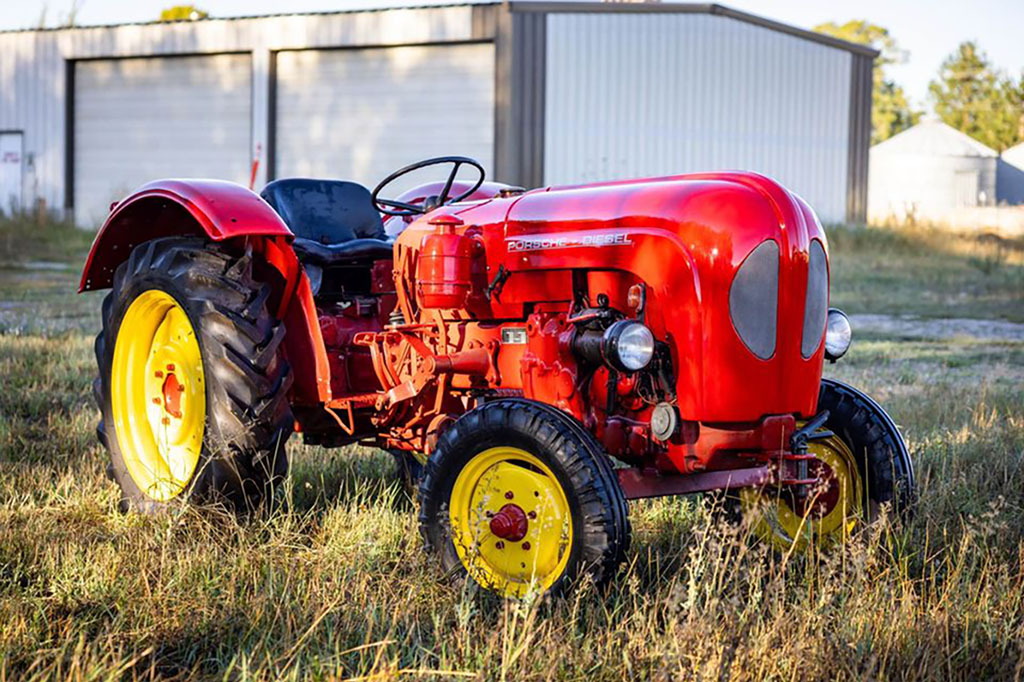
1963 Porsche-Diesel Standard 218
To pay the bills after the socioeconomic and infrastructural ravages in the wake of World War II, Porsche worked on various contract engineering projects, among them tractor designs that were part of Porsche’s core since its founding in 1931. However after the war, only manufacturers that had produced tractors and similar equipment prior to the war were allowed to continue. Porsche was thus forced to license its design to tractor manufacturer Allgaier, who would later be acquired by conglomerate Mannesmann. Production expanded to a defunct zeppelin factory in 1954 where a line of Porsche-Diesel tractors—Junior (14 hp), Standard (25 hp), Super (38 hp) and Master (50 hp)—would be built until production ceased in 1963. Like its contemporary sports car the 356, Porsche-Diesel tractors incorporated advanced technological design for the era, notably with the hydraulic coupling installed between the engine and transmission, removing the need for the clutch while shifting in motion. This example, a Porsche Diesel Standard 219 from the final year of production, comes from a collection in Idaho. It looks to have been restored to a high level in its original Karminrot (3002 Camine Red) over Signalgelb (1007 Signal Yellow) wheels (a 1962-1963 only color). The cabin features black upholstery over a hard-back seat. It’s powered by a 25-hp twin-cylinder four-stroke diesel motor mated to a 6-speed manual transmission, capable of hurling the 3,600-lb. Porsche to its top speed of 30 km/hour in under a minute while lapping the Nürburgring in around 10 minutes when towed behind a Cayenne Turbo GT. While the Porsche-Diesel tractors were popular in their native Germany and throughout Europe, competition from dominant US players like Allis-Chalmers, Ford, and Massey Ferguson kept sales here at under 1,000 copies sold between 1956 and 1963, putting it in a league with the 2013 – 2015 918 Spyder. This 1962 Porsche Diesel Standard can be had for less than 1% of that hypercar’s average resale value, here on Facebook Marketplace with an asking price of $15,000.
1959 GM PD-4104
When the GM PD-4104 was introduced in 1953, it shook the intercity bus market to its core. It was plainly superior to any other bus being offered at the time. The 4104 was a revolutionary design when launched – more modern looking than any other bus on the road. It created as much buzz as the Corvette. The full aluminum-encapsulated body and forward canted large windows became iconic design elements on buses for the next 30 years or more. Rather than use a separate body and chassis, 4104’s were fully monocoque-bodied. High strength aluminum panels over the monocoque frame made for an extremely light yet rigid coach. Combined with the light weight of the coach, the relatively lightweight 2-stroke 210 hp Detroit Diesel 6-71 engine made the 4104 North America’s most fuel efficient bus (8 – 10 mpg), and most likely one of its faster ones (a cruising speed of 65 mph). The Spicer unsynchronized four speed manual transmission was also more efficient than later automatics. And while other coaches were experimenting with air suspension systems, GM had theirs ready to go on both its urban transit and intercity models – it provided an extremely smooth ride, no matter how many passengers were on-board, and just as importantly was very reliable. As nice as all that was for passengers in its day, it’s also what continues the GM PD-4104 a popular choice for conversion today. One of these was used by Google for cross-country promotions, among them Google Maps in 2005 and ten years later for their Code The Road Google Maps APIs. Still said to be in excellent condition with working AC, a new clutch and brakes, it’s ready for its next adventure here on Craigslist in Novato, California for $9,500.
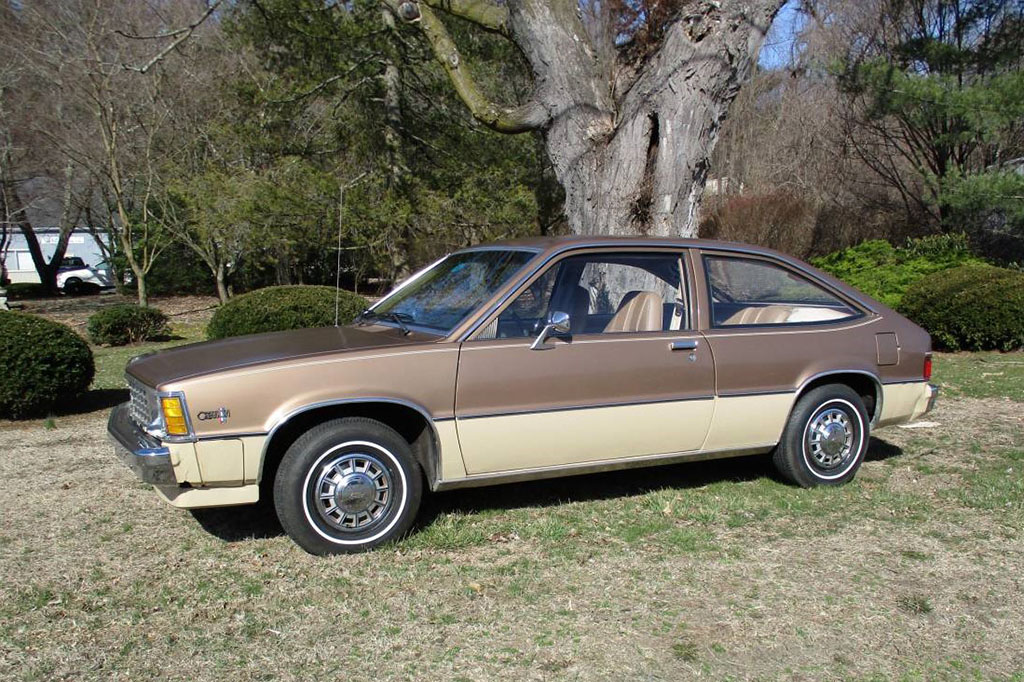
1981 Chevrolet Citation
It was “an obvious choice” for Motor Trend’s Car of the Year, a “clean break with the past” that “clearly points to the future of the American automobile.” It was GM’s hope for salvaging what had been a bleak era for the company—for the American auto industry in general. A few press cars were given special attention to put the Citation in the most favorable light. The ruse worked. For a while. Heeding the glowing reviews, customers flocked to Chevrolet showrooms in its first two years. But soon, its unfortunate build quality, along with weak and in some cases dangerous drivability, exposed the ruse and doomed sales until its ultimate demise after the 1985 model year. What was intended to compete with the Honda Accord for mid-size automotive supremacy turned out to compete with the Ford Pinto for punchlines. It begs to question why anyone would be foolish enough to preserve one, but we present you with this: a 1981 Chevrolet Citation with 57,600 miles in remarkably good original shape. Its two-tone Beige Iridescent over Beige scheme is surprisingly—or perhaps no so—fitting and appears to be in exceptionally nice original condition. The beige interior shows little or no wear with unblemished vinyl upholstery, a crack-free dash and relatively clean floor coverings. With no AC and only an AM radio, its most interesting feature appears to be a dome light. Its hapless “Iron Duke” 4-cylinder mated to an automatic gearbox. That said, it’s hard to not to admire the care that went into it by its original owner, who died before the car did. This 1981 Chevrolet Citation is now being offered for sale by its second owner here on Craigslist in New Milford, Connecticut for $7,800.
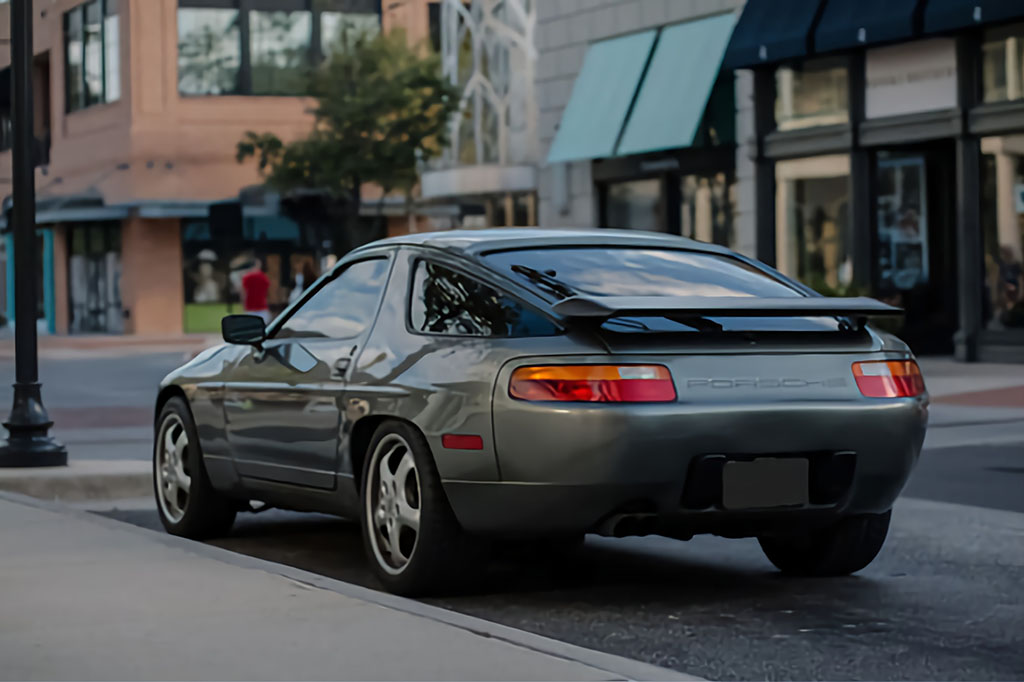
1987 Porsche 928 S4
While the Porsche 928 had gone through an evolution since its introduction in 1977 (adding the S suffix to mark the update from a 219-hp 4.5-liter V-8 to a larger 234-hp 4.6-liter unit; then an even larger, 288-hp 5.0-liter V-8 1985), the 1987 model year brought the first significant changes to the 928 line. Along with a number of styling changes, which included a larger rear wing that helped the new 928 achieve a much improved .34 Cd, the S4 (or Series 4) was the first production Porsche to break the 300-hp barrier (316 to be exact). While many prefer the more streamlined sharklike aesthetic of the earlier cars, the S4 is equally—if not more so—sought after for its performance cred and entirely modern feel. This 1987 Porsche 928 S4 is finished in an attractive and relatively rare Granite Green Metallic (L699 felsengrünmetallic) over Greyish-Green (4JX) leather and originally optioned with a Blaupunkt Reno (replaced), sun/moonroof, and rear air conditioning. It was showing 60,648 miles when listed (March 27, 2024) and has undergone an extensive maintenance and updates under the current owner’s stewardship since 2016. An impressive array of charts and graphs have been kept detailing the car’s use and history, showing warm climate ownership since new. It’s now fully sorted and being offered on Rennlist Marketplace with an asking price of $34,500.
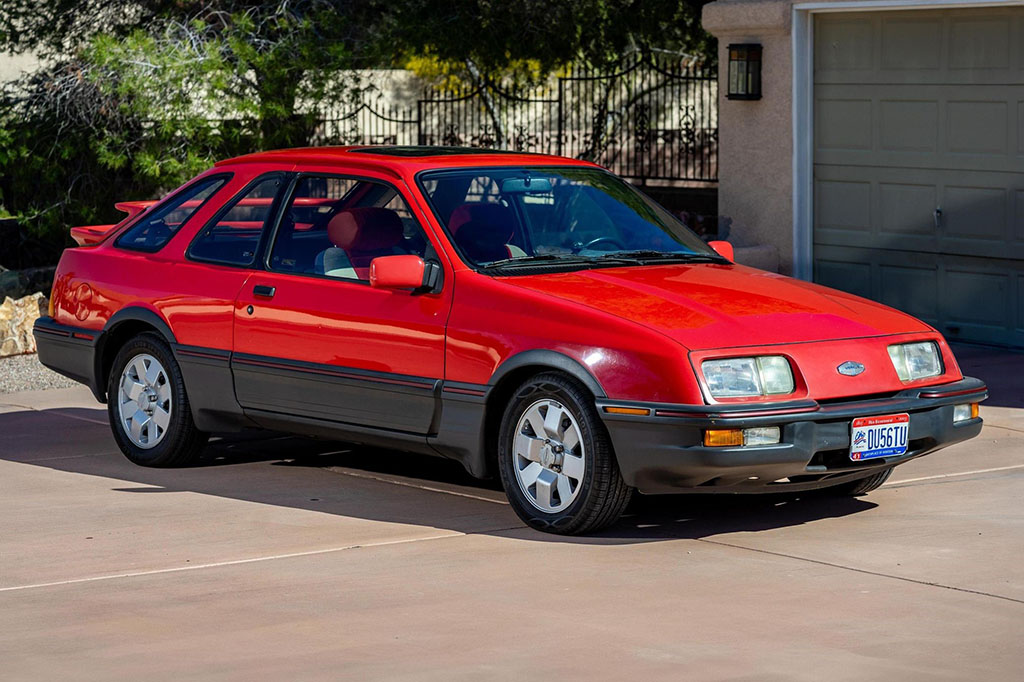
1987 Merkur XR4Ti
The ’80s belonged to the yuppie and everyone wanted a part of it. It didn’t go unnoticed in Detroit that yuppies favored BMWs and Benzes over Lincolns and Cadillacs. Rather than develop a car from scratch, they turned to their divisions in Europe, specifically Germany, to adapt existing cars (like Chrysler’s Maserati, GM’s Opel, and Ford’s Ford) to try and grab a slice of the upwardly mobile market. Ford’s answer came in the way of the XR4Ti. Initially intended as a dealer-body federalized varaint of the European Ford Sierra (ala Dinan and AMG at the time), those plans were quickly scrapped in favor of a new sub-brand: Merkur. Sold through Lincoln-Mercury dealers (much like the Capri of the ’70s), Merkur had hoped to attract new buyers alongside the Town Cars and Cougars. Despite glowing reviews from the press, it wasn’t enough to compete with the German establishment and the XR4Ti became a footnote of Ford’s history. Which also makes them unique today. This one is an especially good example of their initial appeal: a turbocharged 2.3-liter inline-4 putting out 175 hp when mated to the 5-speed manual, a bi-plane rear wing, and a Jackie Stewart-tuned suspension. Finished in a Rosso Red over gray cloth (tragically covered in the photos but also an indication perhaps of care in preservation), it presents closer to the 28,000 shown on the 5-digit odo rather than the 128,100 actual. With recent service including attention to brakes and steering along with a replaced driveshaft, it promises to be mechanically fit. From an era that was all about “me,” the Merkur XR4Ti no doubt stands out today. Find this one on Cars & Bids, selling at no reserve.
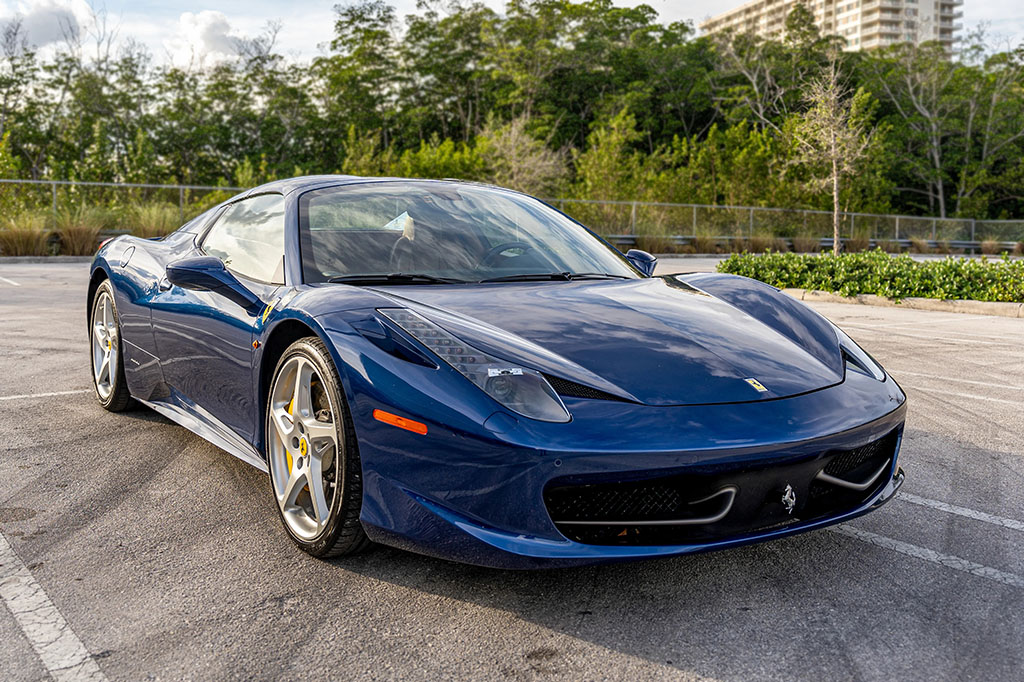
2014 Ferrari 458 Spider
The Ferrari 458 Spider, introduced in 2011, marks both firsts and lasts in Ferrari’s mid-rear-engined sports cars lineage. Its 562-hp 4.5-liter was the last naturally-aspirated V8 engine, while its direct fuel injection was a first for Ferrari V8 road cars. The Spider variant, like the one here, also featured an innovative hardtop convertible mechanism, another first for a mid-engined V8 Ferrari. This 2014 Ferrari 458 Spider is finished in a highly desirable Blu Tour de France. It’s optioned with Scuderia Ferrari fender shields, carbon-ceramic brakes, and Giallo Modena brake calipers. The cabin is upholstered in brown leather and features power-adjustable bolstered sport seats. Black leather accents the dashboard and multifunction steering wheel with its adjustable Manettino control knob. Currently showing 12,970 miles, the car has been meticulously cared for by one owner and presents in excellent condition. It has been routinely serviced, initially under the 7-year plan, and per Ferrari guidelines since 2021. The owner’s manual, service books, and tool kit accompany the sale, along with a car cover, tire inflation kit, and Ferrari-branded battery tender. It’s now available for immediate purchase on Sotheby’s Motorsport for $255,000.
Other finds
- Mostly original unrestored 1968 Chevrolet Camaro Z28 – $78,000
- 21 years owned 1990 Ferrari Testarossa 23,694 miles – $178,990
- 75,545-mile 1985 BMW 325e Arktisblau/tan – $10,950
- 30 years owned 1960 Plymouth Fury Convertible 44,000 miles – $95,000
- 39,000-mile 1983 Honda Civic Sedan time capsule – $9,900
- № 57 of 500 1990 Nissan Skyline R32 GT-R 34,187 km – $145,000
- 70,739-mile 1963 Austin-Healey 3000 Mk II BJ7 older resto – $49,500
- Original owner 2000 Land Rover Discovery II 82,966 miles – $4,200
- 18,675-mile 1979 Pontiac Trans Am WS6 4-speed – $63,500
- Original unrestored 1986 AMC Eagle Wagon 31,800 miles – $17,500
- Two-owner 1987 Mercedes-Benz 560 SL highly original 72,194 mi.– $34,900
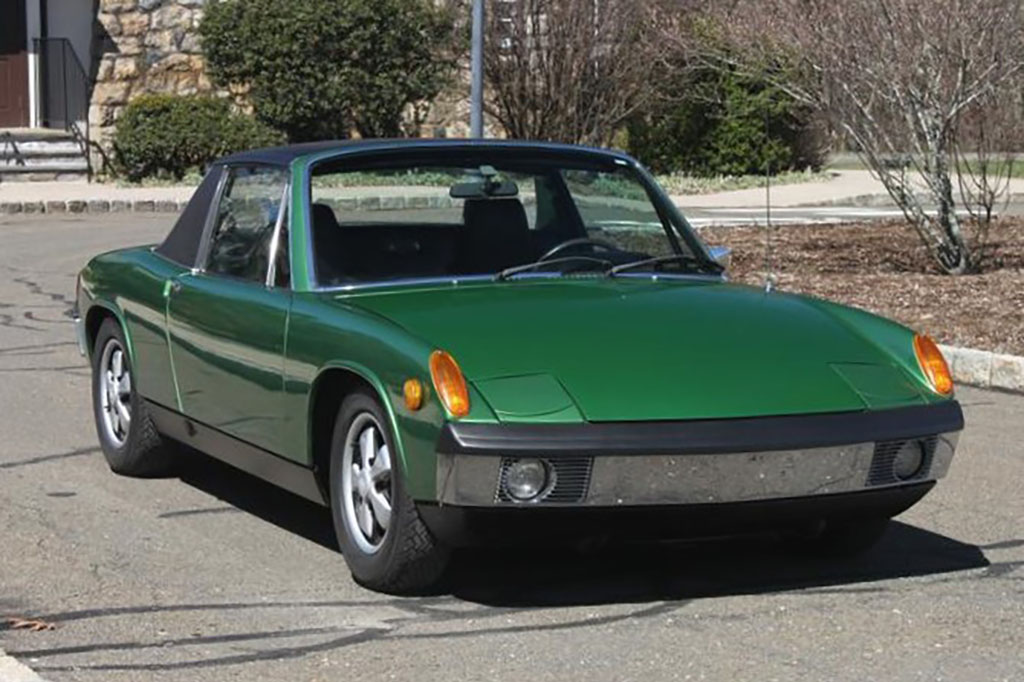
1970 Porsche 914-6
An incredibly original 914-6. Three west coast owners up to 1998. Then the car came east in 1995 to a New York collection and was never driven. Its seller acquired the car in 2022 and brought it to the specialist Porsche shop, Auto Associates of Canton. Documentation shows $35,000 in servicing (complete suspension rebuild, transmission reseal, rebuilt carbs, new brakes complete, new shocks, new gas tank and all fuel lines, all oil lines, motor mounts, new heat exchangers, new tires, refinished wheels by Harvey Wiedman, etc.) Reams of documentation verify the stated 69,000 original miles, including not only service receipts going back to the 1970’s, but the original bill of sale as well from the Las Vegas Porsche dealer who originally sold the car. Documentation also shows an engine rebuild in the 1990’s when the mileage was 68,000. The rebuild is believed to have been done by famed Harry Pellow of Santa Clara, CA. The car comes with its original factory owner’s manual, all original tools, original service book showing the pre-delivery inspection and dealer service stampings up to 60,000 miles. It’s had one repaint done about 30 years ago in the factory original Green Metallic, otherwise it’s all original. It is said to be turn key and fully sorted. It’s listed on here on The Mart (Porsche Club of America classifieds) with an asking price of $125,000.
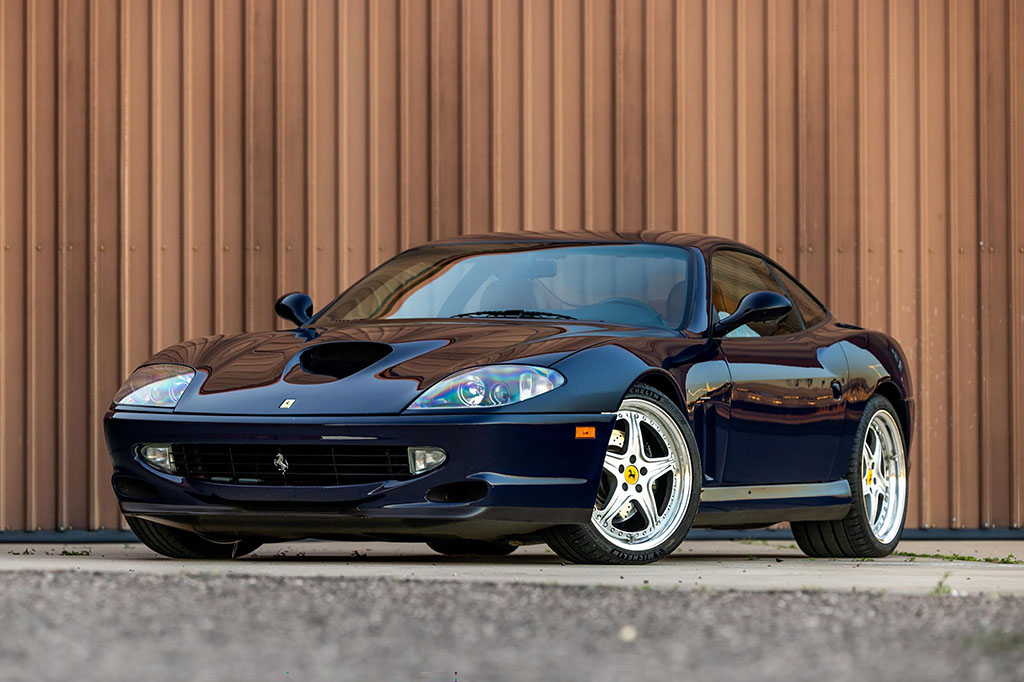
1999 Ferrari 550 Maranello
The Ferrari 550 Maranello has become a sought-after classic. Sharing the same formula of range-topping V12 power with impeccable selection and construction of materials, Ferrari’s front-engine GT was in top form as the 1990s came to a close. This example boasts 7,600 miles along with a desirable color combination of Blu Pozzi over Cuoio and Blue Sterling. Factory equipment includes Connelly leather upholstery, power-adjustable seats, a leather-upholstered rear shelf, and heated door mirrors, according to the accompanying window sticker. The only modification reported by the seller is a set of aftermarket 19-inch 3-piece wheels. The factory 18-inch wheels are pictured in the gallery and included in the sale. This 550 Maranello touts a documented service history. This 550 model represents the ideal Ferrari experience, with a gated 6-speed manual allowing full access to the screaming, naturally-aspirated 12-cylinder engine up front. Find it on Cars and Bids with four days remaining in the auction.
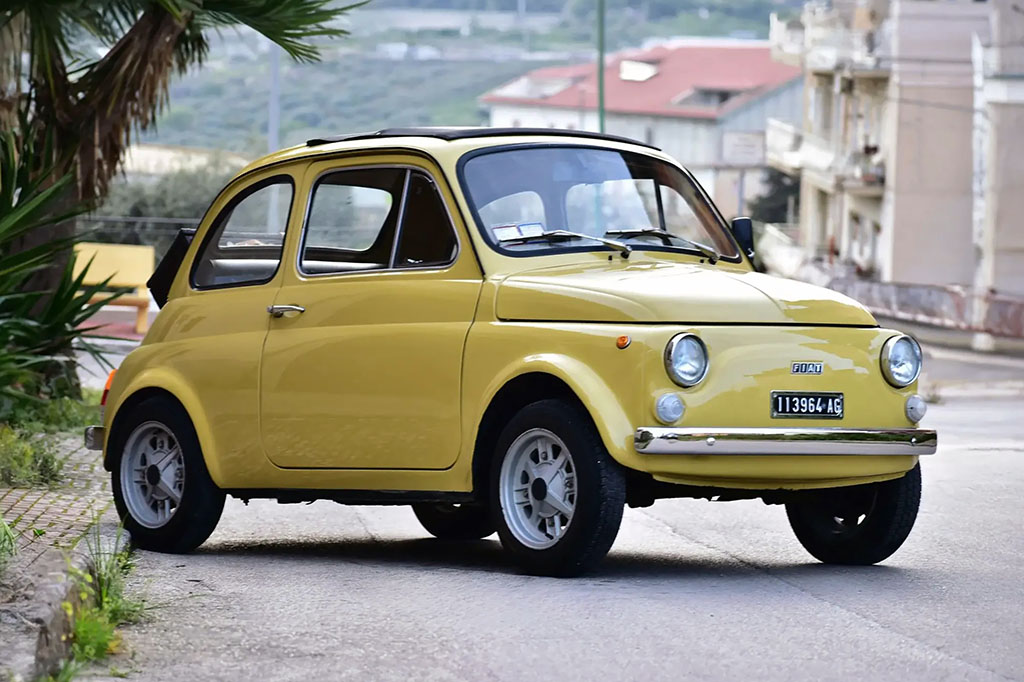
1975 Fiat 500 R
The final iteration of the Fiat 500 emerged as the R model, affectionately dubbed “Rinnovata” or Renovated. Unveiled in tandem with the new Fiat 126 in November 1972, this version boasted a 594cc engine akin to that of the 126. Notably, its power output mirrored that of the L model although at a reduced rev threshold, registering at 4,000 RPM rather than 4,400. This 500 R was initially purchased by the seller’s close family member in the Province of Agrigento in Italy. It is finished in Tufa Yellow (Giallo Tufo, 246) with a black retractable soft top. Equipment includes polished chrome bumpers, bright chrome trim along the front windows, black trim along the windshield and rear windows, a driver’s door mirror, a vented engine cover, and a rear-mounted luggage rack with a wicker travel bag secured by leather straps. The seller notes some areas of refinishing due to cosmetic imperfections. The cabin features black and light-blue upholstery. The materials were selected in leather and cloth at the customer’s request, a rare option at the time (interiors were usually standard in Sky). Other details include body-colored surrounds, a black-finished two-spoke steering wheel, and black floor mats. All gauges, electronics, and accessories are reported to be working properly. Service items are said to include an oil and filter change, replacement of spark plugs, thorough cleaning of the carburetor, installation of a new battery, fitting of a new brake pump, and installation of new platinum points and condenser components. This single family owned Fiat is now being offered on PCARMARKET for auction out of Italy.
Other finds
- Two-owner 1967 Chevrolet Corvette №s match, factory AC – $78,000
- 63,333-mile 1973 Ford Bronco Ranger Bright Lime – $54,900
- One family owned 1969 Porsche 912 one of 3,913 LWB – $60,000
- 17,848-mile 1964 Pontiac GTO Tri-Power 4-speed – $78,000
- Two-owner 1972 Datsun 620 restored, 56,000 miles – $15,600
- 35,286-mile 1986 TVR 280i LHD 4-speed – $16,000
- Original unmodified 1997 Lexus SC 400 69,745 miles – $14,000
- 78,000-mile 1997 BMW 540i M62 Alusil, 6-speed – $17,400
- Highly original 1949 MG TC 90,208 miles – $18,900
- 39,322-mile 1971 Chevrolet Monte Carlo matching №s – $22,500
- Mostly original 1990 Rover Mini Cooper Mk1 28,273 miles – $16,995
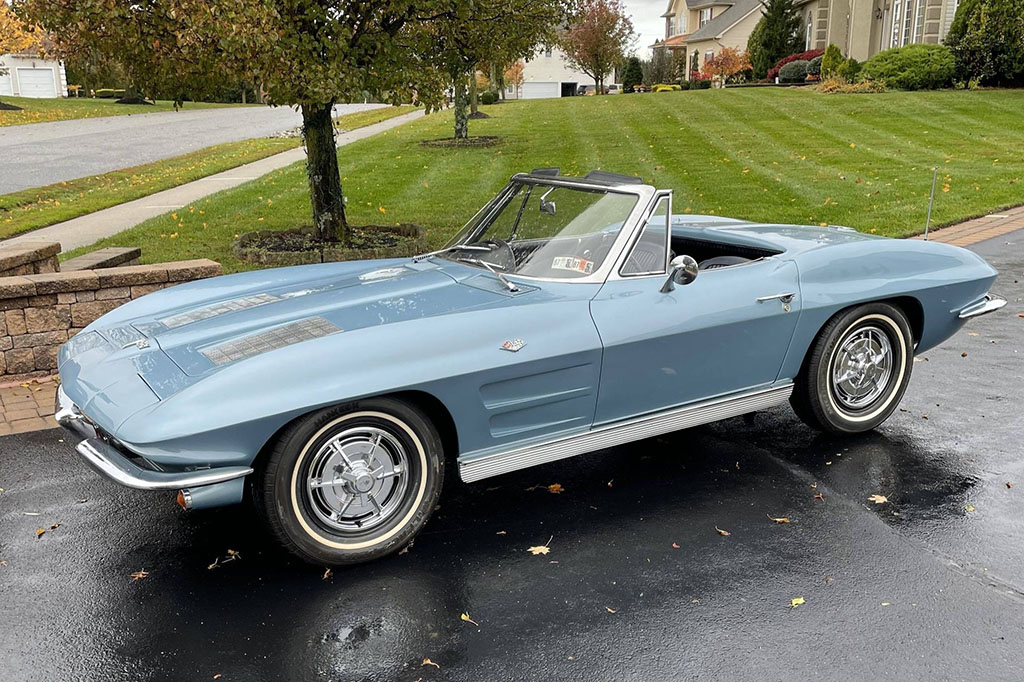
1963 Chevrolet Corvette L76 Convertible
This 1963 Corvette Convertible is said to be factory original aside from a repaint in it original Silver Blue Metallic (912). Its L76 327 puts out 340 horsepower and is mated to a Muncie 4-speed gearbox. It doesn’t pretend to be perfect, but is described as a high-quality driver with concours potential. Offers are being accepted on Hemmings Make Offer or buy it now for $120,000.
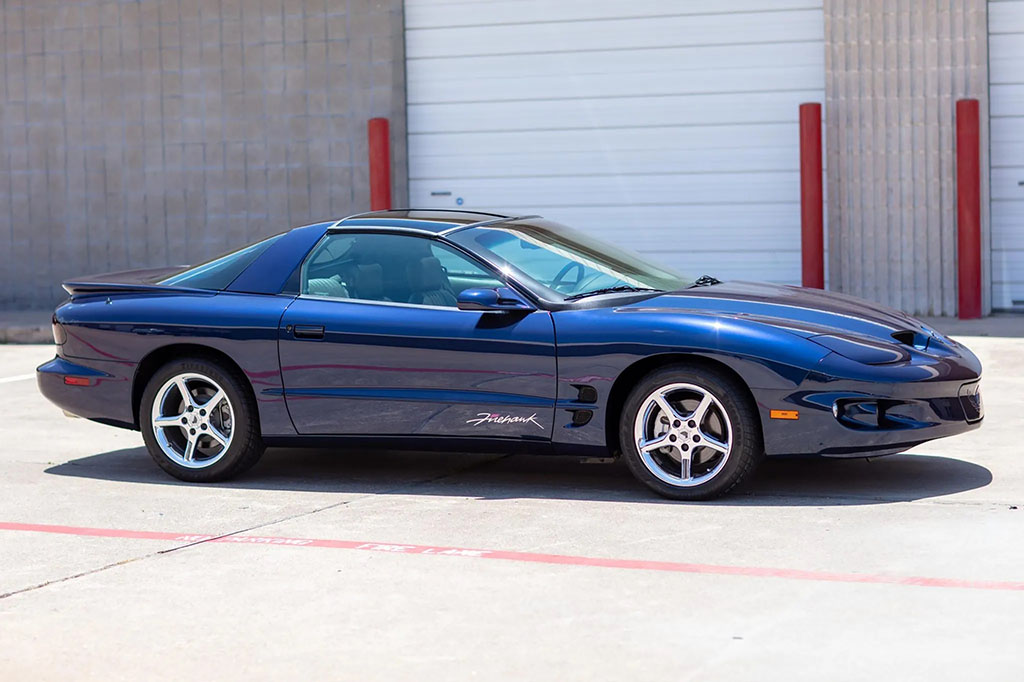
1999 Pontiac Firebird Formula SLP Firehawk
This 498-mile 1999 Pontiac Firebird Formula SLP Firehawk is finished in Navy Blue Metallic over a Dark Pewter leather interior, and power comes from a 327-hp 5.7-liter LS1 V8 mated to a six-speed manual transmission and an Auburn differential. Equipment includes the Firehawk Alteration Package, removable glass T-top roof panels, Bilstein suspension components, leather upholstery, air conditioning, and a factory cassette stereo connected to a Monsoon sound system and a trunk-mounted 12-disc CD changer. This SLP Firehawk is now offered with Pontiac and SLP window stickers, historical documents, an SLP car cover, Firehawk-branded key fobs and floor mats. Find it here at Net Car Showroom for $49,999.
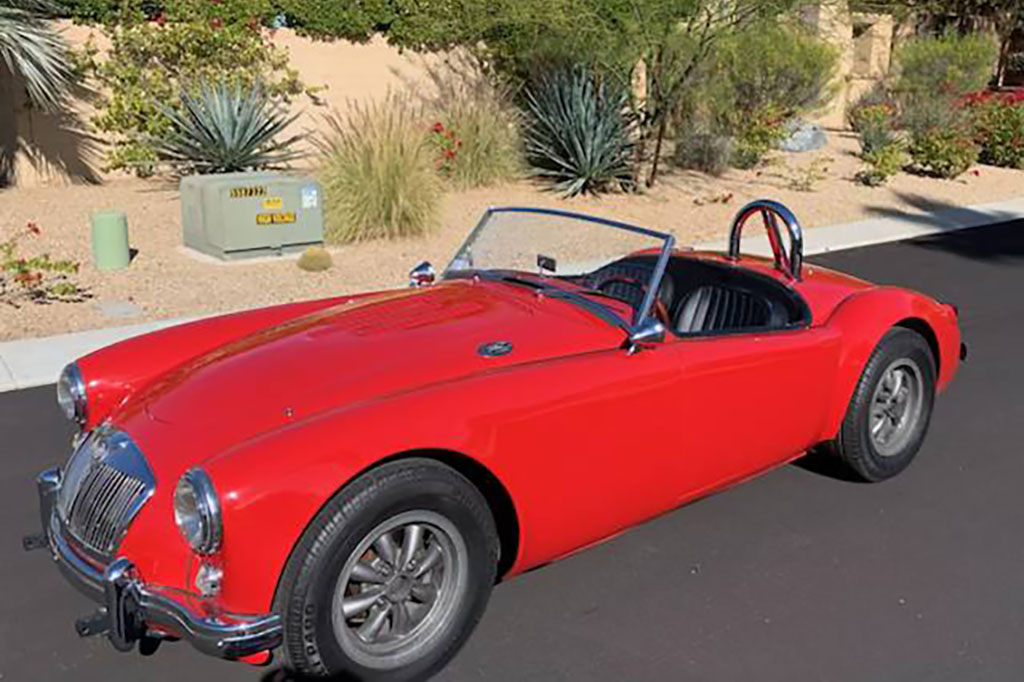
1958 MG MGA Fauxbra 327
This 1958 MGA started life as a dignified British Roadster powered by a 72-hp 1.5-liter inline-4. Inspired by Carroll Shelby’s treatment of its contemporary, the AC Ace in 1962, S&S machine shop in San Leandro, California modified this MGA three years later with a Chevrolet 327 small block. It was raced in SCCA sanctioned autocross events throughout Northern California (likely against AC Cobras). It has upgraded disc brakes, steering, suspension and 3:90 gears in the rear end. This hot-rod MGA also has genuine magnesium wheels (very rare) dressed in new Pirelli tires under its flared fenders. The car was disassembled in 2022 for new paint. It was completely rewired at the same time, while the interior was fully redone in 2023. With original AC Cobras routinely selling for seven figures, this MGA offers much of the same thrills in something of a sleeper package for used Miata money. It’s here on Craigslist in Palm Springs for $27,000.
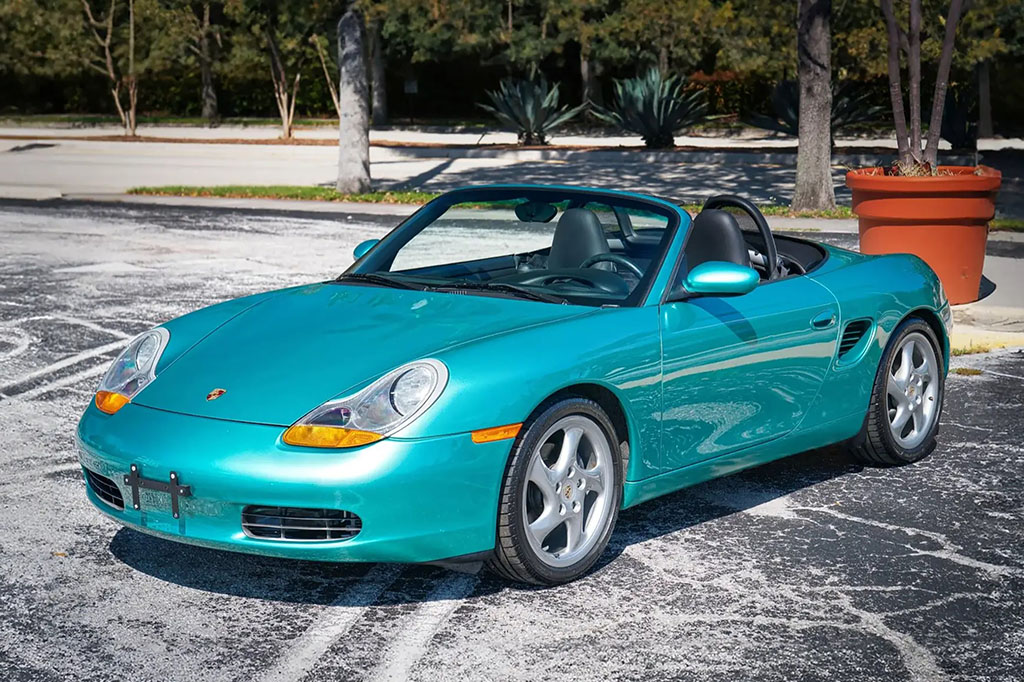
1999 Porsche Boxster
There was a time when a new Porsche that wasn’t rear-engined and rear-wheel-drive was introduced, it was met with skepticism at best (until proven otherwise) and more often dismissal as not a true Porsche. This was especially true of entry-level models going back to the mid-engined 914. But when the Boxster concept was shown at the 1993 North American Auto Show, it drew widespread acclaim from both press and public. The production Boxster may have disappointed some for its departure from the concept (due sharing some parts from the 996 to minimize costs at a time when Porsche was not in the fittest financial state), the Boxster was still well received and it’s often credited with the car that saved Porsche. It was so popular that Porsche added a second production line in Finland. This 1999 Porsche Boxster rolled off that line finished in Ocean Jade Metallic (J3), one of the rarer Boxster colors offered in 1998 and 1999 only. Perhaps not everyone’s favorite color, but it certainly stands out and is nicely tempered by the optional 18” Turbo-look wheels and the Sport Touring Package which adds chrome roll bars behind the headrests. The cabin by contrast is subdued and classic, upholstered in Black supple leather and trimmed with the Sport Touring Package’s stainless-steel door sills, aluminum instrument dials, and aluminum trim to the shifter and handbrake levers. Other accessories include the HiFi Sound Package, a remote alarm system, a Porsche wind-stop, an onboard computer, automatic climate control, cruise control, a central locking system, a remote 6-disc CD changer, and a Porsche CR-220 stereo. It was first registered in Boys Town, Nebraska on May 11, 1999 and has covered a mere 9,987 miles since. The owner’s manuals, the original window sticker, a toolkit, a spare tire, an air pump, and a car cover accompany the sale. While the market for first generation (986) Boxsters as an aggregate remains flat, outstanding examples are becoming collectible. Color and mileage have proven to be the driving factors and this 10,000-mile Ocean Jade Metallic Porsche Boxster unquestionably stands out. It’s a new listing on PCARMARKET out of Tequesta, Florida.
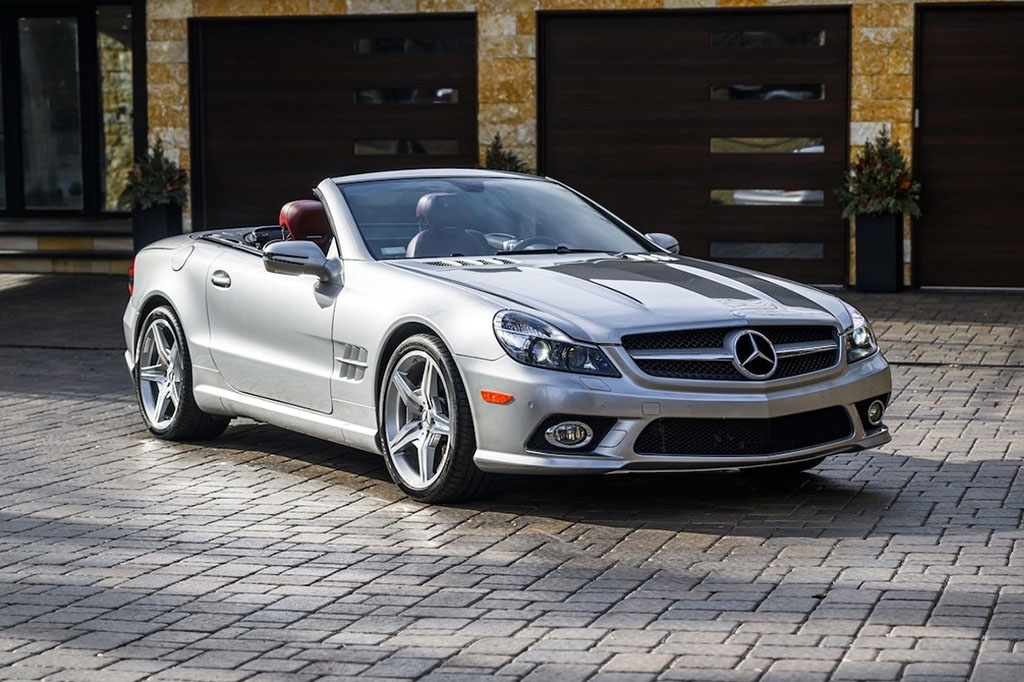
2009 Mercedes-Benz SL 550 Silver Arrow
This 2009 Mercedes-Benz SL550 is one of 550 Silver Arrow editions produced. It was purchased by its second owner in March 2010 and remained in their care through April 2022. The current owner purchased the car in June of 2023. This SL 550 is finished in exclusive Silver Arrow Metallic (777U) and features unique bumper covers and side skirts as part of the AMG styling package. Additional equipment includes Bi-Xenon headlamps, halogen fog lamps, and Parktronic (front and rear sensors). The power-retractable hardtop houses a panoramic glass roof. Original five-spoke 19″ AMG staggered wheels are wrapped in Pirelli tires showing 2022 date codes. The cabin is finished in Red Nappa Leather (807) accented by two-tone trim, and a Silver Arrow Edition plaque is mounted on the center console. Amenities include a power-raising roll bar, heated and cooled multi-contour seats with Airscarf, Keyless-Go, dual-zone automatic climate control, a Homelink universal garage door opener, and the original COMAND infotainment system featuring hard drive based navigation, bluetooth connectivity, satellite radio, and Harmon-Kardon sound. The 382-hp 5.5-liter M273 V8 is mated to a a seven-speed 7G-Tronic automatic transmission with a manual shift mode that can be operated via paddles on the steering wheel or through the speedshift option on the shift lever. The SL 550 Silver Arrow shows consistent dealer service with Mercedes-Benz of Centreville, Ohio with additional records showing recent servicing in 2022 and 2023. With only 8,450 miles showing at the time of listing, this R230 SL 550 will surely join past Silver Arrows in their rapidly increasing collector status, while providing incredible driving enjoyment along the way. It’s being offered on The MB Market with seven days left to bid.
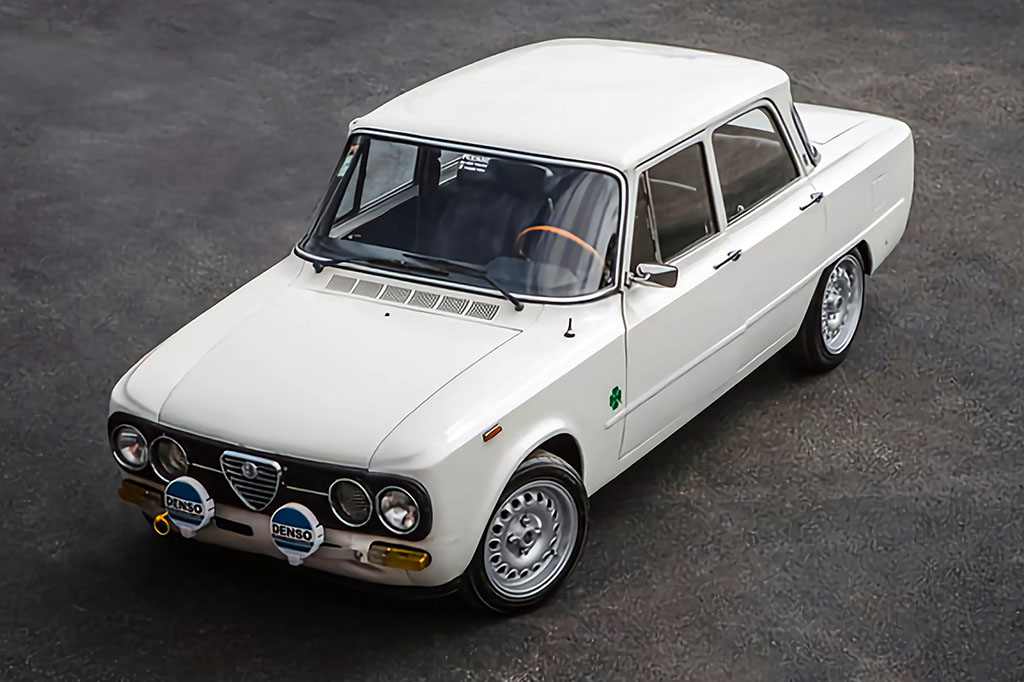
1975 Alfa Romeo Nuovo Super
First offered in 1962, the Alfa Romeo Type 105 Giulia has always been known for its lively driving characteristics. With its lightweight body and light alloy twin overhead camshaft four-cylinder engine, it was one of the most exciting sports sedans of its day. The Giulia Super was lauded for its lively handling and impressive acceleration, particularly when compared to other small European sedans of the era. This 1975 Nuova Super marks the last of the Giulia Super range, now carrying a 2.0-liter twin cam motor with racy side-draft trumpet carburetors mated to a 5-speed gearbox. A lowered stance enhances its racy looks, complemented by GTA-style wheels, front grille air vents, and fog lamps. The bumpers have also been removed for a more streamlined appearance, but are included in the sale, as are the original steel wheels. The cabin meanwhile presents well with minimal wear showing in the upholstery, nice wood, fresh carpets and an original Hellebore steering wheel and period AM/FM radio. Original manuals (in Italian), jack and spare accompany the sale. Showing 90,906 km (~56,500 miles), this 1975 Alfa Romeo Nuovo Super (2.0) is for sale at The Barn Miami with an asking price of $26,900.
Other finds
- One of 27 1956 Bentley S1 Mulliner Continental 46,802 miles – $90,000
- 27,000-mile 2003 Mazda MX-5 Miata Shinsen one of 1,500 – $15,000
- Highly original 1975 Fiat 128SL x18,273 miles – $21,500
- Two-owner 1998 Jaguar XJ8 Vanden Plas 39,500 miles – $5,000
- 2003 Chevrolet Corvette Convertible 50th Anniversary 6 speed – $28,500
- 62,460-mile 1970 AMC AMX 390 ram air, AC – $24,750
- 100+ award-winning 1962 Chevrolet Impala SS 409 4-speed – $94,500
- 62,500-mile 1991 Alfa Romeo Spider Veloce Vino Rosso/Tan – $12,000
- Unmodified 1999 Mitsubishi Eclipse Spyder 5-speed, 67,475 miles – $7,400
- Fully restored 1968 Volkswagen Type 2 Double Cab – $46,500
- 25,714-mile 1967 MG B-GT concours restoration – $30,000
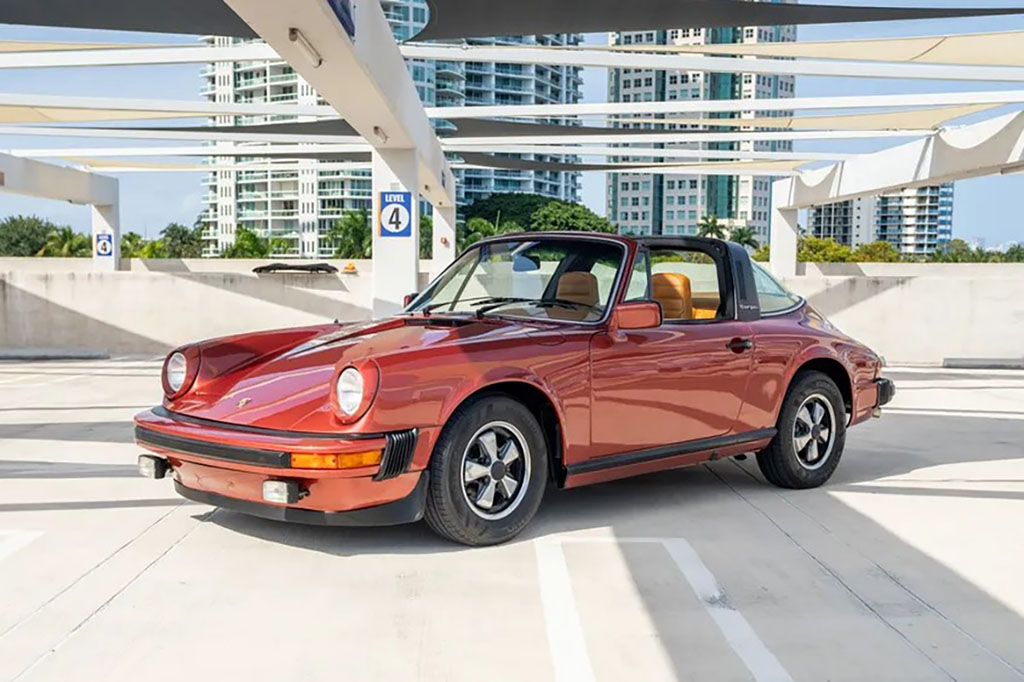
1977 Porsche 911S Targa
This 1977 Porsche 911S Targa (No 2735) is among the last of the 2,747 911S Targas to come off the line before production of the SC commenced. As a US model it was equipped with the 165-hp 2.7-liter engine with the lightweight magnesium crankcase. This crankcase, when combined with US-mandated thermal reactors, created excessive heat, which led to pulled head studs and a seized motor. It was an issue with only a handful of 2.7s in warm-weather climates, but it maligned the 911S for decades to come. Furthermore, prior to Porsche use of “hot-dip” galvanizing late in 1975, the 911S, like those before it, was susceptible to rust. These factors made the G-,H-, I-, and J-Series (collectively known as G-modells) something of a 911 bargain. But newfound appreciation of the 911S’s excellent drivability has seen it catching up to its succeeding G-modells, the SC and 3.2 Carrera. This 1977 911S Targa was restored in its original Sienna Metallic while its Targa roof received a new black liner. While the work appears to have been done to a high standard, a third-party inspection notes some minor blemishes, along with aging body seals. The Cork leatherette interior looks to be and is said to be well preserved and features a leather-wrapped steering wheel and fresh Coco mats, along with a Blaupunkt Bremen and new speakers. All lights, instruments and controls are said to be working, with the exception of the AC (compressor removed but included in the sale). After a 14-year dormancy, the original 2.7-liter flat-6 has been bolstered with an SC oil cooler and camshafts/ towers, as well as Carrera hydraulic chain tensioners, among numerous other refinements. The original Fuchs wheels have been refurbished and dressed in new Kumhos. Two keys, the original owner’s manual, a compact spare and any removed parts accompany the sale. Now showing just under 46,000 miles, this 911S is sorted and ready for open-air motoring season. It’s on Sotheby’s Motorsport out of Miami with eight days left to bid.
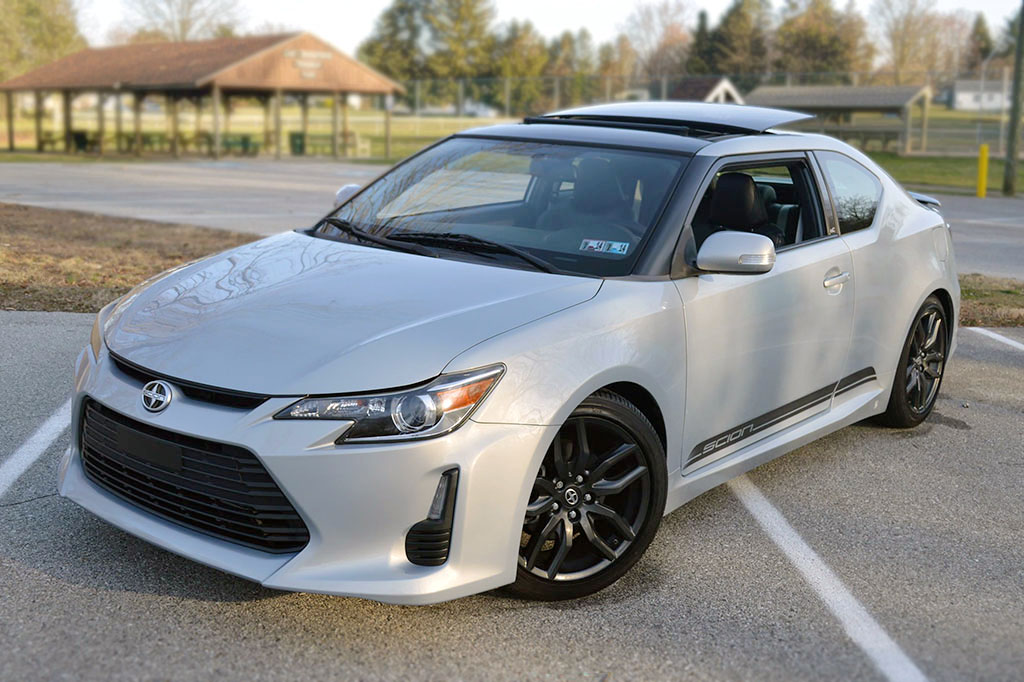
2014 Scion tC 10 Series
Repeating what it had done with Lexus in 1989 by creating a sub-brand aimed at the luxury segment, Toyota developed Scion as a sub-brand aimed at a more youthful car (North American) buyer 13 years later with its introduction of two concepts at the New York Auto Show in the Spring of 2002. The bbX would become the XB for the 2004 model year while the ccX would materialize as the tC a year later. The tC’s mission was to take the baton from the Toyota Celica, soon retiring after a 36-year run. The tC took it and ran, becoming the Scion brand’s most successful model. In 2014, to mark 10 years in showrooms, the Scion 10 Series was released. Applied to all models at the time, the 10 Series included 18″ wheels, a Jack Knife key, a sequential number interior badge, a solar-powered illuminated shift knob, an electroluminescent panel, silver seat belts, silver stitching on seats and steering wheel, exterior body side skirts with Scion badge, and illuminated vehicle locator badges, along with a host of standard tC features. Purchased new in August of 2013, this tC 10 Series is further equipped with TRD performance components like a front strut tie bar, air filer and sports exhaust. It has been owned by a single owner since and despite all the driver-oriented kit, it has been driven less than 300 miles. Yet to complete break-in mileage, let’s call this one an as-new demo complete with its window sticker, factory keys, and owner’s manual. With the Scion brand struggling to find relevance and the sensational FR-S now in production (soon to be rebranded as the Toyota 86), the tC reached its end in 2016, but with only 3,500 made, this Scion tC 10 Series (№ 157) stands out as a highly collectible example of an enthusiast favorite. Its on Cars & Bids in Wilmington, Delaware with four days remaining on the auction.
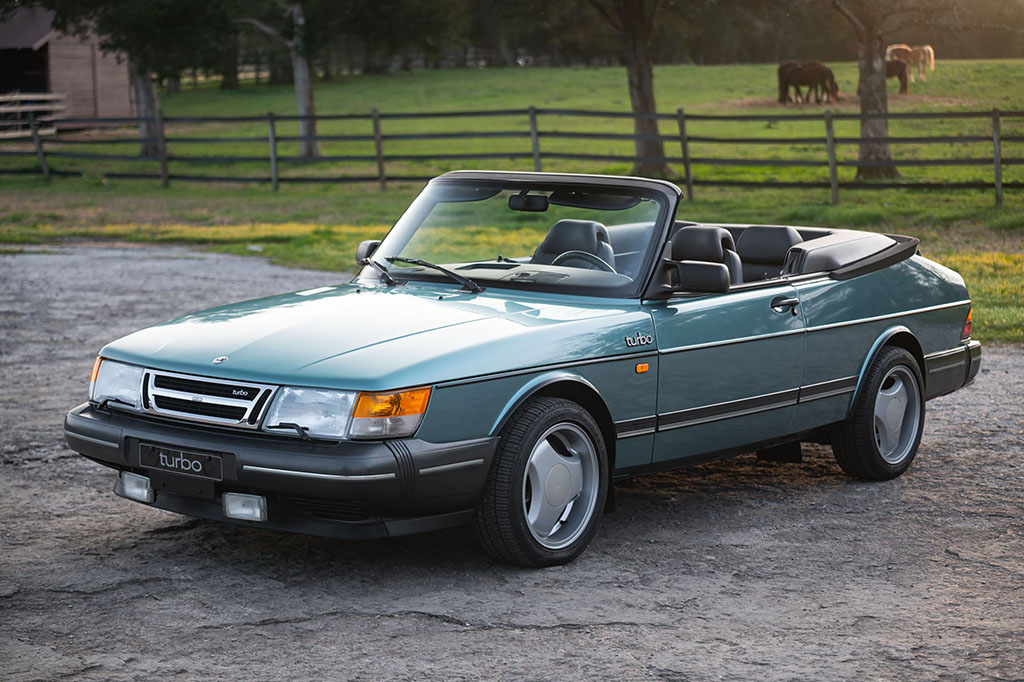
1991 Saab 900 Turbo Convertible
By the early ’80s, the convertible, once thought extinct in light of safety requirements, looked to be making a comeback. The Ford Mustang returned with a convertible in 1983 and the Cadillac Eldorado, said to be “the last American convertible” in 1976, returned a year later. It’s no surprise then that the president of Saab-Scania US proposed a convertible version of the Saab 900. After some prototypes, a concept was shown at the Frankfurt Auto show in 1983. Enthusiastically received the 900 convertible went into production for the 1986 model year. The rest is history as it went on to become not only one of Saab’s most successful models, but remains iconic today. Once a fun-used-car kind of buy, they have become highly sought after, particularly well-kept, low mileage examples. This 1991 Saab 900 Turbo Convertible checks all the boxes: low mileage (58,552 at time of listing), highly original and well preserved. It shows none of the typical older 900 traits: no warped glovebox, no visible cracks in the dash, no split in the driver’s seat cushion or scuffs on the bolster. It is complete with all books, manuals, tools, parade boot, and service tickets. SPG style wheels have been added but its original star alloys and tires accompany the sale. A 900 Turbo Convertible like this is very hard to come by and is likely to provide miles of open-air enjoyment without a loss to the initial investment. Find it here at Frazier Motorcar Company in Nashville with an asking price of $33,500.
Other finds
- One of 4,465 1958 Buick Century Caballero refinished – $31,800
- 197-mile 1978 Chevrolet Corvette Indy Pace Car all original – $55,000
- One of 4,500 1985 Toyota Celica GTS Convertible 5-speed – $14,900
- 29,000-mile 2002 Porsche Boxster S all original, complete – $29,000
- One family owned 1973 Honda Civic 57,000 miles – $25,900
- All original 1969 Datsun 1600 Roadster 60,000 miles – $8,500
- Single family owned 1980 Triumph TR7 Spider 55,300 miles – $7,000
- 23,000-mile 2002 Mercedes-Benz CL 55 AMG – $15,000
- Supercharged JDM 1998 Toyota Estima V All-Trac 58,000 miles – $14,790
- 30 years owned 1960 Plymouth Fury Convertible 44,421 miles – $95,000
- One of 5,196 1967 Mercedes-Benz 250 SL 10-year restoration – $89,000
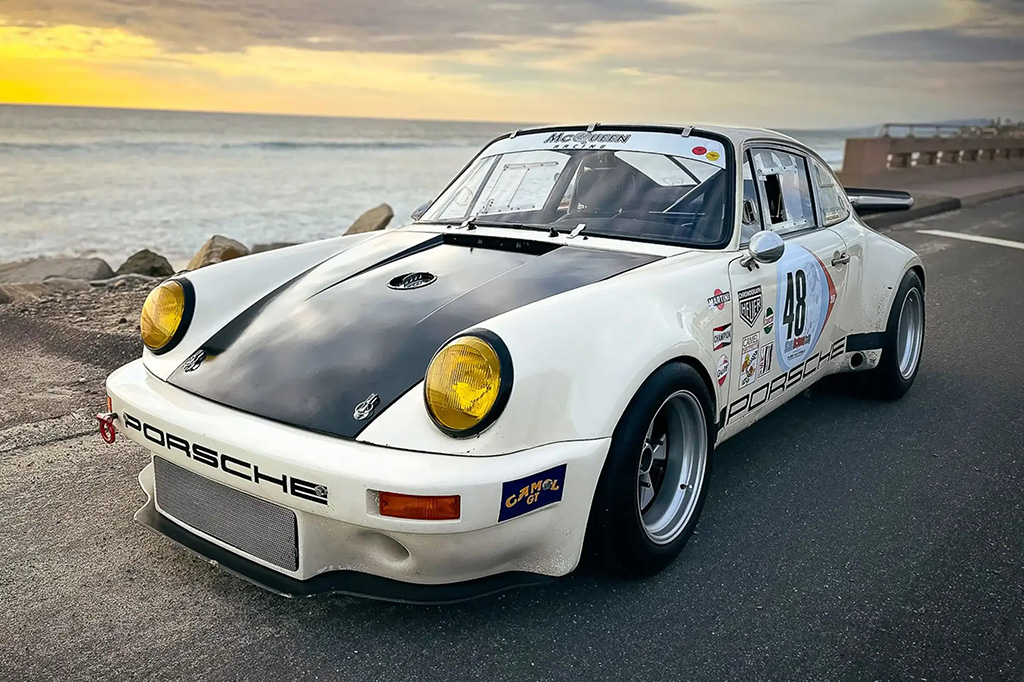
1976 Porsche 911S Coupe R-Gruppe
This 1976 Porsche 911S Coupe is finished in Antique White with a contrasting black hood and spoiler, racing decals, and Porsche logo side stripes, It has also been modified with factory 911 Turbo steel fender flares, an IROC-style front bumper and rear spoiler, a frunk-mounted fuel filler, dual bullet-style mirrors, 911R-style taillights, and twin center-exit exhaust tips. Other features include front and rear tow hooks, yellow-tinted headlamps, hood pains, Lexan front and rear windows, GT Racing polycarbonate slider windows, and GT Racing PETEG Porsche 911R quarter windows with drip trays. Braid Fuchs RSR-style wheels measuring 15”x11” rear and 15”x9” in front are dressed in period correct Michelin TB15 tires. An extra pair of rear 15”x11” Minilite aftermarket wheels is also included with Hoosiers tires. The cabin features custom Alcantara upholstery covering the dashboard, headliner, upper door panels, and a matching three-spoke MOMO Prototipo steering wheel. Other equipment includes a pair of custom GTS Classics Monte Carlo bucket seats, RaceQuip safety harnesses, a bolt-in roll bar, RS-style door panels, an RGate shifter, Rennline Track Mats and floorboards, and a driver/passenger communication system. The battery has been relocated to the smuggler’s box with a Rennline dash-mounted quick disconnect kit. The radio, stereo wiring, front footwell carpeting, and rear seats are said to have been removed. At its heart is turbocharged 3.3-liter flat-six engine sourced from a 1979 Porsche 911 Turbo. It was rebuilt by Turbo Kraft and upgraded with Supertec twin-plug heads, ARP rod bolts, 964 Dougherty cams, a KEP lightweight flywheel, Rare Late exhaust and headers, a Patrick Motorsports oil cooler, and an enlarged intercooler. A dyno-verified output of 485 HP is sent to the rear wheels through a refurbished 4-speed manual transaxle and an upgraded Wavetrac limited-slip differential. The suspension features Tarett Engineering RSR way bars and bushings, a Patrick Motorsports bump steer kit, 930 tie rods, 935 rear spring plates, and Rebel Racing RSR front coilovers with Bilstein inserts and rear shocks. The car also features late 930 axles and 930-sourced disc brakes. The seller notes the engine has been driven less than 700 miles since it was rebuilt. A member of the exclusive invitation-only R Gruppe car club and published in Frank Kayser’s associated book, this 1976 Porsche 911S Coupe is newly listed on PCARMARKET out of Vista, California.
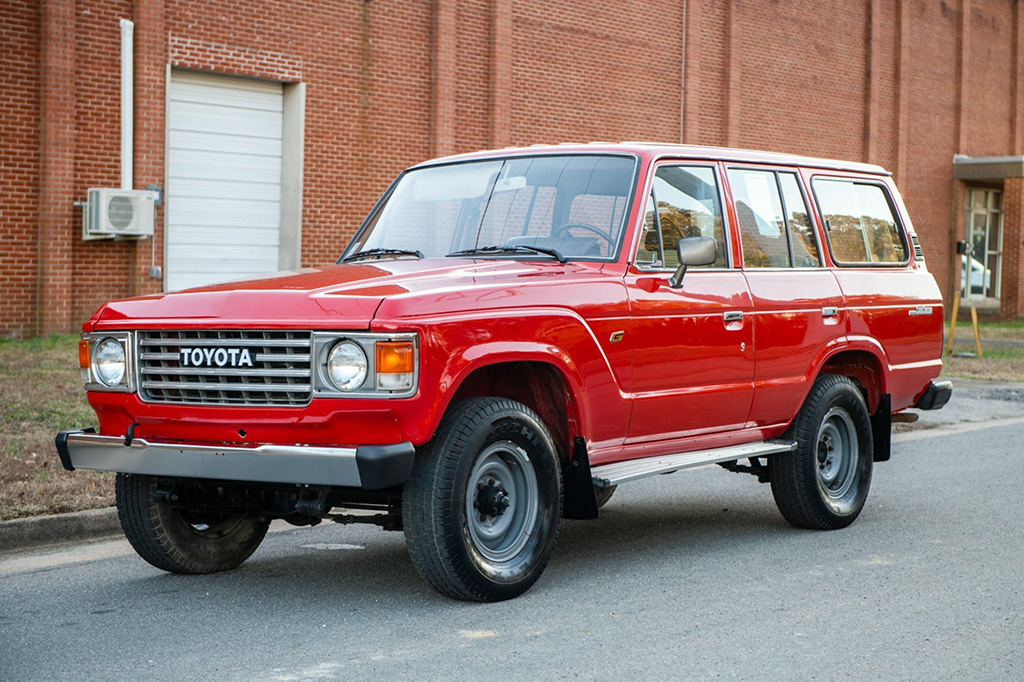
1983 Toyota Land Cruiser FJ60
With a nameplate dating back to 1951, the Land Cruiser was already a legend in its reliability, durability, and off road capabilities when Toyota shifted the lineup in 1980 with a decidedly more comfort-oriented direction. The 60-Series was designed to better compete in the emerging sport utility vehicle market and was given a variety of creature comforts like air conditioning, a rear heater and an upgraded interior. They were popular in their day and sought-after now, with many having travelled over 200,000 miles (or more, much more) still commanding new Wrangler money. This is an example with a remarkable 117,700 kilometers, which represents approximately 73,200 miles. It is an import, but not one from the Central and South American countries they usually stem from. As a Saudi-market FJ60, it is equipped much like its North American counterpart and even has some features not available here like front vent windows (remember those?), a horizontally split tailgate, and sliding rear side windows. Power comes from the same 135-hp 4.2-liter inline-6 mated to a 4-speed gearbox with a 2-speed transfer case and manually locking hubs. Its been mildly modified with running boards, diamond plating on the rear bumper, a cutout in rear bumper for pintle hook, and a Boss Audio 609AUB AM/FM Bluetooth-enabled head unit. It wears dome flaws from use, but presents quite well in its Freeborn red over its original beige- and brown-striped cloth upholstery. Recently imported, it’s now for sale with a clear Virginia title on Cars & Bids out of Richmond.
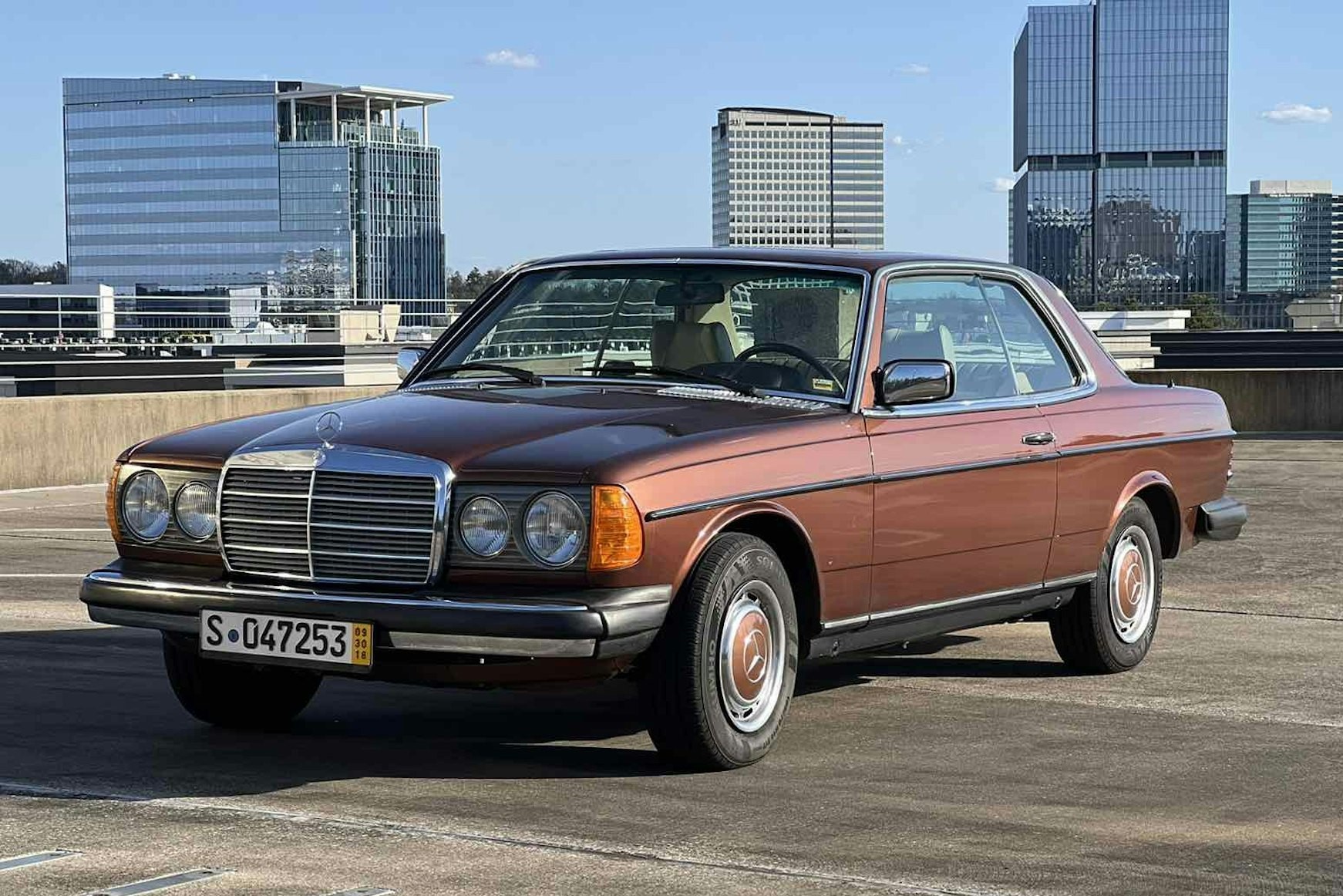
1978 Mercedes-Benz 280 CE
This 1978 Mercedes-Benz 280 CE comes from a 45-year ownership by the family of its original purchaser. It is finished in its original Milan Brown (404), believed to have been repainted but showing very well. The rubber seals around windows, however are said to be cracked and dry-rotted. Factory 14” steel wheels with body-color caps are shod in Kumho tires. The cabin features beige leather seats and wood trim on the center console and contrasting dashboard. Additional equipment includes cruise control, a Becker Europa II radio, air conditioning, power windows, and a center armrest. The 2.8-liter M110 inline-six is believed to be original and now with 101,248 miles (only 500 of which were added by the second and current owner), the car runs and drives well, though oil and transmission leaks are noted on the undercarriage. It’s a stylish, comfortable coupe from Mercedes-Benz’s tank era whose timeless appeal endures. It’s here on Hagerty Marketplace out of Atlanta.
Other finds
- 55,000-mile 1969 Alfa Romeo Giulia 1300 Ti fresh rebuilt 2-liter – $25,000
- Two-owner 1993 Cadillac Allanté 53,000 miles – $9,500
- 28,419-mile 1988 Porsche 924 S final year 156-hp – $16,924
- № 343 1954 Chevrolet Corvette 56,466 miles – $150,000
- 8,450-mile 2004 Jeep Wrangler X two owners – $29,500
- Two-owner 2004 Toyota Tundra SR5 60,000 miles – $16,500
- № 12 of 99 2003 Aston Martin AMR1 Zagato 2,501 miles – $257,900
- One-owner 1,544-mile 2005 Ford GT 4-option – $519,900
- 55,110-mile 2005 Subaru WRX STi one owner – $40,991
- One-owner 1995 Mercedes-Benz SL 320 72,000 miles – $8,900
- 21,065-mile 2004 Bentley Continental GT one owner – $39,999
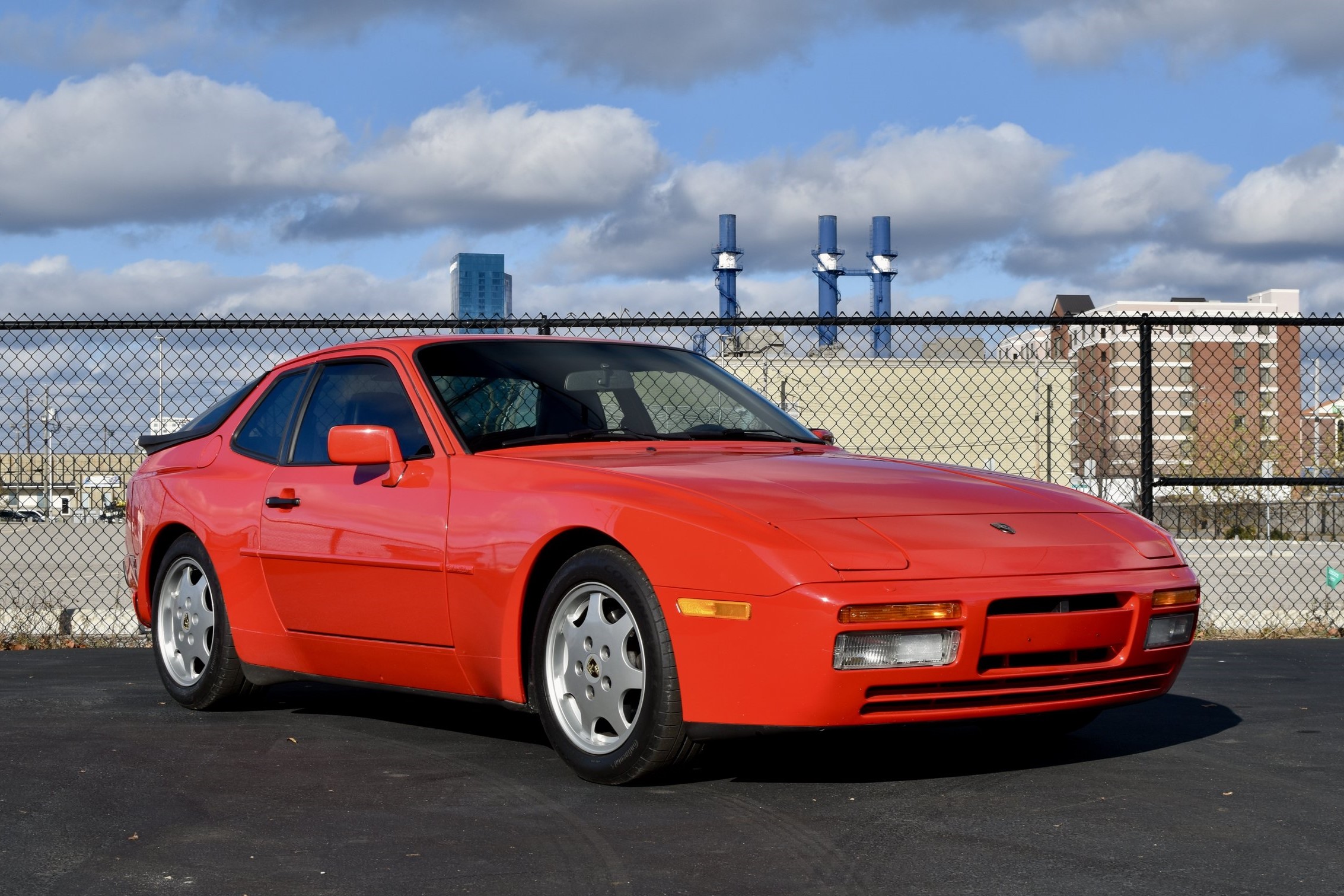
1989 Porsche 944 S2
As a descendent of the Volkswagen/Audi-partnered 924, the Porsche 944 was labeled many things in the ’80s and ’90s: the poor man’s Porsche, the yupPorsche, or simply Porsh (the schwa reserved for the 911 and 928). But in the last two decades, with the widespread acceptance of the Panamera, SUVs and more recently the Taycan, the idea of what constitutes a Porsche has taken on a much different dynamic. The 944 and even the 924 and 914 that came before it, has become appreciated for what it undeniably is: a superb handling, fun-to-drive sports cars i.e,. a legitimate Porsche. This was further emphasized by continual developments in the 944 lifecycle, first with the addition of a Turbo model, then a 16-valve S model, and a final varaint before evolving into the 968, the 944 S2. With a respectable 208 hp coming from the surprisingly silky 3.0-liter 16-Ventiler inline-4 (the largest gasoline-powered 4-cylinder motor since Pontiac’s wobbly INDY 4 in the ’60s), the S2 was within 10 hp of its Turbo sibling and delivered a much smoother power band (also within 10 of the 911 Carrera 3.2 for any purists keeping score). Although 19,727 were made between 1989 and 1991 in coupe and cabriolet form, only around 7,000 made their way to the US. This one (№ 451627) finished in Guards Red over Black leather, appears to have been exceptionally well kept with a binder of records and receipts. With an impressive 37,905 miles showing, its only modifications appear to be the addition of window tint during a two-year stint in Arizona, a headlamp replacement, and a newer Blaupunkt Bremen head unit (original headlamps and Blaupunkt Reno deck have been retained). A copy of the window sticker and both original keys accompany the sale along with a car cover. Find it for sale here at MOTORVAULT in Indianapolis with an asking price of $36,000.
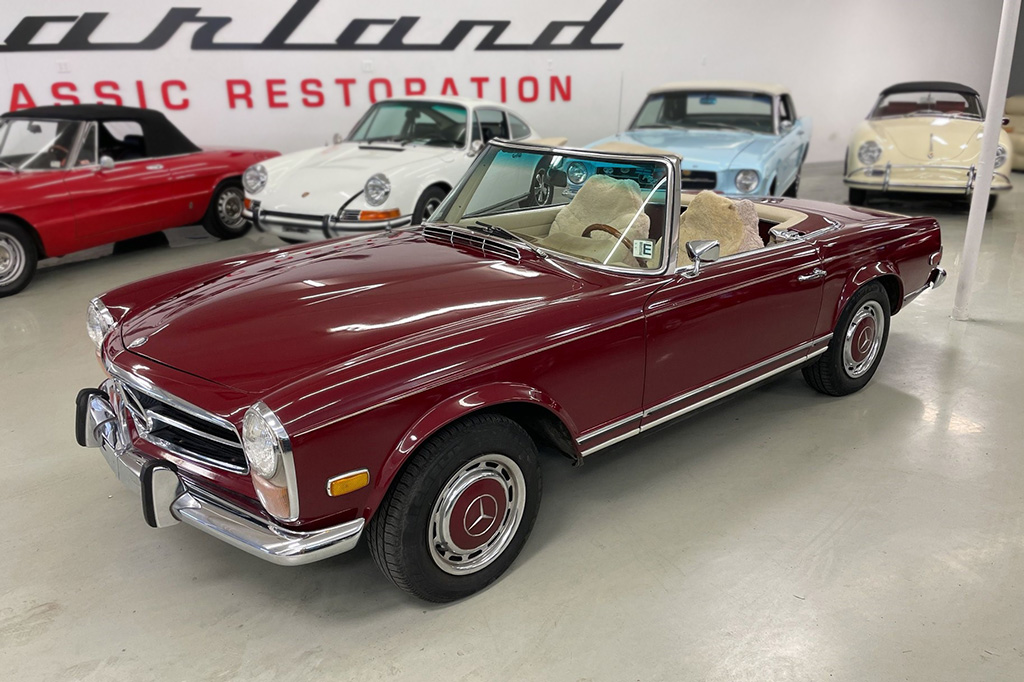
1970 Mercedes-Benz 280 SL
As the peak of the Mercedes-Benz W113 “Pagoda” model line, the 280 SL continues to be a stalworth collectible, with a slow but steady rise in values while not suffering any significant dips. Concours examples are now hammering down at where the deep seven-figure 300 SL was only a decade or so ago. But they don’t all have to be concours and this is an excellent example of one that is simply an honest, well cared for, enjoyable driver. It could be something more, certainly, but its appeal is in its appreciation for what it is. And what it is is a rust-free Mercedes-Benz 280 SL that was sold new in Albuquerque and comes from single-family ownership for the last 40 years. It had an earlier repaint in its original 542 Dark Red (an alluring color for a W113) that was done to a “commercially acceptable” standard. A fresh polish has it looking quite presentable however while the original brightwork is said to be very nice. No details are given on the condition of the soft top or the presence of the factory hard top. The Parchment MB Tex covering the seats is in need of replacement, however looks good otherwise, as do the maroon carpets. A Nardi steering wheel has been added but the original has been retained. Its M180 inline six has been treated to a major tune and servicing after the car’s seven-year dormancy and is said to be running and driving well, with the added bonus of a rare 4-speed manual gearbox. Showing what is believed to be actual mileage of 59,441, this honest 1970 Mercedes-Benz 280 SL is now offered for sale by Farland Classic Restoration in Denver with an honest asking price of $64,500.
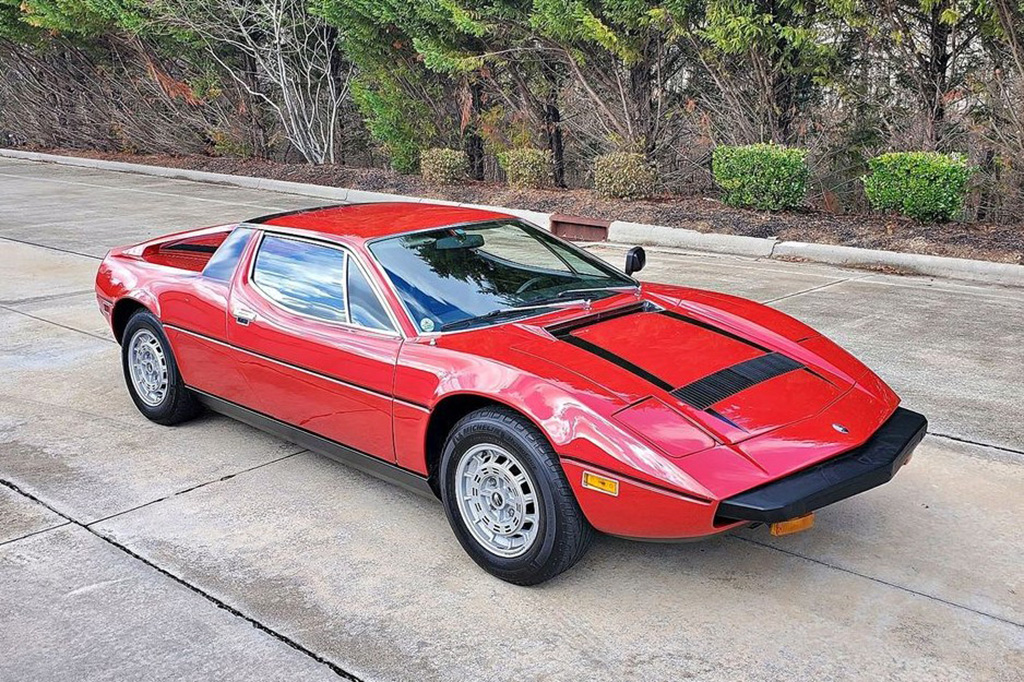
1980 Maserati Merak SS
Facing dwindling sales in light of the ’70s oil crisis, Maserati introduced a more economical sibling to its 4.7-liter V8 Bora, using a modified 3.0-liter V6, which Maserati had originally designed for its then parent Citroën. The Giugiaro-designed Merak was introduced at the 1972 Paris Auto Show, sharing part of the Bora’s structure and body panels. Extra cabin space gained by fitting a smaller and more compact powertrain also gave the Merak a 2+2 seating arrangement, popularized by its compatriots the Ferrari (Dino) 308 GT4 and Lamborghini Urraco. But as they continued to be powered by V8s, the Merak struggled to find its place as an exotic. In 1976 however, a lighter (-110 lbs.) and more powerful (217 hp) version was presented, the Merak SS, giving the smaller Maserati bona fide credibility. This Maserati Merak SS car manufactured in January of 1980, as per the Maserati S.p.A. Certificate of Origin and Technical and Aesthetic Characteristics sheet. It has been refinished in its original color of Rosso Fuoco by a notable restoration and service shop in 2010. Removable black vinyl decals were added at that time as well. The highly original Black (Connolly code VM 8500) interior appears to be in excellent condition with only a modern radio distinguishing it from factory. It is a matching numbers car with original chassis number matching the original engine as confirmed by the Maserati S.p.A. certificate. Maserati S.pA. certificates from Modena Italy including a copy of the original Final Tests Data Sheet for this exact vehicle or chassis AM122/US*2580* are included in the sale. This Merak SS car comes from nearly 40 years of sole ownership. He purchased the car on June 14, 1985 from Continental Motors of Hinsdale, IL with 7,939 miles. The car currently shows 35,665 miles. The owner was said to be fastidious about maintenance and and service records going back to 1985 accompany the car. Under the selling dealer the original Weber carburetors were rebuilt and a new more efficient alternator was installed with new belts. The original alternator is included in the sale. All fluids were changed and the air conditioning was converted to R134A. All lights have been checked and wheel bearings tightened. This 1980 Maserati Merak SS is in exceptional mostly original condition and a wonderful driver car ready to be enjoyed. It’s for sale at MotorCarTrader.com for $67,000.
Other finds
- № 1 of 1 1964 Pontiac Banshee XP-833 Coupe 1,498 miles – $1.200,000
- One-owner 2019 McLaren 570S Volcano Orange 6,138 miles – $180,000
- 65,939-mile JDM 1990 Toyota Sera Tennessee title – $11,000
- One of 576 1933 MG L-Type Magna concours resto – $85,000
- 23,200-mile 1988 Lotus Esprit Turbo recent service – $25,325
- One of 2,500 1983 Pontiac Trans Am Daytona Pace Car 4-speed – $12,000
- AMG OEM 1987 Mercedes-Benz 190 E Cosworth 77,000 km – $42,000
- 76,921-mile 1976 Alfa Romeo Alfetta Sport Sedan rare auto. – $9,500
- FCoI President’s 1980 Fiat 126 Abarth Martini livery – $16,500
- One-owner 76,388-mile 1983 Plymouth Reliant Wagon original – $1,500
- 46,000-mile 1967 Jaguar Mark 2 3.8 4-speed, records/receipts – $39,900
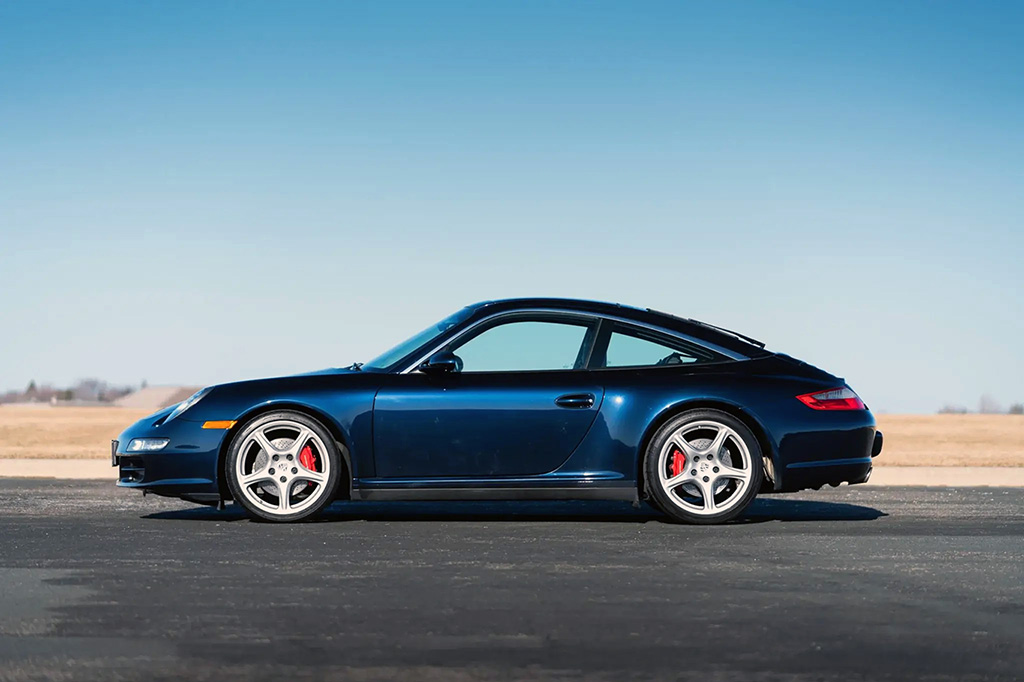
2008 Porsche 911 Targa 4S
Nostalgia can be a fickle thing. The Porsche 911 Targa was introduced in 1965 as an open-air alternative to the coupe, with a removable roof and the “bügel” B-pillar bar ahead of a rear glass dome. This would remain a hallmark of the Targa for nearly 30 years, through the 964 generation. For the next three generations, however, the Targa came to mean a nearly edge-to-edge glass roof that slid back and over the large rear window. The theory, presumably, was to create an even more open greenhouse effect while remaining a fixed-roof alternative to the fully open Cabriolets that had existed since late in the 3.0 SC generation. In practice, however, they didn’t seem to resonate with buyers who swayed to either coupe or cab instead. In a nostalgic move, Porsche would return to the bügel/glass dome configuration (albeit now fully hydraulic and ballet-like in its opening) late in the 991.1 generation. It proved to be (and continues to be) much more of a success with buyers. For several years, the glass-roof Targas languished in their own sort of Land of the Misfit Toys, relegated to cheap 911 territory along with Tiptronics. Call it nostalgia or perhaps a new-found appreciation for an innovative concept, but glass-roof Targas—particularly the 997 gen—have surged in the last two years, with values often leap-frogging Cabrios and not lagging too far behind their Coupe counterparts. This 2008 Porsche 911 Targa 4S—one of less than 1,500 sold worldwide—is a good example of why. It’s Midnight Blue Metallic finish complements the lines of the Targa (which is based on the Cabriolet) perfectly, set off with the bright chrome trim that distinguishes the glass-roofs. It’s further distinguished by red brake calipers and quad exhaust tips. As a 4S (Targas were only available as all-wheel-drive), it sports wide body haunches that further enhance the car’s proportions. The optional 19” Carrera Classic wheels are also a nice touch. Other equipment includes a speed-activated rear spoiler, front fog lights, bi-xenon headlights, and an optional rear window wiper. The hood, front fenders, bumper, and mirrors are covered under a layer of clear paint protection film. The cabin is appointed with Black full leather upholstery accented by the optional (and rare) Makassar wood trim. Wood trim on 911s can be off-setting, but here it’s a stylish touch. Other options include a three-spoke steering wheel in leather, heated seats with Porsche-crested headrests, self-dimming mirrors, the Bose High-End Sound Package, and a 6-disc CD changer. The car is also equipped with cruise control, automatic climate control, and Porsche Communication Management (PCM). What may hold this one back (or potentially make it a great buy) is an engine swap. The car’s original engine failed at 81,606 miles and was subsequently swapped by Porsche of St. Paul with a replacement engine showing 74,315 miles at the time of installation. A new clutch and flywheel were also installed along with a new water pump, oxygen sensors, valve cover gaskets, and other miscellaneous parts. Now showing 83,346 miles with recent maintenance including a fresh battery, hood struts, drive belt tensioner, oil, and oil filter, it’s a newly listed on PCARMARKET out of Minneapolis.
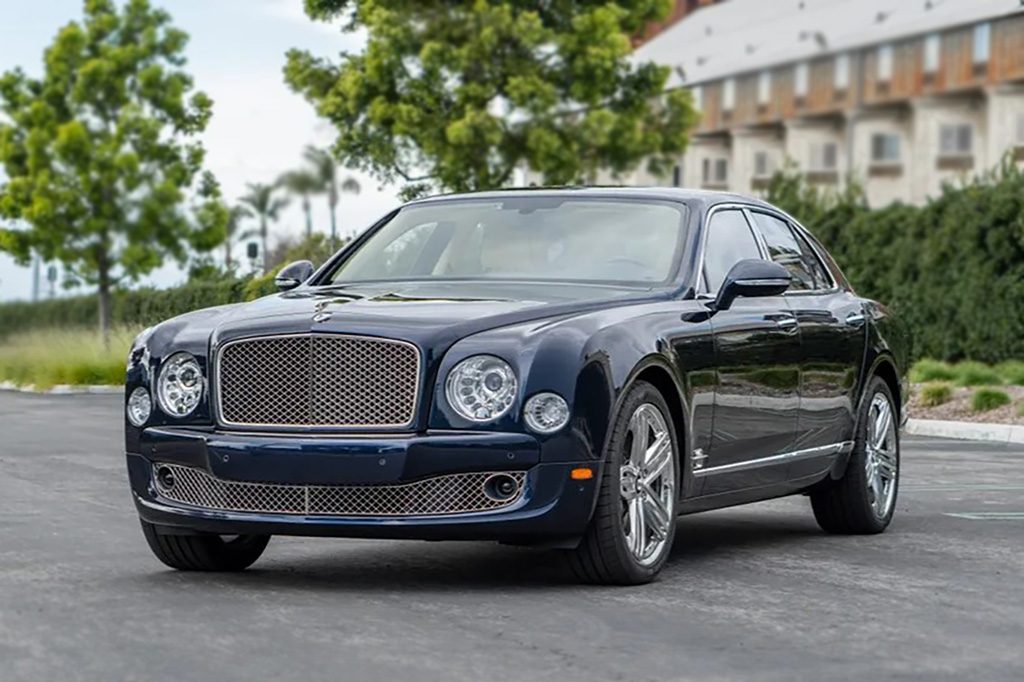
2011 Bentley Mulsanne
Unveiled at Pebble Beach Concours in 2009, the Bentley Mulsanne carried the lineage of the Arnage and took it even. It was developed over nearly five years from the ground-up at Bentley’s home in Crewe, featuring a unique exterior and interior design, along with a new chassis and a new variant of the iconic twin-turbocharged 6.75-litre V8 engine. Production ended in 2020, but for over a decade the Mulsanne held its place as not only the Bentley flagship but as a paragon of luxury and performance. It features a sophisticated air suspension system combined with unparalleled luxury including hand-stitched leather, high-quality wood veneers, and advanced technology features such as an infotainment system with a high-resolution screen, integrated GPS navigation, and a bespoke audio system. This 2011 Bentley Mulsanne was sold new by Newport Auto Center in Costa Mesa, California. It is finished in Dark Sapphire over a tan leather interior and includes nearly $27,500 in options including Flying ‘B’ radiator mascot, Naim for Bentley premium audio system, front/rear seat ventilation and massage function, Adaptive Cruise Control, contemporary-style crossbanding and inlay to fascia/waistrails, Bentley Wing badge to waistrails and fascia, veneered picnic tables with contemporary crossbanding and inlay, veneered iPod drawer & minor gauges panel, rear quarter vanity mirrors with veneer surround, ambient interior mood lighting, rearview camera and more. It has remained in the meticulous care of a single owner since new,. Now showing 11,132 miles, a Full Bentley Service History shows proper maintenance, with a fresh oil service and new tires installed by the selling dealer in January 2024. A third-party inspection reveals no cosmetic issues, however the hood struts are noted to need replacement and the remote trunk release is noted to bind, requiring manual effort to open. The owner’s manual and service books, as well as three key fobs (two regular and one valet) accompany the sale. Offers are now being accepted on Sotheby’s Motorsport with the auction closing in 13 days.
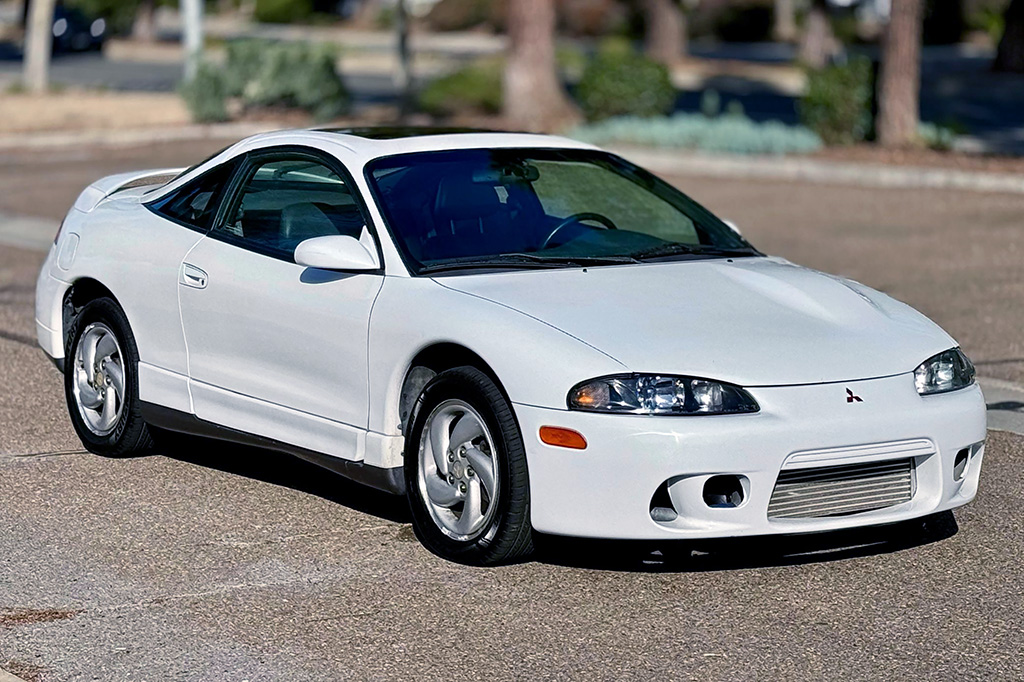
1996 Mitsubishi Eclipse GSX
It was a pick for the 22 For 22 For Under 22 list, but values of the second-generation Mitsubishi Eclipse GSX have since surpassed the parameters of ensuing years. They have in fact nearly doubled since the middle of 2021, now averaging nearly $27,500 (No 3+). The reasons are why they were a pick to begin with. Not only are they arguably the best looking cars to come out of the DiamondStar partnership, but also one of the best and most timeless to emerge from the jelly-bean aesthetic of the ’90s as a whole. Add to that a competent 210-hp turbocharged engine and all-wheel-drive and the Eclipse GSX had the performance cred to back up its sporty looks. With nearly 37,000 of them built (with Eagle/Plymouth cousins included) between 1995 and 1999, the trick is finding one that has not fallen prey to fast & furious modifications. This example. from 1996, comes finished in Northstar White over a gray interior and has gone through its 95,300-mile life relatively unmolested. Modifications have been limited to a fairly harmless K&N air intake system and GReddy blow off valve, while an aftermarket exhaust system and intercooler have also been sapped out. It otherwise retains all its factory GSX appointments like 16″ wheels, a rear spoiler, leather upholstery, a power-adjustable driver’s seat, a turbo boost gauge, and air conditioning, with an optional power sunroof and Infinity sound system. Minor flaws typical of a 95,000-mile car are disclosed but it presents better than most. Fuel injectors were replaced within the last 700 miles while the engine oil and filter were changed and the spark plugs were replaced in February 2024. It is now sorted and ready for its next owner, selling at no reserve on Cars & Bids out of San Diego.
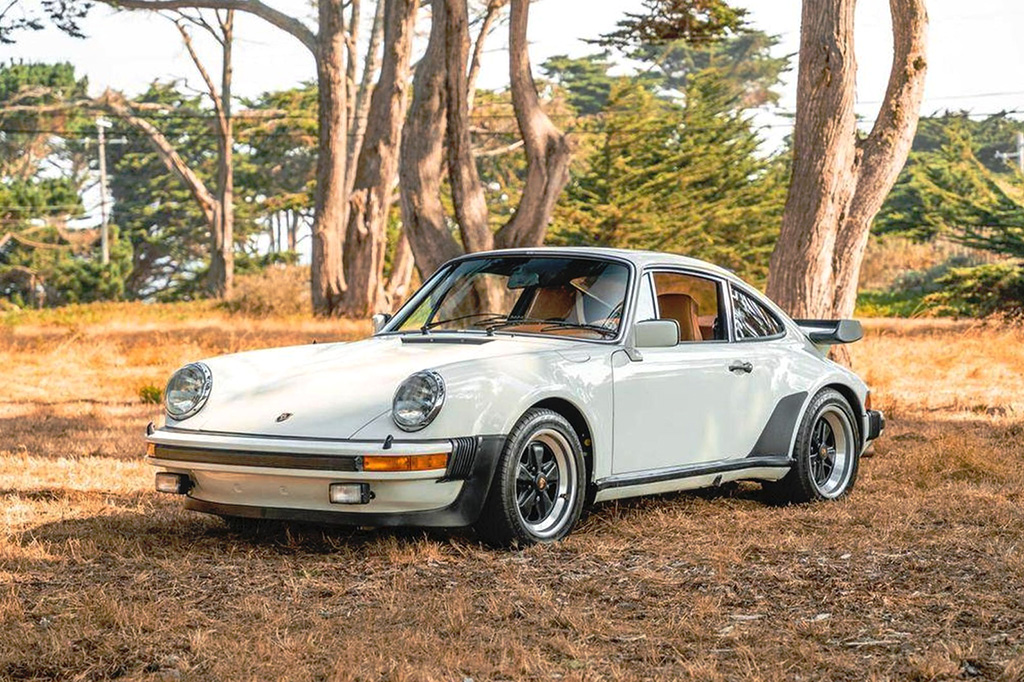
1978 Porsche 911 Turbo
By the 1978 model year, Porsche knew that the demand for the 911 Turbo Carrera (930)—originally intended as a run of 400 road cars to satisfy homologation requirements—was no fluke and they had a model that would have to continue evolving (which, nearly 50 years later, it’s safe to say it has). That year brought some significant developments to the 930, including a larger displacement to 3.3 liters as well as an intercooler on the turbo unit, which also required a revised “tea tray” rear spoiler to house it. Other changes included a modified front wing oil cooler, a new three-way catalytic converter and Lambda sensor, and an increase in compression (8.6:1). Power was up by 40 hp and 50 lb-ft of torque over the Turbo 3.0 (1975 – 1977) while drivability and engine durability significantly improved. This 1978 Porsche 911 Turbo (№ 0131) was initially delivered to Porsche+Audi of Beverley Hills, California, and acquired by its current owner in 2005. It is finished in Grand Prix White over Cork leather and powered by its original motor linked to a four-speed manual gearbox with an optional limited-slip differential. Further equipment includes 16″ Fuchs alloy wheels and Bilstein shocks, with the optional sunroof, fog lamps, headlight washers, rear window wiper, rear fender stone guards, and sport seats. The only modifications noted are a modern Alpine head unit and a European-market exhaust system. It is equipped with air conditioning, however the seller recommends a recharge for warmer climates. Other issues are prior paintwork, wear to to driver’s seat bolster (typical), and slight dash warpage (typical), but from the test-drive video, everything looks to be working properly and it certainly looks at home on the roads of the Monterey Peninsula. Now showing 50,130 miles, with approximately 25,000 of those added under its current 19-year ownership, its being sold on consignment through Mohr Imports at an asking price of $145,500.
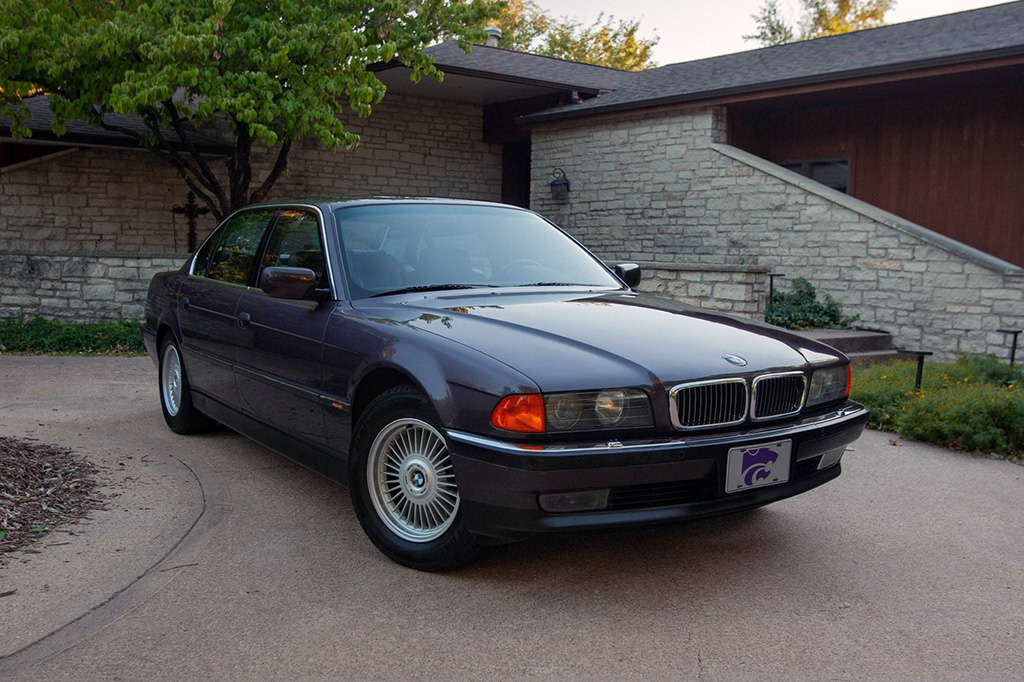
1998 BMW 750iL
Some have called it a four-door McLaren F1, as the 5.4-liter V12 found in the BMW E38 750iL shared the same 12 cylinder layout and design principle as the S70/2 6.1-liter found in the 20-million-dollar supercar. And while the latter’s center driving position could accommodate three, the long-wheelbase 7-Series could add another two in the lap of luxury. And with 15,000 built, compared to 106 of the F1, it’s far more likely to find a 750iL for less than the GDP of some countries. Finding one that stands out, however, is a somewhat bigger challenge. The first thing we notice about this 750iL is the color: Navarra Violet Metallic. It suits the sultry lines of the long-wheelbase E38 (which many agree is the best looking 7-Series ever), although it was more likely appreciated by its owner for its hint at the Royal Purple of Kansas State University. Delivered on November 15, 1997 in Rochester, New York, it was sold five years later to its current owner and Wildcats fan, who has kept it in the family ever since. It remains as it left the factory and its thorough service history shows maintenance performed by authorized BMW dealers and service centers. A third-party inspection report shows minor flaws including various rock chips and scratches around the exterior, wear on the window, trunk, and other rubber body seals, some creasing on the seat bolsters and leather upholstery, some wear on the steering wheel, shifter, carpets, headliner, and interior touchpoints, and some rust on the underbody and suspension components. It is otherwise highly presentable and what we might expect of, if not better than, a well-cared-for 70,000-mile luxury car. With V12s becoming extinct, and increasing number of enthusiasts are embracing their greatness and BMW, McLaren and Gordon Murray would agree, made a great one. Find this V12 1998 BMW 750iL on Cars & Bids out of Manhattan, Kansas (Go Wildcats!) with six days remaining in the auction.
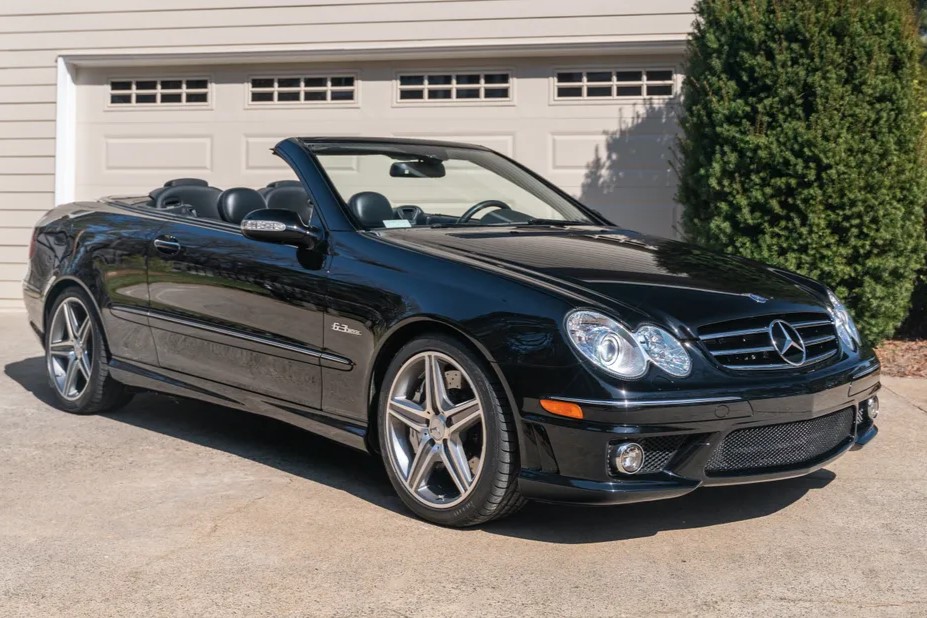
2008 Mercedes-Benz CLK 63 AMG Cabriolet
To look at a Mercedes-Benz CLK 63 AMG Cabriolet is one thing. It is at once elegant and aggressive, yet presents a lasseiz-faire way of going about it. But its most beautiful aspect lies underneath it curves: the 6.2-liter, 475-hp V8, AMG’s first purpose-built powerplant. While it maintains its Mercedes-Benz refinement, it can roll along with the swagger of knowing it has 60 more ponies than the mighty V8-powerd BMW E90 M3 next to it. And it’s a lot more exclusive. The CLK 63 Cabriolet was only offered for sale in the US and only in 2007 and 2008. A total of 243 were sold, of which 143 were 2007 and 100 were 2008 models. This one comes from 2008 and with 5,618 miles showing at the time of listing, it’s barely out of break-in mileage. It’s well appointed with options like DVD COMMAND navigation, Keyless Go, the Lighting Package (Bi-Xenon Active Lighting, Headlight Washing, Cornering Lamps), vented and heated front seats, iPod integration, and electronic trunk closure (total sticker : $98,620). The owner’s manual & service books, window sticker, two key fobs, and a removable windscreen are included in the sale. Bidding for this 2008 Mercedes-Benz CLK 63 AMG Cabriolet, here on Sotheby’s Motorsport, closes tomorrow.
Other finds
- № 1,464 of 2,995 1991 GMC Syclone 13,073 miles – $50,000
- Highly original rust-free 1975 Toyota Land Cruiser FJ40 – $32,000
- One-owner 2004 Mercedes-Benz S 500 44,899 miles – $9,750
- 16 years owned 1965 Oldsmobile Starfire Convertible – $27,500
- All original 1972 Mercedes-Benz 280 SE 4.5 98,000 miles – $29,000
- Two-owner 1972 Chevrolet Vega 2300 49,000 miles – $13,900
- 37,000-mile 1992 Mazda MX-5 Miata original unmodified – $12,000
- Rest-mod 1987 Toyota Land Cruiser FJ60 LS conversion – $45,000
- 28,000 km 1984 Renault R5 Turbo 2 LHD Japanese import – $79,000
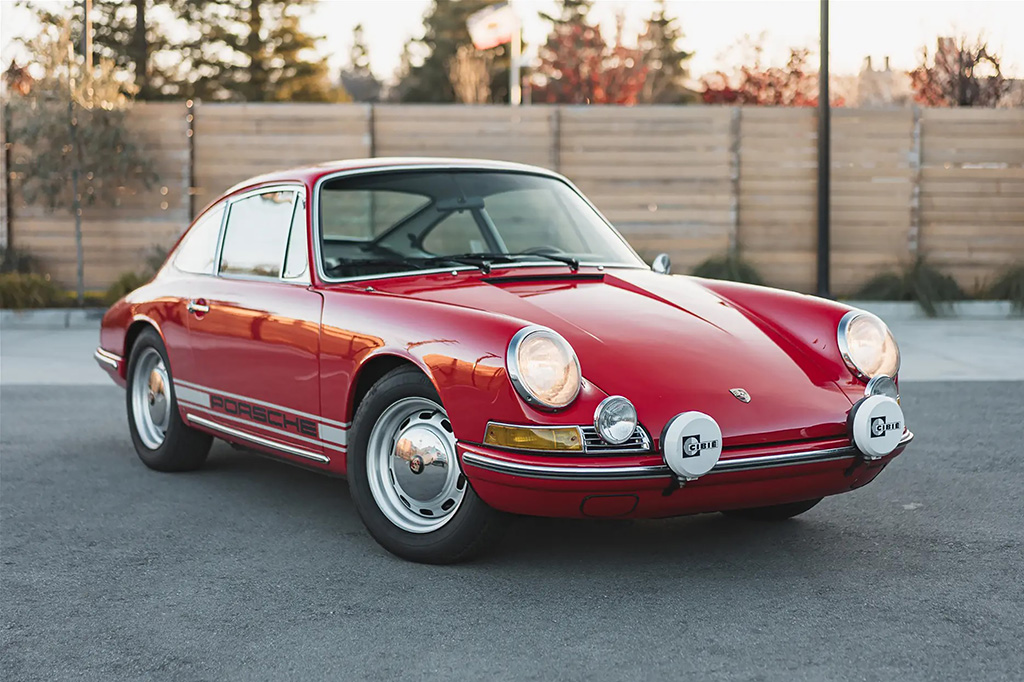
1966 Porsche 912
Introduced in 1965 as the entry-level Porsche (overlapping with the discontinued 356 that year), the 912 was essentially a stripped-down 911 with a variation of the 1,600-cc four-cylinder Type 616 engine used the 356 SC. While its 90 horsepower was well down on the 911, the 912 had more balanced handling as well as a longer range, making it ideal for weekend stage races, such as rally and autocross, while economical enough for daily-driver use. The 912 was also considerably less (~50%) expensive, resulting in about 32,000 (coupé and Targa) sold. The Porsche 912 began production in April of 1965 with a US debut at the New York Auto show in September of that year though it did not become widely available until early 1966. This is one of those coveted early models, distinguished by its three-gauge, green-on-black instrument cluster and the angled ’912’ badge on the deck lid. It was sold new on August 15th, 1966, at A.J. Pierson Sales and Service in Orlando, Florida. Originally finished in Gulf Blue, this 912 was refinished in Polo Red but is said to be otherwise very original. It was acquired by the current owner in 2020 and has undergone a significant ($28,000) mechanical freshening while documentation dating back to the receipt from the selling dealer in 1966 to present have been compiled in a hefty binder. It presents well enough to be included on the lawn at The Quail, a Motorsports Gathering in 2022, and though it was primarily done for aesthetic reasons, a set of rally stopwatches have been mounted in dash, should the next owner choose to make full use of the 912s abilities. A set of bumper-mounted Cibie spots and grille-mounted fog lamps underscore that option. A pre-sale inspection has revealed some minor signs of use such as rock chips on the nose, a small scuff on the right front side fender and a small dent on the right rear fender. A few seals are beginning to tear or separate but otherwise, the exterior is said to be in very good condition. Some typical minor leakage/seepage has been noted on the underside of the engine but is said not to be a major concern at this time. The consistent rise in early 911 values has towed along its four-cylinder sibling as well and this 1966 Porsche 912, with its excellent presentation and extensive documentation dating to new should rise to the top. It’s a recent addition to the inventory at Koenigsegg San Francisco, with offers being accepted here at ISSIMI in San Carlos, California, with a buy-now price of $80,000.
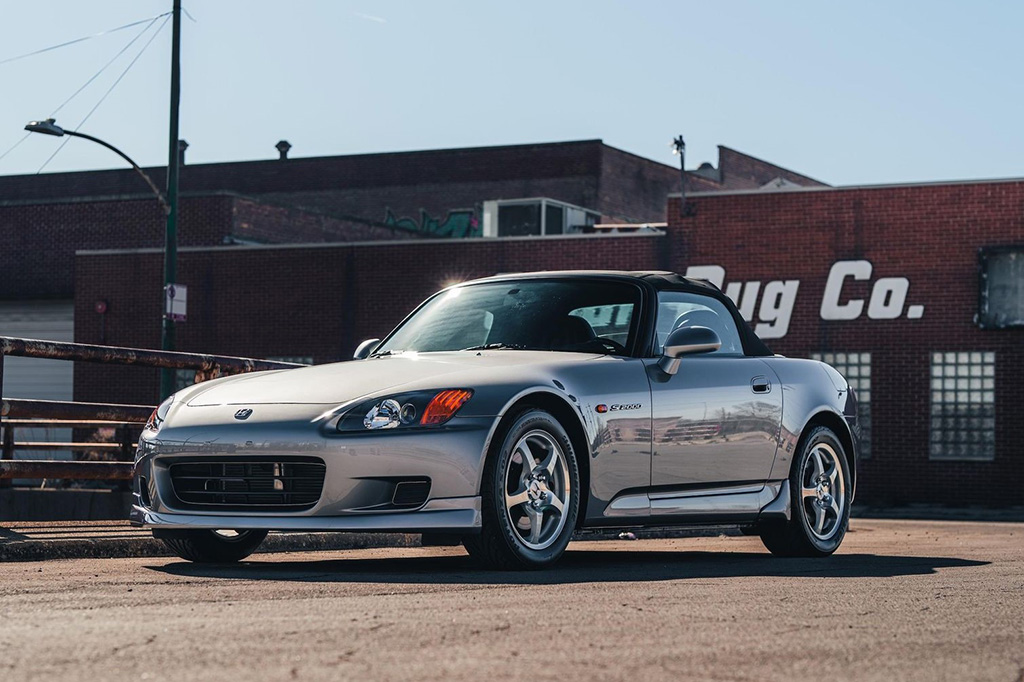
2001 Honda S2000
With European makes like the Porsche Boxster, BMW Z3, and Mercedes-Benz SLK all responding to a new-found enthusiasm for the affordable roadster three years earlier (not to mention the original re-igniter, the Mazda MX-5 Miata), Honda’s mission in introducing the S2000 in September of 1999 was simple: focus on the fun. It was the essence of a sports car with a front-engine, rear-drive layout, an unequal-length control-arm suspension front and back, disc brakes, and supportive, firm bucket seats—all in a package that weighed less than 2,800 pounds. At its heart was a 2.0-liter (hence the S2000) naturally aspirated four-cylinder engine putting out a remarkable-for-its-time 240 horsepower at 8300 rpm and revving to a near 9,000 RPM redline. This mated to a smooth and precise 6-speed manual. The only open-top sports cars matching its power-to-weight ratio at the time were the Chevrolet Corvette, the Dodge Viper RT/10, and the Plymouth Prowler, while only one production engine could match its revs: the Ferrari 360 Modena. At a $30,000 MSRP, the S2000 cost less than all of those ($140,000 less than the Ferrari). With so many grins to be had, it’s easy to imagine an S2000 racking up 100, 150, even 200,000 miles. It does make one wonder what kind of resolve it takes to chalk up less than 1,000. 948 to be exact, at the time of listing this 2001 Honda S2000 AP1. Especially when taking into account its spec: factory aerokit, 16″ wheels, limited slip differential, HID headlamps, and leather upholstery, among other appointments. Some flaws are reported, but it is otherwise as it left the showroom, save for a Comptech intake and cat-back exhaust system. Honda would update the S2000 for the 2004 model year (AP2) with a larger engine and softer suspension (along with some cosmetic changes), but many enthusiast consider the AP1 the true promise of Honda’s mission, the essential sports car. If you missed your chance for a new one in 2001, this may be the closest you’ll get. It’s on Cars & Bids with four days left to bid.
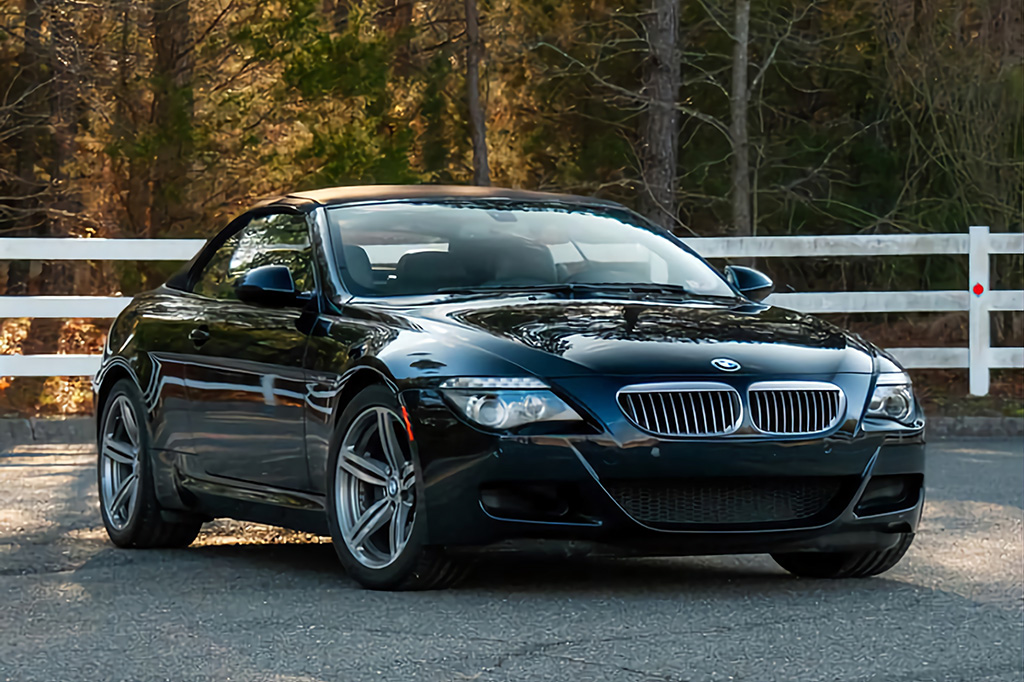
2010 BMW M6 Convertible
The return of the 6-Series to BMW’s lineup was received with mixed reviews. The E63’s “Bangle-butt” styling wasn’t to everyone’s taste and technological advances like iDrive and Active Steering took away much of the “ultimate driving” spirit that was a hallmark of the original E24 6-Series. Much of that changed with the 2006 M6. Any objection could quickly be overcome by its high-revving 5.0-liter V-10 producing 500 horsepower and 383 pound-feet of torque. The only drawback was that of the 14,152 made between 2005 and 2010, the vast majority were equipped with the sequential manual gearbox (SMG). Only 328 coupes and 379 convertibles were offered with a 6-speed manual gearbox. This BMW M6 Convertible is № 379 of those 379, the last manual convertible (E64) to come off the production line. The last of the only naturally-aspirated V10 convertibles with a manual and seating for four that has ever been made. With the end of the internal combustion engine looming large and glorious V12s (and W12s) becoming extinct, it will likely never be seen again. It was built on July 6, 2010, finished in Carbon Black, which is often described as a very dark blue in certain light. Only 15 M6 Convertibles, were made in this color; all of them LCI (facelifted) models and most coming from the final year of 2010. Of those, only 4 came with the optional carbon fiber interior trim and the full Merino leather package. Only two of those were final year 2010 cars. Other options include a heated steering wheel, Comfort Access keyless entry, soft-close automatic doors, automatic high beams, satellite radio, Pod and USB adapter interface, and smartphone integration. Noted flaws include some chips to wheels, some scratches and touch up spots on paint, some flaking on steering wheel trim, a scratch on the driver’s window, and a ding in left side door sill plate (a spare used one is included in the sale). Now showing 49,100 miles, recent maintenance includes new Michelin tires, fluids changed, air filters and cabin filters changed, fresh oil service, new spark plugs, new coils, new trunk struts, roof drains cleaned, windshield trim and wiper blades replaced, new Bluetooth TCU unit, and paint correction along with ceramic coating. Two keys, the ///M owner’s manual & pouch, front and rear license plate brackets, a complete tool kit (no missing pieces), a reproduction window sticker, factory charcoal intake filters, accompany the sale. This rare 6-speed 2010 BMW M6 Convertible can be found on the BMWCCA Marketplace in Mechanicsville, Virginia with an asking price of $55,000.
Other finds
- 61,550-mile 1998 Porsche Boxster Arena Red – $15,000
- One of 6 Tornado Blue 1960 Alfa Romeo Giulietta Veloce spec – $67,500
- Highly original 1968 Chevrolet Camaro SS 62,447 miles – $59,000
- 2,500-mile 2019 Radical RXC Spyder carbon body – $110,000
- Two-owner 1970 Jaguar XKE 4.2 Coupe 48,000 miles – $75,000
- 60,135-mile 2002 BMW 335xi unmodified, well optioned – $12,400
- Ground-up resto 1967 Ford Bronco 289 V8 – $85,500
- 19,000-mile 1967 Triumph Spitfire longtime original ownership – $18,500
- Matching №s 1969 Pontiac Firebird 400 Convertible 66,256 mi. – $75,000
- 67,000-mile 1965 Mercedes-Benz 220 SEb highly original – $55,000
- One-owner 45,000-mile 1976 Datsun 280Z factory A/C – $24,995
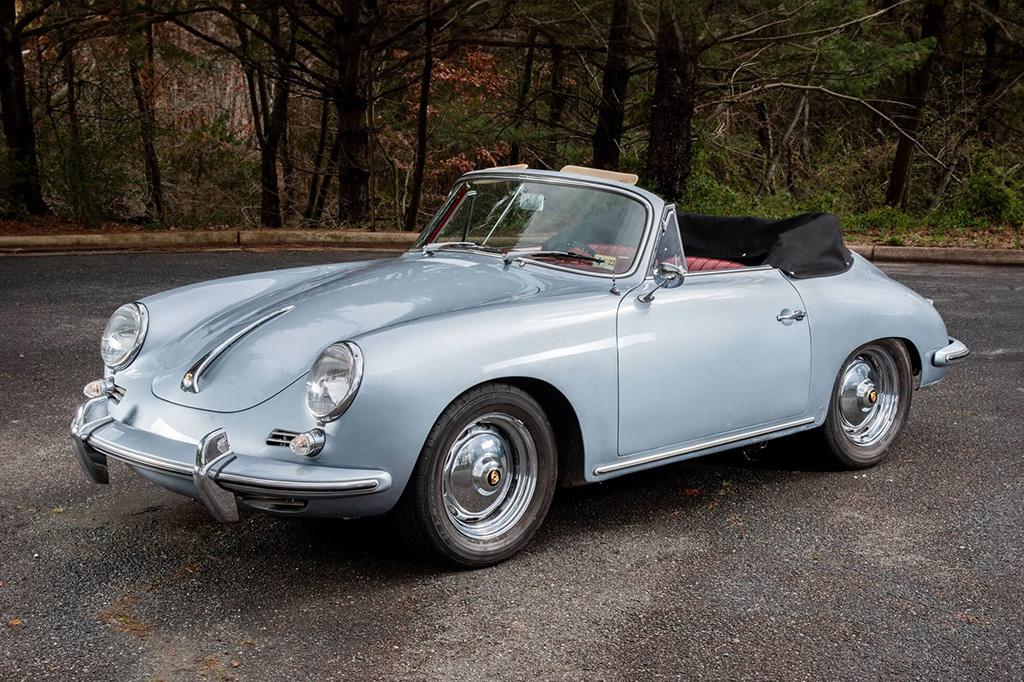
1962 Porsche 356 B Cabriolet
This T6-Bodied Porsche 356 B Cabriolet, with its twin grille and more contoured boot, was completed in December 1962 and delivered in June of the following year by Porsche Cars Pacific, a western-states distributorship in Burlingame, California. It was soon purchased by Thomas and Georgia Strentz of Fresno before moving to Virginia, where Tom would go on to become an authority in hostage and crisis negotiations, the author of three books. The 356 B was treated to an extensive $55,000 two-year restoration which included a glass-out refinish from its original Slate Grey (6201 Schiefergrau) to Silver Metallic along with a replacement Black convertible top. The cabin meanwhile was reupholstered in red leather and fitted with new German square-weave carpeting. The VDO instrumentation, Blaupunkt AM/FM stereo, and glass windows remain original to the car. All gauges and accessories are confirmed to be in working order. Its 1600 cc flat-four “Normal” engine and 4-speed gearbox are original to the car. The motor was rebuilt and modified by specialist Tim Berardelli and is said to produce approximately 85 HP. Notable mechanical work includes new pistons, valves, a new clutch, shocks, bushings, and brakes. A host of service documentation is included in the sale, along with the owner’s manual, a jack, a toolkit, a Kardex, service records, and memorabilia. Upon Tom’s passing last September, the Porsche 356 B Cabriolet is being offered for sale for the first time in 62 years to its next owner. It’s a new listing on PCAMARKET out of Fredricksburg, Virginia.
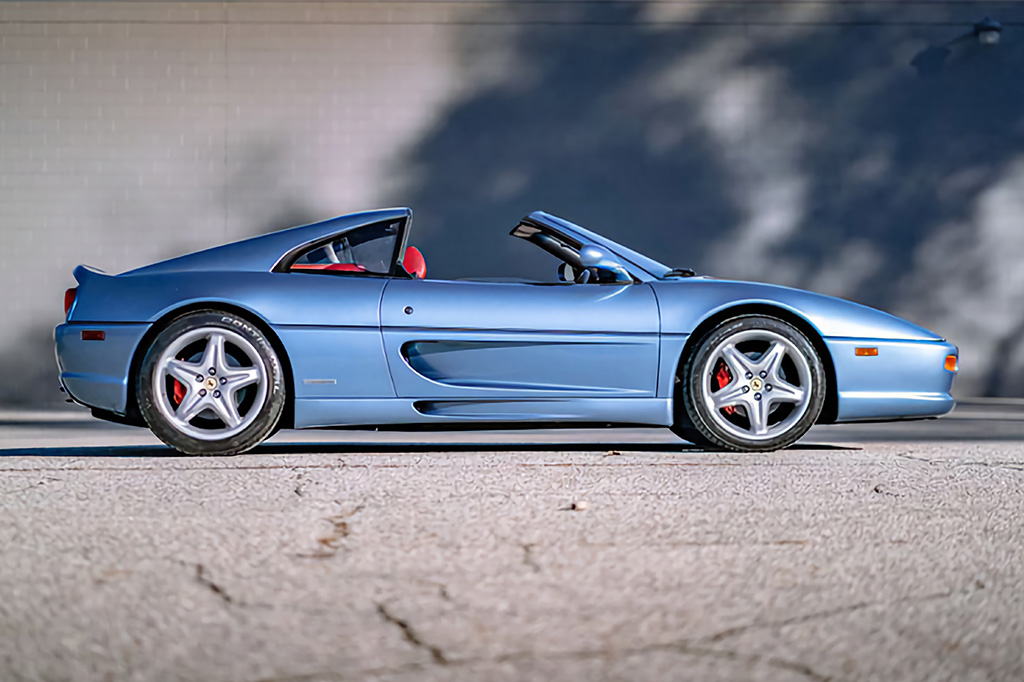
1998 Ferrari 355F1 GTS
As increasing safety standards in the late ’60s and early ’70s looked to be the doom of tops-down convertibles, a growing number of sports car manufacturers were going the way of the Porsche Targa and Corvette T-top. This allowed for much of the open-air, wind-in-your-hair driving experience while providing some rollover protection. The Ferrari GTS followed suit, beginning with the Dino 246 GTS and followed by a string of “Flying Buttress V8” Ferraris: the 308 GTS, 328 GTS, and 348 TS. In 1993, along with subtle revisions to the 348, the line brought back a fully open Spider. It appeared to make the Targa roof GTS obsolete and in fact by the time its successor, the F355, was introduced, only 2,577 were made (out of 11,273 total). Of those, only 529 were equipped with the innovative-for-its-day F1-style automated manual paddle-shift transmission. That makes a 355F1 GTS among the most coveted modern Ferraris today. This particular Ferrari 355F1, from the 1998 model year, is all the more appealing in its Azzuro California over Red leather combination. It’s said to be entirely original, save for a replacement head unit (original factory radio has been retained and included on the sale). There’s little to fault in the paint aside from a few scuffs and scratches while the interior appears to show little wear and relatively free of the “sticky” that plagues Ferraris of this era. Some typical warpage of the passenger airbag cover is evident though not as severe as some. It’s in line with what we would expect of a 26-year-old 15,648-mile 355F1. It has however had a fresh engine-out service, which gives its next owner five years or 3,000 miles (per factory recommendation) of relatively maintenance-free enjoyment. Find it here on ACC Auctions through a dealer in Grand Rapids, Michigan with seven days left to bid.
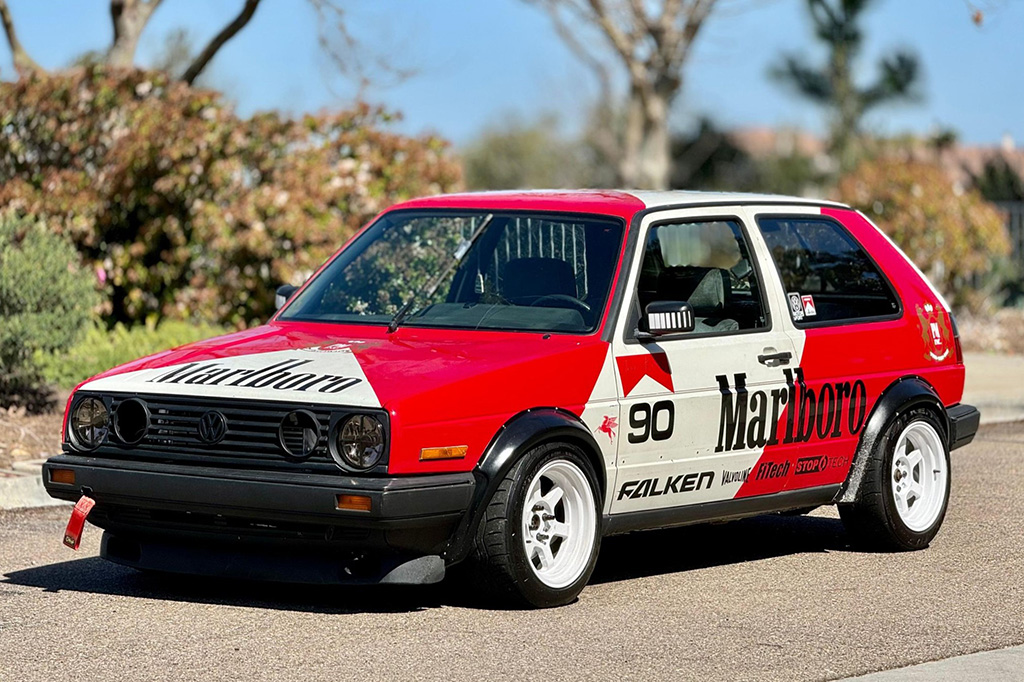
1990 Volkswagen Golf GTI
The Mk2-generation Volkswagen Golf GTI endures as one of the most iconic and engaging hot hatches of all time. Along with its economical and practical everyday usability the peppy 2.0-liter engine and five-speed gearbox offered plenty of sporty character. Not sporty enough for some however, as it also made an easy and affordable platform for modifications. This one, wearing the Group A Marlboro Racing livery, has been modified with a Volkswagen-sourced turbocharged 1.8-liter engine swap, a 02J 5-speed manual transmission swap, a Garrett GT3076R turbocharger, a EuroCustoms Stage 2 tune, custom exhaust, Solo Werks coilover suspension, MK3 GTI front brake calipers and rotors, 15″ MST Time Attack wheels, Voomeran-style wide fender kit, and a Mk3 GTI instrument cluster (as a result being sold as TMU), to name a few. While the car has some minor flaws that can be expected of a 34-year-old-Golf, the mods look to have been done to a high standard and the video in the listing shows it to be an excellent driver, teasing at what it might do if unleashed on an open road. It’s a new listing on Cars & Bids out of San Diego.
Other finds
- 651-mile 1984 TVR 280i two owners – $14,600
- Two-owner 1990 Ferrari Testarossa 22,100 miles fresh service – $136,000
- 74,248-mile 1984 Ford Escort Diesel time capsule – $15,000
- Autographed Starsky & Hutch 1974 Ford Torino 26,000 miles – $38,500
- 55,852–mile 1987 BMW 325is 5-speed limited slip – $32,000
- One-owner 1998 Chevrolet Corvette 28,045 miles, tasteful mods – $22,000
- 26,945-mile 1990 Volkswagen Corrado G60 fully documented – $18,500
- One of 26 1995 BMW M3 Lightweight one-owner – $220,000
- Original owner 1969 Buick Riviera 65,000 miles – $26,500
- Mrs. Shelby’s 1987 Dodge Shelby Shadow CSX № 230 of 750 – $5,000
- One-owner 2003 Porsche Boxter S PTS Lago Green – $19,950
- Little old lady’s 2004 Lexus is300 45,000 church-driven miles – $14,500
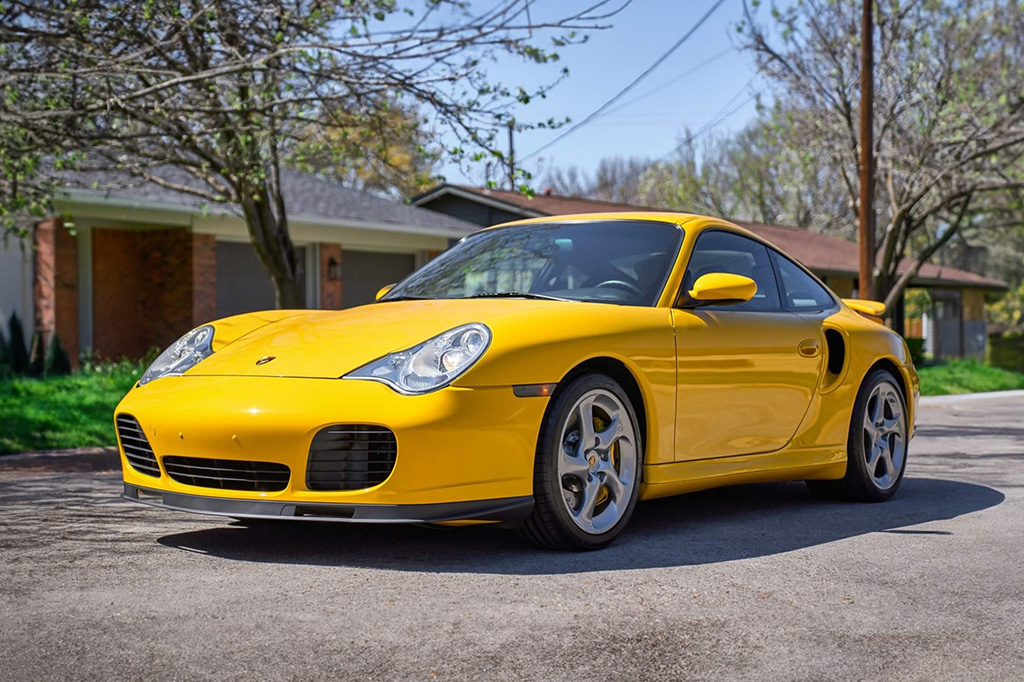
2005 Porsche 911 Turbo S
Like its predecessor, the 993, the Turbo S was made as a the ultimate 996 to cap its generation. The Turbo S differs from its non-S counterparts by the X50 Powerkit, which boosts power from the water-cooled Mezger 3.6-liter flat-6 to 450 hp (up 36) by way of larger K24 turbos and a revised ECU and exhaust. PCCB (Porsche Ceramic Composite Brakes) with painted calipers were also standard, as were aluminum-look instrument dials and model designations on the door sills and forward center console. Only 598 copies were made for worldwide markets. This one, presented in a hard-to-miss Speed Yellow over full Black leather, is optioned with stainless-steel tailpipes and painted side skirts, along with a Sport Shifter and black floor mats with Porsche lettering. It spent most of its life in Florida with brief stints in Arizona, Maryland, and most recently Texas. It has likely amassed more miles in transport than on the road, showing just over 9,000 miles since new. A comprehensive maintenance service was performed through Porsche Owens Mills during its Maryland stay in 2021. Just over 400 miles have been clocked since. The owner’s manual, toolkit, and battery charger accompany the sale. It’s a new listing on PCARMARKET out of Austin.
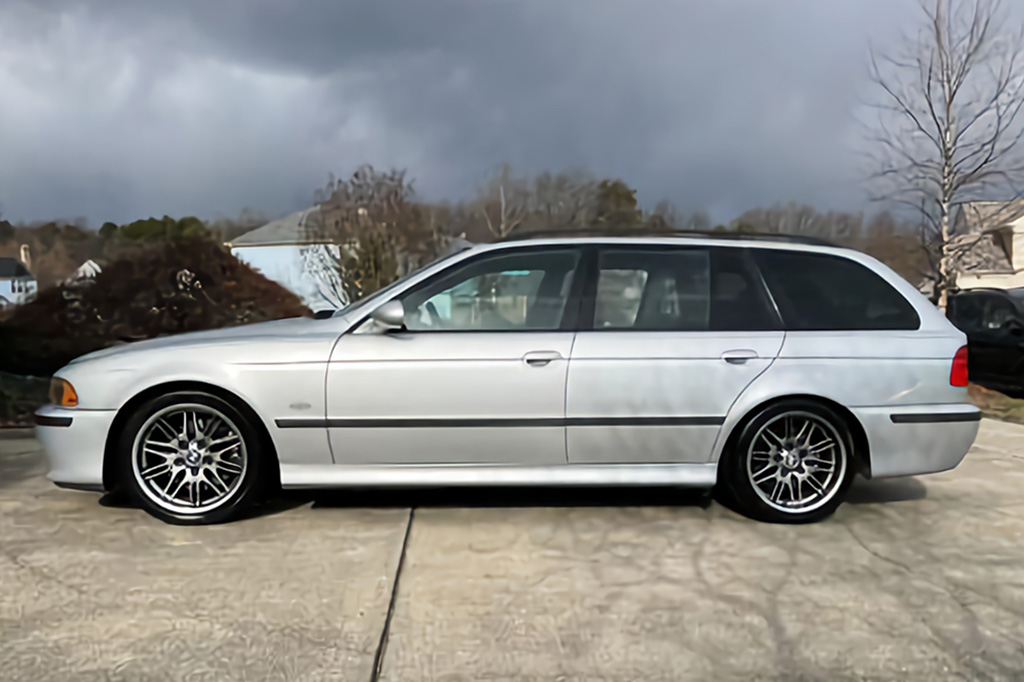
2003 BMW 540iT
The E39 BMW M5 Touring, never offered here in the US, will not fall under the 25-year Rule until next year at the earliest. In the meantime, some owners have been forced to get creative. This is an example of taking a relatively rare 540iT (wagon) M-Sport with an automatic gearbox and fitting it with a 4.9-liter S62 V8 was sourced from a 2002 M5 and an M5-sourced six-speed manual transmission with a limited-slip differential. The rear floor was cut out and replaced with a fabricated M5-style Status Gruppe carbon-fiber rear. An M5-sourced steering box and brakes were also installed. The subframe was reinforced and fitted with Powerflex bushings. Eisenmann M5 Race mufflers were installed along with a Supersprint X-pipe. Suspension modifications included Dinan front springs, Koni Yellow Sport shocks, a Dinan adjustable rear sway bar, BeastPower rear sway bar brackets, and Powerflex rear sway bar bushings. Additional work during the build included refinishing the 18″ Style 65 wheels and replacing the front and rear control arms and rear air springs. The side mirrors (also from an M5), side skirts, and Sport Package front bumper cover were refinished in color matching Titanium Silver as part of the project. The cabin was overhauled during the project and fitted with M5-sourced front seats and door panels reupholstered in Porsche Bordeaux leather. The second-row bench seat was retained and also retrimmed, and the shifter was rebuilt. Other M5 details include knee pads, sun visors, door sill plates, and carpeted floor mats. A microsuede headliner has been added along with a ZHP shift knob with a red boot. Other interior details include a factory stereo, aluminum trim, and an air conditioning system that is said to have been recharged in 2022. It’s a faithful two-year effort at replicating one of the greatest BMW touring cars of all time. With 83,000 miles currently showing on the odometer and 21,000 miles on the S62 at the time of the conversion, it has a lot left to give its next owner. After failing to meet reserve through a recent online auction, it’s now offered here on the BMWCCA Marketplace (BMW Car Club of America) with an asking price of $55,000.
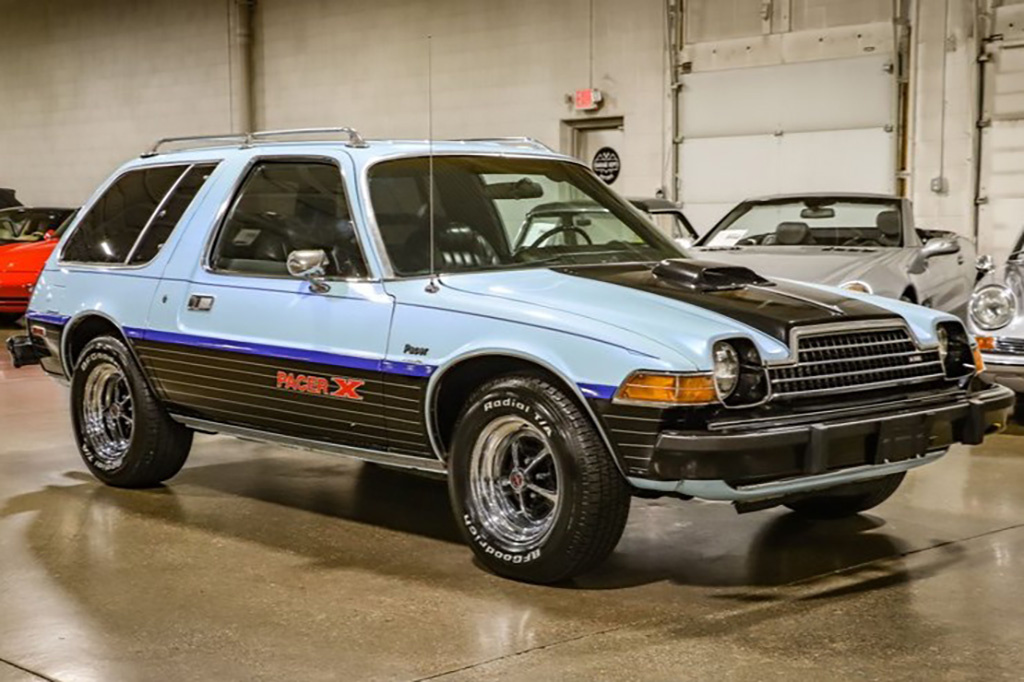
1978 AMC Pacer X
Introduced in 1975 as the successor to the Gremlin (success in this case relative), the Pacer promised to be what AMC called a “piece of tomorrow.” But its awkward girthy shape and shoddy build quality had many calling it a piece of something else entirely. Its run only lasted five years, but its legacy isn’t forgotten today. In that sense perhaps AMC got the “tomorrow” bit right. There was in fact a fair bit of innovation behind the tomorrow idea: the wide body partially intended to ease big-car Americans into the downsized future; it was also the world’s first “cab forward” design (as it would be coined by Chrysler nearly a decade later) engineered for occupant safety while its longer passenger door (by 4 inches), odd as it was, made for easier rear seat access. The design itself was drafted around initial plans to use a Wankel rotary engine, first from aircraft engine builder Curtiss-Wright, until an opportunity to buy them from GM arose. When GM scrapped those plans, the Pacer was left without an engine and had to rely on feeble GM straight sixes, leaving them down on both power and fuel economy. Woeful or not, there certainly is no mistaking a Pacer. But while most of us associate it with the bulbous rolling fish bowl, a somewhat less unusual looking compact station wagon was added to the product line in 1977. A year later they got a mild facelift, but clearly not enough to move the bar. This Pacer comes from that year in the wagon variant. Like the Gremlin before it, the Pacer was available in a number of appearance and equipment trims. This is a Pacer X, which included, among other things, black vinyl bucket seats, a sports steering wheel, two-tone paint for upper and lower bodyside (repainted in its original shades of Powder Blue/Brilliant Blue), slot-style road wheels with radial tires, and Pacer X decals on the doors. It’s powered by the new-for-’78 304 c.i. V8, capable of hurling the 3,500-lb wagon to 60 in around 12 seconds. It’s been fitted with a new carburetor and is mated to the original 3-speed automatic gearbox. It’s optioned with factory air conditioning and features fresh carpets, an aftermarket stereo and upgraded suspension, along with 15” Magnum 500 wheels dressed in new Radial T/As. With 62,050 miles showing at the time of listing, it’s evident that someone gave the once-unloved Pacer some love. What will its piece of tomorrow be? Seven days of bidding will tell, here on ACC Auctions through a dealer out of Grand Rapids, Michigan.
Other finds
- 18,996-mile freshly serviced 1997 Ferrari F355 Spider 6-speed – $139,950
- One of 4,993 1993 Ford SVT Mustang Cobra 14,706 miles – $59,975
- 58,835-mile 1979 Land Rover Range Rover Pablo Escobar Car – $75,000
- 95% original 1935 Plymouth PJ Touring Sedan T5 5-speed – $16,500
- 6,600-mile 1978 Pontiac Firebird Redbird two owners – $33,500
- Two-owner 1976 Mazda RX4 Wagon highly original – $22,000
- 13,800-mile 2017 Ford Shelby Mustang GT350 original owner – $53,500
- Stored 25 years 1984 Pininfarina Azzure 28,650 miles – $33,995
- One of 3,429 1957 Mercedes-Benz 220 S Bruce Adams resto – $295,000
- Original owner 1974 Cadillac Coupe De Ville 20,900 miles – $39,900
- 38-year family owned 1985 Jaguar 4.2 Vanden Plas 61,503 miles – $16,000
- Updated 1974 Triumph Stag Rover V8, Tremec 5-speed – $29,500
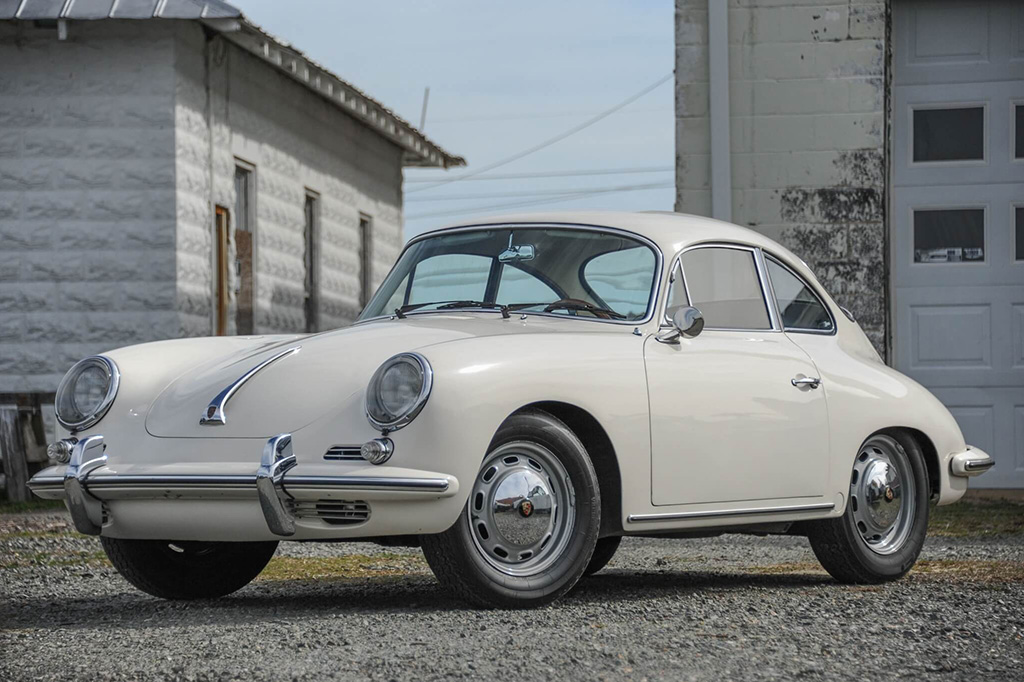
1964 Porsche 356 SC
This 1964 Porsche 356 SC Coupe was sold new in Germany and eventually imported to the U.S., where it has remained under the care of its owner since 1989. It was factory-finished in Ruby Red but underwent a repaint in its current Light Ivory color shortly following an accident involving the driver’s rear quarter shortly after the current owner’s acquisition. A slight misalignment in the bracing of the engine compartment inside the rear fender remains, however there is no other evidence of body or frame repair reported. The exterior shows signs of road-going wear including paint chips along the leading edges of the front clip, door edges, and other outer components. A slight dent is present where the rear bumper is affixed to the fender. Some areas also exhibit bubbling indicative of rust formation, although these spots are isolated and are said to be approximately pea-sized. The interior was reupholstered around 2004, accompanied by matching door panels and gray carpets. The dash presents its factory-specified red finish and has been wrapped in black vinyl. The gauges are said to remain original, except for the tachometer, which currently displays a ‘C’ trim instead of the original ‘SC’ designation. The carpet, floor mats, and rubber lower floor coverings are reportedly original, and one area of wear is noted near the driver’s foot, likely from scuffing over time near the door sill. The headliner is said to be free of stains, and a wood-rimmed Nardi steering wheel has been installed. The seller notes that the two cabin lights as well as the speedometer, odometer, and clock are currently non-functional. The 1.6-liter Type 616/16 flat-four engine underwent a rebuild in 2004 by Foreign Intrigue of Maine. Moreover, the car received recent services in February 2024 including a rebuild of the Solex 40 PII-4 carburetors using a Stoddard kit, installation of new air pumps, Bosch ignition points, and a new coil, along with a thorough cleaning of the fuel system. Additionally, a Willhoit front sway bar was fitted during the same period. What this car represents is a true driver-quality example of the most evolved 356, the SC. Albeit presentable in its current state, it won’t be winning any awards at the Amelia. But that’s not a bad thing. It gives its next owner the license to drive it in the spirited manner in which it was intended at what may end up a bargain price. We’ll watch how it plays out in six days, when bidding for this 1964 Porsche 356 SC on PCARMARKET closes.
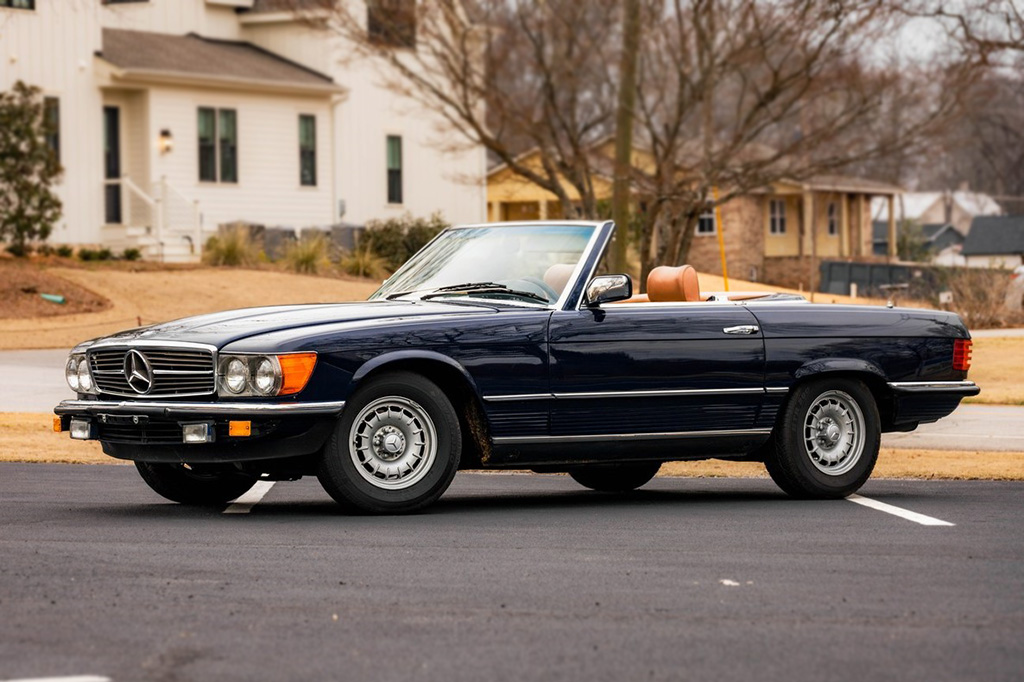
1985 Mercedes-Benz 280 SL
With nearly 240,000 R107 roadsters made over a period of 17 years, finding one is not particularly difficult. And despite that kind of volume, quality examples regularly fetch close to their original MSRP today, if not considerably more. Within the nearly 240,000 R107s, however, there were some relatively limited production models. The 280 SL, made from 1974 to 1985, is one such model. 25,436 were built (compared to 120,000 of the 450 SL and 380 SL of the same period). Furthermore, while far from the super leicht character of the original SL, the 300 SL of the 1950s and early ’60s, the 280 SL, with its 2,746 cc DOHC inline-6, has a considerable (around 180 lbs) weight advantage over its V8 counterparts. At the same time, its max power output (182 hp) was comparable to a US-spec 450 SL and more than the later (1981 – 1985) 380 SL’s 155 hp. This 1985 Mercedes-Benz 280SL was purchased for $22,000 from the factory. It was intended as a grey market import into the United States from new and shipped from the factory in Stuttgart to the port in Los Angeles, California in June of 1985. It is finished in a sultry Midnight Blue (904) over Palomino Leather (274) with a Blue (9001) soft top, and features a four-speed automatic transmission, automatic climate control, tempomat cruise control, power windows, and rare, factory installed rear seats (“kinder seats”). While most of the paint is original, some touch-up and a few light scratched have been noted. The 14″ Bundt wheels have been refinished in their original Astral Silver. The soft top was replaced 14 years ago but is said to look and fit like new. A color-matched hardtop and stand are included in the sale. The cabin is upholstered in Palomino Leather (274) with matching carpets and burl wood trim. It retains its original Becker Mexico. Minor flaws reported include two small cracks in the dash (common flaw), a non-operational power antenna, and not enough of a charge in the original R12 AC to kick the compressor on. The original M110 motor was treated to a top end rebuild in 1998 at 58,000 miles. The head gasket was replaced, the head resurfaced, intake/exhaust guides were replaced, and timing was dialed in. Now showing 91,718 miles, the seller notes a possible main seal leak, a transmission leak, and a few engine oil leaks. A tool kit, a jack and spare tire, importation papers from 1985, and service records from the ’90s and ’00s accompany the sale. With its striking color combination, svelte Euro bumpers, spirited performance, relative rarity, and a bit of sorting, this could be an R107 to show and go. It’s here on The MB Market out of Senoia, Georgia with seven days left to bid.
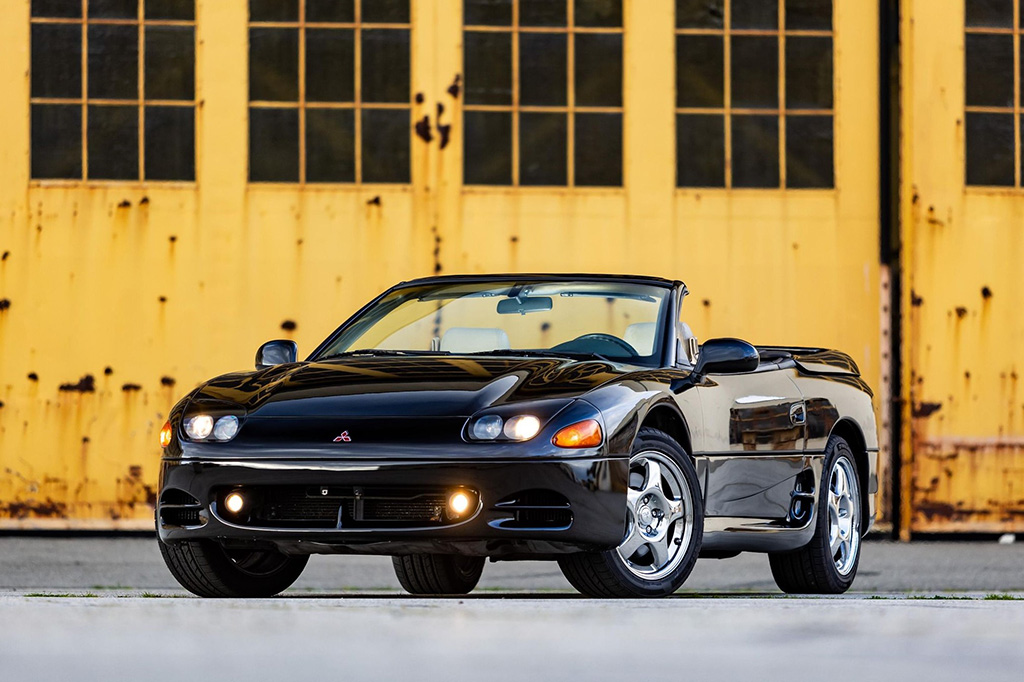
1995 Mitsubishi 3000GT VR4 Spyder
In 1990, with the Japanese sports/GT wars kicking into high gear with their turbo engines, Mitsubishi jumped in with the 3000GT (along with its DiamondStar sibling, the Dodge Stealth). Based loosely on the HSR/HSX concept shown at the 1989 Tokyo Motor show, Mitsubishi’s offering was perhaps more GT than its NSX, 300ZX and RX-7 compatriots, with a 2+2 seating arrangement, but it was no less equipped to do battle with the VR4 variant’s 300-hp twin-turbo DOHV V6, along with its Viscous Real-time 4-wheel drive (VR4) and electronically controlled suspension aiding its road manners. The Series 2 facelift of 1994 brought power up by another 20 hp. A year later, a convertible Spyder, built by ASC, was introduced. Made only for the 1995 and 1996 model years, only 604 VR4 Spyders were built. This 1995 Mitsubishi 3000GT VR4 Spyder has the desirable 6-speed manual gearbox and along with its factory appointments like 17″ wheels, 4-wheel steering, a power-folding hardtop, a power-adjustable driver’s seat, automatic climate control, and an Infinity sound system, a Python security system and an aftermarket spark plug cover have been added. Showing 89,972 miles at the time of listing, its had recent service including the replacement of the serpentine belt, water pump, and timing belt, while the coolant was flushed. An oil and filter service was done about 1,700 miles ago in April of 2022. It promises to be a superb GT, but what may hold it back are a repaint in its original Sable Black, along with a Manufacturer Buyback or Lemon designated title. This reportedly was due to an issue with the retractable hardtop roof mechanism. Other flaws reported appear relatively minor and consistent with age and mileage. It’s a new listing on Cars & Bids out of Hayward, California.
Other finds
- 20 years owned 1978 Porsche 911 Turbo 50,200 miles – $8,500
- 28,900-mile 1998 Jaguar XJR two owners – $21,000
- Award-winning resto-mod 1947 Cadillac 62 Sedanette LS3 – $89,900
- One of 29 2001 Dodge Viper GTS ACR 32,129 miles – $87,000
- 70+ year family owned 1952 MG TD Mark II photo history – $32,500
- № 139 of 650 2018 Chevrolet Corvette Z06 Carbon – $119,999
- 74,000-mile JDM 1999 Toyota Crown Royal wool upholstery – $7,995
- One of 821 1975 Jaguar XJ12C running project – $20,000
- 21,964-mile 1969 Chevrolet COPO Camaro 1/1 Liquid Chain – $219,900
- One of 3,933 1973 Buick Riviera GS factory ASC sunroof – $30,000
- 57,881-mile 1995 Mercedes-Benz E 320 Cabriolet highly original– $20,700
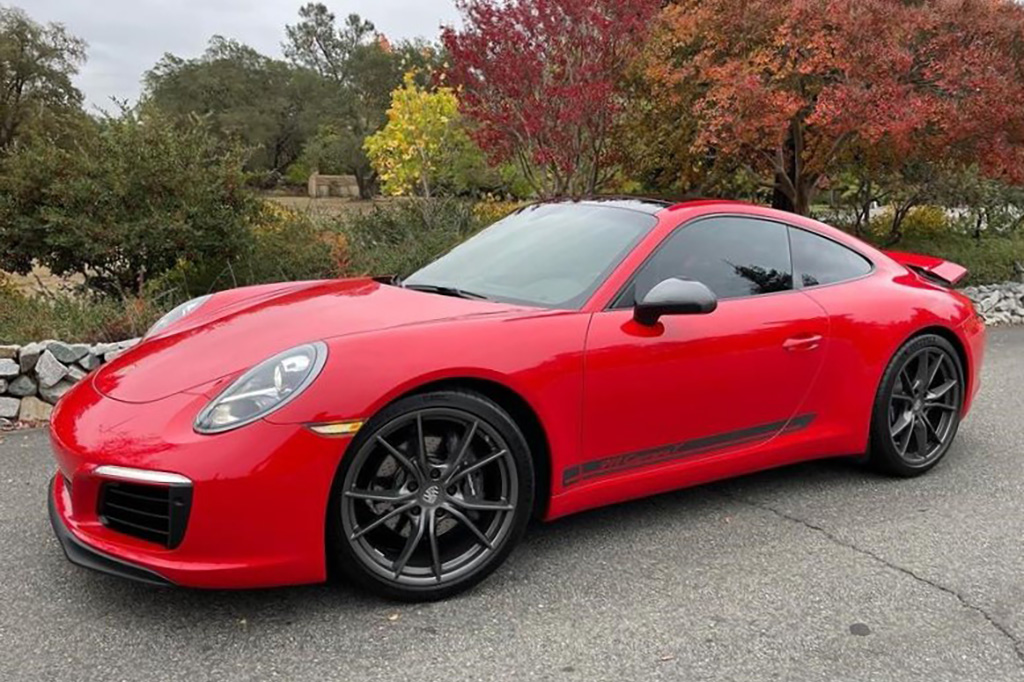
2018 Porsche 911 Carrera T
With the 2018 911 Carrera T, Porsche got back to basics: an enhanced performance and intense driving experience through lighter weight, shorter transmission ratios from the manual gearbox and rear-wheel drive with mechanical rear differential lock, In addition the T (Porschespeak for Touring) included the PASM sports chassis as standard, which lowers the Carrera by 20 mm, along with the weight-optimized Sport Chrono Package, a shortened shift lever, and lightweight glass in the rear and rear side windows. Fabric loops replace door handles and sound absorption has been largely reduced. This Guards Red 7-speed manual 911 Carrera T is one of only 64 991.2-generation Carrera Ts sold with that combination. The interior features four-way adjustable heated Sport Seats Plus with Sport Tex inserts, red deviated stitching and Guards Red belts. Other appointments include a heated GT Sport steering wheel, Porsche Entry and Drive (keyless), Porsche Dynamic Lighting System (directional), and a Bose® surround Sound system. While rear seats were omitted in T models, there was an option to add them back in at no cost and this Carrera T comes with rear seats. Its current owner purchased the car with 17,710 miles in September of 2022. It has been driven sparingly and garaged since, showing 19,100 miles at the time of listing. Both keys and factory manuals accompany the sale. It looks to be an excellent example of a hard-to-come-by driver-focused 911. Find it here on The Mart (Porsche Club of America Classifieds) out of Granite Bay, California with a reasonable asking price of $104,500.
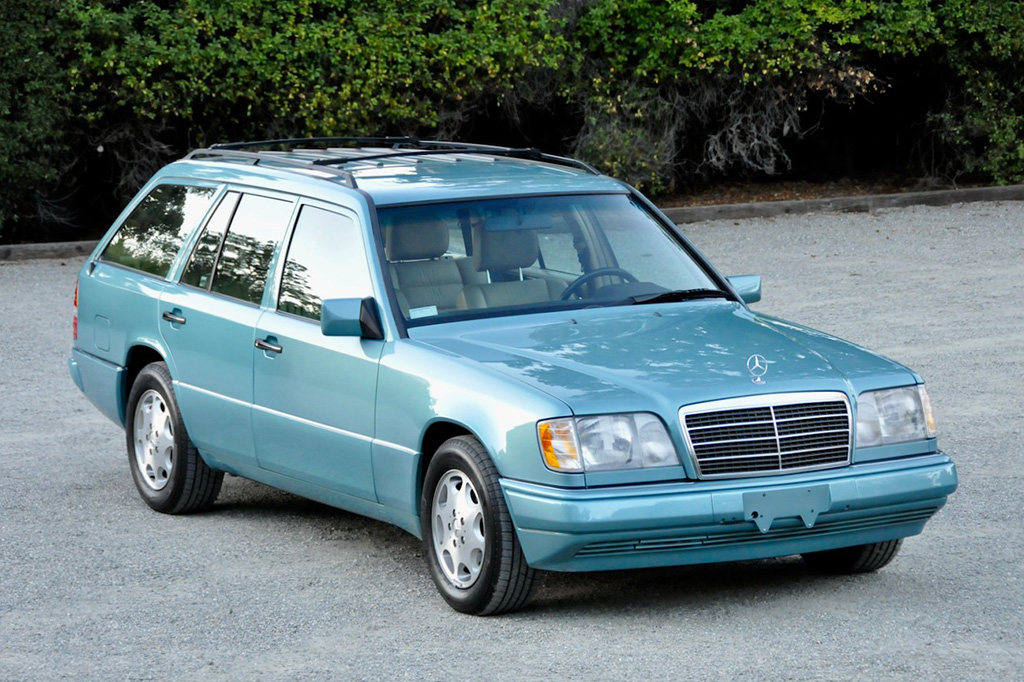
1995 Mercedes-Benz E 320 T-Model
As the first production wagon (T-Model in its native tongue) to come from Stuttgart, the Mercedes-Benz S123 (1976 – 1985) was a tough act to follow. Tough both in the sense of difficult and because of its legendary durability, combined with the comforts we associate with Mercedes-Benz. But its successor, the S124, did just that: overengineered and built to a standard that has been unmatched since. At the same time, it took the mid-size wagon to another level—literally—with a rear self-levelling suspension, along with much improved aerodynamics and refinements like soft-closing rear doors that are commonplace today. Owing to their durability and general reliability, the 124, like the 123, has earned a reputation as a million-mile car. Finding one with under 100,000 miles is relatively rare. Finding one with 57,750 miles (at the time of listing), most of which came from a single family until 2019 is approaching unicorn territory. Finding one in Beryl Metallic [888] puts us deep in the lands of the winged equine. Completed on August 18, 1995, this E 320 T-model is believed to be one of the last US delivery 124s, spec’d with options like color-matched lower cladding, a power sliding/tilting sunroof, MB Exquisit radio with Active Bass loudspeaker, a factory luggage rack, and a rear-facing third-row “kinderseat.” The exterior presents as one would expect of a well cared for 58,000-mile car, however the passenger side of the car is said to show signs of paintwork. Other blemishes noted are minor rock chips at the front of the vehicle, a small crease below the passenger rear brake light, and a small scratch on the rear bumper, however there are no signs of corrosion. The cabin is trimmed in Beige Leather (265) showing very little wear, with Zebrano wood trim showing no signs of fading. Both front seats offer 10-way power adjustability with two-position memory for the driver. Interior appointments include an electrically-telescoping steering column, cruise control, automatic climate control, a 60/40 split-folding second row, and a retractable partition net. All controls, instruments and lighting inside the cabin are said to function as they did from the factory. A partial service history is noted in the service booklet while extensive records from 2001 onward are shown in the Carfax. Most recently (January 2024), the 3.2-liter M104 inline-6 received a new head gasket, a common issue with the M104. The wiring harness—its other Achilles heel—looks to have been been replaced, inspected and shows zero signs of degradation. The original manufacturer’s literature, the original tool kit, and factory first-aid kit accompany the sale, along with a set of all-weather floor mats. This extraordinary 1995 E 320 T-Model can be found on The MB Market where the auction ends in seven days.
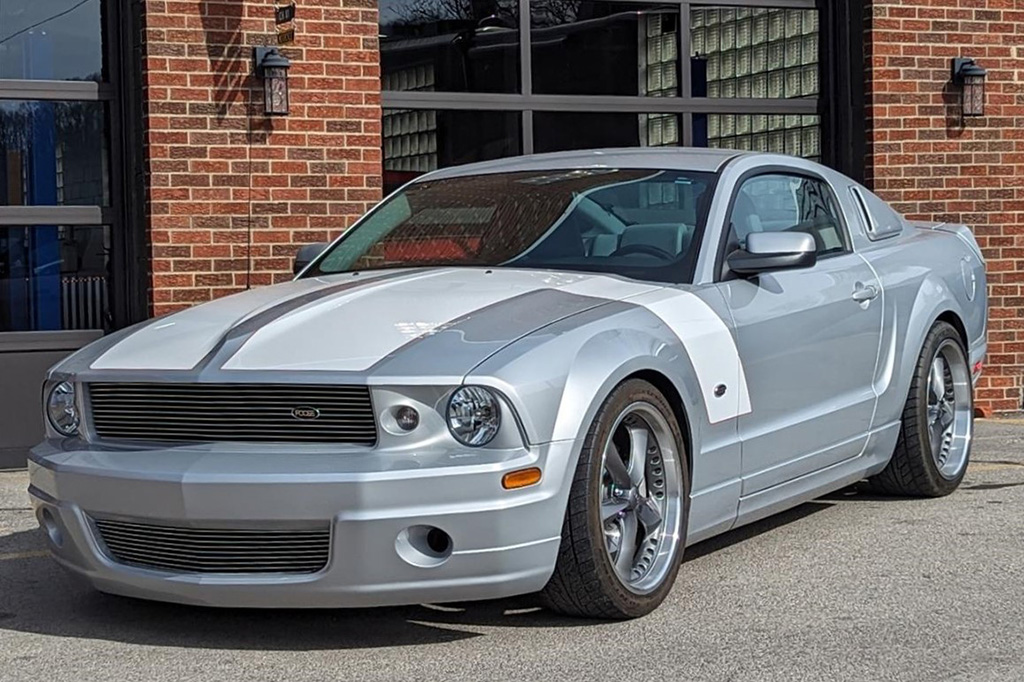
2007 Foose Stallion
Following their ties to the hugely popular Eleanor, the Ford Shelby Mustang GT500 from the 2000 remake of Gone in 60 seconds, Unique Performance and custom car designer Chip Foose collaborated on what would come to be known as the Foose Stallion. Using the then-new S197 Mustang GT as a basis, Foose penned the design while Unique assisted in the engineering and development of modifications, as well as marketing and distributing to select Ford dealers. Though a run of 3,000 copies was planned, only 221 were built after Unique shuttered its doors following investigations into using prison labor as well as transferring VIN tags. This is № 206. Titled as a 2007, it features a Roush Supercharged 445-hp 4.6-liter V8 (the top of three engine offerings) mated to a 5-speed manual gearbox with a Hurst shifter. One-off 20″ Foose wheels are dressed in Z-rated rubber. Additional modifications include custom DuPont paint and graphics, custom hood and side moldings, custom front and rear facias, custom side marker lights, a revised grille, C-pillar scoops, and a rear aero spoiler. This Foose Stallion comes from two California owners, the latest having owned the car since 2009. A total of 15,177 miles have been clocked. Freshly serviced, it is now for sale on ACC Auctions with seven days left to bid.
Other finds
- 25-year ownership 1966 Oldsmobile Toronado 38,000 miles – $8,500
- 38,000-mile 1957 Cadillac Eldorado Biarritz highly original – $99,000
- 30-years owned 1967 Volkswagen Beetle 61,409 miles – $12,000
- 42,630-mile 1989 Jaguar XJS Rouge two owners – $15,000
- Highly original 1971 Chevrolet Monte Carlo 39,222 miles – $23,500
- One of 20 1946 MG TC original paint – $49,000
- 62,000-mile 1994 Infiniti J30 all original – $8,500
- One owner 1984 Volkswagen Rabbit Convertible 22,999 miles – $8,999
- 56,782-mile 1970 Chevrolet Nova SS L78 4-speed – $27,990
- One family owned 1986 Porsche 944 67,000 miles – $19,000
- All original 1969 Ford Torino 93,564 miles – $15,900
Earlier finds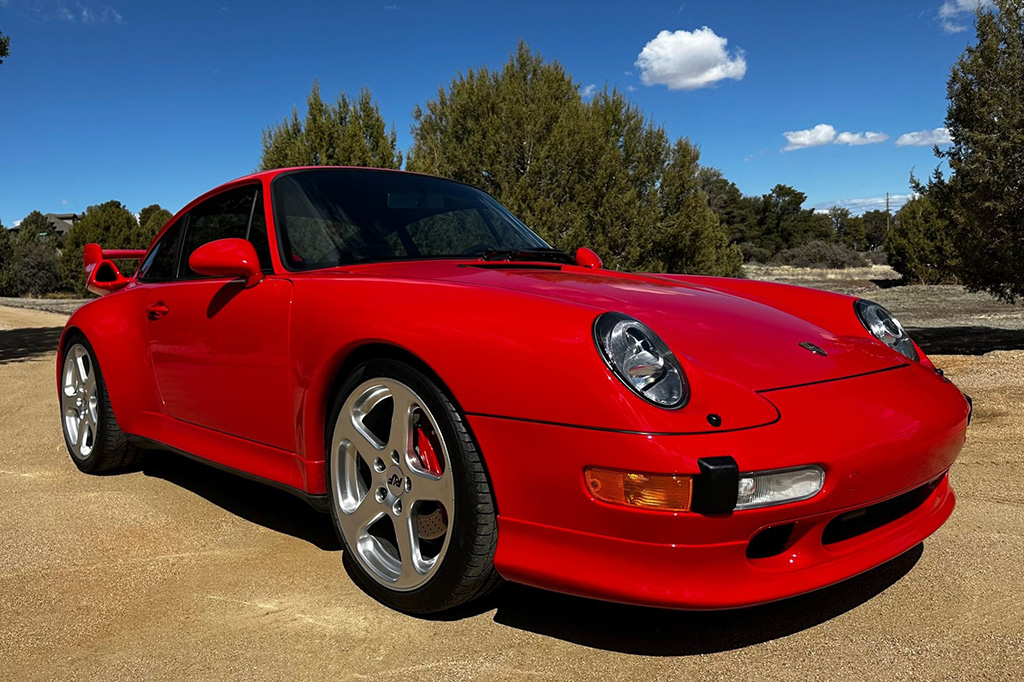
1996 Porsche 911 Carrera 4S/Turbo
The 993-generation Porsche 911 Carrera 4S already carries many of the Turbo model’s attributes, including the wide body and aprons. It is essentially a Turbo without the turbocharger and cost around $40,000 less when new. It might seem curious then why someone would spend twice that to convert a perfectly good Carrera 4S to a twin-plug Turbo, but in 2019, someone did just that and the automotive landscape is all the better for it. It started with what on paper was a very good example of a 993 Carrera 4S: factory aerokit, factory hardback sport seats painted Guards Red to match the exterior, along with the handbrake and shifter, cruise control, etc. Modifying a valuable 4S can be risky, with only 7,000 made and selling at an average of nearly $140,000. But this one looks to have been done right, using OEM components along with high-end tuning from FVD Brombacher, TurboKraft and Patrick Motorsports. Add to that some RUF enhancements like polished 18” wheels, coilovers and exhaust tips, this one has been well thought out and executed. With around 54,000 showing at the time of listing, this 911 Carrera 4S has already provided a modest sum of driving excitement in its native form and promises to deliver plenty more in its conversion. It’s now being offered on the Rennlist Marketplace with an asking price falling in the middle of an average 4S and Turbo at $170,000.
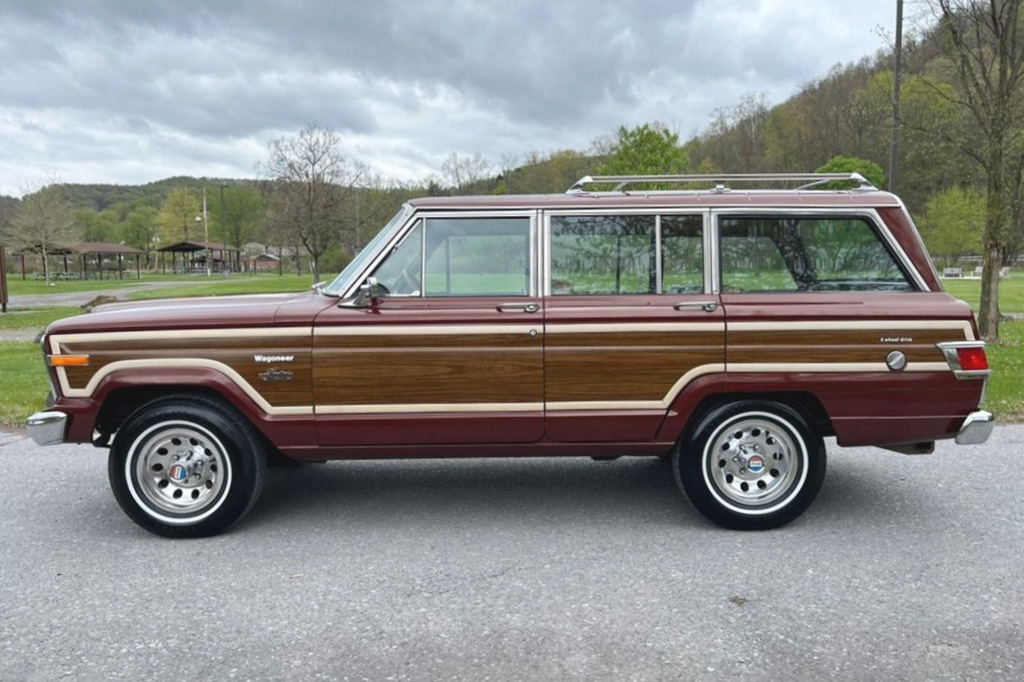
1979 Jeep Wagoneer Limited
Before the Range Rover was introduced in the US and well before the likes of Cadillac, Mercedes-Benz, and BMW got in the game, the luxury SUV segment had but one player: The Jeep Wagoneer (later Grand Wagoneer) Limited. Distinguished by its upscale-for-the-’70s simulated woodgrain siding, it was also loaded with amenities like partial leather upholstery, power-adjustable bucket seats, power door locks, power windows, power disc brakes, tilt leather-wrapped steering wheel, and cruise control. It was powered by a 390-c.i. V8 driving four wheels through its standard (and innovative for its time) Quadra-Trac system. Despite a relatively high MSRP ($10,500 in 1979 dollars), they were popular, with nearly 27,500 sold in 1979. They became enough of an icon that specialty restorers like Wagonmaster can now command well over six figures. This Wagoneer Limited, from AMC-era 1979 (first year of the square headlamps and “pig-nose” grille), has not been restored but remains exceptionally presentable in its original Bordeaux (9P) finish with a lustrous look to its “wood” grain. The interior also looks very well cared for with no visible signs of excessive wear, no tears in the upholstery, no cracks in the dash, no sagging headliner, and unblemished carpets. It was delivered new through a dealer in Jasper, Georgia to its first owner in Conyers, near Atlanta. It has amassed a respectable 65,800 miles since. Now fully serviced and thoroughly inspected, it is selling at no reserve on ACC Auctions with seven days left to bid.
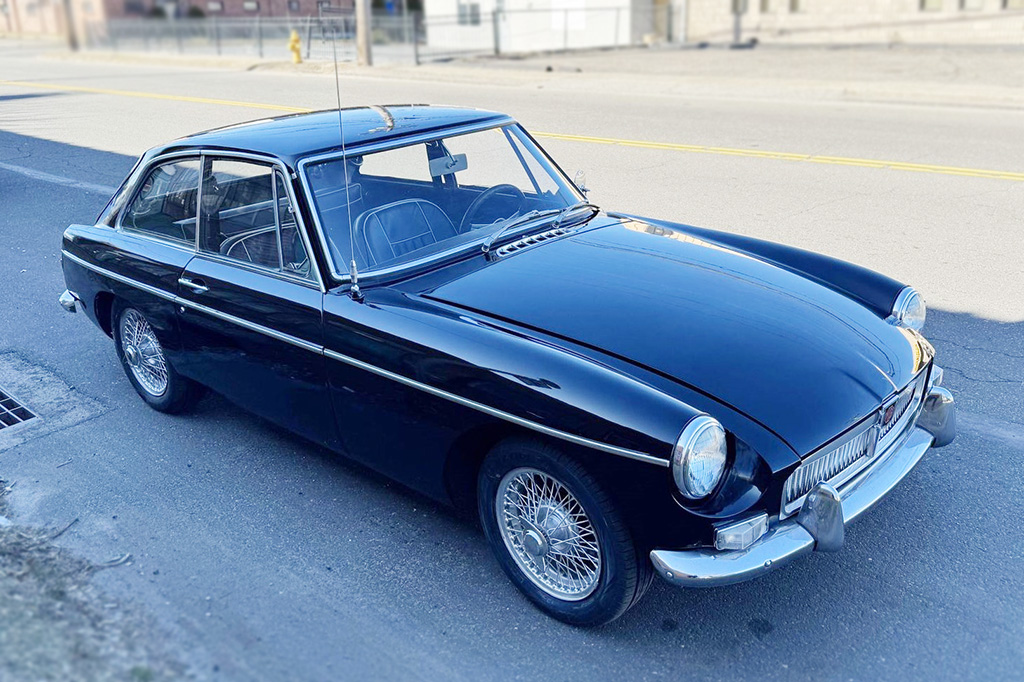
1966 MG MGB GT
With the success of its MGB roadster, introduced in 1963 to replace the aging MGA , the British Motor Company, then MG parent, looked to make the B a more usable all-season touring car, much like Jaguar’s offering with the E-type or Porsche’s new 911. To that end, MG commissioned Pininfarina to design a fixed roof greenhouse with the added practicality of a sloping rear window hatch opening to a relatively spacious cargo area along with a +2 rear seating arrangement. In 1965, for the 1966 model year, they introduced the MGB GT. While using the same drivetrain as the roadster (95-hp 1.8-liter inline-4 with twin SU carbs mated to a 4-speed non-synchromesh gearbox), it received different suspension springs and anti-roll bars. It proved to be as popular as hoped with 125,000 built through its 15-year run. It continues to be attractive today, with Road & Track naming it to their “16 of Pininfarina’s Most Beautiful Designs That Aren’t Ferraris” list. This 1966 MGB GT is reported to have been extensively restored. It included a rebuilt engine, new interior, and new electrical system. A rebuilt fully synchronized transmission from a later MGB was added as well, making it “far stronger and much more pleasant to operate.” The MGB GT rides on proper 14″ wire knock-offs dressed in decent looking tires, though their age could not be confirmed. The black paint shows some age and milage (TMU) related blemishes though it remains glossy and presents well. Very little surface rust underneath but otherwise no visible signs of rust or rot. The interior trim is said to be “like new” with freshly reupholstered black vinyl piped in white and carpets in good condition. It retains the original BMC AM radio, which is said to be working, while three-point seatbelts and a MOMO steering wheel have been added. While no museum piece, this MG MBG GT remains true to the intent of a sporty yet everyday British motorcar. It’s on Hemmings Auctions with four days remaining.
Other finds
- 58,300-mile 1956 Ford Thunderbird fully restored – $49,500
- One of 9 Canadian-spec 1984 Audi Quattro Coupe 116,000 km – $65,000
- Highly original 1971 Ford Bronco 52,000 miles – $24,500
- Two-owner 1981 Volvo 242 DL 57,000 miles – $12,500
- One-owner 2000 Toyota Tacoma PreRunner TRD 30,700 miles – $24,880
- 48 years owned 1973 VW Karmann Ghia Sport 18,645 miles – $39,996
- 15,000-mile 1972 Pontiac GTO all original 4-speed – $69,500
- One of 3,331 1963 Triumph TR3 B-TCF frame off resto – $32,000
- 1,300-mile 1989 Oldsmobile Toronado Trofeo two owners – $25,000
- Matching №s 1968 Dodge Dart GTS H-code 383 – $60,000
- One family owned 1972 Chevrolet Vega GT Kammback barn find – $5,000
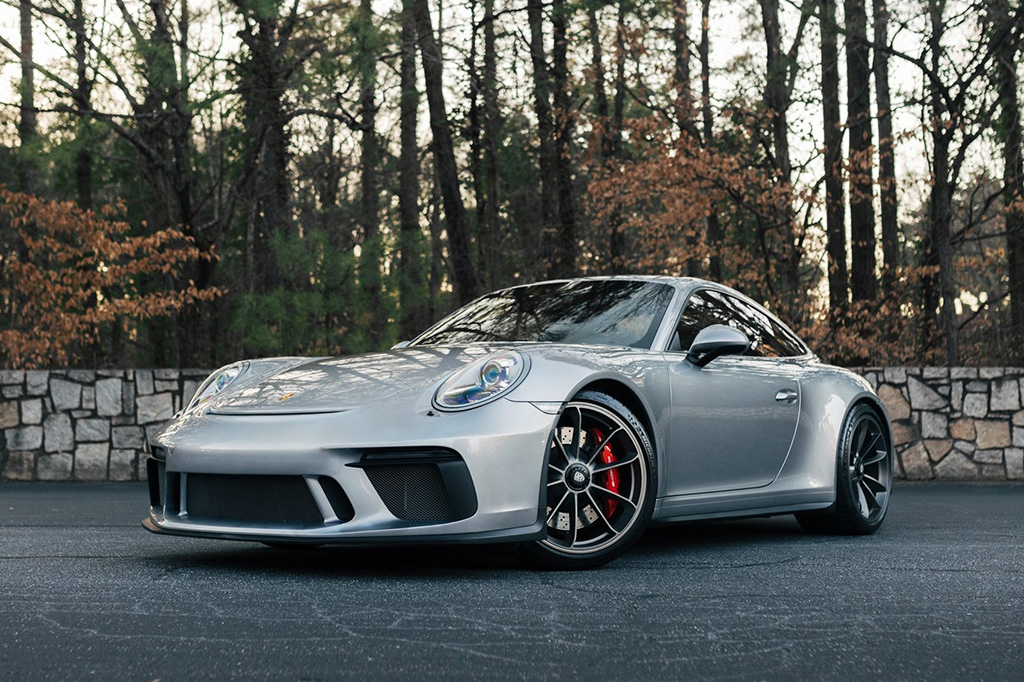
2018 Porsche 911 GT3 Touring
It’s widely considered one of the—if not the—greatest driving Porsche cars ever: the 991.2-generation 911 GT3 Touring. It packs in all the track-tuned performance features of the GT3 into a less ostentatious silhouette, with the more docile speed-activated hydraulic rear spoiler replacing Nürburgring-tuned rear wing. It’s a track-derived 911 that’s perfectly suitable as a daily driver while giving the driver a notably more analog experience than in the newer generation 992. Finished in a classic combination of GT Silver over Black leather and cloth, this 2018 911 GT3 Touring has all the right specs: a 6-speed manual gearbox and desirable options like front axle lift, extended-range fuel tank, and carbon full bucket seats. It’s also trimmed tastefully with a leather-covered dash, Guards Red deviated stitching, Guards Red seat belts, and the Smoking Package (cigarette lighter/AC outlet). Though showing less than 8,000 miles at the time of listing (7,942), it’s said to have extensive service and maintenance records, which includes a full PPF treatment. The original books and documents accompany the sale. Having peaked in August 2022 at an average of just over $225,000, the market has slightly but steadily softened, dropping around $10,000 since. That’s still well above its roughly $150,000 MSRP and with only 600 made, bodes well as a drivable investment. This 991.2 GT3 Touring, now offered by Merit Partners, looks to be well above average with an asking price of $249,990.
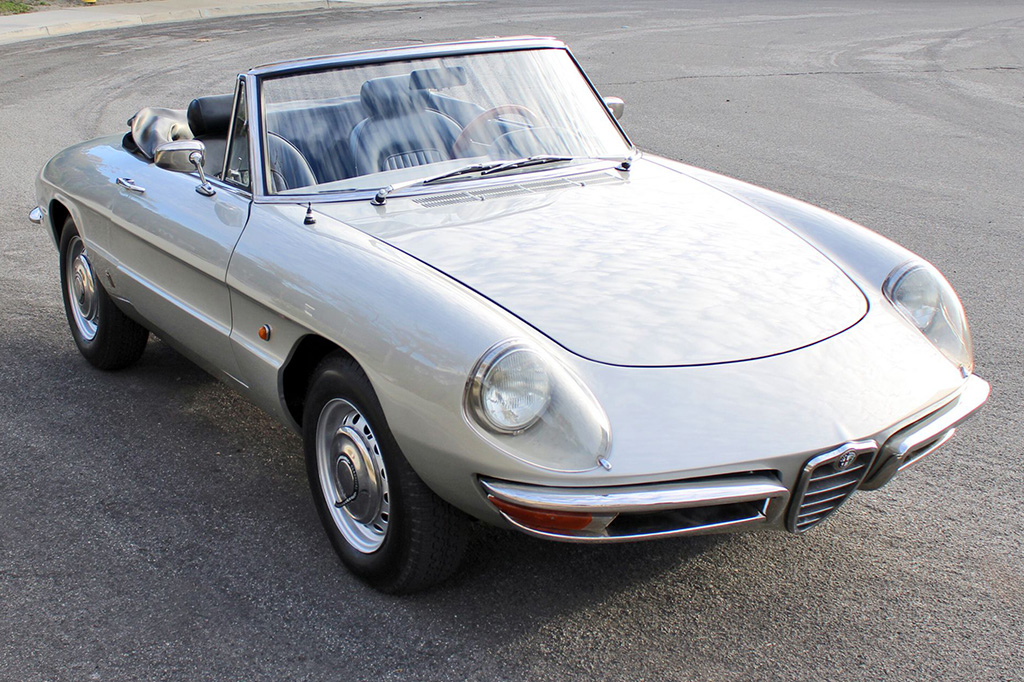
1967 Alfa Romeo Spider 1600
The Alfa Romeo Spider 1600 (often called Boattail, for obvious reasons, or “Duetto,” as the name Alfa Romeo intended to use before a trademark issue kept it from being officially badged as such) was the first in a series of Pininfarina designed and assembled Italian roadsters that would endure into the ’90s. Its sleek bullet shape continues to be a timeless design while its Alfasong exhaust note provides all the soundtrack necessary for la dolce vida. This 1967 Alfa Romeo Spider looks that much sleeker in its silver finish, with the desirable covered headlamps (banned in the US after 1968). The body is said to be free of rust with no blemishes in the paint, subject of an older restoration that appears to have held up well. The interior too looks clean and tidy with no tears or cracks. It retains its Blaupunkt Frankfurt radio while an aftermarket steering wheel has been added. The original 107-hp 1,570 cc twin-cam engine is mated to a 5-speed manual gearbox with no reported issues and no leaks. The correct slotted 15” steel wheels are correct as are the Pirelli Cinturato 155HR15 CA67 tires, though they are said to be older. This Alfa Romeo Boattail Duetto is said to have no needs and is ready to go, here on Hemmings Auctions with five days left to bid.
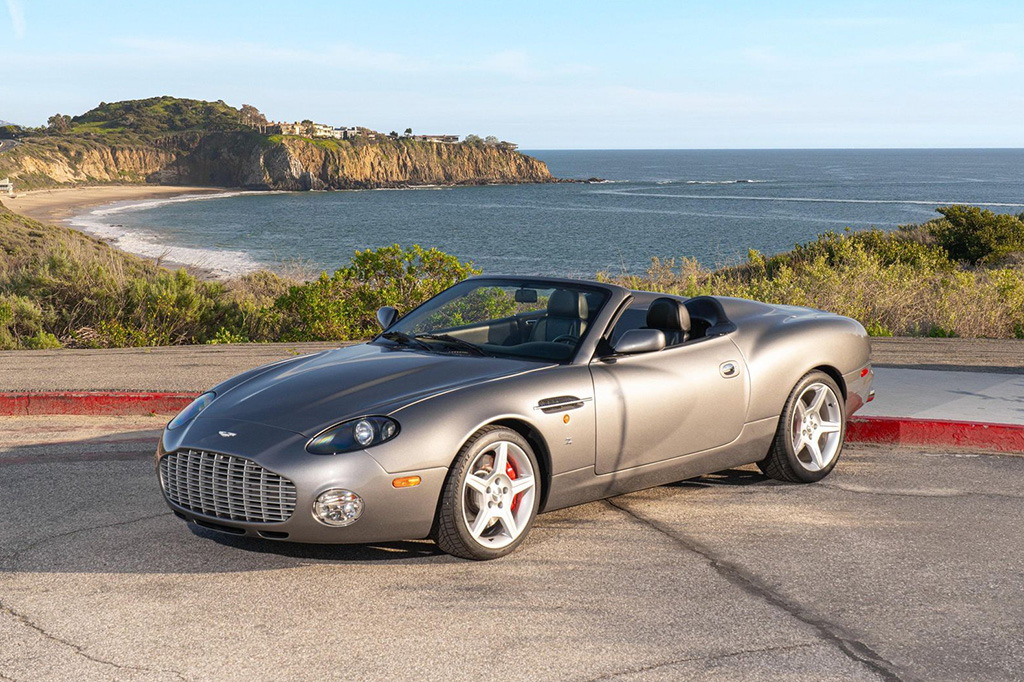
2003 Aston Martin DB AR1
The Aston Martin DB AR1 was an exclusive variant of the DB7, Aston Martin’s highest production volume car of the time. Only 99 examples were produced for customers between 2003 and 2004 (plus one additional for the factory collection). Based on the Vantage Volante, its design was a collaboration between Zagato Milano and the DB7’s designer Henrik Fisker with inspiration from the late ’50s sports racer, the DBR1, winner of the 1959 24 Hours of Le Mans. Like the DBR1, the AR1 had no top of any kind (other than a tarp they called a Parking Top), as it was intended solely for the US market (AR1: American Roadster 1), and more specifically places like Miami and Southern California, where Aston Martin heard from a song that it never rains. The bodies were hand-formed by Zagato and assembled at the new Gaydon facility (the first to come off the line along with the upcoming DB9) with an interior from the DB7 GT, along with some added Alcantara and carbon-fiber trim. The AR1 is powered by the GT’s 420-hp 5.9-liter V12 as well. This DB AR1, № 79/99, is finished in desirable Tungsten Silver over Charcoal, which complements the flowing lines with both brawn and grace. It’s one of only a handful offered with a 6-speed manual gearbox (most were Touchtronic). It has an impressive two-owner history, having covered just under 9,600 miles at the time of listing. It retains its factory keys with remotes, owner’s manual, two factory umbrellas, and Parking Top, along with a custom car cover. Recently serviced and well sorted, it’s a new listing on Cars & Bids out of Newport Coast, California.
Other finds
- Frame-off restored 1967 Mini Copper S “cost no object” – $33,200
- One of 1,774 1971 Dodge Challenger Convertible 440 Six-Pack – $149,900
- 45,631-mile 1999 BMW 740i Sport known three-owner history – $7,200
- Matching №s 1967 Chevrolet Chevelle SS 396 4-speed – $74,000
- 7,111-mile 1984 Toyota Celica Supra one-owner – $65,500
- One-owner 1978 Lincoln Continental Mark V 28,000 miles – $20,000
- 25,000-mile 2003 Honda S2000 AP1 – $35,000
- One of 1,232 1993 Porsche 968 Club Sport 68,000 km (US title) – $89,000
- 53,414-mile 1994 BMW 525i Touring all service records – $12,400
- 65,460-mile 1965 Volvo 122S rare Code 19 Black – $25,000
- One-owner 5,329-mile 1988 Lincoln Mark VII LSC – $39,995
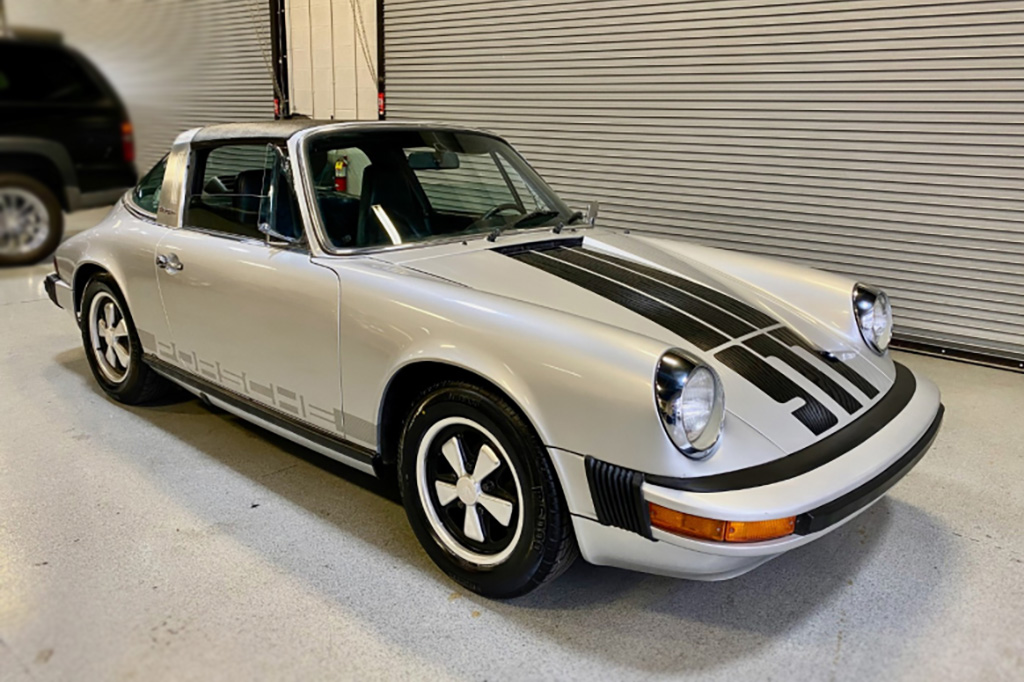
1974 Porsche 911 2.7 Targa
Completed in November of 1973, this 1974 Porsche 911 2.7 Targa is one of the first examples of the new “impact bumper” 911. Finished in Z2 Silver Metallic over a Midnight leatherette Interior with options including Fuchs wheels dressed in Pirelli tires, front and rear stabilizer bars, tinted glass, ‘Porsche’ script on the doors, and the unique magnetic “Ornamental Painting” (aka Safety Stripes, used to cut down on reflections coming off the hood), it was sold new to a physician upon US delivery (one of only 256 US-spec Targas in 1974). It was kept in his care until his passing at 95 years old. It remains original throughout per the Porsche Certificate of Authenticity, with paint metering original on many panels. Sparingly driven, it currently shows 37,564 miles. Its condition is what one would expect from a cherished low-mileage Porsche, with no visible rust (highly unusual for a pre-galvanized 911), bright and glossy paint, and interior patina àpropos of a 50+ year-old car with less than 38,000 miles. This 911 Targa has been the subject of meticulous preservation and retains its original books and tools. Having recently come out of storage, this 1974 Porsche 911 2.7 Targa has been recommissioned, sorted, and ready for its next chapter. It’s offered here at Motorgroup Auto Gallery in Scottsdale at an asking price of $109,995.
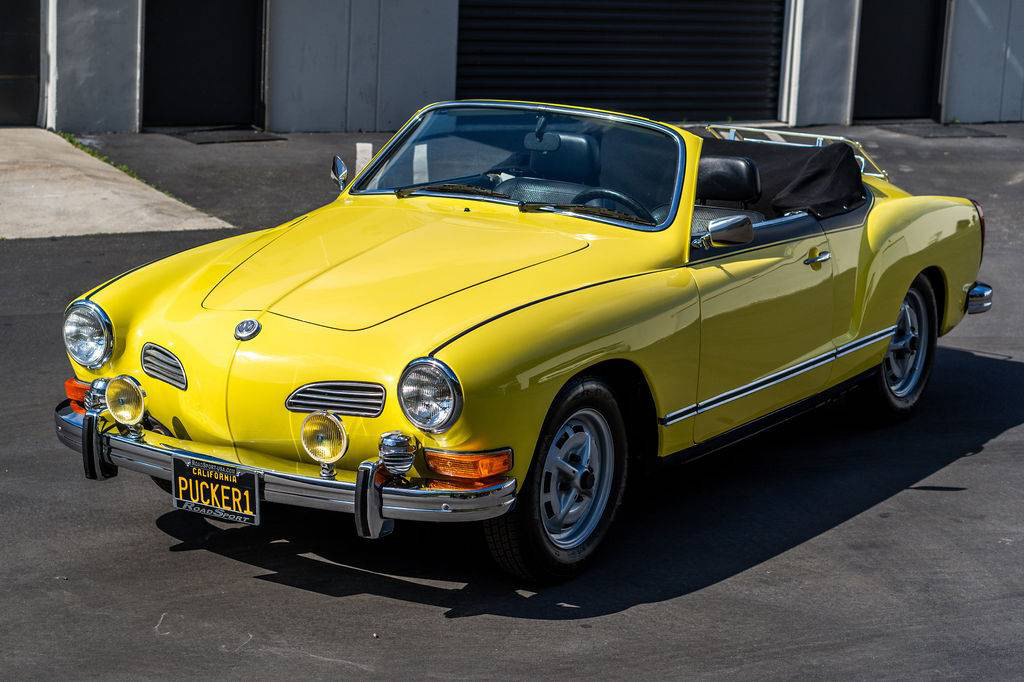
1973 Volkswagen Karmann Ghia Sports Edition
Responding to increasing market pressure in the ’70s from sporty and economical Japanese makes, Volkswagen launched a number of special editions, primarily around its best-selling Beetle. These included the Sun Bug and Sports Bug, both of which were sales successes in the US. The Sports Bug (not to be confused with the ill-fated GSR) in particular was so popular, that Volkswagen of America wanted to apply the concept to other models, starting with the already sportier Karmann Ghia. It approached Wilhelm Karmann GmbH directly in 1972 with a proposal to produce a limited edition Sports Karmann Ghia solely for the US market. An initial order of 300 was placed and production was underway for two months before the brass in Wolfsburg caught wind of the deal and put a stop to it. Nevertheless a few were delivered to customers (reportedly around 20). All were finished in L13M Saturn Yellow (an existing Karmann Ghia color) with anodized black striping along the waist. 4½J x 15″ GT Sport wheels (not offered on any other Karmann Ghia), a plump Petri steering wheel covered in simulated leather, and Recaro-sourced bucket seats (all borrowed from the Sports Bug) made up the rest of package. This 1973 Volkswagen Karmann Ghia Sports Edition is said to be a very well taken care of example, validated by multiple car show awards. It appears to be highly original, retaining its period-correct (and valuable in itself) Empi AM/FM radio—enhanced by later Kenwood speakers in the footwells—along with what appears to be the original (or at least correct) Michelin XZX spare. Black plates indicate long-term California ownership and further assurance of a dry, solid car. Photos of the undercarriage show nothing to contest that. Extensive documentation that looks to have been kept in a binder includes the Delivery Status Certificate (Zertifikat), along with a Data Sheet and original promotional materials. This 1973 “Sports” Karmann Ghia is preservation-class quality, or can be driven as Volkswagen of America had Wilhelm Karmann had agreed it ought to be. It’s for sale at Laguna Classic Cars in Laguna Beach with an asking price of $29,999.
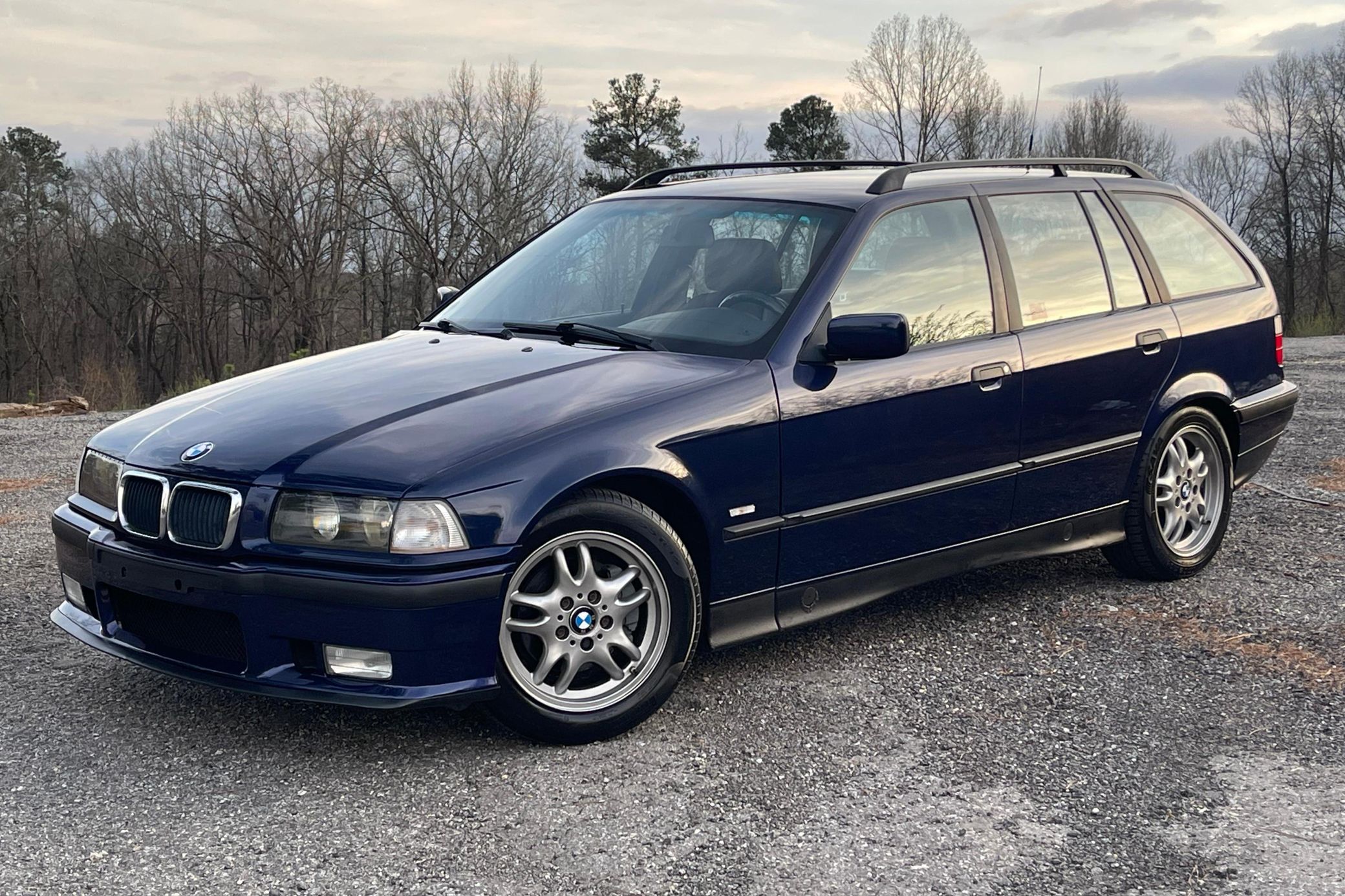
1997 BMW 320i Touring
Given how popular BMW Touring (wagon) models are among enthusiasts, we have to wonder if BMW North America missed a call. While there were a handful of both 3- and 5-series wagons offered (E39, E46, E61, E90, F31), the US market was denied some of the most compelling Touring models. Case in point, this E36 320i Touring. Despite the popularity of the E30 (also not offered in longroof form here), the E36 was a significant update. Driving a good example doesn’t feel all that different from say a two-year-old G20 (the latest-3 Series). A silky smooth inline six mated to a precise 5-speed gearbox (when BMW still made precise manuals) feels at once analog and entirely modern. This E36 Touring is a 320i model, indicating it has a trusty a 2.0-liter inline-6, capable of 148 hp and 140 lb-ft of torque. That was plenty spirited for 1997 and doesn’t disappoint today. It comes atypically well equipped relative to many Euro-spec imports, with leather upholstery, heated front seats, dual-zone automatic climate control, 16″ Style 30 wheels, roof rails, and a rear cargo cover. It features a few tasteful modifications like M3-style front and rear bumpers, a Wiechers Sport front strut tower brace, and an M chrome shift knob. The original owner’s manuals (in German) and two factory keys accompany the sale. With fresh service upon its arrival in the US (September 2023), this 1997 BMW 320i Touring is newly listed on Cars & Bids with a clear Georgia title.
Other finds
- One of 1,601 1991 Lancia Thema 8.32 88,000 km US title – $19,950
- Resto-reimagined 1969 Volkswagen Type 2 Samba 23-window – $48,895
- 63,000-mile 1970 Mercedes-Benz 280 SL rare 4-speed – $69,500
- 40 years owned 1954 Chevrolet Corvette 51,475 miles – $85,000
- 51,000-mile 2006 BMW M3 Convertible 6-speed – $31,000
- One-owner 1990 Toyota Celica GT 75,560 miles – $12,500
- 30,000-mile 1972 Opel Manta 1900 Rallye 4-speed – $7,500
- Original owner 2003 Chevrolet Monte Carlo SS 20,080 miles – $17,995
- 19,666-mile 2004 Volvo C70 Convertible one owner – $15,000
- Original owner 1969 Buick Riviera 65,999 miles – $26,500
- 37,000-mile 2000 Audi TT Coupe Denim Blue/Blue 5-speed – $14,200
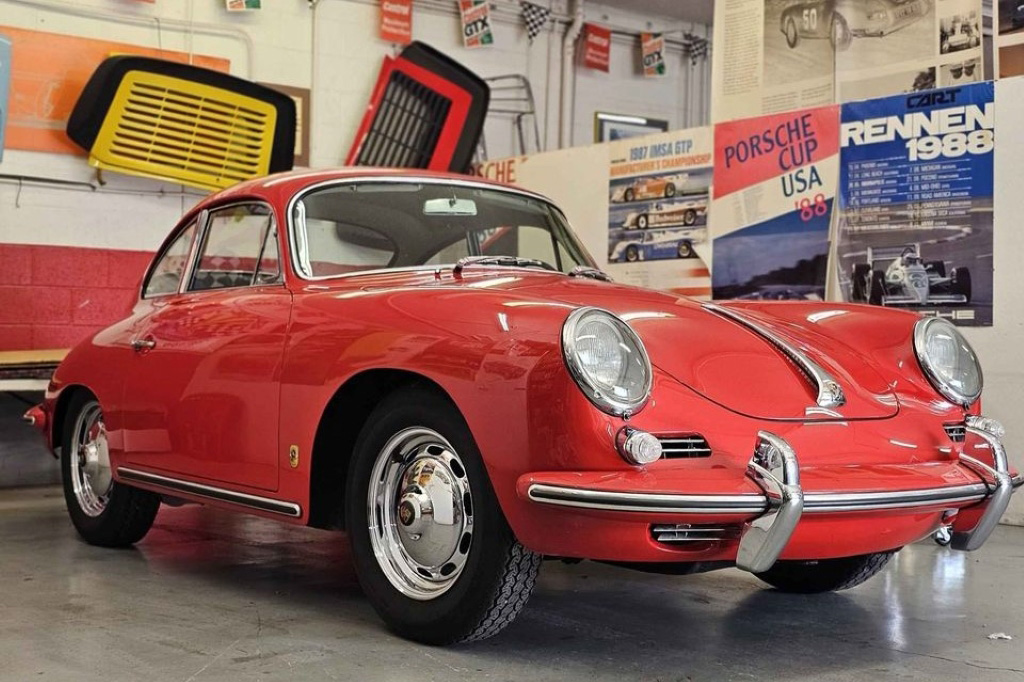
1963 Porsche 356 B Super 90
The Porsche 356 B, often considered the middle child in the 356 family, was produced from 1960 to 1963. It retained the curved front bonnet and rounded arches of the earlier A series, but evolved to more modern needs—particularly those of the important American market—by raising the headlamps and bumpers to better protect the body from damage. A larger bonnet handle was added, and front vent windows appeared in the doors. A new steering wheel and column similarly refreshed the interior, along with redesigned rear seats. The 356 B also saw mechanical improvements, with stronger engine internals, transaxle, shifting linkage, and better Alfin brakes. The “Super” model, with higher compression, added an extra 15 brake horsepower (now up to “90” hp) to the standard version’s 1.6-litre, air-cooled flat four engine, resulting in performance more closely matched with its looks. This 1963 Porsche 356B Super 90 is a Reutter-built coupe that was assembled on June 10, 1963 and acquired by its current owner in 2014. It’s finished in factory Signal Red [6211] and optioned with chrome ventilated wheels. The cabin features Black leatherette upholstery with black rubber floor linings covering the salt-and-pepper squareweave carpets. Additional appointments include lap belts, map pockets, a VDO clock, and a ’70s-era Jensen cassette stereo and speakers. Its number-matching Type 616/7 flat-four engine (P☆0800817☆) has been refreshed with a big bore kit to displace 1,750 cc while twin Solex carburetors are equipped with Knecht mesh air cleaners. A Porsche Certificate of Authenticity confirms the production date, factory colors, options, and drivetrain serial numbers. It accompanies the sale, along with service records and a tool roll. The modifications made to the Super 90 motor may have kept the car from meeting its reserve through an online auction earlier, but it’s now being listed on Facebook Marketplace as a “perfect driver or a show room beauty queen” with an asking price of $100,000.
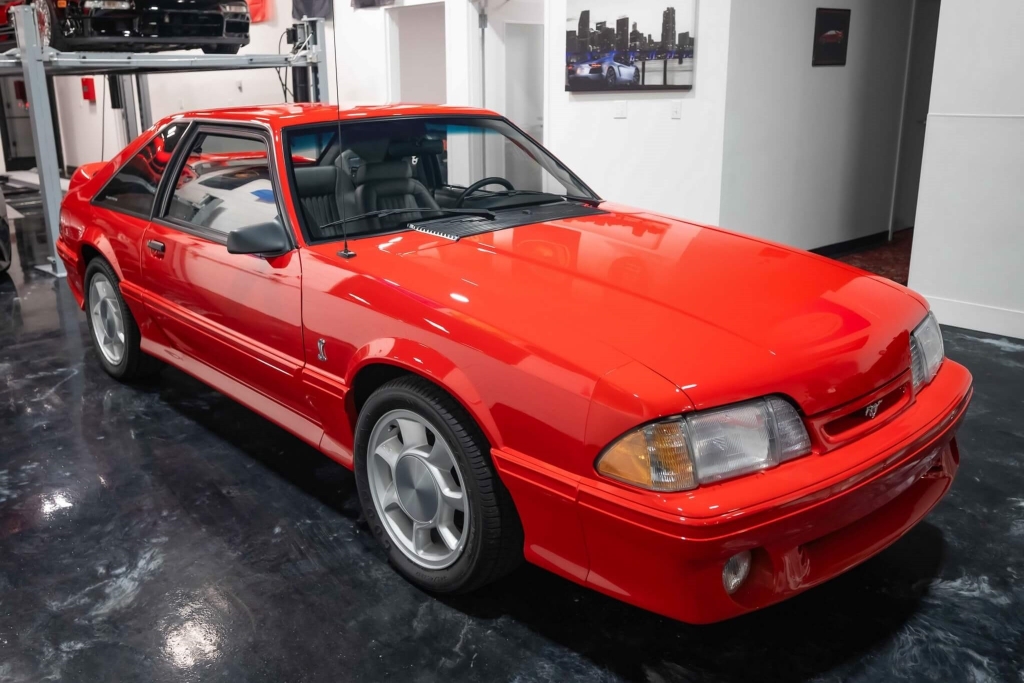
1993 Ford SVT Mustang Cobra
After a few years of the downsized malaise-era Mustang II, Ford introduced the Fox-body in 1979. It was welcomed by both enthusiasts and press, even though it carried over much of the Mustang II’s underpinnings in its first years. Steady improvement throughout the 1980s however culminated in the ultimate factory Fox, the 1993 SVT Cobra. It was powered by a 235-hp 302ci V8 featuring a Cobra-specific upper intake manifold and camshaft, GT40 cast-iron cylinder heads, aluminum roller rockers, and a 65 mm throttle body. This was mated to a BorgWarner T5 5-speed manual gearbox driving the rear wheels through a Traction-Lok limited-slip differential. Power-assisted four-wheel disc brakes, an SVT-specific suspension with custom-tuned shocks, struts, springs, and sway bars, along with sport-tuned dual exhausts, articulated sport seats, and Turbine-style 17″ cast aluminum wheels were also part of the SVT Cobra package. 4,993 were made in total. This 358-mile example was sold new from Ken Garff Ford of Murray, Utah and is finished in Vibrant Red (one of 414) over an Opal Grey leather interior. The car came optioned with a rear window defroster, a premium AM/FM CD stereo, and the Preferred Equipment Package which adds air conditioning, front floor mats, and power windows, mirrors, and door locks. The owner’s manuals, original window sticker, toolkit, spare tire, car cover, and certificate of authenticity accompany the sale. Exceptional examples of Fox-bodies have been and continue to be highly sought after and this one may be the Holy Grail. It’s on PCARMARKET with five days left to bid.
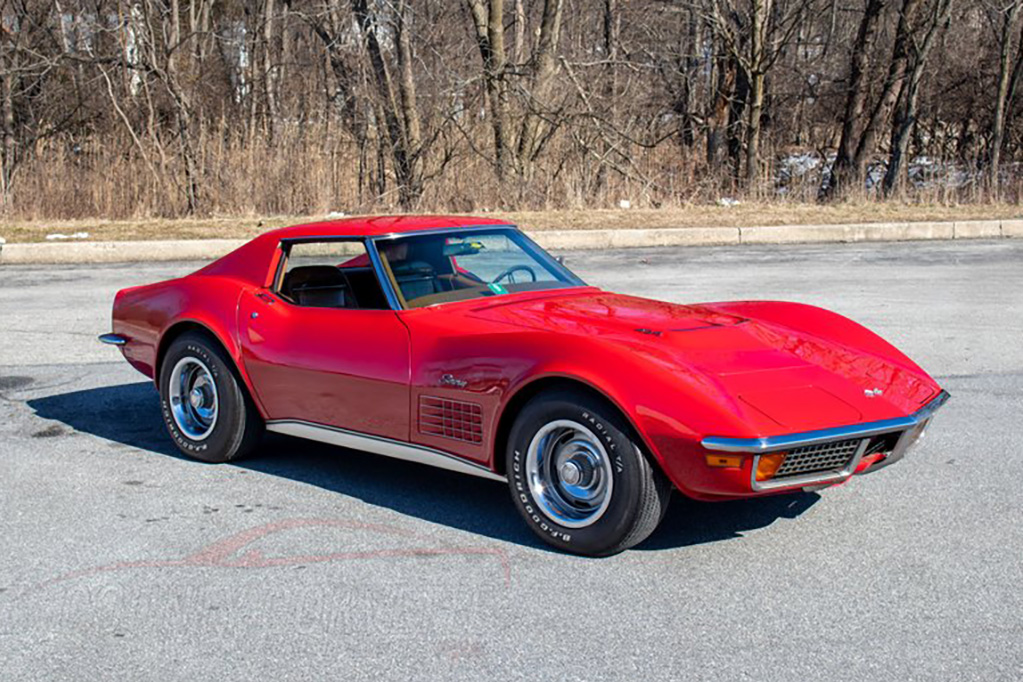
1972 Chevrolet Corvette LS5
Presented in its original-paint Mille Miglia Red with a Saddle leather interior, this 1972 Corvette Coupe was completed on March 3, 1972 before being purchased from City Chevrolet in San Diego, California by an air force serviceman. It came equipped with nearly every option available in 1972 including power windows, air conditioning, tilt-telescopic steering column, rear window defroster, heavy-duty front and rear springs, power brakes, air injection reactor, F70 tires (now sporting BF Goodrich radials from 1973 with a color sales brochure), and an AM/FM stereo radio. It’s powered by a [stated] 270–hp 454 c.i. LS5 V8 mated to a desirable 4-speed wide-ratio gearbox and a 3.08:1 rear differential. The Corvette comes with an impressive collection of documents including a handwritten Bill of Sale, dealer type-written Bill of Sale, salesmen’s business card, original GM Tank stickers (the number of options required two) on the original fuel tank, two original GM No. 5 build sheets, two original GM No. 7 build sheets, original GM window sticker, original GM standard order copy (located under the gauge cluster), original GM Protecto Plate, and letters exchanged between the original buyer and the dealership. Now showing an impressive (documented) 5,202 miles, it’s listed on ACC Auctions by the selling dealer (County Corvette in West Chester, Pennsylvania), who recently acquired the car from the estate of the serviceman. The auction closes in two days.
Other finds
- Freshly restored 1975 Volkswagen Type 2 (Bus) Brazilian import – $44,800
- 25,275-mile 2003 Land Rover Discovery II SE well optioned – $39,999
- Barn find 1971 Ford-Mercury Capri 49,800 miles – $7,800
- Two-owner 1998 Volvo S70 49,714 miles – $5,500
- 34,740-mile 1978 Porsche 928 5-speed project Serial № 112 – $9,000
- One-owner 1989 Mercedes-Benz 300 CE 50,279 miles – $18,900
- 31,133-mile 1990 Nissan 300ZX Turbo 5-speed – $35,995
- Newly restored 1972 Fiat 500L 35,825 miles – $19,975
- 52,685-mile 2003 International WorkStar 7300 “Big Red” – $75,000
- One of 2,400 1978 Oldsmobile Toronado XS 30 years stored – $9,800
- 5,949-mile one-owner 1990 Lexus SC400 Diamond White Pearl – $24,927
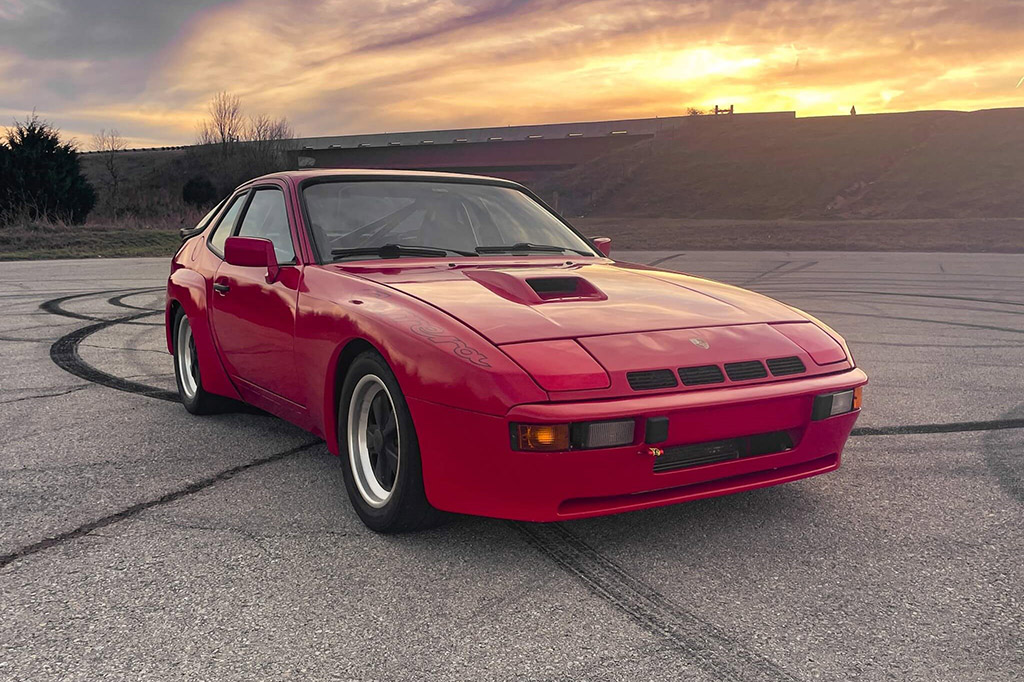
1987 Porsche 924 S Carrera GT Tribute
It’s hard to overestate the importance of the 924 Carrera GT in the Porsche canon. Stylistically it’s what led to the 944, but more importantly it legitimized the “transaxle” 924, which had up to then (1980) struggled to be recognized as a legitimate Porsche. By adding an intercooler to the newly released 924 Turbo, lowering the suspension and making other small but important tweaks, Porsche was able to develop the 924 Turbo into the race car they had wanted, thus the 924 Carrera GT encountered no objection in its worthiness of the Carrera badge. In order to comply with the homologation regulations, the 924 Carrera GT (937 in Porschespeak) was offered as a road car producing 210 hp. While it’s relatively common to see older production 911s modified to pay tribute to their great earlier racing counterparts like the RSR and ST, it’s unusual to see that treatment applied to a stock 924. It’s likely simple math: the cost to do a respectable conversion far exceeds the car’s initial worth. Someone, however, undertook such a conversion and is now putting it on the market. After acquiring a stock 1987 924 S (already a much improved variant over the Volkswagen-Audi-based early 924) in 2018, the car underwent extensive body modifications including trimming and welding the rear fender wells closed and grafting a 944 Turbo front end to accommodate the intercooler. The exterior has been fitted with a fiberglass Carrera GT-style front bumper, fender flares, rocker covers, hood scoop, a Euro-spec 924 rear bumper, and a steel vented front header panel from a 924 Turbo. It was refinished in 2-stage Guards Red paint, decorated with removable 924 Carrera GT graphics, and equipped with 8”x16” genuine Fuchs wheels dressed in Toyo RA1 tires (an extra pair of 7”x16” Fuchs wheels accompanies the sale). The cabin features black partial leather upholstery with cloth inserts. It was refreshed by the current owner with a new vinyl headliner, a reupholstered vinyl dashboard, a refurbished center console, and an aftermarket gauge panel housing a manual boost control knob, a boost pressure gauge, and an exhaust back-pressure gauge. Other modifications include a custom welded 4-point roll bar, 6-point racing harness attachments, and a MOMO steering wheel. The original analog gauges have been rebuilt with a Speedhut Speedbox GPS-based speedometer, and the odometer was previously repaired with new gauges. At its heart is a turbocharged 2.5-liter inline-four engine from a 944 Turbo which was rebuilt including new stock rod bearings, a rebuilt Lindsey Racing head, a rebuilt Lindsey Racing K26/6 turbo, all new seals and gaskets, timing and balance belts, a new turbo water pump, engine mounts, a baffled oil pan, new coolant hoses, and a Lindsey Racing billet radiator with a built-in oil cooler. The engine was also upgraded with a Lindsay Racing 300 RWHP kit which includes a DME and KLR chipset, a dual-port wastegate, a 3″ header-back exhaust system, and a Borla muffler. The rear wheels are driven by a 944 S2-sourced 5-speed manual transaxle with a limited-slip differential, an oil cooler, and a short shifter. A new pressure plate, clutch disc, and throw-out bearing have been installed within the last 2,000 miles. The chassis also includes a manual steering rack, early offset 944 Turbo spindles, new wheel bearings, rebuilt CV joints, new Koni yellow front struts with adjustable Ground Control camber plates, Racer’s Edge front control arms, a KLA front strut brace, adjustable Lindsey Racing sway bars, 28mm rear torsion bars, and 944 Turbo brakes at each corner. The Porsche requisite owner’s manuals, toolkit, and air pump accompany the sale. Though the car has some flaws, it’s a commendable effort. The flaws don’t appear difficult to address but perhaps its current owner has simply lost the motivation; not to mention the fatigue of the financial outlay. But therein lies the opportunity for new owner to perhaps acquire an admirable tribute to an important part of Porsche history for considerably less than it cost to build, with room left for improvements. It’s a new listing on PCARMARKET from a private seller in Mustang, Oklahoma.
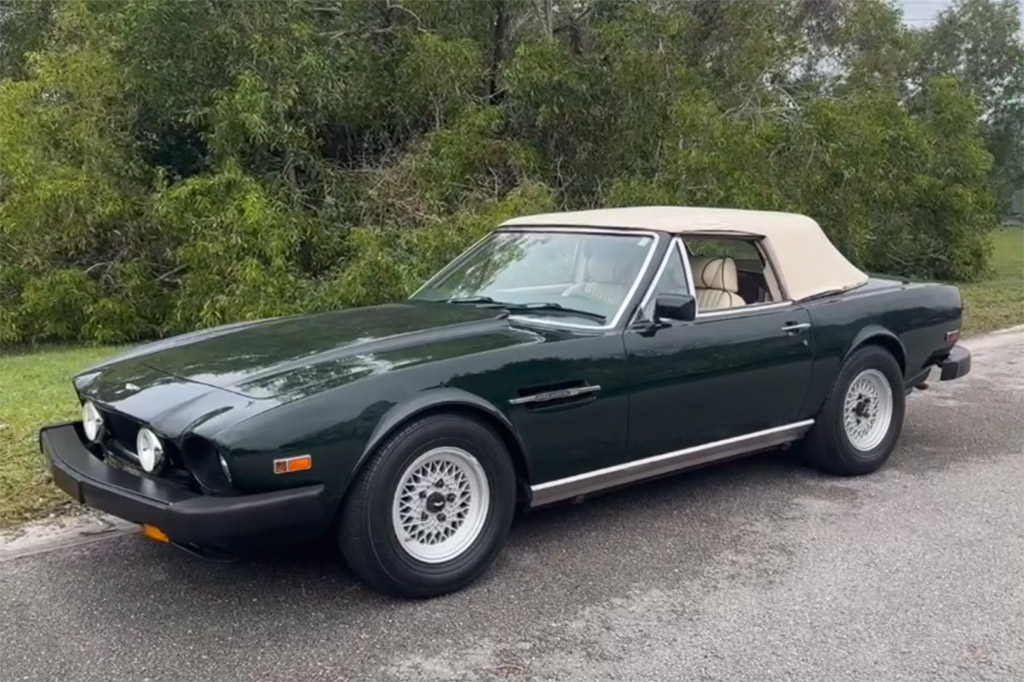
1988 Aston Martin V8 Vantage Volante
Hailed at its 1977 introduction as “Britain’s First Supercar” for its 170-mph top speed and best-of-its-day 0 to 60 time (5.3 seconds), the Aston Martin V8 Vantage remains a road car of the highest caliber. With the introduction of the Series 2 in 1986, the 5.3-liter V8 received Weber-Marelli fuel injection and put out 305 horsepower. At the same time, the Volante (convertible) was added to the Vantage mix. With very low production (192 from 1986 – 1989) and fine materials throughout, a Series 2 Aston Martin V8 Vantage Volante’s unique blend of transitional styling, opulent appointments, and exhilarating wind-in-the-hair performance places it in a class of its own. This US-spec Aston Martin V8 Volante comes from long-term ownership (a single owner until 2023). It is presented in a proper British Racing Green and is accented by front driving lights, BBS 15″ wheels dressed in correct Avon Turbosteel 235/70 radial tires, polished lower rocker trim, and dual exhaust. The cabin is draped in Parchment leather with wood veneer trim, a leather-wrapped steering wheel, and green seat piping. Additional appointments include cruise control, air conditioning, power windows, and power mirrors, along with a Kienzle clock, aftermarket Alpine AM/FM/CD stereo and Motorola car phone. Now showing 5,618 miles, this unrestored time capsule convertible benefits from recent mechanical refurbishment and is ready for its next caregiver on Sotheby’s Motorsport with three days remaining in the auction.
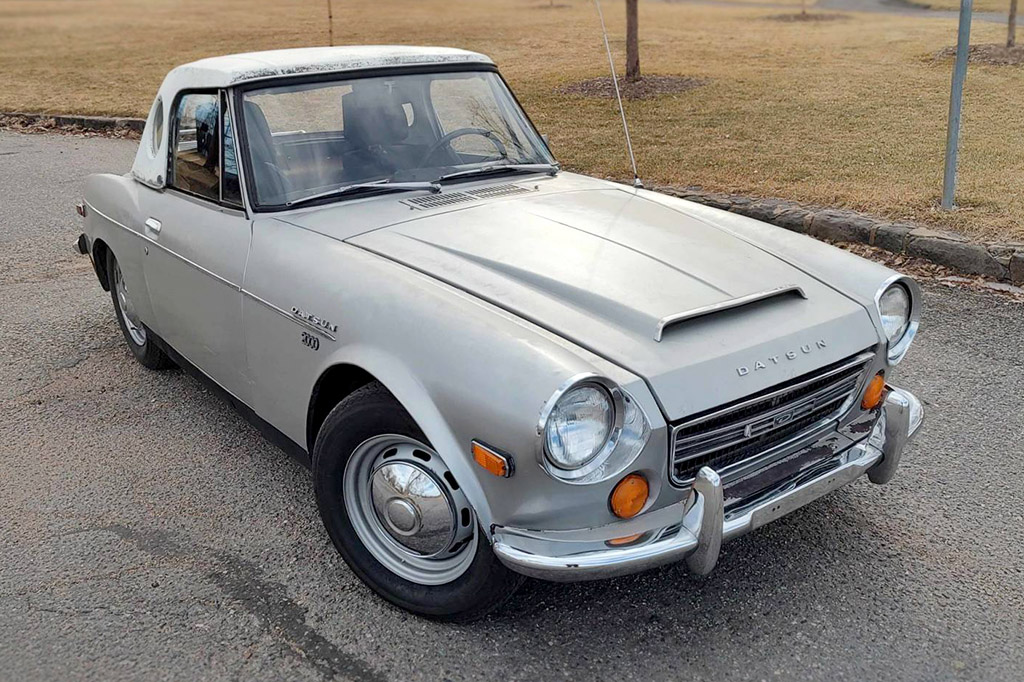
1970 Datsun 2000 Roadster
While Datsun had been making a two-seat Sports/Fairlady roadster since 1959, it was in 1967 that it saw its biggest leap. Now with a 135-hp 1,982 cc motor and five-speed gearbox (rather uncommon in 1967), along with the Pininfarina-esque body carried over from the SP311 1600 (designed however by Count Albrecht von Goertz), as well as a coil-sprung independent front with rear leaf spring suspension, the little Datsun was a serious contender in the affordable roadster market that had been dominated by the likes of Triumph, MG, Fiat and Alfa Romeo. Soon kids in high school would put the Datsun 2000 Roadster on their wish list. One such high school kid got their wish, a 1970 model, in 1976 and hasn’t let go of it since. Until now. While clearly showing its age, it wears it proudly, having been refinished once in its original (Silver) color, with a new right front fender and black undercoating applied to the rocker panels across the lower side of the car. The original black vinyl interior has seen some use, but remains in service with seat covers. The dash also shows some significant cracks but it’s open and honest. The motor meanwhile is said to have been treated to around $5,000 in service, completed in November 2019. The clutch master cylinder, clutch slave cylinder, and tires were replaced, the fuel tank was cleaned, the brake system was overhauled, and the carburetors were rebuilt. The video in the listing shows a smooth running peppy driver-quality roadster. A factory hardtop, original convertible top and frame, and a 131-page copy of specifications, performance, and general overview of the car accompany the sale. This 1970 Datsun 2000 Roadster is not going to take home any awards at next year’s Amelia, but it no doubt has some stories to tell in its 48 years with a single owner. And that may be an even greater prize. It’s on Hagerty Marketplace with seven days left to bid.
Other finds
- Original owner 1968 Triumph TR250 stored since 1991 – $21,000
- 51,000-mile 1984 Volvo 240 GL theft recovery – $11,400
- One-owner 1979 Volkswagen Beetle Convertible 18,500 miles – $15,000
- 82,904-mile 1976 Ford-Mercury Capri II Ghia 4-speed – $7,400
- One-owner 1997 Jaguar XK8 Coupe 49,000 miles – $11,200
- 63,000-mile one-owner 2003 Toyota Tacoma PreRunner SR5 V6 – $24,995
- One-owner 27,800-mile 1974 Chevrolet Impala Coupe all original – $27,500
- 67,023-mile 1988 Suzuki Samurai one family owned – $8,950
- One-owner 2014 Ferrari 458 Spider TdF Blue 12,970 miles – $224,890
- 34,300-mile 2006 Pontiac GTO Holden Crewman ute conversion – $38,000
- One of 267 2001 Ford Mustang Saleen S281 Coupe 16,162 miles – $22,000
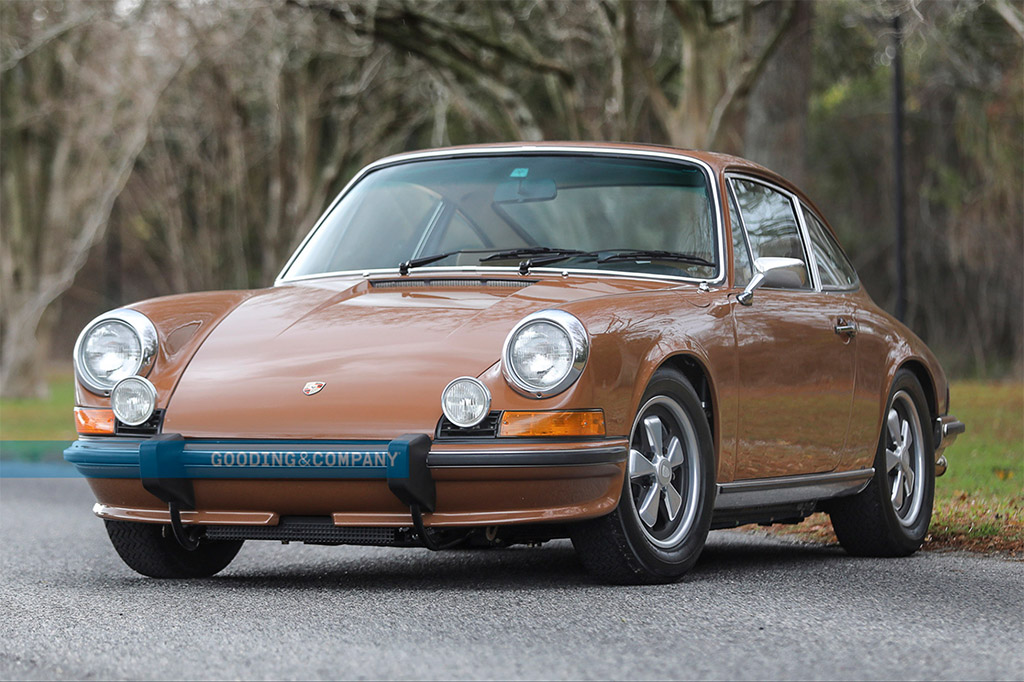
1973 Porsche 911 S
This Porsche 911 S was built in May 1973, one of only 1,430 S Coupes built in 1973, the last year of ealy 911 production (pre-impact bumper) It’s finished in a rare Sepia Brown over beige leather, and heavily optioned with sport seats, fog lights, electric windows, sunroof, air-conditioning, KONI shock absorbers, tinted glass, and Blaupunkt Frankfurt radio. The car was first sold via Jimmy Payne Porsche Audi of Memphis, Tennessee. It was acquired in 1989 by its current owner under whom it underwent an exacting refurbishment. This included a full exterior repaint, mechanical refreshing, and a methodical cleaning of the entire vehicle. The displacement of the numbers-matching 190-hp 2.4-liter engine was increased to 2.7 liters. The factory sport seats were recovered in matching perforated leather as well. Meticulously maintained in a private collection for 35 years and driven sparingly since restoration, this 58,866-mile 911 S is accompanied by its Porsche Certificate of Authenticity, tools, owner’s manual, warranty book, and radio instructions. While the modifications no doubt improve the driving experience, their non-originality likely kept bidders from taking this one home. It’s now offered at Gooding & Company with a fixed asking price of $230,000
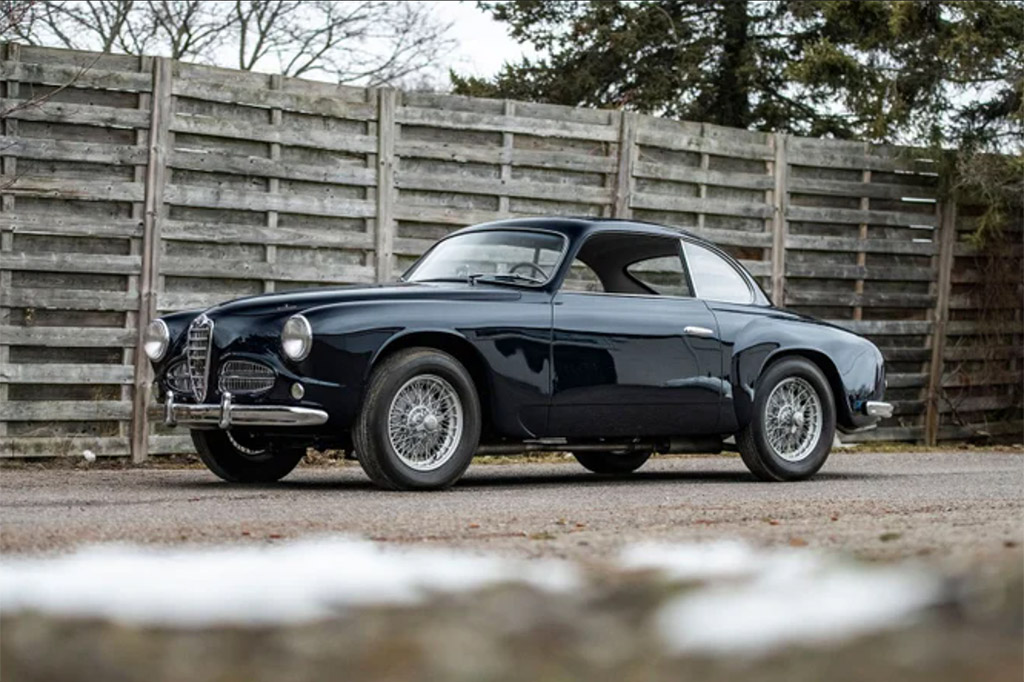
1952 Alfa Romeo 1900 C Sprint Touring
Alfa Romeo debuted the 1900 at the 1950 Paris Motor Show. It was its first post-war design and its first to employ unitary construction. Powered by a four-cylinder twin-overhead-cam engine producing 100 horsepower in “1900 TI” specification, the Carrozzeria Touring-designed 1900 C Sprint’s Superleggera coachwork offered an athletic appearance in line with Alfa Romeo’s sporting heritage, together with comfortable 2+2 accommodations. This 1952 Alfa 1900 C Sprint by Touring was delivered new to Acireale, Italy on 9 January 1953 before making its way to Naples until 1962. It was then passed to Robert Doucette, an enthusiast from Freeport, Maine, who cherished and preserved the car for an impressive 42-year period. In 2004, English collector Robin Otto acquired the Alfa Romeo and treated the highly original but patinated Alfa underwent a meticulous four-year restoration in the shop of Chicago Restorations Ltd. in Northlake, Illinois, renewing chassis number 01227 to its former glory. Otto enjoyed the freshly restored Alfa for a further three years before it changed hands again in 2015. Today, the 1952 Alfa Romeo 1900 C Sprint wears an attractive dark blue finish, complemented by Borrani knock-offs. The luxurious interior is trimmed in gray hides with matching cloth inserts and is adorned with an array of desirable equipment such as its Autovox radio, wood-rimmed steering wheel, and Veglia instrumentation. Ready to show, race, or tour at any number of prestigious events including the Mille Miglia, chassis 01227 is now available at Broad Arrow Auctions with a fixed asking price of $250,000
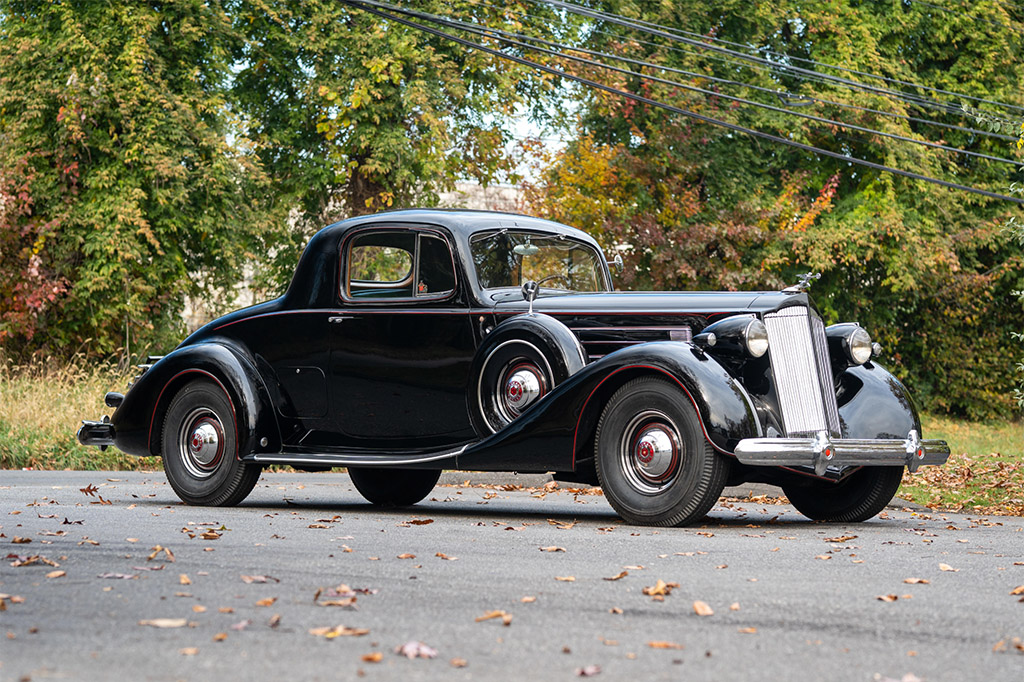
1937 Packard Twelve 1507 2/4 Passenger Coupe
The Packard Twelve was introduced in 1933, and was the successor to the Twin Six as the flagship model. It was offered on a short or long wheelbase, and was available in a wide range of body styles including sedan, sedan limousine, coupe roadster, and formal sedan. For the Fifteenth Series of 1937, Packard fully embraced streamline design language with flowing, fully skirted fenders, soft curves, and a raked and painted radiator shell, as well as a modernized chassis with smaller steel wheels and the adoption of the new “Safe-T-FleX” independent front suspension—further refining Packard’s already renowned ride quality. The massive 7.8-liter L-head V12 produced 175 bhp in silken silence. The Twelve would end production in 1939 with only 1,300 examples in all body styles. With it came the end of the V12 era as well. This 1507 Twelve Coupe strikes a grand and imposing façade in a finely maintained black livery concealing an elegant interior appointed in green leather with matching wool carpets and burled walnut. The 2/4-passenger rumble-seat coupé body was designed and built by Packard’s Detroit body shop and sat atop the long 139 ¼″ wheelbase chassis. This 1507 Twelve 2/4 Coupe (Chassis № 1038214) was delivered new to William Fenn of Wilmington, Delaware on December 1, 1936 before trading hands in 1939 to Mr. Frank Ewing, also of Wilmington, who drove the car for a few years before placing it in storage, where it remained through 1969. It spent time in Indiana before making its way to Saratoga, California, where it received its first full restoration. Correspondence on file shows that the rear differential was changed to a highway-friendly 3.73 ratio using original Packard gears, and that the installed engine (№ 905963) is a period-correct replacement, corresponding to published records as a 1937-specification V12. Since its restoration, the interior was refreshed in the mid-2010s. Original features include a factory AM radio, heater, and defroster. Recognized as a Full Classic® by the Classic Car Club of America, it is widely eligible for tours and concours events. With an pre-auction estimate of $180,000 – $200,000, Bonhams Lot 20, bidding on this 1937 Packard Twelve 1507 coupé fell short of its reserve.
Other finds
- One of 30? 1990 Mercedes-Benz 300 GE Cabriolet 78,000 miles – $87,500
- Two-owner all-original 1967 Cadillac Coupe de Ville 52,000 miles – $72,500
- 28,888-mile 1980 Datsun 510 Wagon 5-speed – $4,700
- One of 58 2001 BMW M5 Individual Order Velvet Blue Metallic – $64,999
- Two-owner 1957 Volkswagen Beetle full pan-on resto – $30,000
- One of 25 1991 Chevrolet Lumina Earnhradt Edition 4,068 miles – $19,995
- One-owner 2003 Mini Cooper R50 5-speed 31,160 miles – $7,750
- Highly original 1974 Toyota Corona SR5 well documented – $16,500
- Two-owner 1957 Volkswagen Beetle full pan-on resto – $30,000
- 50+ years owned 1957 Cadillac Eldorado Biarritz resto-mod – $78,480
- 30,047-mile 1973 Lincoln Continental Mark IV Lime Gold – $11,000
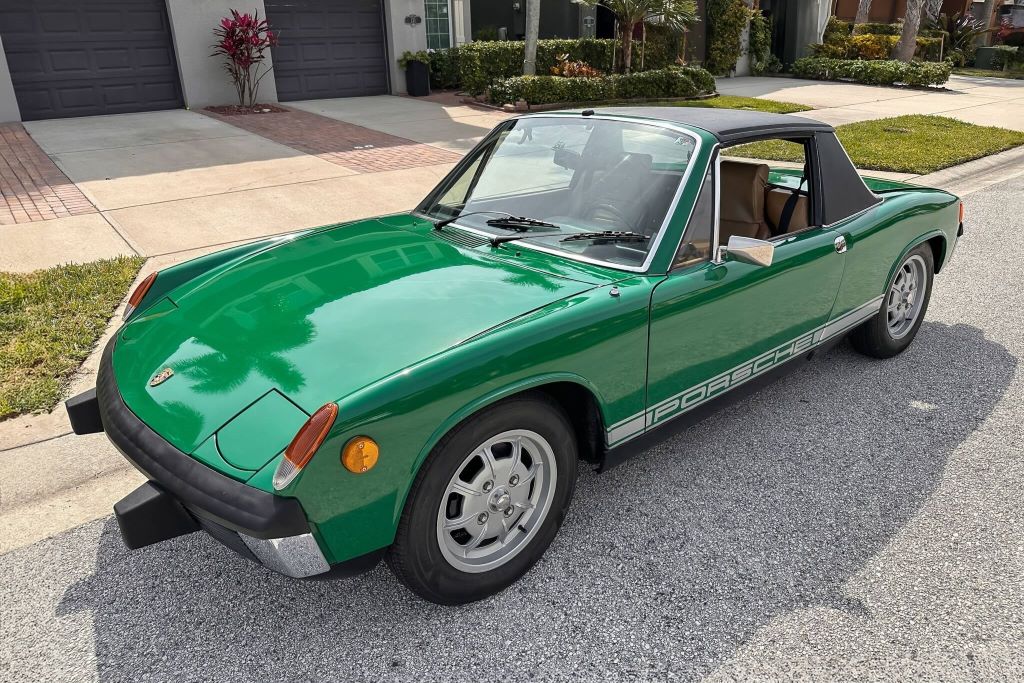
1974 Porsche 914 2.0
The Porsche 914, introduced in 1970 as the entry-level model to replace the four-cylinder 912, was updated in 1973 with the 914 2.0. The 2.0 refers to the engine size of its 95-hp flat-4, now designed and built by Porsche (previous models used a Volkswagen powerplant, much to the dismay of Porsche loyalists), but in doing so it can also be said that it was a revision 2.0, the difference is so vast. While the 914 had always been a fantastic handling car owing to its low center of gravity and mid-engine layout, the new engine gave it the power to dramatically improve the driving experience. This Porsche 914 2.0 was initially purchased from Porsche-Audi North in Wexford Pennsylvania on May 17, 1974. It has been refinished in its factory-specified shade of Zambezi Green and optioned with chrome bumpers and upgraded wheels. The finish has held up well with minor blemishes pointed out (literally) in the listing’s photos. The tan vinyl interior has also been redone and presents well aside from the minor blemishes disclosed. It features an optional armrest along with an aftermarket shift knob and center-mounted cup holder. All gauges, electronics, and accessories are reported to be working properly, with the exception of the dealer-installed radio (a bit clumsily covered in the perforated vinyl of the dash face). The engine bay looks tidy with no evidence of rust in the “hell hole” battery box. A complete tune-up was reportedly performed in 2023. Slight engine oil leaks were noticed after the vehicle sat for a couple of weeks (affirming it’s a genuine Porsche). It’s an honest, driver-quality 914 with the desirable 2.0-liter motor, 5-speed gearbox, and chrome bumpers (1974 the last year for these in the US). It’s a new listing on PCARMARKET out of Indian Harbour Beach, Florida.
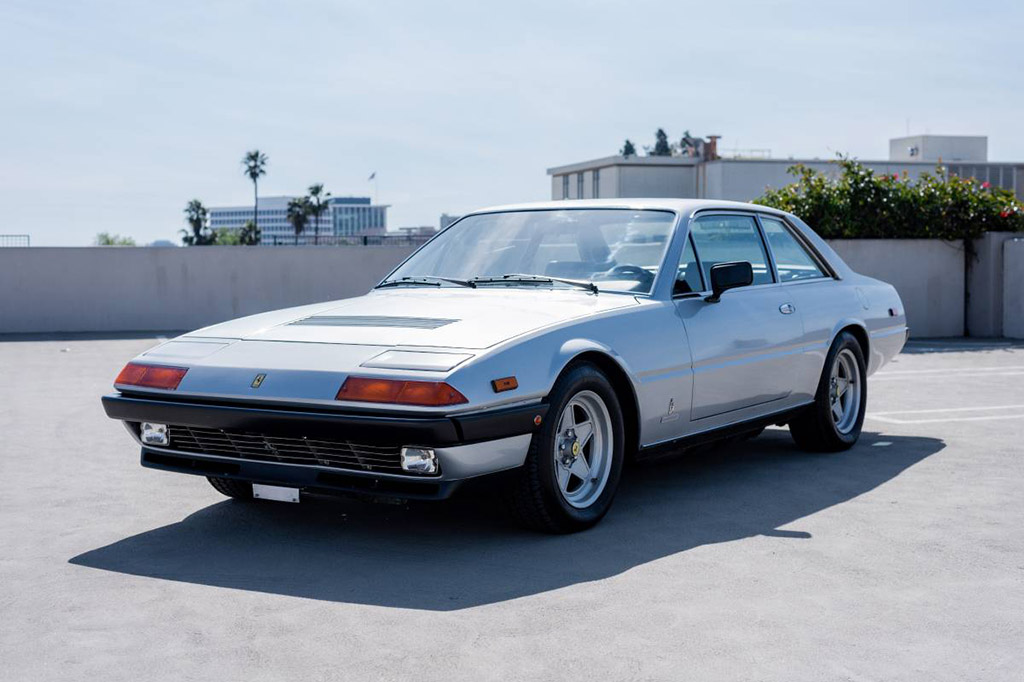
1982 Ferrari 400i GT
It may have made the Jeremy Clarkson’s list of “crap cars,” but the Ferrari Tipo F101 (365 GT4 2+2, 400, and 412) also ranked high among il commandante Enzo Ferrari’s personal favorites. His vision was to exude elegance but in a decisively svelte Italian way while staying true to the Prancing Horse. Designer Leonardo Fioravanti, while working for Pininfarina, borrowed queues from his earlier design, the Ferrari 365 GTB/4 Daytona, with the characteristic swage line dividing the body into upper and lower halves. The F101’s 4.4-liter Colombo V12 shared many of the Daytona’s characteristics as well. But while the Daytona flirts with million-dollar auction prices these days, it actually cost significantly less in today’s dollars than the 400i in their day (~$190,770 vs ~$199, 750). The 400i introduced fuel injection to a stroked variant of the V12 now displacing 4.8 liters, and though down about 10% on power to its triple-Weber predecessor, it offered smoother power delivery and better fuel economy (for what that was worth to the buyer of a Ferrari V12). With the US market in mind (though none would be sold here due to ever-evolving safety and emissions regulations), a GM-sourced automatic was also introduced to a Ferrari for the first time. Most of the 1,305 400i’s made were in fact automatic. Only 422 were GT models, equipped with a 5-speed manual gearbox transmitting power through a limited slip differential. This early 1982 (Series I) Ferrari 400i GT is one of those, in its original and rare color combination of Grigio Argento over Black leather. It retains its original drivetrain, with a new clutch and new Michelin TRXs on all four corners. It’s said to have been well maintained otherwise and partial service records accompany the sale, along with an additional set of wheels and tires said to be “great” for everyday use. The ‘everyday Ferrari’ had been Enzo’s idea behind the F101, and to that end the current owner states the car has been a long-time daily driver. Though with less than 34,000 miles showing, its use has been perhaps regular but sparing. This Ferrari 400i GT is now offered for sale here on Craigslist in West Hollywood, California with an asking price of $90,000.

1985 Mercedes-Benz 190 E 2.3 AMG
While the W201 190 E was widely successful throughout its 11 year run, it seemed to receive less attention from period tuners making them arguably more rare as compared to its larger stablemates such as the W124 and C126. This 1985 Mercedes-Benz 190 E 2.3 AMG was reportedly built by AMG North America in Westmont, IL. It’s finished in Astral Silver Metallic (735) and features an authentic AMG body kit that includes an extended front and rear bumper, side skirts, and trunk spoiler. The 190 E 2.3 AMG also includes Euro-spec headlights, a sliding sunroof, and an automatic antenna. Some chips and scrapes are noted on the lower portion of the front bumper, however the paint quality is reportedly in excellent condition with no signs of fading. Authentic 16″ AMG Penta wheels are dressed in a set of Pirelli Cinturato P7 tires. Each wheel shows original AMG stamps and come with period correct AMG center caps. The cabin is upholstered in Black MB-Tex (171) with a black dashboard and matching carpets. Extended AMG Burl wood trim covers the center console, dashboard, shift knob, and doors. Appointments include automatic climate control, cruise control, power windows, an Alpine head unit, and an electrically adjustable passenger side mirror. All window regulators, door locks , antenna, heat, and cruise control are said to be in proper working order though the A/C has not been tested. At its heart is a120-hp 2.3-liter four-cylinder engine mated to a four-speed automatic transmission. Maintenance in preparation for the sale includes new shifter linkage bushings, new valve cover gaskets, and an engine oil and filter change. Now showing 33,473 miles at the time of listing, this 1985 Mercedes-Benz 190 E 2.3 AMG is now offered for sale on The MB Market out of Homer Glen, Illinois with four days remaining in the auction.
Other finds
- Rare original Twilight Blue 1951 Jaguar XK 120 FHC project – $33,500
- 37,420-mile 1978 Ferrari 308 GTS books, records, fresh service – $72,500
- All original two-owner 1991 Range Rover Classic 93,477 miles – $15,000
- 24,958-mile JDM 1994 Nissan D21 Hardbody quad cab – $15,500
- Frame-off resto 1974 Chevrolet Camaro Z28 49,179 miles – $52,998
- 73,000-mile 1999 Mercedes-Benz SL 500 dealer maintained – $14,900
- № 9 of 23 1975 MG MGB 50th Anniversary Roadster 9,739 miles – $47,500
- 53 years owned 1969 Ford Mustang 351W Shelby 62,000 miles – $35,000
- Barn find 54,000-mile 1980 Toyota Celica Liftback 5-speed – $5,850
- 58 years owned 1964 Triumph TR4 Heritage Certificate– $17,000
- One-owner 68,000-mile 1967 Alfa Romeo Giulia Super 2000 – $74,000
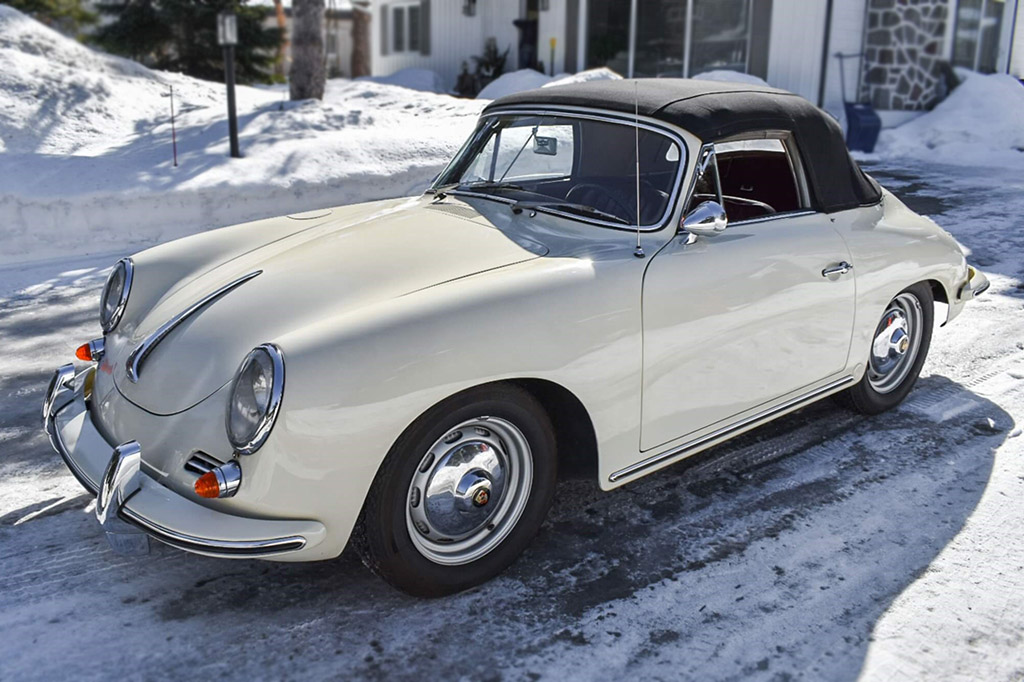
1963 Porsche 356 Super
As the Porsche 356 evolved, the significantly redesigned B model underwent another significant change in 1962 with the T6 body style that would carry through to the end of production with the C and SC in 1965. Most notable differences were a front lid that had been widened at the bottom, a tank cap in the front right wing, and a twin-grille rear decklid shared with the now highly coveted 1962 T6 Roadster. From its final year of B production, this 1963 1600 Super Cabriolet had been cared for (“babied and pampered” in the seller’s words) by its original owner until 2022 and subsequently passed on to the owner’s spouse. It underwent a respray in its original Ivory (6204) in 2000 but is said to have remained otherwise entirely original. The black convertible top and chrome accents on the bumpers, headlight rings, door handles, and window moldings all look to be in exceptionally good condition for a 61-year-old having showing an admirable 88,800 miles on its 5-digit odometer. In the cabin, Red leather covers the seats, door panels, and upper dashboard while matching carpets line the floors. Additional appointments include an analog quartz clock and a Blaupunkt radio albeit no information is given on their working order. The 75-hp 1,600 cc flat-four however has been well maintained, with fluids flushed yearly. No signs of leakage are reported. Accompanying the sale are the original owner’s booklets, Blaupunkt radio literature, some tools, and a spare tire. This 1963 Porsche 356 B Super is a fresh listing on PCARMARKET by a dealer in Montréal, Quebec (where the car is stored for the winter), but it is said to be a US car with a Virginia title.
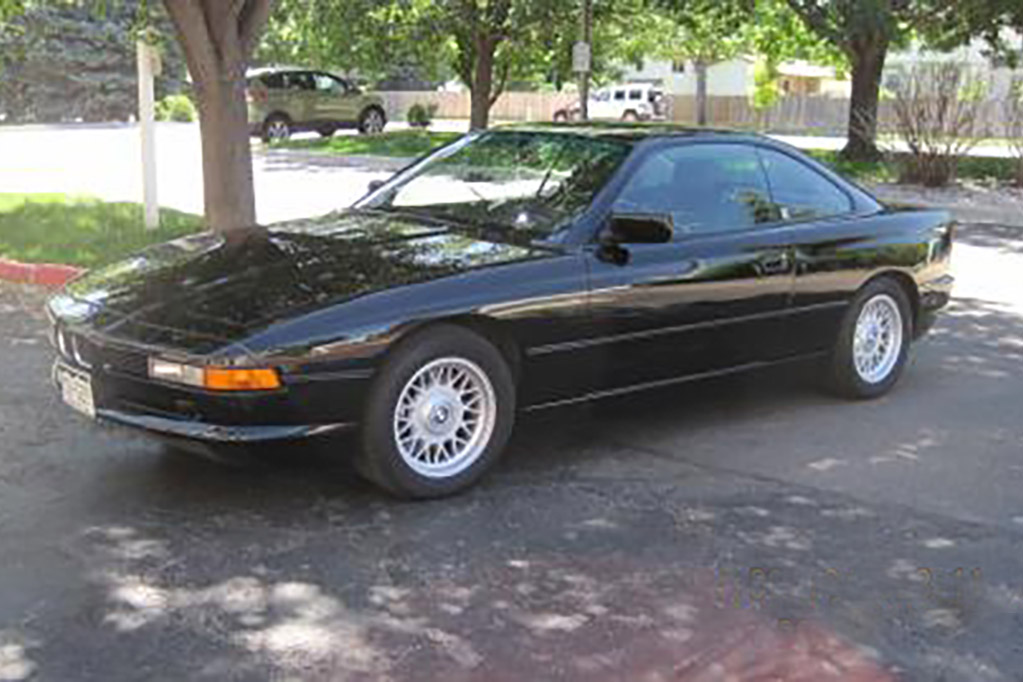
1993 BMW 850Ci
Following the popular and sales success that was the E24 6-Series, BMW decided to go big. Big in this case was dropping a 5.4-liter V12 into a sleek coupé body that was and remains stunning. The E31 850i was an immediate hit, with orders outnumbering production into its fourth model year. When the high-performance—and now highly sought-after—850CSi (there was no M8 then) was introduced in 1992 , the E31 V12 line added a midrange model, the 850Ci. While shy of the CSi’s 375 hp and impressive 406 lb-ft of torque, its new M73 5.4-liter V-12, was good for a respectable 332 hp and 361 lb-ft of torque (up 36 hp and 30 lb-ft on the “base” 850i). Today the 850Ci represents something of a bargain comparatively, yet is actually more rare than its mighty sibling (1,218 vs 1,510). This 1993 850Ci spares details, but is said to be in “very good” condition, with “lots” of recent work performed including fresh paint, new tires, new batteries, and more. The car currently shows around 73,000 miles with service records dating back to 2005. A well-maintained 850Ci generally proves to be robust, though attention to seepage and its complex electrical systems is always advised. Otherwise $29,000, as listed here on The Mart (BMWCCA classifieds), buys one of the most beautiful and indisputably timeless designs ever to wear the roundel while its place as the only V12 coupe in BMW’s long history portends well for its future.
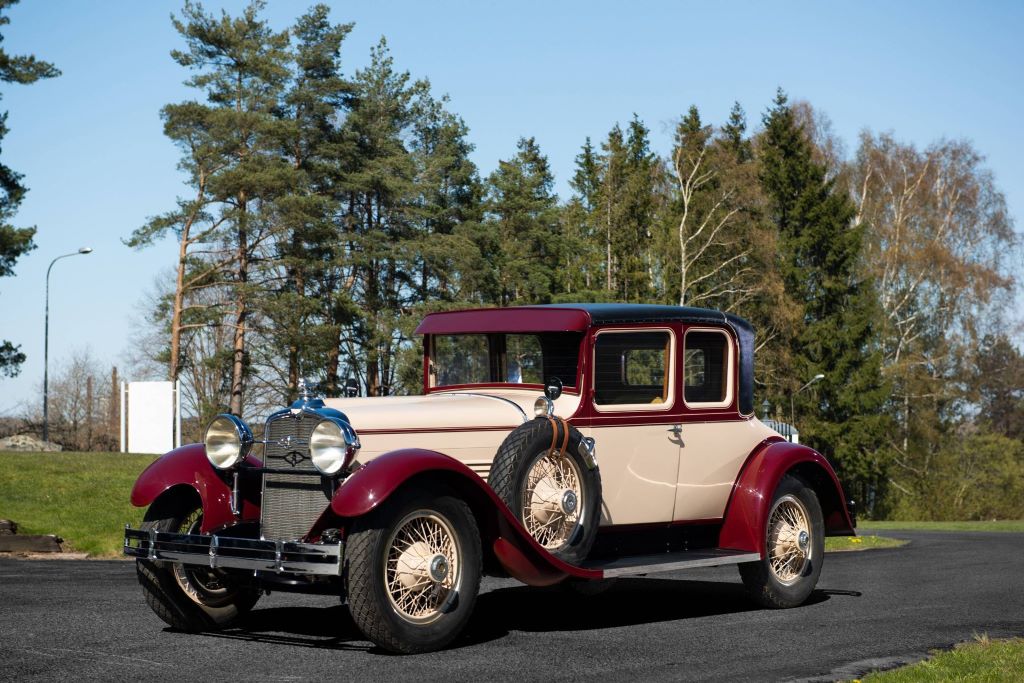
1928 Stutz Vertical 8 Victoria Coupé
The Stutz BB Series (also called Vertical 8), was designed by Frederic E. Moskovics with the aim of returning the Stutz brand back to the luxury-performance field with an impressive 100-hp 5.3-liter straight 8 delivered from Duesenberg to Stutz. They were fitted with elegant bodies that were often specially designed according to the customer’s wishes. The Victoria Coupe Body was only produced in eight exclusive copies. This 1928 Vertical 8 Victoria Coupé (BB-C9-BL51D) was delivered new to a female doctor in Manhattan where it was chauffeur-driven (only a small folding extra seat is fitted next to the driver). Later the BB would spend time in the care in the collection of the eccentric and reclusive A.K. Miller, considered to have had one of the largest Stutz collections ever. In a rare decision to sell one of his precious articles, BB-C9-BL51D was bought in October 1990 as a renovation project by its current owner and exported to his home in Sweden, where it remains awaiting its next owner. The renovation was underway but the facility where the car was stored caught fire. Many parts and documents were destroyed and the car once again sat inactive. However, in 2020, restoration resumed in the hands of von Braun Sports Car. The car is now almost complete. The engine with drive train has been dismantled and refurbished and the car can once again be started and driven, though some work remains to make it completely road-safe (the brakes and wiring harness need to be reviewed further and the main rear petrol tank is missing but rather easy to fabricate from drawings/measures/pictures available, among other things). The two-tone paintwork is burgundy and beige in the same configuration as the car’s original paintwork. The body and paint work was carried out around the turn of the millennium and is in good condition. The interior is a classic velour textile was completed and renovated at von Braun Sports Cars. With a rich history that includes the Indianapolis Speedway as well as Sunset Boulevard and Riverside Drive, The Stutz Motor Company remains an iconic piece of the automotive landscape. This 1928 BB Vertical 8 Victoria Coupé represents the highest rank in provenance and luxury from the company’s storied past. Early photos and documents accompany the sale, along with its Swedish registration number and a pre-registration carried out at the time of importation in 1990. Older documentation from the US is also included, along with a Columbia License Plate. It’s now open to offers on Hemmings Make Offer, or buy it now at $99,000.
Other finds
- 12,000-mile 2003 Aston Martin Vanquish paint to sample – $79,500
- Original split-bumper 1971 Chevrolet Camaro RS 65,000 miles – $19,500
- 7,274-mile 2003 Hummer H2 rare Sunset Orange – $69,995
- Black-plate 1950 Oldsmobile Rocket 88 all original 55,000 miles – $39.000
- Highly-optioned 1988 Nissan Pathfinder SE 97,787 miles – $15,900
- 42,447 mile 2014 Bentley Continental GT V8 S Mulliner, FBSH – $79,990
- Matching №s 1961 Jaguar E-Type OTS flat floor JDHT Certificate– $138,500
- 38,898-mile 2006 BMW M5 V10 SMG-III – $29,800
- 57 years stored 1947 MG TC untouched original – $15,000
- Highly original 1971 Datsun 240Z – $27,000
- 55,700-mile 2000 BMW 528i M-Sport two owners – $7,100
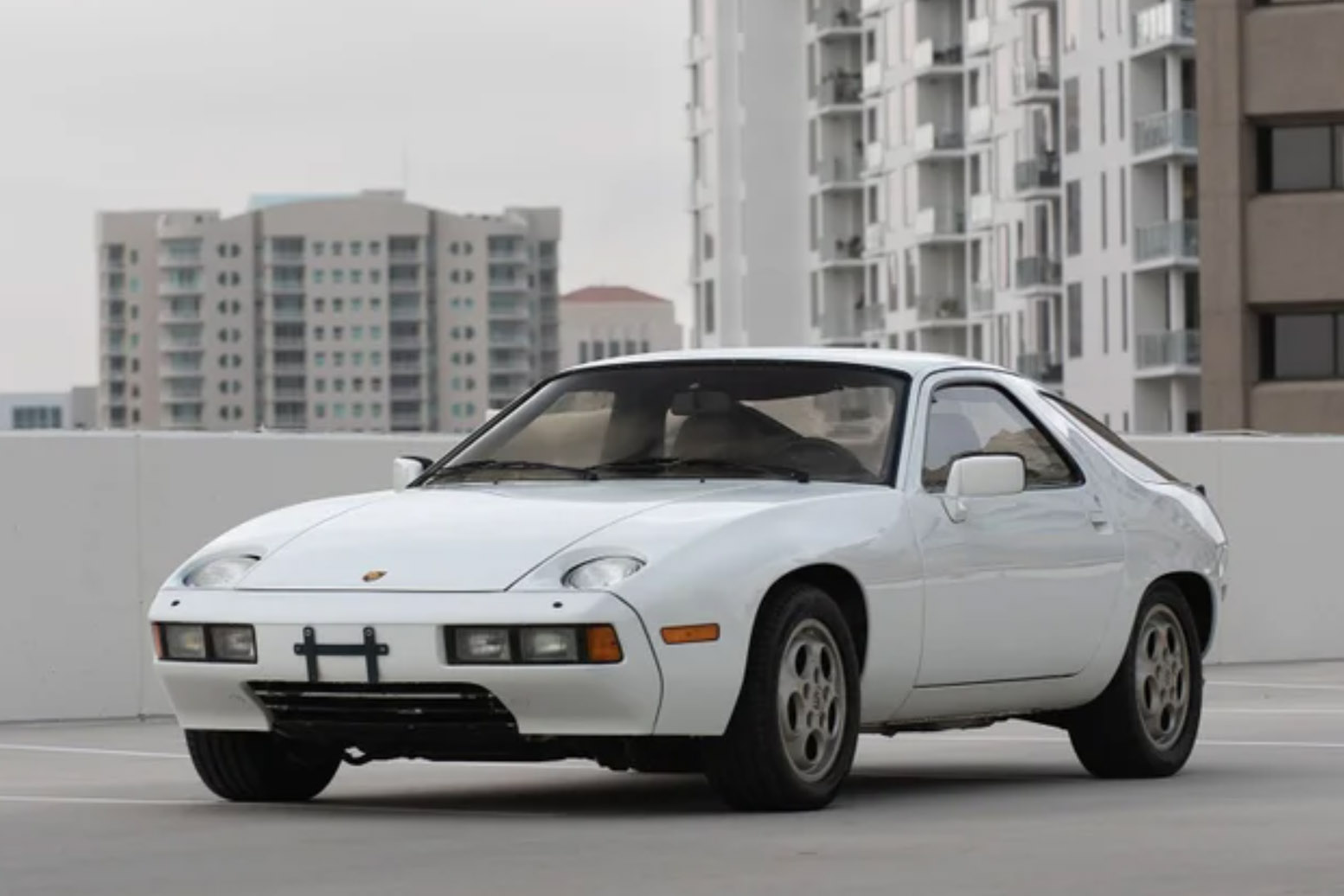
1978 Porsche 928
This early U.S.-market Series 1 Porsche 928 appears much the way it did when it rolled off the line in January 1978. Finished in classic Grand Prix White over a Green-upholstered interior with beige Pasha (!) velour (!) inserts, it shows an impressive amount of original equipment such as a desirable 5-speed gearbox with optional limited slip, 16″ Teledial wheels, both flag mirrors, and a clean, spoiler-less rear hatch. It retains its factory-original Porsche-branded Blaupunkt CR Stereo while the Recaro seat inserts have been recently reupholstered in their original factory correct specification of Pasha velour cloth, one of the most period-appropriate and iconic seat fabrics to emerge from Style Porsche. Though showing some minor cracking in the dash, there is none of the typical warping seen on many 928s. Showing 34,700 miles at the time of cataloguing, it was treated to servicing in 2021 that included an oil change, a new water pump, and a timing belt replacement along with a refresh of the air conditioning system. Earlier that year the car received four new Michelin Pilot N-Spec tires. The original owner’s manual and Blaupunkt manuals, toolkit, jack, and spare, will accompany this 1978 Porsche 928 when Broad Arrow Lot 131 crosses the block with no reserve on Friday, March 1 with an estimate of $50,000 – $70,000. According to Broad Arrow, it will be challenging to locate a 928 to match this early example’s originality and the purest vision of Porsche’s futuristic front-engined V8 GT. That may be true but …
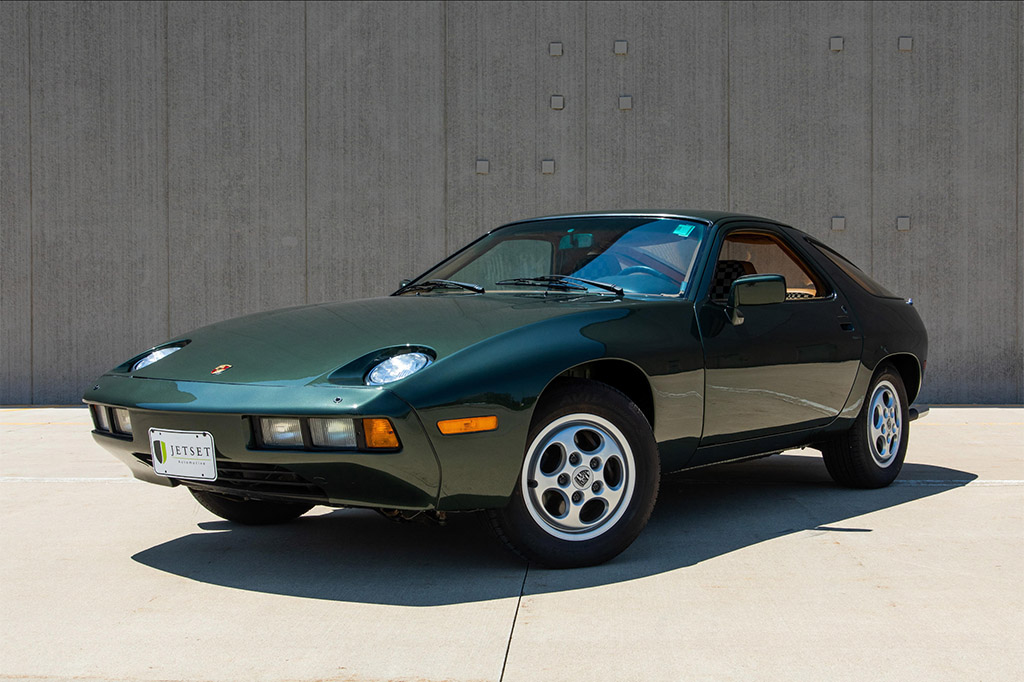
1978 Porsche 928
Anyone interested in an early S1 Porsche 928 would benefit by heading up the A1A to look at Bonham’s Lot 6. It was car number 1,001 off the line, rolling out of the Zuffenhausen plant finished in Oak Green Metallic over tan upholstery. It is also spec’d with the desirable 5-speed manual gearbox, velour seat inserts, and 16″ Teledial wheels. This 1978 Porsche 928 was originally delivered to Canada before coming to the United States a few years ago. The consignor reports it was repainted in its original color some time after arrival. Between 2021 and 2022, additional work is reported to include a replacement 5-speed gearbox, refinished phone-dial wheels, engine service, and refurbished seat bolsters against the original Pasha inserts. The car currently shows a modest 177,000 kilometers (~105,600 miles) at the time of cataloguing and it benefits greatly from recent refurbishment. Offered without reserve with an estimate of $40,000 – $50,000.
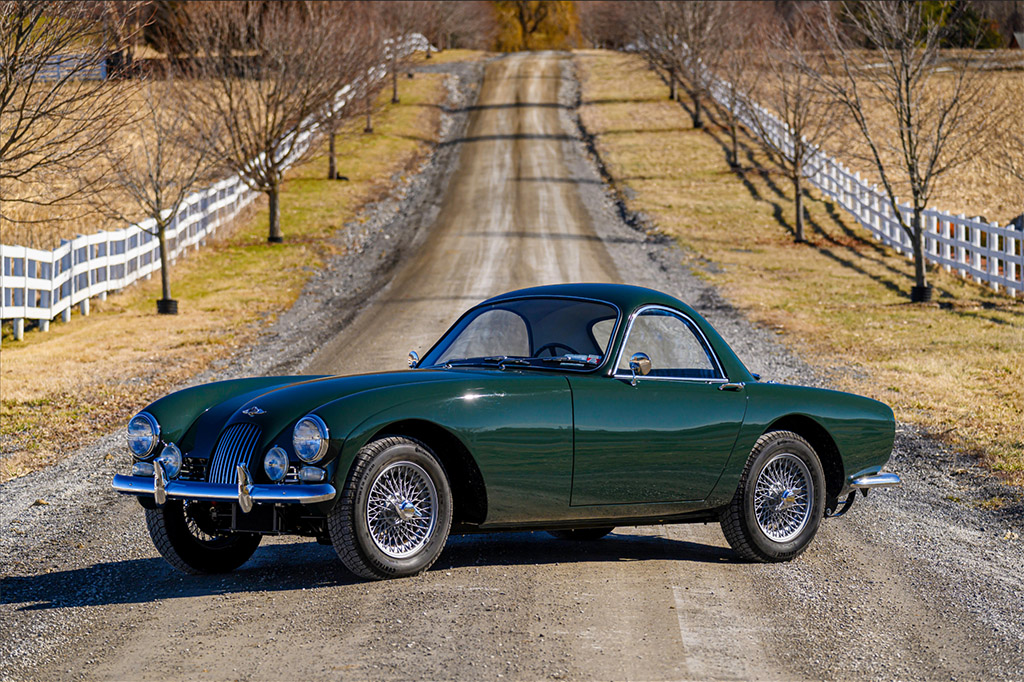
1966 Morgan Plus 4 Plus
While at Bonham’s, this 1966 Morgan Plus 4 Plus might be worth a paddle raise. In the early 1960s, Peter Morgan wanted to add an “up-to-date” model to the Morgan line, which had ben largely unchanged since 1950 (1936 if we include the 4/4) This modern silhouette was lighter and more aerodynamic than the traditional Plus 4 roadster but also 50% more expensive. Thus it was not a commercial success. Only 26 being were made before the supplier of its fiberglass bodies, EB Plastics, suffered a fire which destroyed the tooling for the Plus 4 Plus bodies. This Morgan Plus 4 Plus , titled as a 1967, was the 25th built. It was purchased new by Douglas Van Patten, the prominent naval architect who designed the record setting “Miss Canada III” and “Miss Canada IV” hydroplanes amongst other important commissions including “Beatrice”, at 1,200 feet the largest boat in the world in 1964. His son Doug, also a naval architect, inherited the Plus 4 Plus upon his father’s death in 1990. The seller, a Morgan enthusiast for more than 50 years, purchased the car from Doug in 2010 through Morgan Motors of New England and commissioned them to do a “nut and bolt” restoration. The restoration of the fiberglass body was entrusted to an artisan from Hinckley Yachts and the interior was beautifully made by Paul Russell and Company. The rarity of the Van Patten Plus 4 Plus and its restoration was rewarded in 2017 with the car winning “Best in Show” first time out at the Morgan 3/4 Club annual meet. Its second time on the show field was at the 2019 Fall Vintage Festival at Lime Rock where it won the Chairman’s Award. The car has not been shown since. The Van Patten Plus 4 Plus has been meticulously maintained and is reported to be “on the button”, as it proved to be on a test drive last fall. Historical photographs of the Van Patten car (including one from 1970 with Peter Morgan in the driver’s seat), and photographs from the restoration are provided as well as the detailed records from the restoration. A photocopy of Morgan’s hand-written Record Book for the car and the factory Chassis Record are also provided. Additional material accompanying the car includes: tool roll, jack and hammer as well as extremely rare original sales brochures/literature on the model. This Morgan Plus 4 Plus, Bonham’s Lot 45, offers a rare opportunity for the sporting enthusiast.
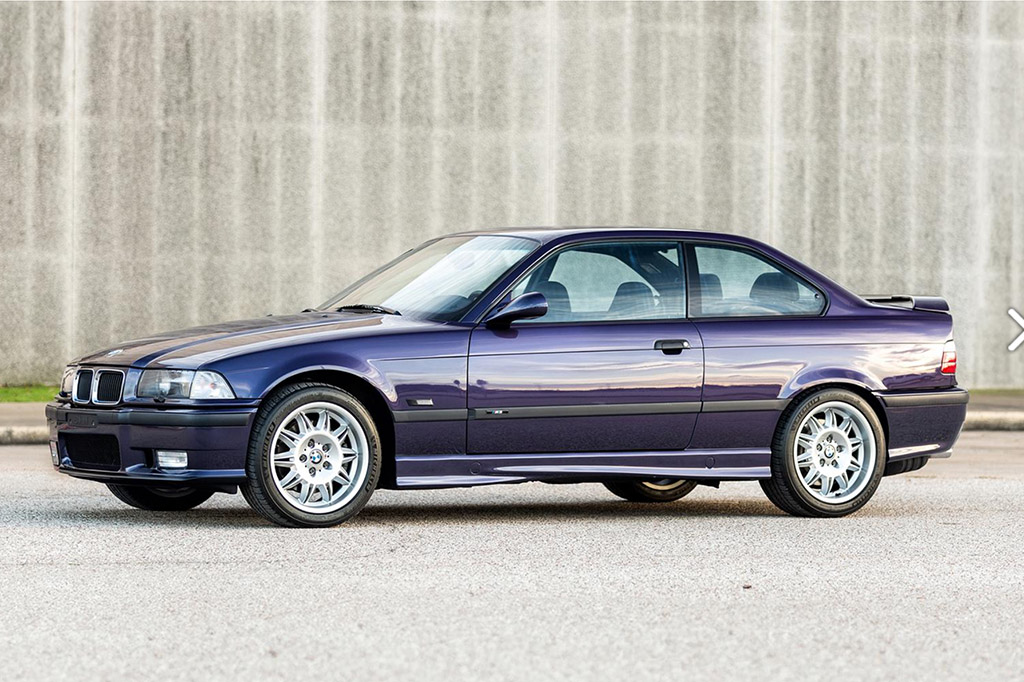
1992 BMW M3 3.2 Evolution
Beloved by driving enthusiasts since its introduction, BMW’s M3 is the company’s most successful high-performance model. The E36 M3 debuted in 1992, the first M3 with six-cylinder power, featuring dual overhead cams, VANOS variable cam timing , and electronic fuel injection. This limited-production, highly sought-after European-spec E36 Evolution model is powered by a 321-hp 3.2-liter engine rated at , making it the first BMW engine to produce more than 100 hp per liter. It’s mated to a 6-speed manual gearbox. This 1996 BMW M3 Evolution is a very rare and well-preserved example with glossy and captivating Techno Violet paint, full original BMW-etched glass, original staggered BMW Motorsport wheels with new Michelin Pilot Sport tires, and an M-Cross fabric interior with its factory-original radio. Original owner’s manuals, pamphlets, and directories are inside the proper folio. An inspection and major service, Including VANOS system restoration, was completed by BMW Group Classic in Munich prior to the M3’s recent arrival in the US. Gooding & Company Lot 6 is ready to find its new owner when it crosses the block without reserve on March 1.
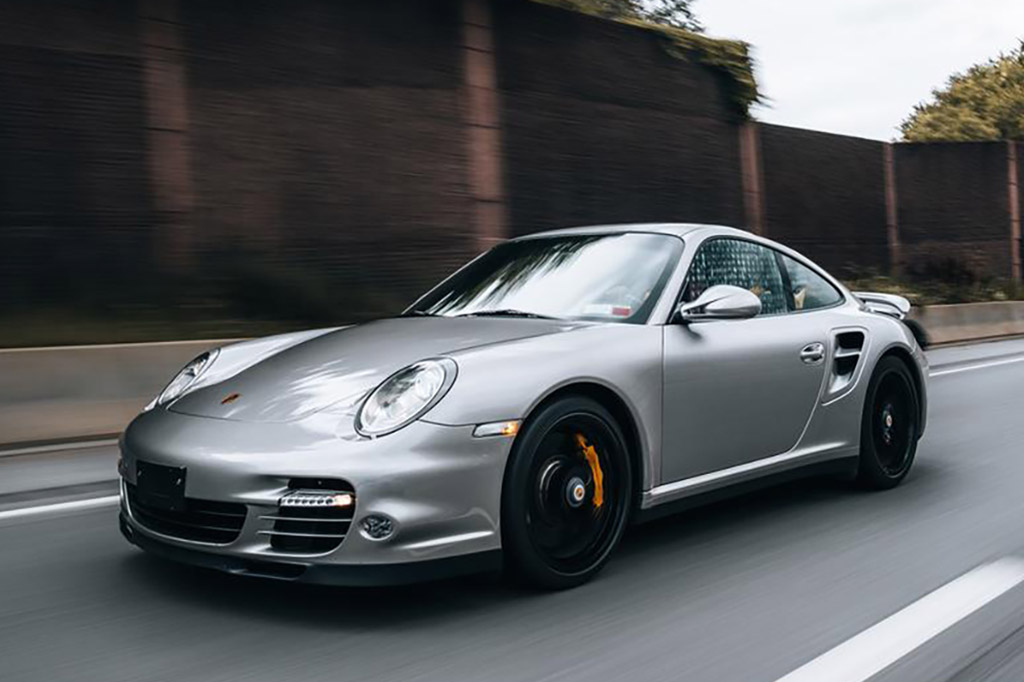
2013 Porsche 911 Turbo S
2013 marked 50 years since the first Porsche 911 (badged 901 in 1963, prior to Peugeot’s objections). It also marked the last of the 997 generation, considered by many Porschephiles as the best of the line for its more compact size, rawer, more analog feel, and hydraulic steering over future generations. This 2013 Porsche 911 Turbo S is believed to be the seventh to the last 997 (997.2) to come off the production line). As a Turbo S (“Sport”), it was tuned to generate 30 hp more than the standard Turbo, bringing the total to 523 hp. The Turbo S was Porsche’s fastest production car to date at the time of its introduction, alongside the track-focused GT2 RS, with a 0–60 time of 2.6 seconds on its way to a top speed just shy of 200 mph. The 997.2 Turbo S was available only with a 7-speed PDK transmission while carbon ceramic brakes and the Sport Chrono package came standard. There were reportedly fewer than 100 997.2 Turbo S models shipped into the US in total with only 15 of those in 2013. This 2013 911 Turbo S, finished in Platinum Silver Metallic is spec’d with carbon ceramic brakes, along with Speed Yellow seat belts and gauges to match. Its 19″ RS Spyder center-lock wheels have been dressed in Michelins Pilot 4s on all corners within the last 200 miles, along with an oil and transmission service. All components are said to be factory save for a transmission pan replace by a genuine Porsche part. Showing around 19,000 miles at the time of listing it can be found here on The Mart (Porsche Club of America classifieds) out of Rochester, New York with an asking price of $127,500
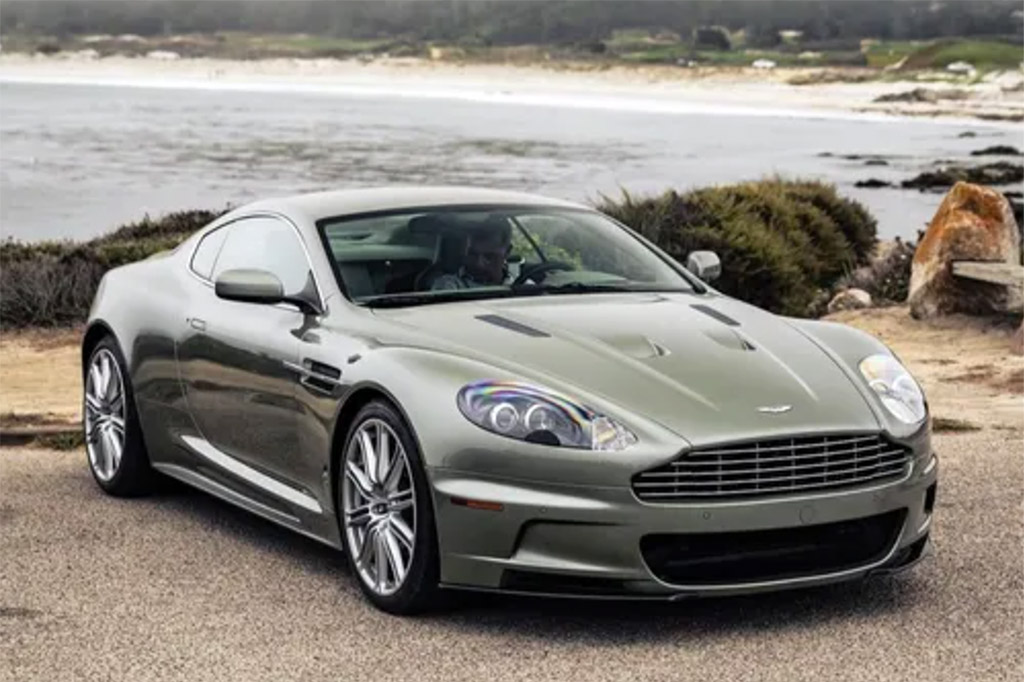
2009 Aston Martin DBS
Aston Martin unveiled the DBS at the Pebble Beach Concours d’Elegance in 2007. With carbon fiber exterior trim extending to the front splitter, side mirrors, and rear diffuser fascia, it concealed the car’s hand-assembled 6.0-liter V12—along with adaptive suspension and Aston Martin’s first deployment of carbon ceramic brakes. As such, the DBS was significantly more sharpened and engaging than its DB9 sibling. The 510-hp DBS quickly garnered praise as a lavish grand tourer with supercar performance. And while a Touchtronic II ZF automatic was later offered, fewer than 1,000 units are believed to have been configured with a manual gearbox. This 6-speed 2009 DBS was purchased new and owned by notable collector Michael Fux, It was spec’d in unique special-order California Sage (one of four worldwide and the sole US delivery) over Absynthe Green leather and Alcantara (one of two worldwide and the sole US delivery). Appointments include include power-adjustable heated seating w/memory, 700-watt audio, green carpet foot mats, and carbon fiber trim throughout, along with a leather-wrapped steering wheel and iconic billet aluminum gearshift. It’s been sympathetically modified by the vehicle’s original dealer, Miller Motorcars of Greenwich, Connecticut and includes body-color ‘S’ painted brake calipers and carbon fiber veneered center console, shifter/ashtray surround, and vent bezel trim. Paint protection film has been added more recently. This special-order DBS was configured with sill plaques personalized for Mr. Fux, who owned the car until 2018. Subsequent registrations show Florida, Arizona, and California ownership. The seller states third and fourth owners listed by the document reflect a change in address and true three-owner history. Currently showing an odometer reading of 8,757 miles, with recent maintenance completed by David Nutley Automotive of San Diego, California. This includes replacement of the original battery, door strut replacement, brake fluid flush, engine oil/filter change, and left rear wheel refinishing. Accompanying the sale are a Sapphire ECU, remote fob spare and valet key, along with the owner’s manual and service books, an umbrella, and car cover. Offers are now being accepted on Sotheby’s Motorsport out of Pine Valley, California with six days remaining in the auction.
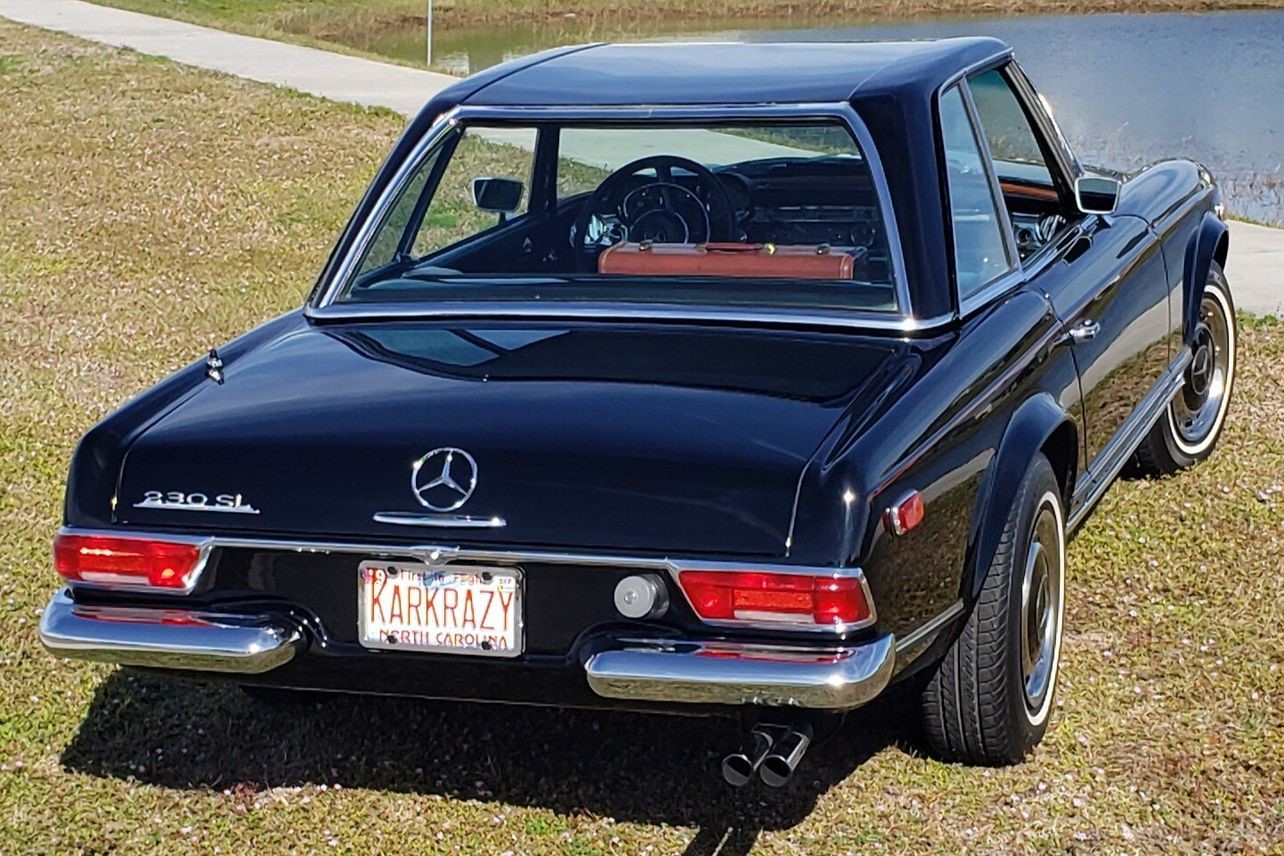
1967 Mercedes-Benz 230 SL
Carrying on the coupé-roadster legacy that began with the 1957 300 SL Roadster, Mercedes-Benz introduced what would become one of its most iconic models, the W113 Pagoda. The first of three configurations, the 230 SL was introduced at the Geneva Auto Show in 1963. Production began in June of that year. Though perhaps not as sporting as the 300 SL, its 2.3-liter inline six engine produced a respectable 148 horsepower and in fact nearly matched the lap time of a V12-powered Ferrari 250 GT in the hands of a grand-prix driver at Vétraz-Monthoux. The 230 SL was produced until January of 1967, with a total run of 19,831, of which fewer than a quarter were sold in the US. This one comes from late in the production and features a rare Triple-Black combination along with a desirable 4-spd manual gearbox. The current owner purchased the 230 SL from a North Carolina doctor in 1994. The title transfer at the time stated 21,124 actual miles and that mileage was believed to be accurate, however with no prior owner’s records (other than the factory build sheet), current mileage (33,645) is stated TMU. It was treated to a comprehensive two-year restoration by SL specialists Bud’s Benz of Georgia. It’s now said to have a near perfect interior with fresh leather, correct carpets and newly finished wood trim. The body was treated to a bare-metal repaint by a marque specialist in the original 040 black, using modern high-quality two-stage base color and clearcoat that’s still used by Mercedes-Benz on 2024 models. It was then accented by a hand-painted red pinstripe. Both tops are reportedly near perfect, and a custom-fit W113 Pagoda top hoist and dolly are included in the sale. Brightwork is said to “sparkle.” As testament to the car’s condition, it was judged Best of Show in 2023. Documentation and service records covering the seller’s 30-year ownership along with detailed receipts for the extensive work recently done will accompany the sale, as will the owner’s manual, a matching spare, original Mercedes tool kit and jack, along with a vinyl tire storage cover, and period-correct Samsonite suitcase. This 1967 Mercedes-Benz 230 SL is now available in Mount Dora, Florida on the MBCA Classifieds (Mercedes-Benz Club of America) at a negotiable price of $99,000.
Other finds
- One-owner 2006 BMW M5 73,200 miles – $17,900
- 67,000-mile 1993 Chevrolet S10 Tahoe extended cab – $12,900
- Backdated 1978 MG MGB 61,400 miles – $9,950
- 30,499-mile 2000 Ford SVT F150 Lightning private collection – $37,500
- Two-owner 1999 Mercedes-Benz SL 500 29,000 miles – $28,750
- 8,080-mile 2003 Porsche Boxster one owner – $24.800
- One-owner 1997 Ford Thunderbird LX 32,500 miles – $11,500
- 16,201-mile 2015 Mercedes-Benz S65 Coupe V12 – $108,000
- № 145 of 507 1990 Alpina B10 59,041 miles – $79,950
- Highly original 1948 Cadillac 61 Club Coupe 64,000 miles – $16,000
- 11,300-mile 1981 Chevrolet Corvette highly optioned 4-speed – $31,900
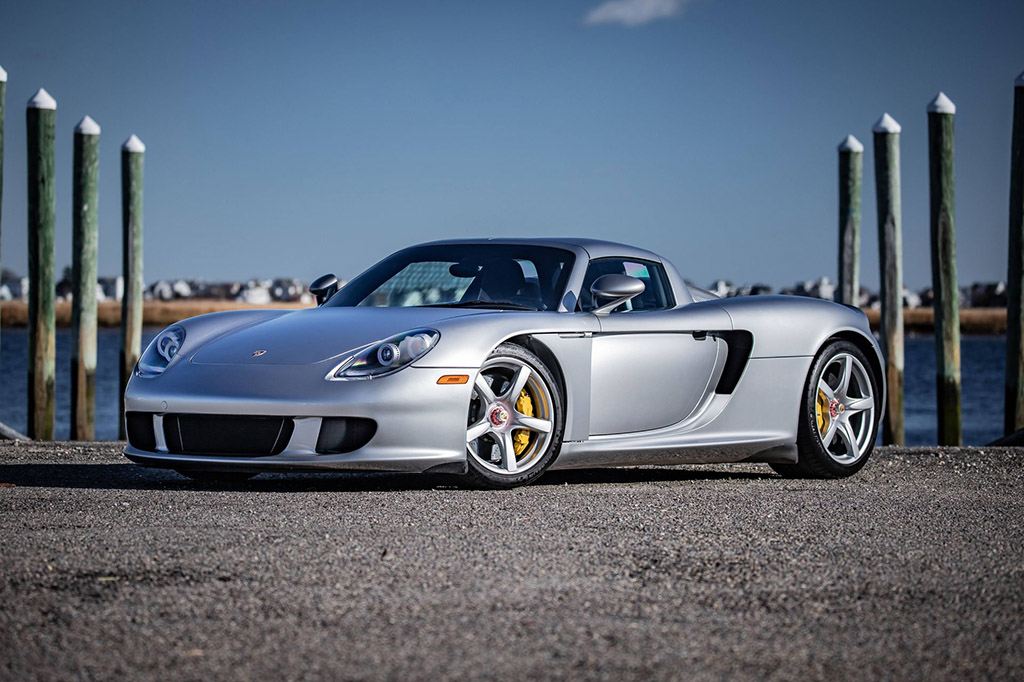
2005 Porsche Carrera GT
One of a trio introduced in 2003 (along with the Ferrari Enzo and Mercedes-Benz SLR McLaren), the Porsche Carrera GT (CGT in Porschespeak) marked the company’s return to supercar territory after 959 production had ended a decade earlier (discounting the 25 street-legal versions of the Le Mans GT1). Like the 959, the Carrera GT was born from racing aspirations (the 959 based on Group B rally; the CGT was built around a V10 from a canceled Le Mans prototype). The 5.7-liter engine was capable of 603 horsepower with 435 lb-ft of torque, allowing it to reach 60 mph in 3.5 seconds and a top speed of 208 mph. With its exhilarating performance (along with one of the most sonorous exhaust notes in automotive history), stunning design, and pure analog character, the Porsche Carrera GT continually lands near the top on Greatest-Sports-Cars-of-All-Time lists. Yet with an extraordinary attention to detail, it remains a comfortable and civilized road car, with power controls, an effective climate control system, and high-end audio. It is, in other words, a Porsche, albeit with 1,270 made from 2003 to 2007 (644 US-delivery), one that is that much more desirable among supercar enthusiasts and collectors. While far from a daily driver, this CGT is no garage queen, having covered 16,571 miles at the time of listing. While that would be remarkably low for, say, a 2005 911, it is on the higher side for a Carrera GT. From the distant photos provided (no close ups, meter readings, etc.), the GT Silver Metallic [U2] exterior appears to have been well kept, as does the Dark Gray [DZ] leather interior, optioned with Bucket Seats XT [386/387], a Porsche Online Pro CD-Radio [690], and Carrera GT Custom Tailoring [2427], along with a factory car cover and floor mats. with a recent $80,000 engine-out service, offers are being accepted for this 2005 Porsche Carrera GT on Hemmings Make Offer, with a buy-now price of $1,275,000.
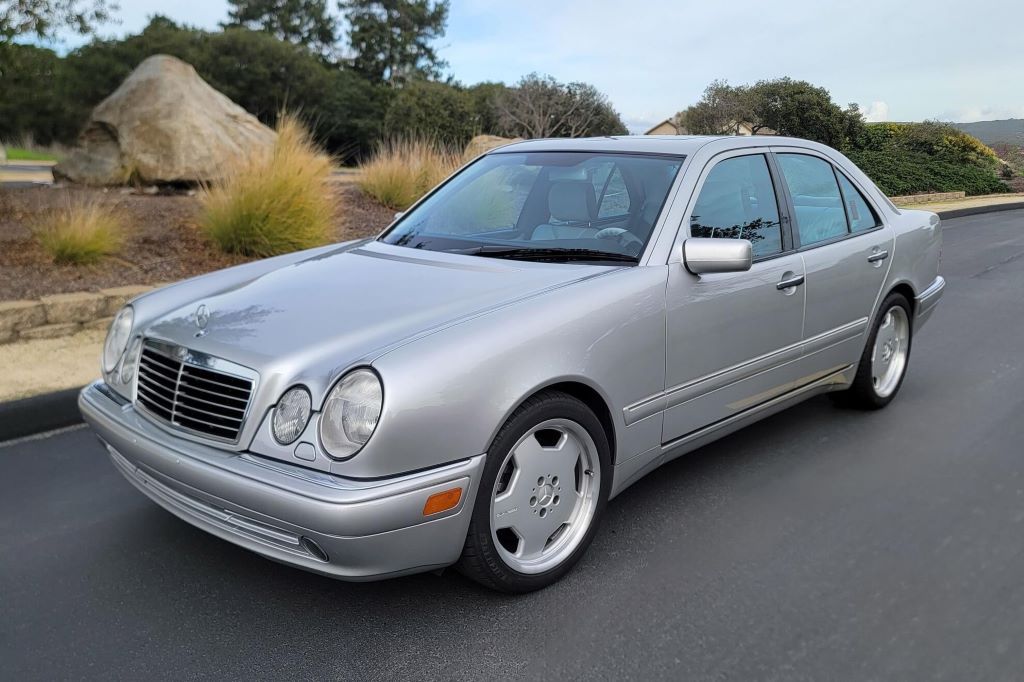
1999 Mercedes-Benz E 55 AMG
Following in the tracks of the 300 SEL 6.3, 450 SEL 6.9, and W124 E 500, the Mercedes-Benz W210 E55 AMG assumed the role of the Star Q-ship with its 1999 introduction. This is the same year that AMG became a wholly-owned subsidiary of (then) DaimlerChrysler, however the E 55 would continue to be built in its entirety at AMG’s Affalterbach facility. AMG aerodynamic body kit, 18” AMG Monoblock wheels, an AMG braking system, AMG exhaust distinguish the E 55 AMG from its more pedestrian W210 variants. At its heart is an AMG-built 345-hp 5.4 liter V8, which could hurl the 3,700-lb car to 60 mph in under five seconds on its way to an Autobahn-worthy 160 mph top speed, while lapping the Hockenheim Short course in 1:18:20 (roughly the same as the BMW E39 M5). Like its forebearers, it never forget it’s a Mercedes Benz. Exclusive AMG leather upholstery drapes heated and power-adjustable front seats with memory settings while dual-zone automatic climate control, cruise control, a rear sunshade, a Bose sound system make for civilized cruising. This 1999 E 55 AMG was delivered new in Michigan but spent most of its early life in Florida and South Carolina before finding a home in California since 2016. Finished in what appears to be its original Brilliant Silver Metallic [744] over a two-tone Alpaca Gray and Slate Gray interior, it is said to have been especially well cared for. It’s been driven very sparingly in the last eight years, showing 48,067 miles at the time of listing. The original owner’s manuals, toolkit, and spare tire accompany the sale, along with a car cover, and a collection of documentation. While its predecessors have become sought-after collectibles, the W210 E 55 AMG remains a relative enthusiast bargain. This one is now on PCARMARKET out of Monterey, California with four days left to bid.
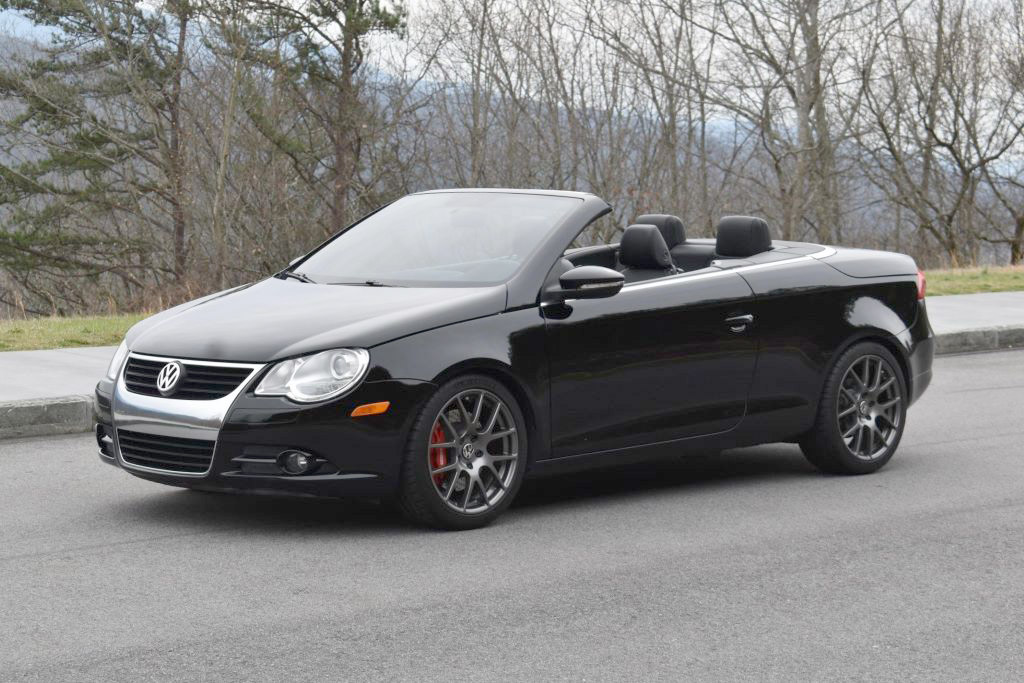
2011 Volkswagen EOS Komfort
For most of its history, Volkswagen has had a tradition of mating its people’s car with while not a true sports car, something sportier. It began with the Karmann Ghia and continued through the Scirocco and Corrado. It would end (at least for now) with the Golf Mk5-based EOS, a 2-door hardtop convertible produced from 2006 to 2015. It was the world’s first car with a five piece CSC (coupé, sliding and convertible) roof. The front segment had a transparent glass effect and could be opened or raised like a conventional sliding/lifting sunroof. Even with the roof closed, the result was a bright interior atmosphere. Power came from a 2.0-liter turbocharged inline-4, rated at 200 horsepower and 207 lb-ft of torque in stock form. It was relatively popular in its first years, but as the appeal of hardtop convertibles quickly faded, so too did sales figure of the Eos. This example comes from 2011, about mid-life, just prior to a facelift that would bring it line with Volkswagen’s Mk6 design language. There seems to be a strong preference for the sportier aesthetic of the pre-facelift Eos. This one looks especially athletic in its Ninja Black exterior. That appearance is enhanced by a rare 6-speed manual transmission (not available on Lux models) and some modifications intended to increase driving satisfaction – including an APR Stage 2 tune and cold air intake, 18″ Neuspeed wheels, Borla exhaust, and performance-oriented suspension and brake components. The interior features Titan Black leatherette and is appointed with a power-adjustable driver’s seat, heated front seats, a center infotainment screen with voice control, and more. Showing 53,100 miles, recent service includes replacement of tire pressure monitoring sensors, clamp-in valves, and left rear wheel speed sensor, as well as routine oil and filter changes. It’s listed on Cars & Bids with four days left in the auction.
Other finds
- One owner 18,000-mile 2004 Dodge Viper SRT-10 NOVI 2000 – $62,999
- All-original rust-free 1950 Chevrolet 3100 Pickup 216 3-speed – $26,000
- 54,164-mile 2004 Nissan Xterra XE 4×4 one owner – $7,649
- One-owner 1990 Mazda MX-5 Miata 58,644 miles – $10,500
- 5,768-mile 1988 Pontiac Firebird Trans Am well optioned – $29.900
- 51 years owned 1955 Jaguar XK 140 MC OTS JDHT Certificate – $85,000
- 30,600-mile 2000 Porsche 911 Carrera 6-speed – $25,000
- One-owner 2004 Honda Element EX 57,000 miles – $17,995
- Blue-plate 1971 Datsun 240Z 62,634 miles – $26,000
- One-owner 1996 Mitsubishi Pajero 4WD JDM 67,781 km – $16,000
- Matching №s 1970 Buick GS 455 Convertible Protect-0-Plate – $47,500
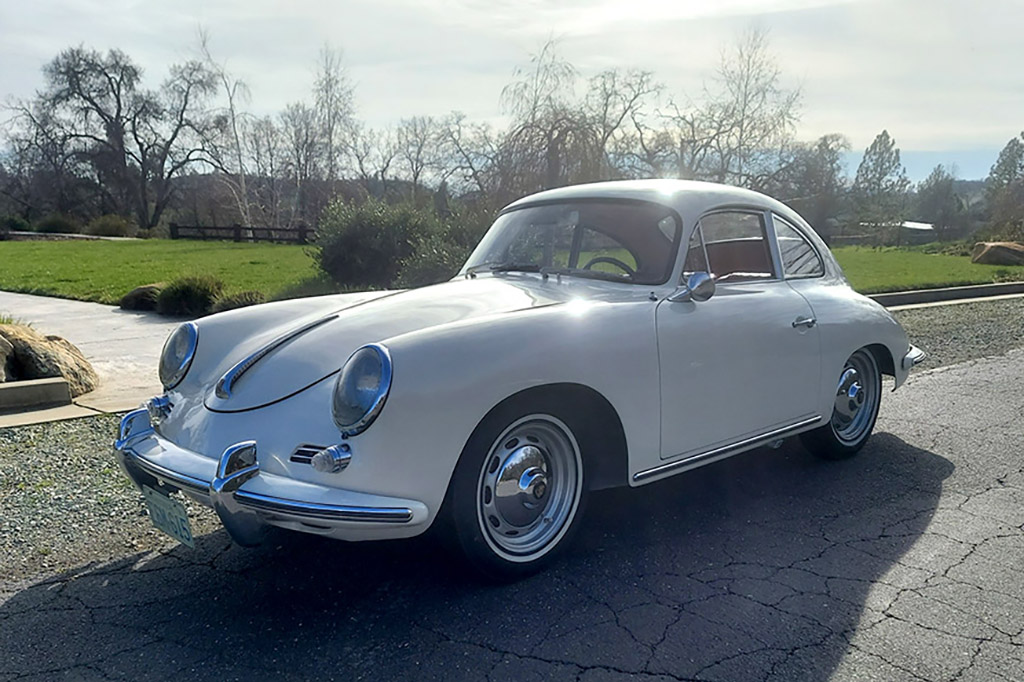
1960 Porsche 356 B 1600 Super
The model year 1960 brought big changes to the Porsche 356, big enough to redesignate it the 356 B. The key visual differences between the B and the previous A model included the front bumper with enlarged rim guards and the headlights, which were also positioned much higher. The horn grilles next to the further-protruding front indicators were flatter and featured two chrome-plated slats. The front lid handle was also wider at the bottom. The two lamps for the number plate lighting were integrated in the higher-positioned rear bumper, while the reversing light was mounted below the bumper. This 1960 Porsche 356 B is largely as it was when it was sold new in the Bay Area. As a 1600 Super, it came equipped with a 75-hp 1.6-liter flat-four mated to a four-speed manual gearbox. It’s been repainted some years ago in its correct finished in Ivory White, while its red upholstery remains original. The car remained in the Bay Area until the second owner purchased it in 1968 and moved it to Missouri before returning it car back to California. It was reportedly stored indoors until the third and current owner purchased the car as in January 2020. This 356 B car received rubberized undercarriage coating early in its life, and in 1971 at 10,463 miles the engine seized due to overheating as the coating was covering an air dam. The second owner chose to store the car in California without driving it for nearly 50 years, when the seller purchased it in January 2020. Once they seller possession of the car, the engine was serviced, and less than one mile has been added since–the odometer still reads 10,463 miles, which the seller believes to be correct. It is currently registered in California as “non-operational” as the seller decided not to add miles to the odometer. This 356 B 1600 Super is now offered with factory books and manuals, service receipts from July 1971 and 2022, a spare wheel/tire assembly, tool kit, some spare parts, and three three keys. It’s here on Marqued with 11 days left to bid.
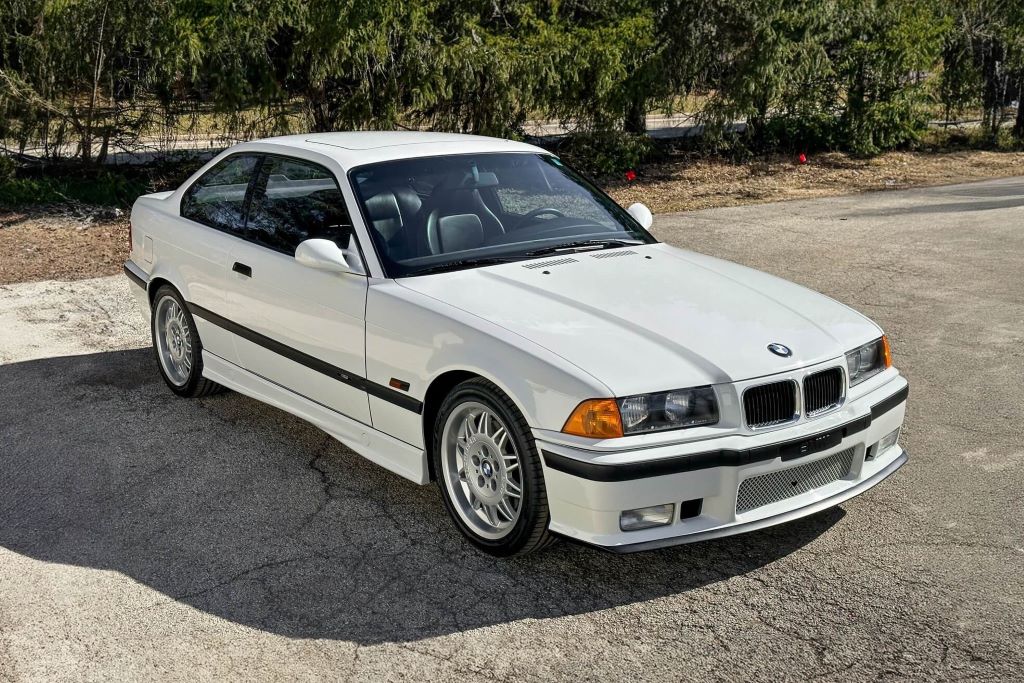
1995 BMW M3
For years—decades really—the E36 generation BMW M3 has been overshadowed by its predecessor, the original E30 M3. While that’s still mostly true, the E36 (1995 – 1999) has been emerging for its own merits. While we here in the US didn’t get to enjoy all the benefits as the rest of the world (the idea of a 3-Series costing more than $40,000 was at the time—1995—too big a leap for US dealers), the lower cost but less powerful S50B30US was still good for 240 horsepower (vs 282 RoW) and 225 lb⋅ft of torque (vs. 236). Nevertheless, a healthy bump over the E30’s 192 hp/170 lb-ft, with smoother power delivery from its DOHC 24-valve aluminum-head inline-6 (albeit at the expense of 250 lbs.). Other notable differences included suspension changes and single piece brake discs (instead of floating discs). This example comes finished in Alpine White (300) and includes a factory sunroof, fog lights, and numerous dealer-installed Dinan upgrades including an airflow meter, Stage 3 chip, cold air intake, and throttle body. It rides on 17” Style 22 wheels mounted dressed in recent (2023 date code) Toyo Proxes Sport tires. The cabin is appointed with Black Nappa leather upholstery covering the desirable “Vader” heated sports seats. Equipment includes an M-sport multifunction steering wheel, a HiFi speaker system, a cassette stereo, a trunk-mounted 6-disc CD changer, dual-zone climate control, an on-board computer, and cruise control. Slight wear is reported on the driver’s seat bolster while all gauges, electronics, and accessories are said to be working properly. Showing 54,300 miles at the time of listing, the M3 has been freshly serviced including a new battery, new fuel injectors, an oil change, and a brake fluid flush. A fine example of a first-year (US model) E36 M3, it’s awaiting its next owner on PCARMARKET in Lake Bluff, Illinois.
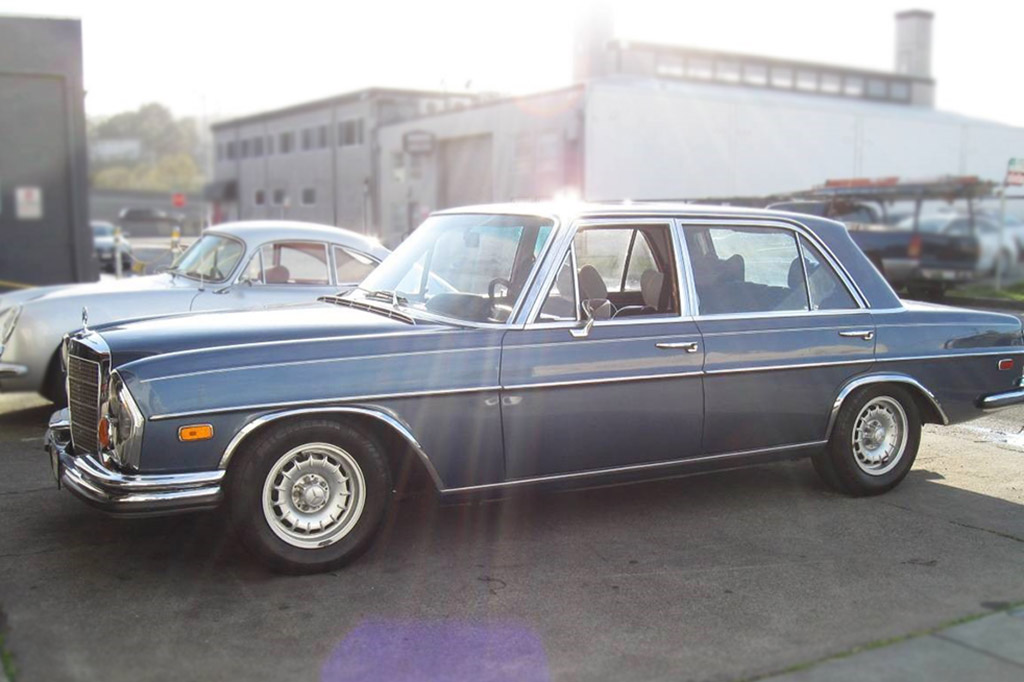
1972 Mercedes-Benz 300 SEL 6.3
With all due respect to the Chrysler Letter cars and the Lotus Cortina of the ’50s and early ’60s, credit for the world’s first Q-car (a high-performance variant of an outwardly unassuming car) is broadly given to the Mercedes-Benz 300 SEL 6.3. It began when a Finnish Mercedes-Benz engineer named Erich Waxenberger swapped the W109’s inline-6 for the big M100 6.3-liter V8 from the Großer-Klasse 600. While his primary motive was to recapture the company’s performance cred, which had been fading since the end of 300 SL production, it appealed to the higher-ups as a way to make better use of the M100 engine production facilities. Ready to attack the Autobahn, it never forgot it was a Mercedes-Benz with innovative and high-end luxury appointments like air suspension (also borrowed from the 600), ventilated 4-wheel power disc brakes, power windows, central locking and power steering. It debuted at the Geneva Motor Show in March of 1968, with its US introduction at Laguna Seca a few months later. By the end of its run in 1972, a total of 6,526 300 SEL 6.3s were built. This car is one of the 1,797 made for the 1970 model year. Originally owned by a factory executive, the current owner purchased the car in 1976 at the factory. It is said to be a Euro-spec model and well optioned with air conditioning (will need attention), power sunroof (working), and rare headlamp washers. It’s said to be highly original, save for an older repaint that appears to be holding up very well. Driven sparingly but regularly—and only in fair weather—it now shows around 54,000 miles. Recent service includes a new battery, fresh fluids including brake fluid, replacement of suspension air bags and rebuilt valves. It’s now being offered here on Craigslist in San Rafael, California with an asking price of $60,000.
Other finds
- 11,000-mile 2008 Ferrari 599 GTB Fiorano $45,000 in options – $164,900
- Matching №s 1968 Chevrolet Corvette L-68 well optioned – $62,000
- Straman converted 1991 Nissan 300ZX Convertible – $25,750
- One of 138 original 1966 Dodge Coronet 500 Hemi 14,500 miles – $79,000
- Ground-up resto 1956 Volkswagen Beetle original coral red – $31,500
- 30,900-mile 1991 Mitsubishi 3000GT VR4 records/receipts – $25,000
- All-original matching №s 1976 Pontiac Trans Am SE 69,200 miles – $76,000
- One-owner 1990 Buick Reatta Convertible one of 2,132 – $12,500
- 10,249-mile 1990 Ford LTD Crown Victoria one-owner – $24,995
- One-owner 2003 Mercedes-Benz SL 500 54,253 miles – $13,500
- 20,595-mile 1981 Chevrolet Corvette numbers-matching L81 – $25,000
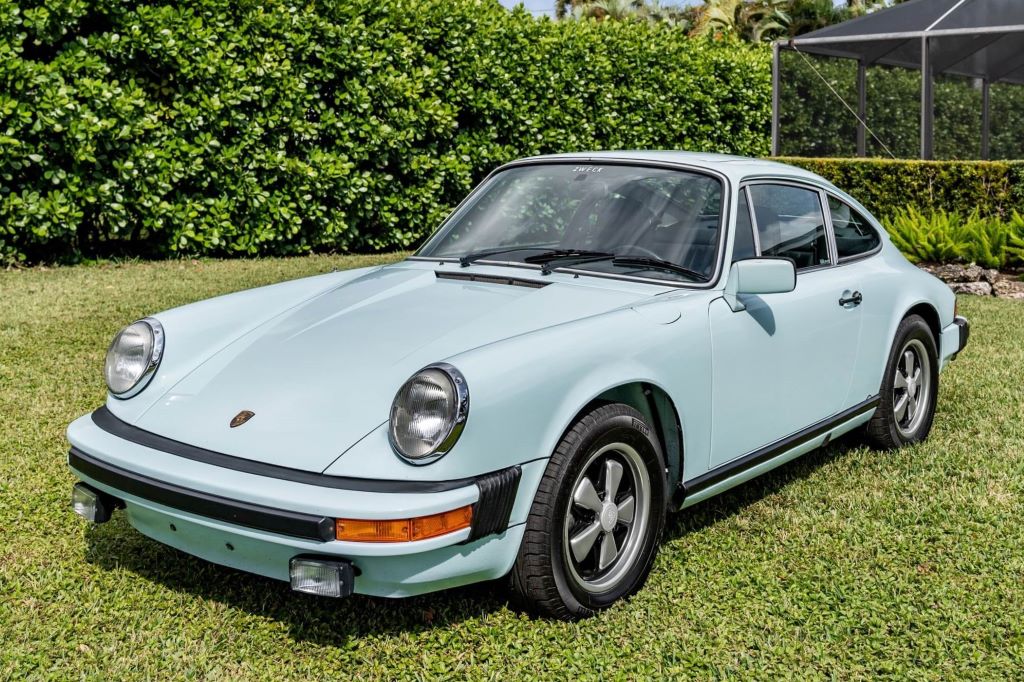
1977 Porsche 911S
Call it a great idea that got lost in translation. The Porsche 911 G-modell introduced the “impact bumper” era that would carry through for a 16-year run, but also a detuned version of the legendary Carrera RS 2.7-liter engine, with Bosch K-Jetronic injection and a magnesium-crankcase. The trouble was that in the US, this engine was incumbered with emissions equipment, specifically a thermal reactor that under excessive heat, could lead to warping and pulled head studs. Many of these 911s were being sold in hot-weather US states, where these issues primarily arose. Even though relatively few cars were affected (in relation to all 911s sold in the US), the mag case got a bad rap. This led to the 1974 – 1977 911 and 911S being something of a bargain and a prime target for repatriotization during times of a more favorable Euro exchange rate, not to mention chop-shop customization. The net being nice examples don’t come up for sale nearly as often the later SCs or Carrera 3.2s. Once in a blue moon—Coppa Florio Blue, to be exact—a 911S comes along that truly stands out. Aside from its über-rare color, this Porsche 911S has a good story: it was completed on April 13, 1977 and optioned with Fuchs wheels, Koni shocks, a front oil cooler, an electric sunroof, a leather steering wheel, fog lights, and power windows. It sold new in California (by Vasek Polak?) and spent time in Ireland (where it was reportedly owned by a World Championship rally driver) and Canada, along with Oregon and Miami under its current ownership. Currently showing 118,244 miles, most of the paint is said to be original and all factory original parts are still in place on the body. Minor imperfections include one small ding on the driver’s door, thin paint on the driver’s side mirror, and some paint missing on the trailing edge of the roof. The cabin is appointed with partial black leather. The driver’s seat shows some wear and the leather strap securing the rear driver’s side seatback is broken. The sun visors were recently replaced, and a set of coco floor mats have been added to the footwells. The air conditioning components were removed under prior ownership, although all other accessories are said to be fully functional. Over the past several years, this 911S underwent extensive servicing including engine and transmission refurbishments, overhauled brakes and suspension, new SSI heat exchangers, and a Dansk muffler. Accompanied by a Porsche Letter of Origin confirming a numbers-matching engine and transmission, along with its owner’s manuals, toolkit, spare tire, and an assortment of spare parts, this 1977 Porsche 911S Coupe is a new listing on PCARMARKET, selling at no reserve.
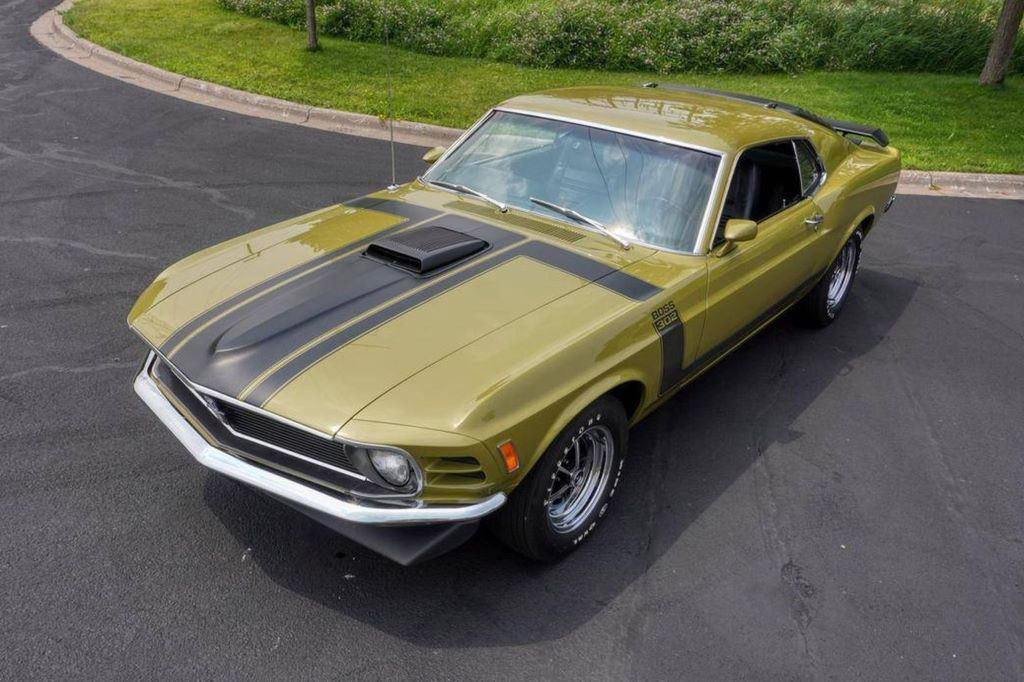
1970 Ford Mustang Boss 302
In an effort to keep pace in the Pony Wars of the late ’60s, Ford created the Boss 302 (Hi-Po) engine in 1968 for the SCCA’s 1969 Trans-Am road racing series. The engine was then made available as an option in the Boss 302 Mustangs of 1969–70. The Boss 302 package, which also included handling and aerodynamic aids, bucked the trend of bigger engines, as it was limited to 305 c.i. in order to meet SCCA Trans Am homologation guidelines. Today the 1969-70 Ford Mustang Boss 302 is highly coveted and considered to be “peak Mustang” by many. One of whom happens to be 2009 Formula 1 World Champion Jenson Button, who found this Medium Lime Metallic 1970 Mustang Boss 302, with its matching-numbers engine, 4-speed close ratio gearbox (matching numbers case with broken ear retained), and 3.91 Traction-Lok differential, to be particularly appealing. It’s well-optioned with power brakes and steering, competition suspension, quick-ratio steering, center console, AM radio, shaker hood scoop, rear deck spoiler, sport slats, color-keyed racing mirrors, and F60 x 15″ Wide Oval raised letter tires (Marti Report confirms the car was built with these options). The 11,447 miles showing at the time of listing are believed to be original. It was treated to a nut-and-bolt rotisserie restoration with a very detailed chassis, original sheet metal and no floor replacement. It can be said that it hits all the right buttons and is now open to offers on Hemmings Make Offer with a buy-now price of $150,000.
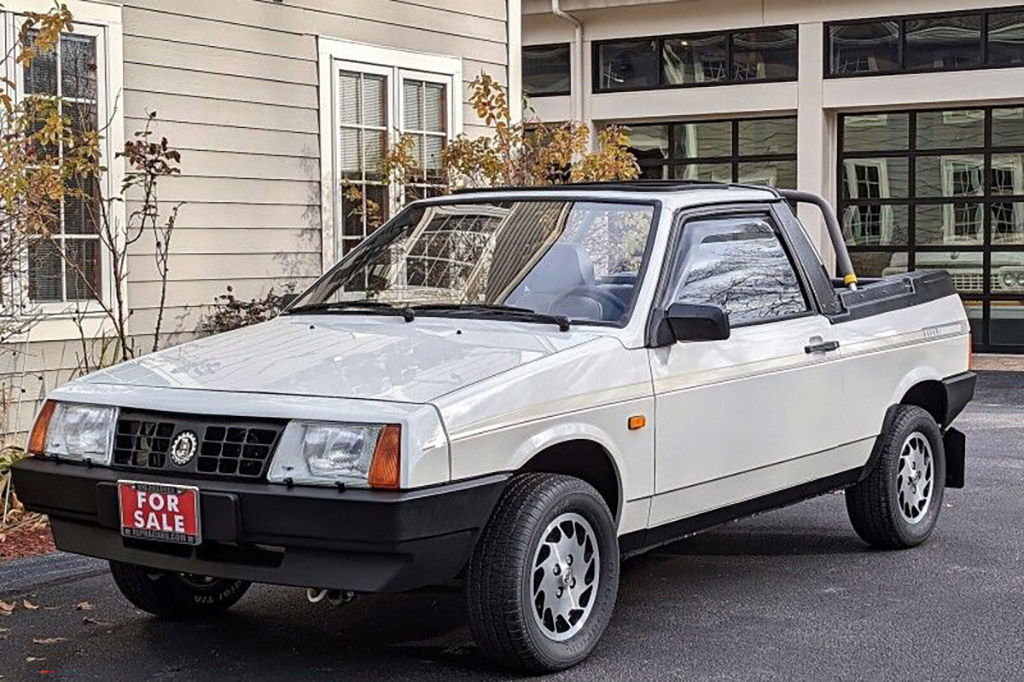
1994 Bohse Safari Landau
A significant aspect of the cars-&-coffee culture is to see—and, naturally, to be seen in—vehicles that we don’t normally encounter on a daily basis. In one corner you may have cordoned-off Bugattis and Pagani, while in another corner you’ll see the SEMA-ready tuner cars, somewhere in the middle will be the Porsche guys (and gals) and off to the side somewhere you may find a small group with an affinity for Soviet-era people’s cars (Lada, pre-VW Škoda, Trabant, etc.). Chances are good that neither of them has seen anything like this. With only a few hundred ever built, the Bohse Safari was based on the Lada 2108 (aka Samara or Sputnik), but it was heavily modified by Boshe, a German coachbuilder known for its high-quality conversions of ‘existing ’80s and ’90s vehicles to create something both striking and versatile. A good example of this is the Safari’s removable sunroof and collapsible Landau top. This allows the car to be transformed from a traditional sedan into a convertible or even a pickup truck in a matter of seconds. Another unique feature of the Safari is its Porsche-tuned engine and running gear. Porsche was brought in to help with the design and development of the 2108. The company’s engineers worked on the engine, running gear, and overall design of the car to improve performance and handling. The result was a vehicle that was far more advanced than anything else that Lada was producing at the time. This particular Safari has been meticulously cared for by its previous owner. It has only 6,000 miles on the odometer and is in pristine condition. A collection of spare parts, all important brochures, and tool kits from the time accompany the sale. Benefitting from a new set of Bridgestone tires, extensive detailing, and comprehensive inspection, this 1994 Boshe Safari Landau is now available at AlphaCars & Motorcycles in Acton, Massachusetts with an asking price of $33,995.
Other finds
- 24,500-mile 1987 Chevrolet Callaway Corvette Convertible – $27,500
- Matching №s 1959 Jaguar XK150 DHC Heritage Certificate – $115,000
- 30,500-mile 1977½ Porsche 924 second owner – $14,000
- Body-off restored 1967 Chevrolet Chevelle SS 396/325 L35 – $79,500
- 44,000-mile 2004 Mini Cooper S John Cooper Works two owners – $11,750
- One-owner 1969 Chevrolet Camaro RS/SS Pace Car all original – $89,500
- 61,000-mile 1997 Plymouth Volare Premier Wagon original paint – $14,500
- 20 years owned 1974 Pontiac Trans Am SD 455 one of 731 – $74,900
- 69,800-mile 1988 Porsche 928 S4 18-year ownership – $38,500
- 51 years owned 1963 Jaguar X-Type OTS Heritage Certificate – $99,000
- Frame-off restored 1953 Rover P4 Saloon 75 Toyota 22R power – $13,500
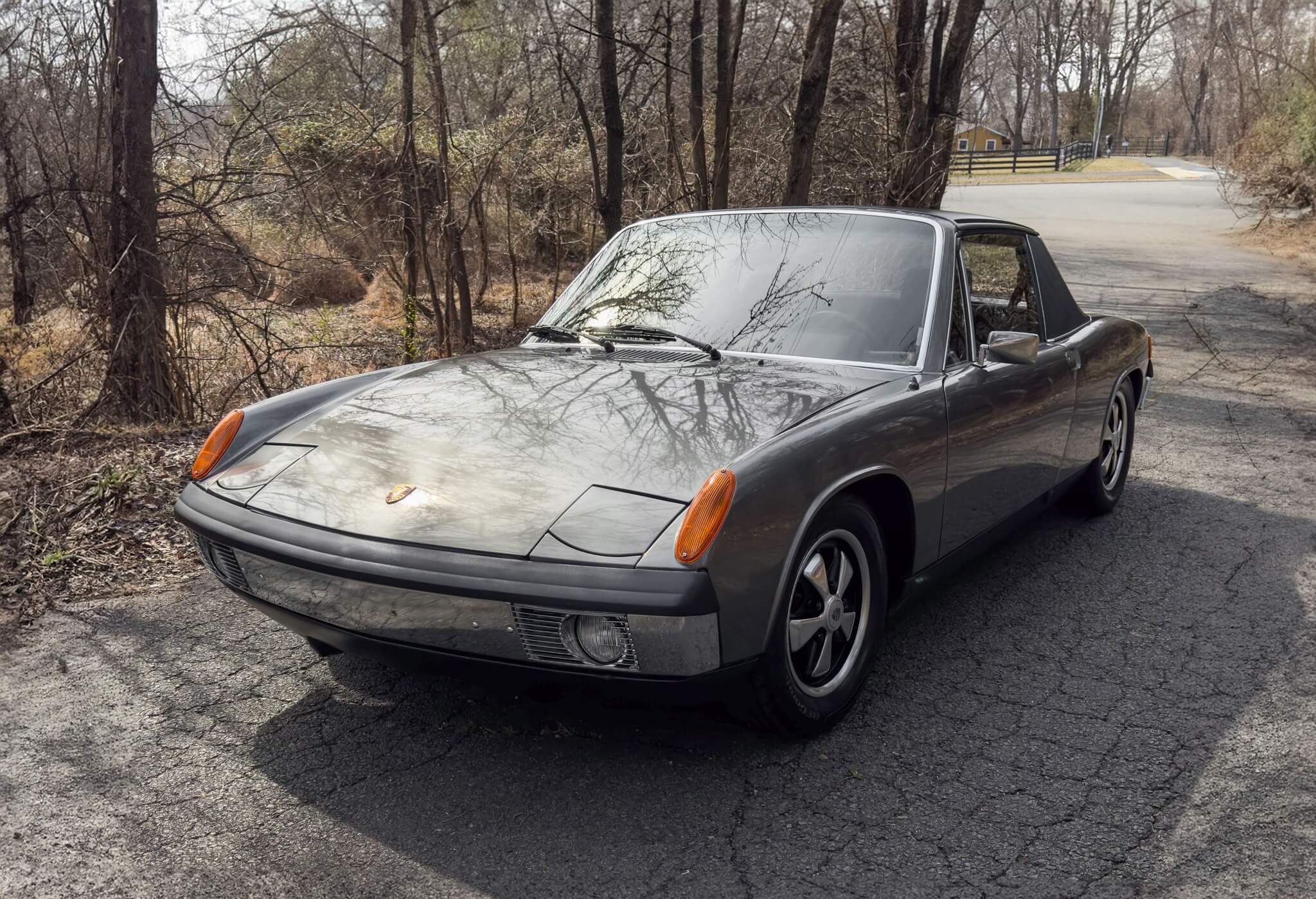
1970 Porsche 914/6
For the first few years of its existence, the 914 didn’t get a lot of love from the press nor from Porsche enthusiasts. This is largely due to its joint development with Volkswagen to replace the 912 as the entry-level Porsche as well as provide Volkswagen with an edgier alternative to the Karmann Ghia. The 914/4—powered by a Volkswagen 1.7-liter flat-4—was originally intended to carry a VW badge (in Europe and other parts of the world it was in fact marketed as VW-Porsche). The 914/6, on the other hand, was always intended to be a true Porsche, using the 110-hp 2.0-liter flat-6 from the 911 T. The 914/6 was significantly more rare: 3,338 built between 1969 and 1972 (compared to 60,738 914-4s), with over half—1,788—destined for the US market, leaving 1,550 RoW. The 914/4 did indeed find its intended niche as the entry-level as the entry-level Porsche (as it was marketed here), outselling the 911 by a wide margin. While its 80 horsepower was, by 1970, very un-Porsche-like, it was highly praised for it go-kart like handling, often feeling much faster than it was. Meanwhile, the high price point of the 914/6 (the result of Volkswagen claiming rights to the chassis) left it just shy of the well-established and admired 911. Buyers found it hard to justify, given that it was so much VW. The last 248 copies of the 914/6 would roll off in 1972, replaced by the 914 2.0 to further delineate it from the 911 (now 2.2 liters). This 914/6, from its peak year of 1970, was delivered new in Finland (according to the CoA code C13) and optioned with a Blaupunkt “Frankfurt” radio, fog lights, and tinted side glass. It was restored to a high standard over a three year period, completed in 2015. During that time, the original Irish Green was changed to an unspecified gray metallic. The Black leatherette interior was also refurbished including upgraded perforated seat inserts, color-matched door panels, a stitched upper dashboard, and salt & pepper carpets. Appointments include a leather-wrapped 4-spoke steering wheel, and a RetroSound head unit. The tachometer is said to have been rebuilt in 2015, and all gauges, electronics, and accessories are reported to be working properly. Mechanical restoration included rebuilding the original engine (№ 6404822) using 81MMX9.8:1 2.0 liter pistons, ceramic coated rod bearings, main bearings, new wrist pin bushings, IMS shaft bearings, all new gaskets, and a set of PMO type carburetors. The brakes and brake lines were rebuilt, new master cylinder installed, all fuel lines replaced, the ignition converted to Pertronix, Optima battery, a new fuel pump and fuel pressure regulator installed, and the CV joints were cleaned and repacked. In addition, the gearbox was rebuilt along with new synchro sleeves. More recently, the shifter and bushings were replaced with a polished Rennshift unit, the left front brake caliper was rebuilt, and the Targa roof and black vinyl sail panels were refinished. In 2019 it received a valve adjustment, new Sweptco transmission fluid, brake flush, new rear Bilstein shock absorbers, new exhaust manifold gaskets, new specially crafted ’914-6 Werkshop’ heat exchangers, new muffler gaskets, and new bumper tops. Electrical work included a new back up light switch, some minor under dash electrical sorting, drop link bushing, sway bar bushing, new window felt and squeegee, new rear window guides, a new driver’s door latch, and misc. cad plating and powder coating. The car was given an alignment and oil change as well. Now extensively sorted, this 1970 914/6 is on PCARMARKET with three days left to bid.
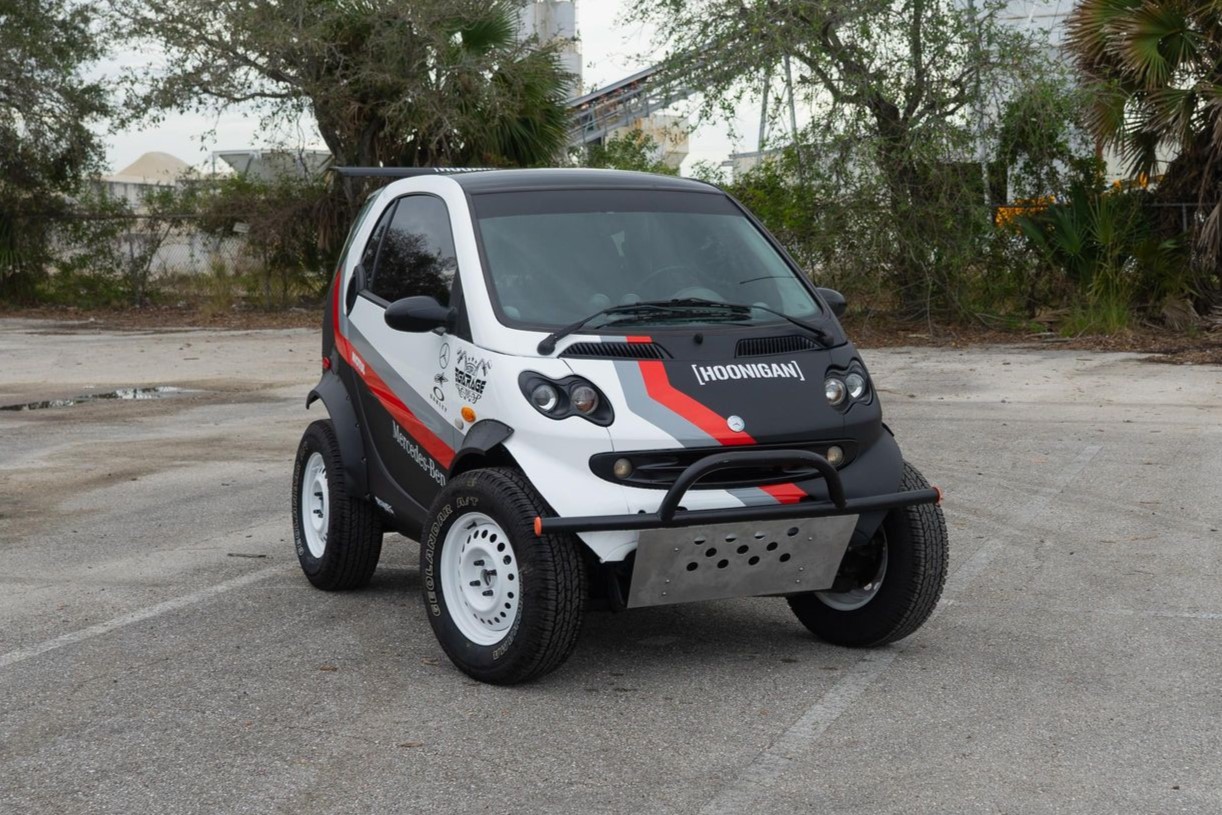
2006 Smart Fourtwo
What started as an idea brought to (then) Daimler-Benz in 1994 by popular watchmaker Swatch has, thirty years later, become the standard for the 21st-century city car (not unlike Volkswagen in the middle of the 20th). It would be 2008 and the second-generation (Model 451) before the US got the Smart, but a specialist company, G & K Auto Conversion, was bringing in a handful of the early Model 450 cars and converting them to US DoT standards. This car was originally imported new and converted in 2006. But the conversion didn’t stop with the DoT. Smart cars have always been an interesting canvas for modification, including factory editions like a Brabus-tuned model as well as the bonkers Crossblade. This one, goes over the top—literally. Over practically anything, with a 3.5″ suspension lift kit, front skid plate, 15″ steel wheels dressed in oversized Yokohama Geolander A/T G015 all-terrain tires, a glass roof, front and rear steel bumper bars, and a set of fender flares. Adding to the Dakar flavor is a rear roof wing and a Quattro-esque vinyl wrap sporting the Mercedes-Benz logotype and hood badge, a nod to its mighty 60-hp three-cylinder 700 cc Mercedes-Benz powerplant (451s used Mitsubishi motors) mated to a 6-speed Gertrag automated manual. Wear is consistent with an 18-year-old car showing around 68,900 km (42,900 miles), while recent service included a a cylinder head repair. A lifelong southern-states car with a clean Florida title, this 2006 Smart Fourtwo is now on Cars & Bids with six days remaining in the auction.
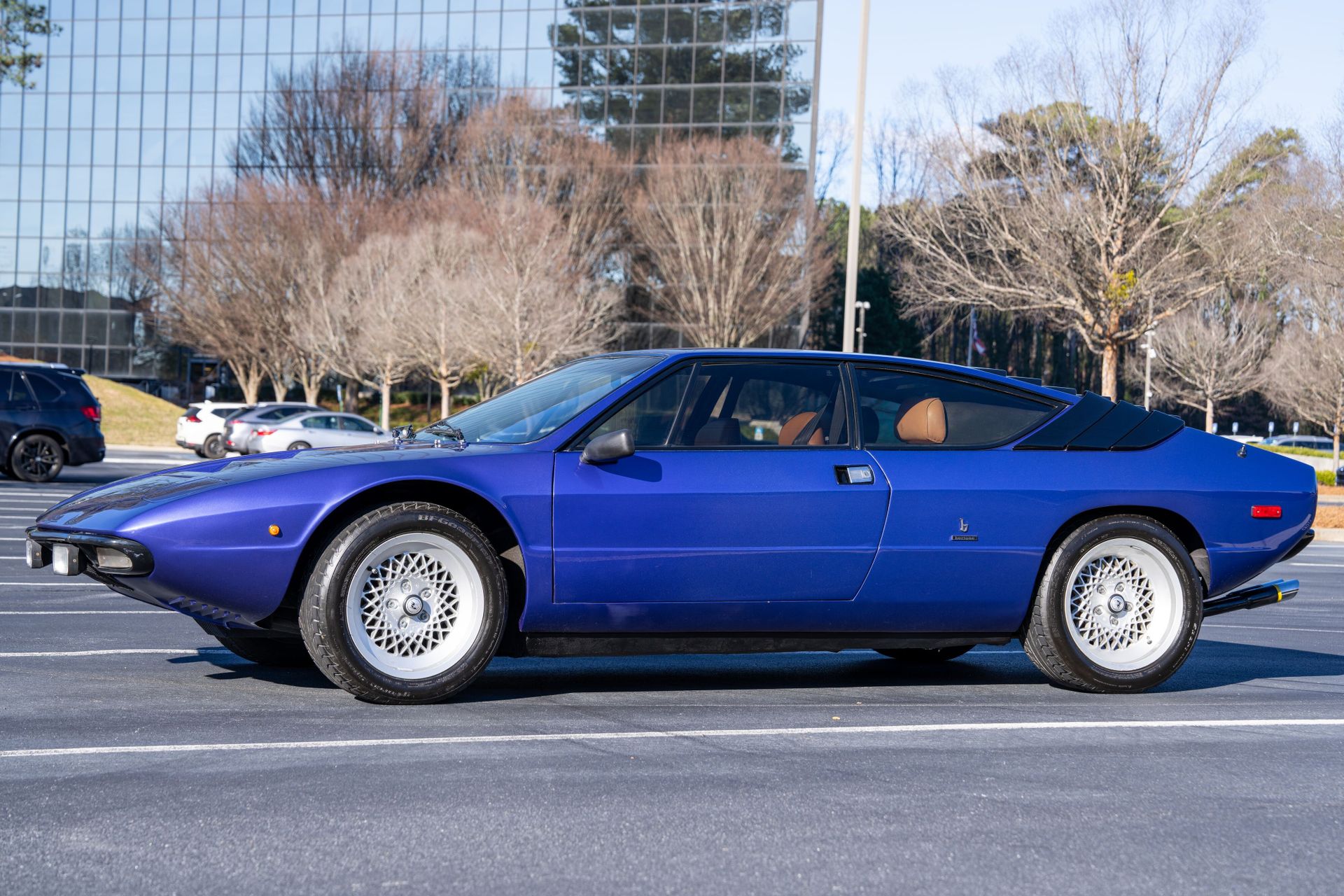
1974 Lamborghini Urraco P250S
The Lamborghini Urraco is a story of firsts and lasts. By the time of its introduction in 1972, Lamborghini had established itself as a builder of stylish, luxurious supercars with powerful V12 engines. This however had a limited market, which was felt by the company’s bottom line and was further burdened by a looming oil crisis. As Ferrari did with its Dino and Maserati with the Merak, Lamborghini looked to a more approachable model to be powered by its first V8 engine. It would also be the last Lamborghini developed under the ownership of Ferruccio himself before he sold the company. Years of hardship would follow, including a 1978 bankruptcy, before stabilizing under Chrysler and more recently the Volkswagen Group. In the face of such financial turmoil, the Uracco never had much of an opportunity to do as it was intended. Only 791 Urracos were built through its end-of-life in 1979. 520 of these were the P250/250S, powered by a 330-hp 2.5-liter DOHC V8. Only 21 of these 520 were built for the US and are highly collectible today, despite rather homely bumpers and an emissions-choked engine. That said, 499 is rare enough—not to mention prettier and more powerful. This 1974 Lamborghini Urraco P250 is an S model, which benefits from leather upholstery, power windows, and Weber carburetors. It has been owned by the seller since 1985 and underwent a major restoration in the late 1990s. The exterior presents well with reportedly no rust. Its Indigo paint is said to be in good condition with no swirls or blemishes. The tan leather interior appears to be in good condition, The front seats have been covered in sheepskin to prevent excessive wear and now show relatively well with no rips or tears. The carpeting looks to be relatively fresh while headliner shows no sagging. The stereo is a recently installed Alpine unit with four speakers, all said to be working properly, as are the power windows. A blown head gasket amounted to a $24,000 partial-engine-out repair. The engine has been upgraded to electronic ignition and upon a cold start, idles normally with no smoke. Once under way, its traditional 90° cross-plane crankshaft gives an exhaust note that’s described as “American muscle car meets European exotic.” There are reportedly no leaks and the five-speed transaxle is said to shift smoothly once it is warmed up. Currently with 123,460 km (76,714 miles) at the time of listing, bids are now being accepted on Hemmings Auctions with three days until close.
Other finds
- One-owner 1997 Mercedes-Benz SL 500 40th Anniversary – $25,000
- 32,962-mile 1998 BMW Z3 M Roadster two owners – $24,888
- All original 1963 Ford Thnderbird 56,900 miles – $38,900
- 6,326-mile 2004 Pontiac GTO one owner – $32,900
- Two-owner 1969 Jaguar XKE Coupé 54,000 miles – $70,000
- Original 1980 Chevrolet Camaro Z28 4-speed 47,000 miles – $27,988
- Blue-plate 1976 Toyota Pickup two owners – $7,500
- 19 years owned 2002 Audi TT 225 Convertible 56,000 miles – $8,790
- 28,300-mile 1974 Jeep Cherokee highly original – $32,500
- One owner 1978 Ford Pinto Squire Wagon 36,905 miles – $23,977
- 58,000-mile 1998 Mitsubishi Lancer Evo V JDM clean title – $39,000
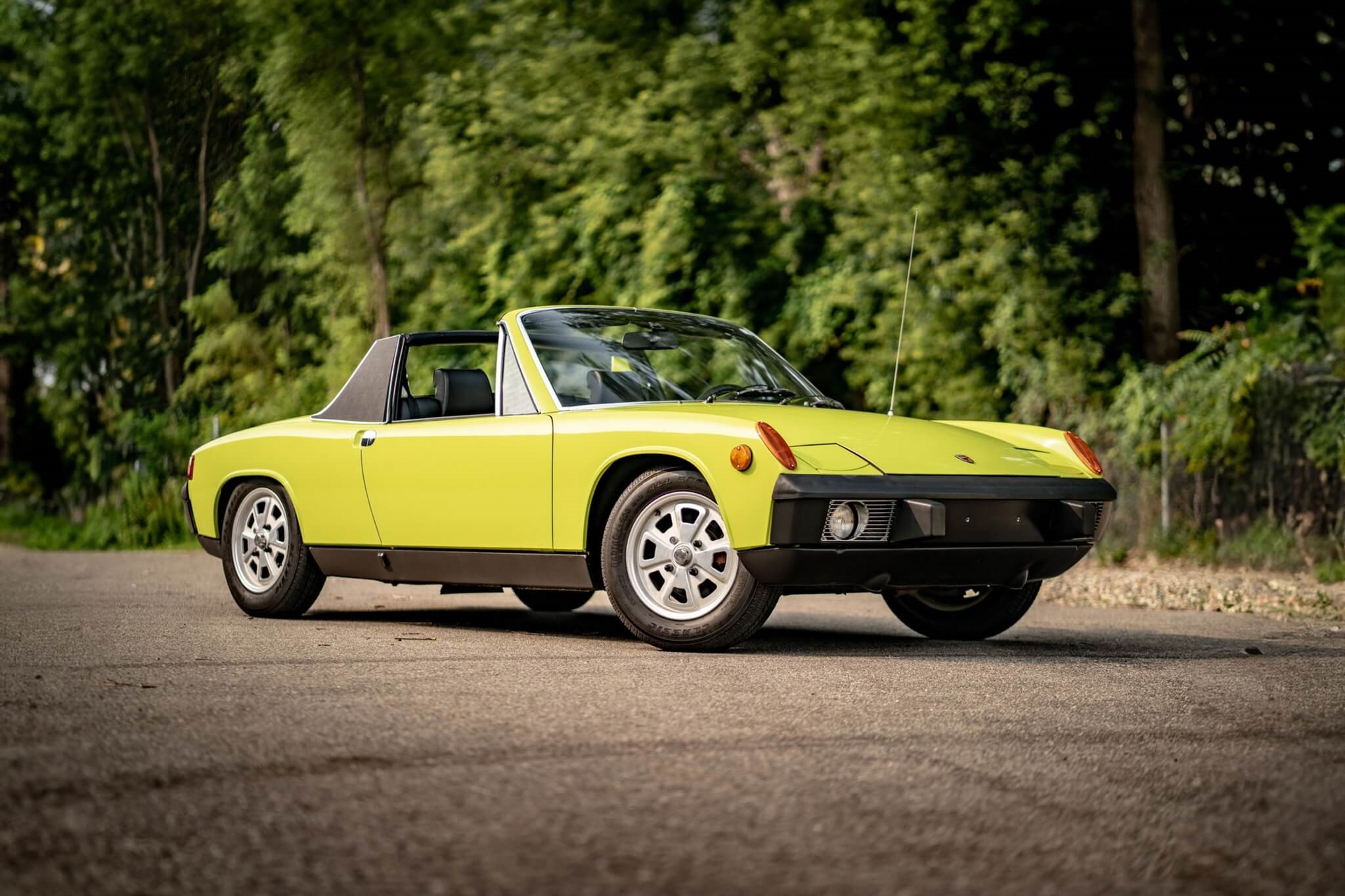
1974 Porsche 914 2.0
This is the story of a Kalamazoo couple who walked into the showroom of Classic Porsche+Audi in 1974 and left with this Porsche 914 2.0. They were understandably taken by the rare and striking Ravenna Green (L65K) exterior, complemented by the black vinyl-covered sail panels and Fuchs wheels. Driving away, they sat in the black leatherette interior that included the optional Appearance Group which adds a suite of gauges mounted in the center console, along with a four-spoke steering wheel, a center armrest, climate controls, and a leather shift boot. But what really put a smile on their faces was the joy of driving it. There are few cars that deliver as much slow-car-fast thrills as a Porsche 914 with the factory built (not Volkswagen) 2.0-liter flat-4 mated to a side-shifter 5-speed gearbox. Not that the 914 is particularly slow (with an adequate-for-its-day 91 hp and 105 lb.-ft of torque), but it’s no Turbo Carrera. However, its light weight combined with its mid-engine layout, low center-of-gravity, and Macpherson strut suspension make for a decidedly go-kart like experience, particularly with the Targa top out. Naturally, they were taken with their purchase; so taken that they treated the Ravenna Green Porsche 914 as their baby. It remains almost entirely original: original paint, original interior and original drivetrain. Its only modifications are an aftermarket Pioneer stereo, a replacement battery tray (no “hell-hole” rust issues), and tires to keep pace with its 54,607 miles (last dated 2008 and 2009). So taken were they with their purchase that they could not, would not part with it for 50 years, serving as the Porsche’s sole continuous owners for its entire life. But apparently the time to part has finally come and it is now for sale on PCARMARKET through Garage Kept Motors, just up the road from Kalamazoo in Grand Rapids.
1992 BMW M5 Touring
Even in US-spec, the BMW E34 M5 is regarded by many as “peak M5,” the last to employ a naturally-aspirated inline-6. Its handsome yet unassuming styling has much to do with that as well. What we missed out on here in states though is 1.) the 335-hp 3.8 liter S38B38 (we were emissions-restricted to the pre-1992 3.6-liter S38B36 putting out 311 hp; and 2.) the Touring (wagon) body style, of which there were only 900 made. This Euro-spec E34 M5 not only covers both of those, it’s finished in the highly desirable Avus Blue. It is further distinguished by its Nürburgring Handling Pack, which includes a thicker anti-roll bar, wider rear wheels, EDC switchable dampers, and a servo-tronic steering rack, along with M-Technic mirrors and 17″ M System II “throwing star” wheels dressed in new Continental ExtremeContact tires. Its cabin is appointed in Anthracite (an almost-black gray) buffalo hides, with a 3-spoke M steering wheel, power-adjustable and heated front seats, automatic climate control, and full blue/black Coco mats. Showing 97,600 miles at the time of listing, all service is said to be up to date. A BMW Classic certificate accompanies the sale, now on the BMWCCA Marketplace (BMW Car Club of America) with an asking price of $65,000 and open to offers.
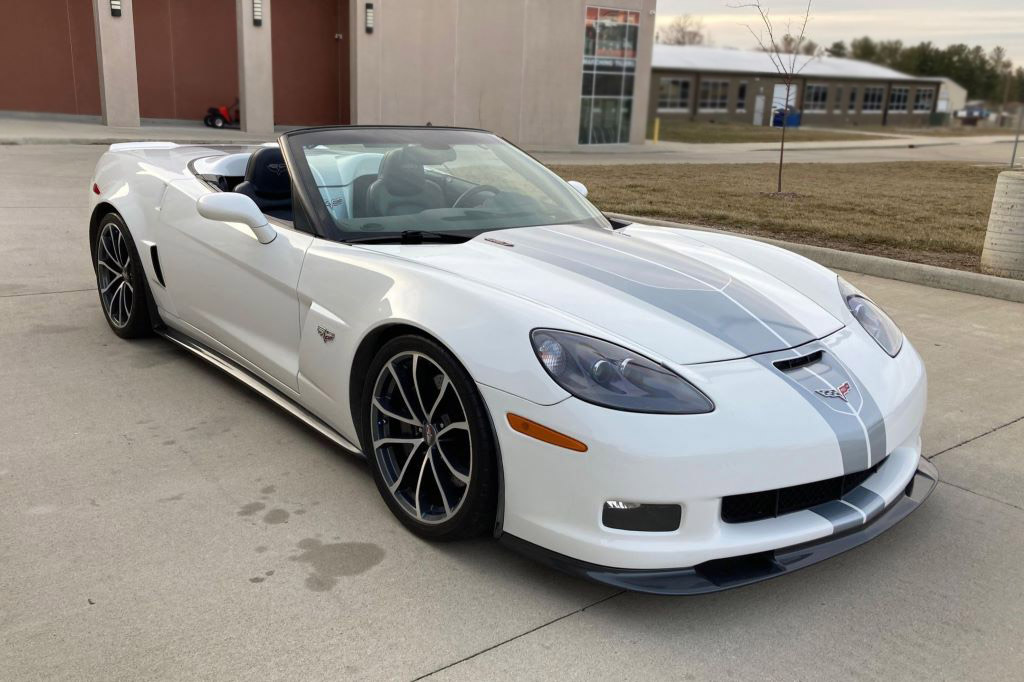
2013 Chevrolet Corvette 427 Convertible
It often gets called a Z06 convertible (which was never available in the C6 generation of Corvette) and there are valid reasons for that: namely its 505-hp dry-sump 7.0-liter LS7 V8 coupled with a 6-speed gearbox (both shared with the Z06), and the Z06’s rear axle, which is equipped with the Z06’s available magnetorheological shock absorbers. But the limited-production Corvette 427 Convertible was designed to be a high-performance drop-top (perhaps a test bed for future generations of Z06 Convertibles), not simply a Z06 with its magnesium-reinforced roof panel lopped off. Furthermore to compensate for the Convertible’s lesser rigidity, the steel frame from the base Corvette was used in lieu of the Z06’s aluminum structural core. That said, the 427 Convertible offers a similar driving experience with the added delight of open-air motoring. Among the 2,552 Corvette 427 Convertibles made, 1000 were kitted with the 60th Anniversary Package, consisting of an Arctic White exterior finish with a Blue Diamond leather-wrapped interior, accented by suede and capped with a blue folding soft top. There was a ZR1-style rear spoiler, special badging, gray-painted brake calipers, and the “60th” logo on the wheel center caps, steering wheel, and seat headrests. An optional graphics package added full-length racing stripes in Pearl Silver Blue, including a tonal stripe stitched into the convertible top, extending the graphic theme over the roof. This particular Corvette 427 Convertible 60th Anniversary also includes the 1SC Package (leather bucket seats, power-adjustable seat bolsters and lumbar, memory package, power convertible top, custom leather-wrapped interior, universal home remote), as well as the Carbon Fiber Package (gray-painted carbon fiber rockers and front splitter, body-color ZR1 rear spoiler), bringing its sticker price to over $91,000. It remains largely original, with a minor parking lot incident necessitating the only paintwork. The only modifications made have been the addition of window tint and a leather-wrapped steering wheel. The original suede wheel has been retained and included in the sale, as are two keys, the owner’s manual, original window sticker, an indoor car cover and a trickle charger. Routinely serviced throughout its 46,277-mile life, it’s now being offered at Cars & Bids out of Olney, Illinois.
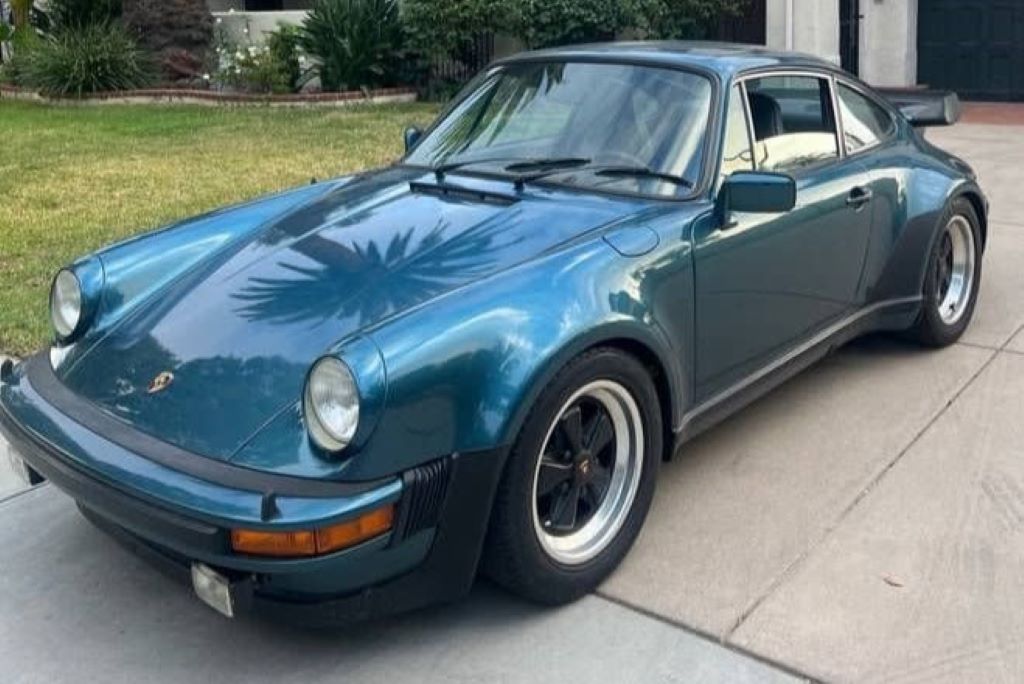
1979 Porsche 911 Turbo
When the Porsche 911 Turbo [Carrera] was first introduced to the public, it was never intended to be the sensation it was (and still is). The idea was to build 400 road cars to appease homologation requirements that allowed Porsche to race its 911 Turbo Carrera RSR 2.1 in Group 4 and Group 5 (production cars). That left the early cars somewhat raw, and while there is undoubtedly a certain appeal in that, it looked as though the 911 Turbo (930) road car was here to stay and it would have to evolve. A big change came in 1978 with the enlargement of its 3.0-liter flat-6 to 3.3 liters, but perhaps the bigger news was the addition of an intercooler. Not only was the 930 more durable for road use, but its already bonkers performance (for 1978) was dialed up that much more (0 – 60 in 5.4 seconds; 13.5-second quarter mile;162 mph top speed). The new intercooler, atop the enlarged motor, required some additional vertical space and this is how we got the iconic “tea tray” rear spoiler (replacing the equally if not more so iconic Whale Tail on turbo cars). That it looked badass with the widened fender flares was a form-follows-function byproduct. This example, from 1979, looks particularly good in its seldom-seen Petrol Blue finish, which is said to be perfect with no blemishes, scratches or dings, and no corrosion or rust anywhere on the car. That speaks to its meticulous care and indeed the car is said to have been garaged throughout its life and driven sparingly, showing only 53,000 miles. Likewise, the interior shows little if any wear, with none of the burnishing that the deep side bolster of the driver’s seat is typically subjected to, no warpage or cracks in the dash, and fresh carpets. Mechanically, it’s recently been treated to a full engine-out service including brand new clutch, spark plugs, transmission and engine reseal, and much more. It’s one of the finer 930s that have come on the market and it’s now listed on Rennlist Marketplace in Burbank for a fair $155,000.
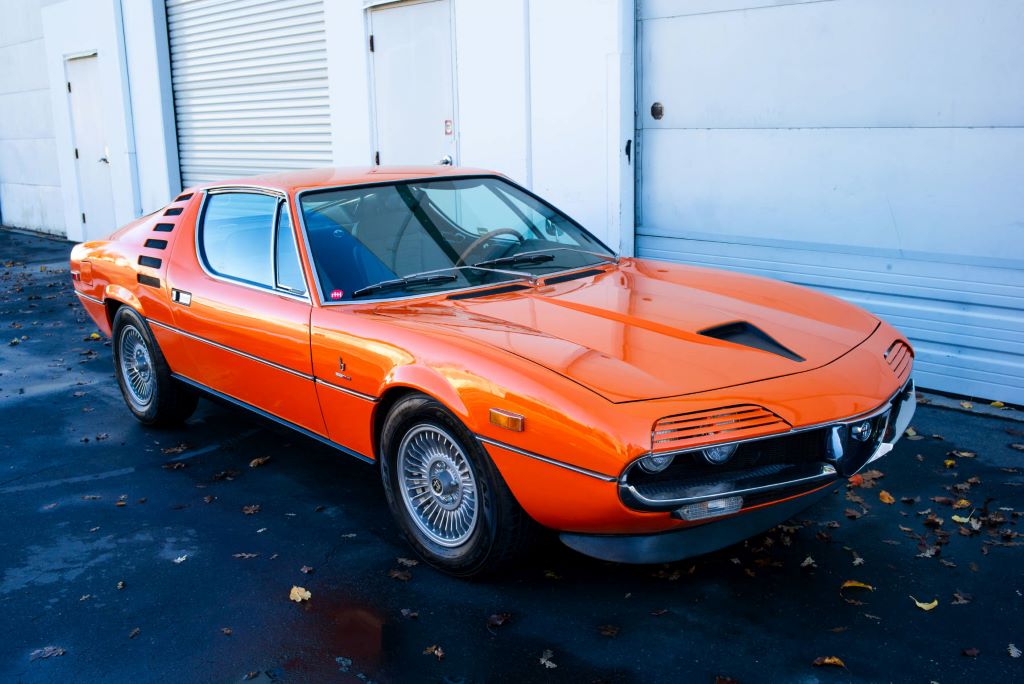
1972 Alfa Romeo Montreal
Based on a concept car penned by Marcello Gandini at Bertone (and shown in Montreal for the first time), the production Alfa Romeo Montreal was introduced at the 1970 Geneva Motor Show. While keeping come of the concept car’s visual queues like the louvered half headlight covers and a vented C-pillar, the production model differed in its drivetrain, with a 197-hp, SPICA fuel injected, 2.6-liter V8 now supplanting the show car’s 4-cylinder Giulia underpinnings. This elevated the Montreal to the sphere of exotics, underscored by relatively low production numbers—3,925 built between 1971-1975. None were officially imported to the US, but its appeal was strong enough to warrant a number of them coming in through the grey market. This 1972 Alfa Romeo Montreal, imported in peak grey-market 1985, looks particularly ’70s exotic in its striking Orange (AR 601) finish. It reportedly had an older repaint which shows some orange peel (Orange orange peel) and other imperfections. The fine houndstooth check cloth interior features a high-end McIntosh CD head unit, along with aftermarket speakers, but otherwise appears to be largely original and very well kept, showing only the slightest wear on the driver’s seat bolster. It’s said to have had an engine reseal in 2020, however it is currently being sold in a non-running state. A spare Campagnolo wheel and tire, spare V-belt, and pre-purchase inspection from April 2016, accompany the sale, along with an operation and maintenance handbook, and miscellaneous manuals. Bids are now being accepted on Hagerty Marketplace for a very promising 1972 Alfa Romeo Montreal, currently residing in Sacramento.
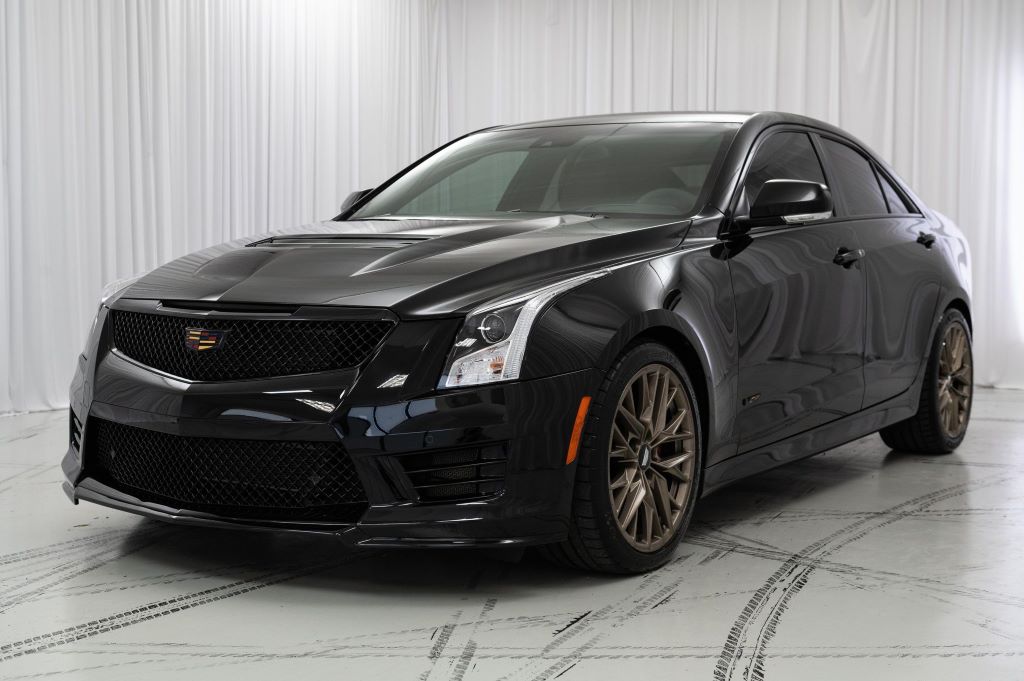
2018 Cadillac ATS-V
It’s no malarkey! This 2018 Cadillac ATS-V was once leased by President Joe Biden. We know that Biden is very fond of his 1967 Corvette Stingray (currently stored under Secret Service protocol), but prior to becoming President, daily driver duties (when not riding Amtrak) were split between a Cadillac Escalade and this not-so-sleepy Cadillac ATS-V. The ATS-V, like all V-Series, was performance focused, in this case, a 464-hp twin-turbo V6, a completely redesigned suspension system, and unique exterior touches like the facias and front fenders, hood, and aero rear spoiler and rocker moldings. This one is factory equipped with the Luxury Package (split-folding rear seats, sport alloy pedals, HID headlights with AFL and LED signature, universal home remote, navigation system, 110-volt power outlet, Bose surround sound system) as well as the Safety and Security Package (head-up display, Advanced Security Package (remote lock fuel filler door, locking wheel lugs, steering column lock, additional theft-deterrent alarm system, inclination/tilt sensor), Driver Awareness Package (rear thorax for outboard seating positions airbags, Rainsense wipers, following distance indicator, lane change alert with side blind zone alert, lane keep assist, lane departure warning, Intellibeam headlights, forward collision alert, rear cross-traffic alert), making it a special Cadillac ATS-V even without the provenance—especially given its low mileage (15,900) and a fastidious service history. But is that much more unique in that it is a one-of-one Black Raven over Kona Brown, specified by Joe himself. In addition it rides on 18″ wheels from the CT4-V Blackwing, finished in Tech Bronze, and adds a Rennick Performance front grille and rear bumper kit, a black emblem kit, a suede microfiber steering wheel and shift knob, and (naturally) tinted windows. Like him, hate him, say what you will, but the man is sharp about his cars. It’s a new listing on Cars & Bids through Wilmington Cadillac in (of course) Wilmington, Delaware.
Other finds
- 54,863-mile 1998 BMW M3 100% unmodified original – $32,000
- Two-owner 1959 Chrysler Windsor 2-Door 83,000 miles – $20,000
- 1,300-mile 1989 Oldsmobile Toronado Trofeo two owners – $25,000
- Numbers match 1979 Chevrolet Camaro Z28 67,000 miles – $20,000
- 40,006-km 1979 Škoda 120L original paint, chrome – $10,499
- One-owner 2003 Range Rover HSE 61,700 miles – $14,500
- 29,000-mile one-owner 1985 Ford Mustang GT 5-speed – $37,000
- One of 1,256 1969 Buick GS 400 Stage 1 two owners – $40,000
- 37,000-mile 1986 Ferrari Mondial 3.2 serviced, books, tools – $48,000
- Original 12,750-mile 1974 De Tomaso Pantera three owners – $105,000
- 22,300-mile 1970 Ford Ranchero original owner – $10,000
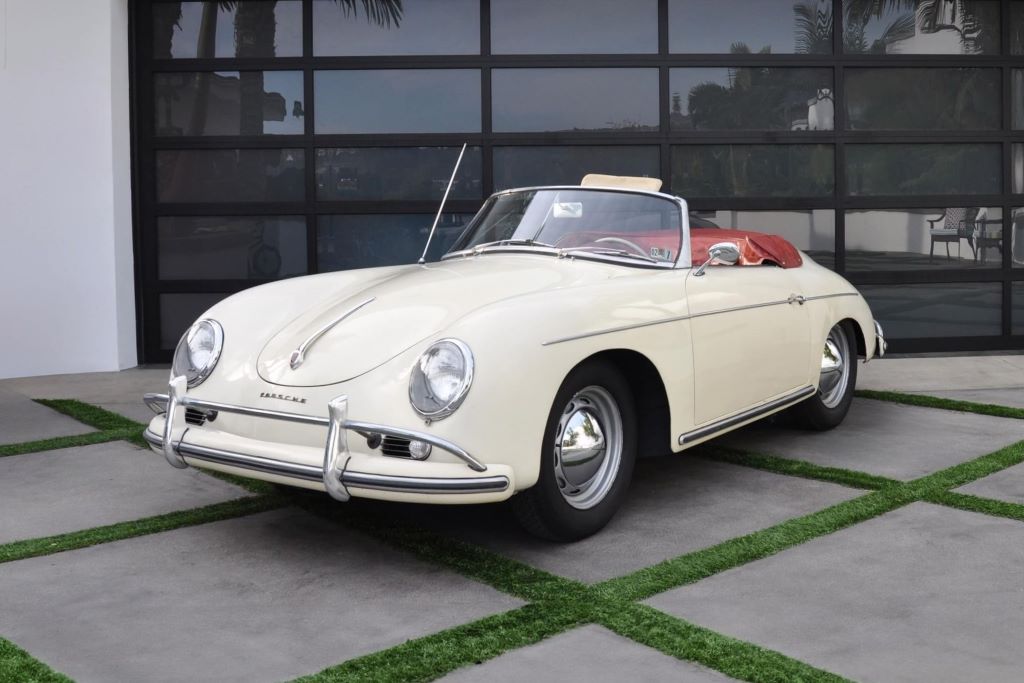
1959 Porsche 356 Convertible D
When Max Hoffman, the illustrious American importer of luxury European automobiles, convinced Porsche to build the 356 Speedster, he was quickly proved right. The Speedster was indeed what American sports car buyers were looking for: a no frills, lightweight, roadster, that as its name suggests, was focused on speed. But as tastes and buying habits changed, customers—particularly in Europe—wanted more comfort to go with that speed (exhibit A: the Mercedes-Benz 300 SL). With coachbuilder Reutter at capacity, Porsche was already looking to hometown firm Karosseriewerke Drauz KG to share coachbuilding of the upcoming 356 B, which included the more refined Roadster. As a bridge to meet those customer tastes and habits sooner, the 356 A Convertible D (Drauz) was conceived. It featured a taller, more practical windshield (allowing improved headroom with the top up), roll-up glass side-windows and more comfortable seats. In total, 1,331 were built between August 1958 and September 1959, making it one of the rarest Porsche models ever built for a full year (the T6 “twin grille” Roadster was produced for only a few months). This 1959 356 A Convertible D was originally imported to New York and sold new by the aforementioned Hoffman Motor Car Company. It was then bought by its second owner, spending time in Pittsburgh before being placed in storage in 2000. It eventually found its way to California where it was purchased by the current owner in August 2020. The car is said to have undergone paintwork (5704 Ivory) during prior ownership. Some paint chips and discoloration are noted, as is pitting on the chrome moldings and bumperettes, as well as metallic silver tape covering the chrome windscreen frame. All components are said to be correct and all hardware has been preserved and coated, not replaced. The cabin features red leatherette upholstery on the seats, door panels, and upper dashboard, and is complemented by oatmeal square-weave carpeting . It is appointed with red lap belts, black rubber floor mats, door panel storage pockets, and an aftermarket tri-band radio mounted beneath the dashboard. The 1600 cc engine, gearbox, and suspension were overhauled under current ownership including the installation of new Koni shocks. The drum braking system was also overhauled in 2020 with a replacement master cylinder, brake lines, and wheel cylinders. Extensive photo documentation is included in the sale, along with the owner’s manuals and a Porsche service book. A rare opportunity to own a 356 A Convertible D that is neither concours-quality, nor a project. It’s newly listed on PCARMARKET out of Burbank, California.
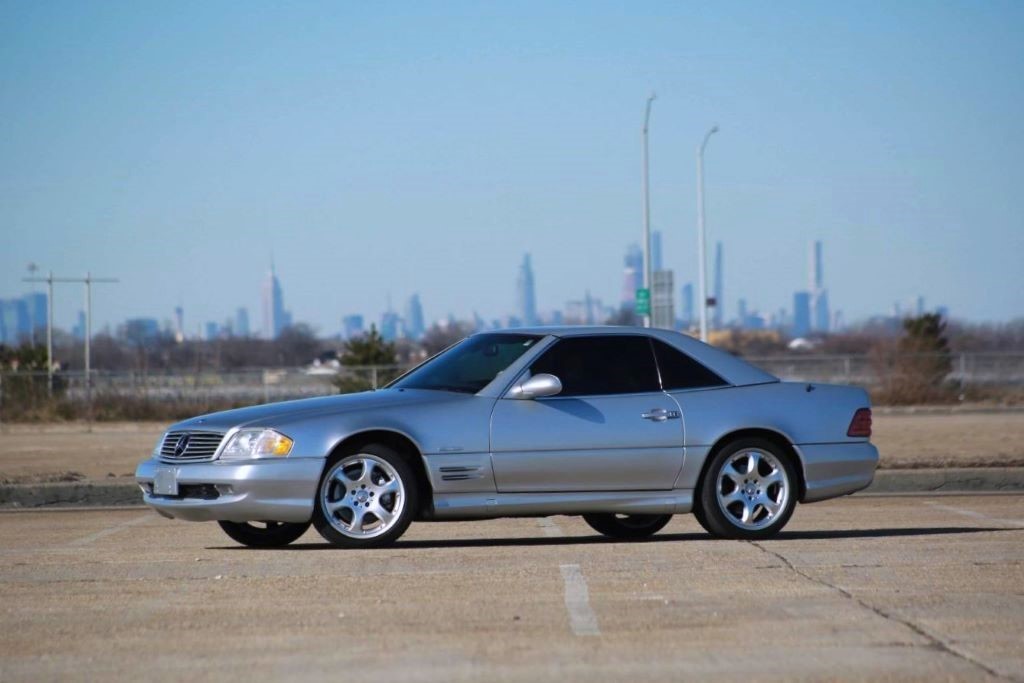
2002 Mercedes-Benz SL 500 Silver Arrow
In recent years, the Mercedes-Benz R129 (1990 – 2002) has gained considerably in appreciation, both in terms of admiration and valuation (doubling in the last five years). There are no more sought-after factory R129s than the final-year Silver Arrow editions, which included an exclusive ultra-metallic silver paint (777) along with unique 18” six-spoke wheels and aluminum trim accenting the exclusive perforated black leather (51) interior. DaimlerChrysler built 1,550 Silver Arrows: 1,450 of the SL 500 and 100 of the SL 600. This SL 500 Silver Arrow benefits from having had just two owners: purchased in June 2002, then changing hands in 2006. While it has seen some miles (98,060 at the time of listing), it has been well maintained, with records dating back to new. It has spent time between Texas and New York, where it currently resides. It is said to be a strong № 3 and the accompanying photos support that. Taking the collectible nature out of it (given the relatively high mileage), there’s still plenty to love and that is unique to the Silver Arrow at what may be a reasonable point-of-entry. Find it on Hagerty Marketplace with 13 days left to bid.
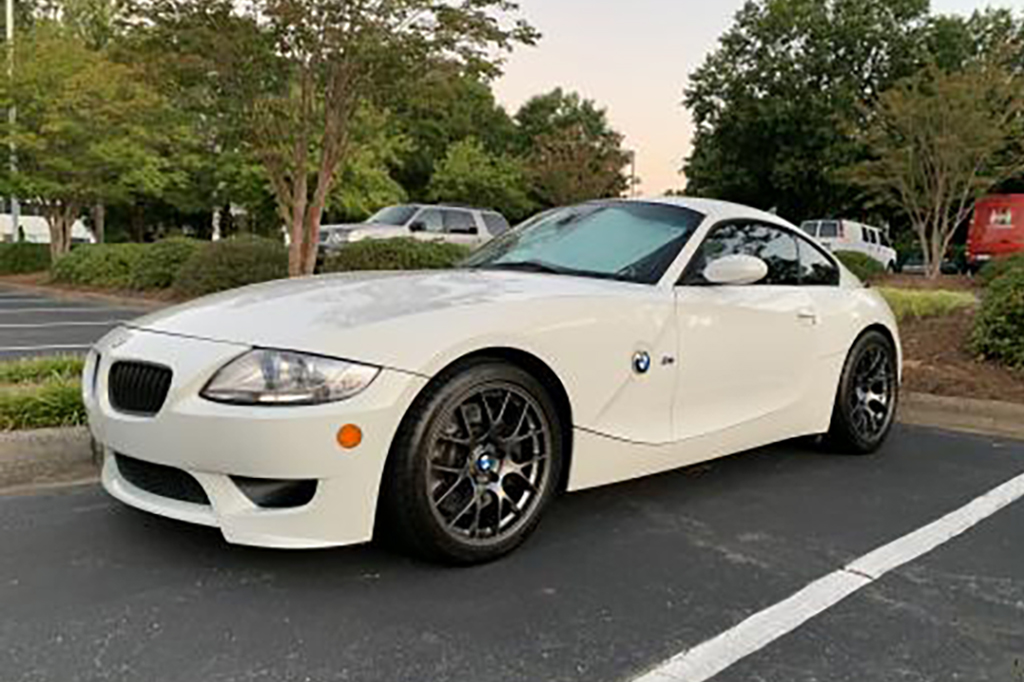
2007 BMW Z4 M Coupe
While its predecessor, the Z3 Coupe could best be described as “amusing” (nicknamed Clown Shoe), the Z4 Coupe was—is—undeniably gorgeous. Although it shares some of its lines with the Z4 roadster, there’s a star charisma in its double-bubble roof and flat-topped haunches. And like Bradley Cooper in Maestro, it makes the most of a long nose and a short bum. Particularly in the hands of the M Division, which supplied it with the 330-hp 3.2-liter S54 inline 6, shared with the M3 (albeit faster to 100 than the highly regarded E46 M3), exclusive 18″ aluminum wheels, a 6-speed gearbox (no option for SMG here), ventilated compound brakes, variable M limited slip differential on the rear axle, hydraulic rack and pinion steering, M Sport seats, and an M leather steering wheel. This 2007 BMW Z4 M Coupe is one of only 1,815 M Coupes made and one of only 18 in Alpine White over Light Sepang Bronze. Coming from 12-year ownership by a 20-year BMWCCA member, it is said to be in excellent condition inside and out, as one would expect of a 21,300-mile, dealer-maintained Z4 M. It’s nicely appointed with Premium Package, heated seats, extended leather, Xenon headlamps, and a BavSound speaker upgrade. It’s a fresh listing on BMWCCA Marketplace in North Carolina with an asking price of $47,000.
Other finds
- 66,623-mile 1972 Ford Ranchero GT Marti Report original – $15,500
- 19 years owned 1965 Chevrolet Impala SS 4-speed, factory air – $41,500
- 57,844-mile 1995 Mercedes-Benz E 320 Cabrio final year C124 – $20,800
- Two-owner 2004 Jeep Wrangler TJ Rubicon 21,905 miles – $35,900
- 87,046-km 1995 Nissan Mitsuoka JDM Texas title – $9,800
- Two-owner 1979 Mercedes-Benz 450 SEL 6.9 – $55,000
- 18,500-mile 1990 Mazda Miata MX-5 first year – $13,900
- Highly original 1969 Mitsubishi Minica Super Deluxe AZ title – $12,000
- 51,065-mile 1970 AMC AMX matching numbers 390 – $45,000
- Original 54,000-mile 1981 Delorean DMC12 – $69,500
- 79,637-mile 1978 Honda Civic CVCC two owners – $12,800
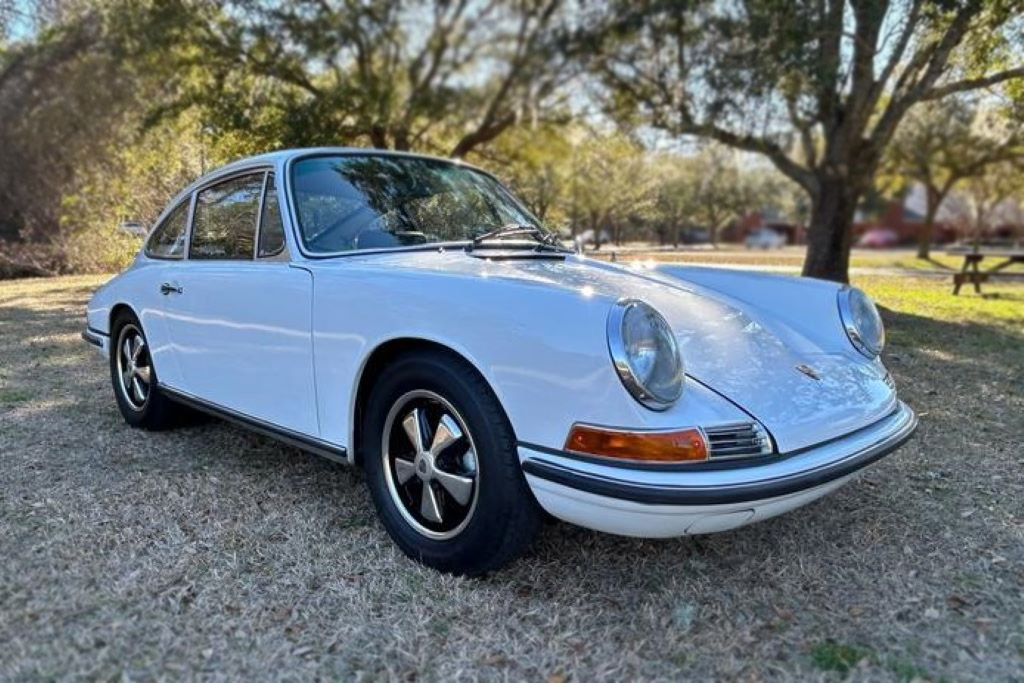
1968 Porsche 911 L
With new emissions regulations in the US excluding the 911 S from the US market, the 911 L, introduced in 1968 as a midrange model elsewhere, was the highest level offered here. It shared its engine with the base model 911, rated at 130 hp, however it featured thicker anti-roll bars, and much-improved dual-circuit brake system, along with ventilated discs sitting behind 5.5 x 15″ Fuchs alloy wheels, as well as minor updates such as new door handles, a black steering wheel and other details. Approximately 1,610 samples were produced in total, of which 1,169 were coupes (making it much more rare than the 911 S). A mere 449 of these were US models. This is № 84 (production date October 19,1967). As an early production 911 L, it’s equipped with the highly desirable 901/14 engine with the aluminum case (as opposed the magnesium cases offered in later production 911 Ls, which are known to pull and/or warp head studs in warmer climates when equipped with a US emissions-required thermal reactor). This engine, while numbers matching, has been recently rebuilt and includes an increased displacement to 2.2 liters with refurbished cylinder heads, 911 E camshafts, and 40 mm PMO carburetors. The gearbox (also numbers matching) was reported to have been rebuilt by the previous owner and shifts flawlessly. It was refinished in its original color of Light Ivory [6804] over Black interior, which has been completely refurbished with leather upholstery (originally Leatherette), new dashboard, new plush velour carpeting, and new perforated white headliner. In addition, the steering was professionally restored and the original Becker Europa AM/FM radio was refurbished by Becker. All gauges are said to work as they should (including the clock!). The original Fuchs 5.5 x 15″ wheels (very rare as they were only produced for the 1968 model year) have been also refurbished and feature polished spokes and dressed with new Vredestein Sprint Classic tires. A matching spare is fitted in the trunk. The brake system has been fully refurbished with new rotors, pads and rebuilt calipers at each corner. Original factory options include : Becker AM/FM radio, sunroof, retractable antenna, driver and passenger seat belts (!), loudspeaker and driver’s side mirror. The chassis is said to be solid and rust free. Three keys, the original owners manual, and a Porsche Certificate of Authenticity accompany the sale. It can be found here on The Mart (Porsche Club of America) with an asking price of $135,000.
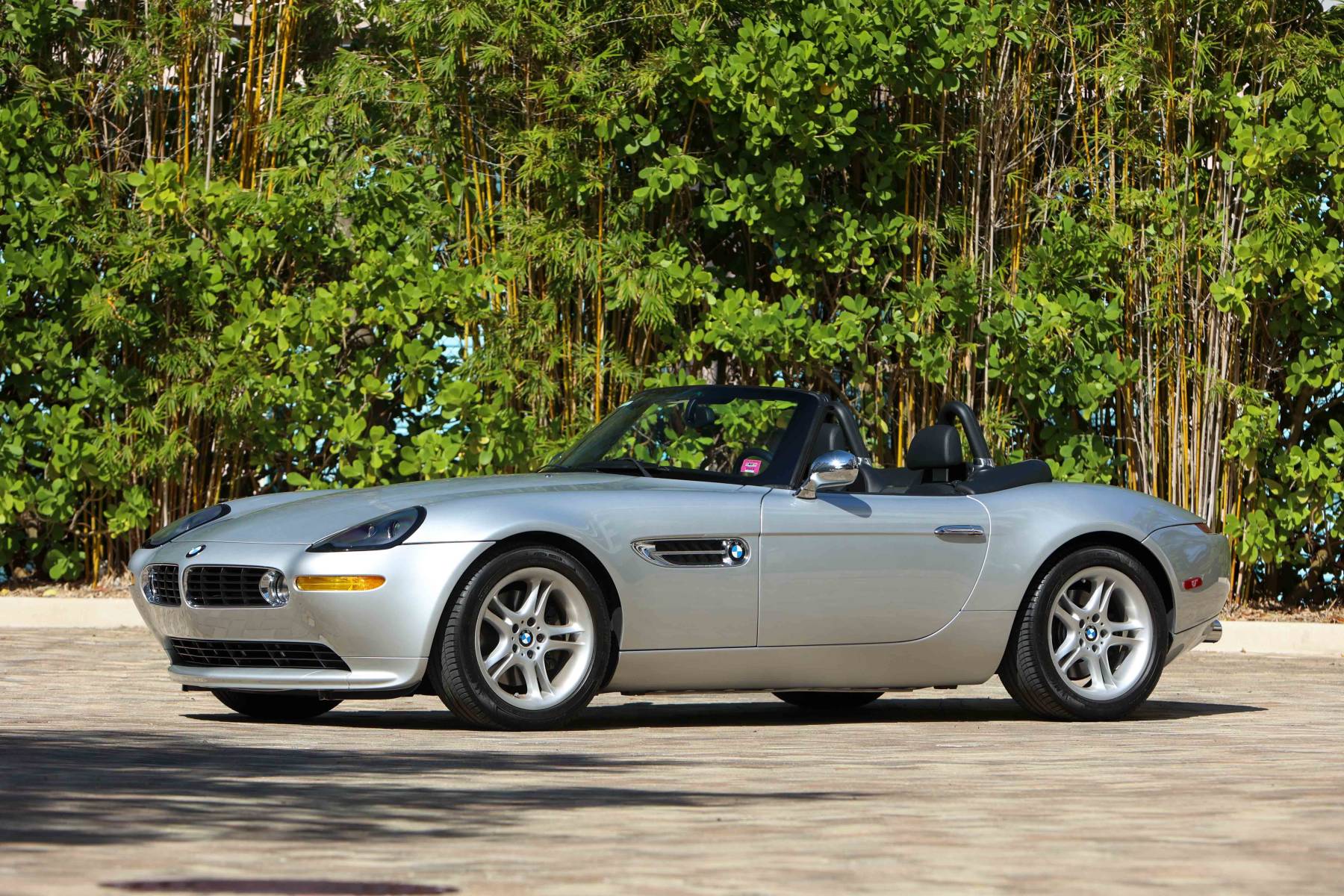
2002 BMW Z8
Paying homage to the classic BMW 507, the Henrik Fisker-designed Z8 is considered one of the best retro-inspired cars with an aesthetic that holds up gracefully today. Powered by a 395-hp 4.9-liter S62 V8 engine, shared with the much-adored E39 M5. It features Double VANOS variable valve timing and electronic throttle valve control with eight individual throttle bodies. It comes in at just under 3,500 pounds thanks to an all-aluminum spaceframe with aluminum body panels. Its relative light weight, combined with the S62 mated to a six-speed manual gearbox, propels the Z8 to 60 from a standing start in just over four seconds. Stopping power comes from four-wheel ventilated disc brakes with ABS. Its acceleration, braking, and handling, stemming from 50/50 weight distribution, rival the class-leading Ferrari 360 Modena. This 2002 BMW Z8 was initially sold in Little Rock, Arkansas in December of 2001. 31,821 miles later, it remains with its sole owner. It features Dynamic Stability Control (DSC), double-spoke forged 18″ light alloy wheels, Xenon low-beam headlights, and Neon brake and rear turn signal lights. Its full Nappa leather interior has recently been reupholstered. It is equipped with a 10-speaker Harman Kardon sound system, a power telescopic steering column, electronic cruise control, electric sports seats, one-touch power windows, an anthracite headliner, and six-disc CD changer. A hardtop and storage rack, soft top boot, wind deflector, battery charger, and two keys with a Z8 cover accompany the sale. With six days left to bid, it’s listed on Hagerty Marketplace out of Naples, Florida.
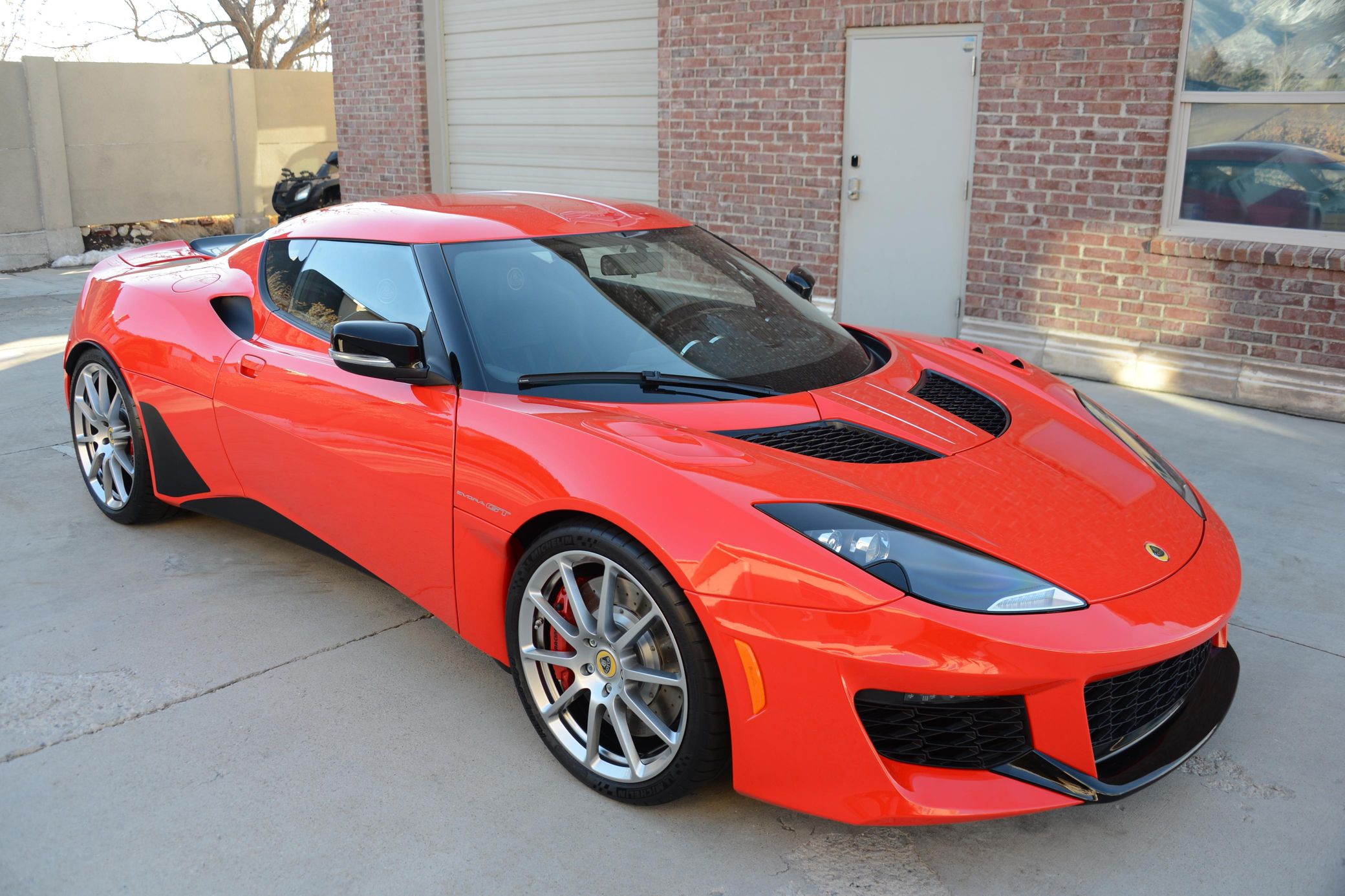
2020 Lotus Evora GT
The Lotus Evora S, introduced to the US in 2010, was designed to be a more practical and mainstream alternative to its decidedly impractical Elise and Exige models. Initially the car was rough around the edges, but the brand’s sporting heritage, combined with impressive driving characteristics from its midship-mounted, supercharged, 345-hp Toyota-derived 3.5-liter V6 and forged-aluminum, double-wishbone suspension with Bilstein high-performance gas dampers and Eibach coaxial coil springs, along with hydraulically assisted power steering showed promise as the car developed. But 10 years in, not much development took place. Until … As a swan song to the Evora before its replacement by the [outstanding] Emira, Lotus introduced the Evora GT for the North American Market only. Along with a bump to 416 horsepower, the Evora GT received aero upgrades including larger carbon-fiber air ducts that move air around the front wheels more efficiently, deeper front and rear splitters, and carbon ducts behind the rear wheels adding and addition 211 lbs. of downforce. It was finally the Evora it was meant to be all along, a genuine alternative to a “practical” exotic like the Ferrari Roma, never mind its closest class competitor, the Porsche Cayman. This 2020 Lotus Evora GT, finished in a very Rosso Corsa-like Formula Red over a Black leather and Alcantara interior, was delivered January 20, 2021. Showing only delivery miles (10) three-plus years later, it’s as close to new as we’re likely to see. It’s well equipped with a desirable 6-speed gearbox (which includes the Torsen limited slip), High Power Silver 19″ front and 20″ rear wheels over Lotus/AP Racing red brake calipers. It’s also tastefully optioned with Blue and Silver Double Stitch, an Alpine head unit with subwoofer and amplifier, a full-leather steering wheel, and Pearl White accent stripes. In addition, a Gregs Racing Parts cold air intake, an Evora 400/410/GT decat/race exhaust pipe, V3 taillights, and wheel spacers accompany the sale, along with two keys, the original window sticker, and a limited edition (1 of 130) Gavox Lotus wristwatch. It’s a recent listing on Cars & Bids out of Highland, Utah.
Other finds
- Brass 1913 Ford Model T Runabout highly original – $16,000
- 9,300-mile 1987 Chevrolet Monte Carlo SS original owner – $40,000
- Well-kept original 1967 Opel Rekord C – $19,000
- № 93/100 2002½ Lotus Esprit 25th Anniversary 26,500 miles – $85,000
- 67,364-mile one-owner 2000 Saab 93 Convertible – $22,500
- 20+ years owned 2000 Dodge Viper 22,980 miles – $53,800
- 45,212-mile 1973 Buick Riviera matching №s 455 – $27,000
- One of 2,375 1965 NSU Spyder 13,665 miles – $16,700
- 30,500-mile 1987 Toyota Supra 5-speed – $25,500
- Extensively correct 1972 Ford Mustang Mach 1 49,418 miles – $42,000
- 33,645-mile 2003 Subaru Legacy L Wagon Seamist Green – $9,500
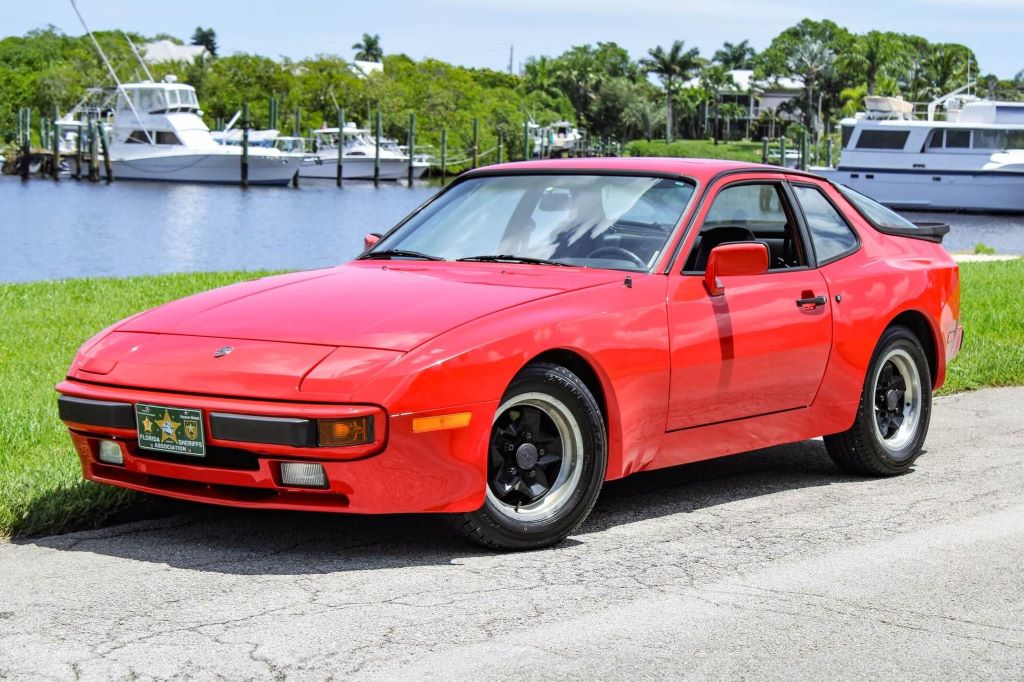
1984 Porsche 944
With some recent high-dollar sales of highly prized Porsches, it’s easy to overlook something as humble as an early S1 944. Yet for its 9-year run (13 if you count the 968), it set the standard for daily driver sports cars. Datsun/Nissan, Mazda, DiamondStar, and others used the Porsche 944 as their benchmark. With its 2.5-liter inline-4, designed and built by Porsche using Porsche parts (in essence half the 928’s V8), it was far better accepted than the anemic VW/Audi-derived 924 it replaced. Its box flared fenders, wider wheels and tires, front air dam and rear deck spoiler were queues from the 924 Carrera GT, now one of those aforementioned highly prized Porsches. This 944, from 1984, will never be one of those highly prized Porsches. It’s an early car (pre-1985.5), retaining the 924’s basic but functional interior. It’s had a color change, from a relatively rare Montego Black to a more ubiquitous Mars Red. It has an aftermarket exhaust and a newer Alpine head unit. But that also puts this firmly in the driver category and that’s what the 944 has always been about. With 48,896 showing (5-digit odo) from 29 years of ownership, it appears to have been well card for, with minimal wear and recent service. All controls and instruments are said to be working. It’s a turnkey Porsche that will likely go for used Hyundai money. It’s now on PCARMARKET out of Stuart, Florida with four days left to bid.
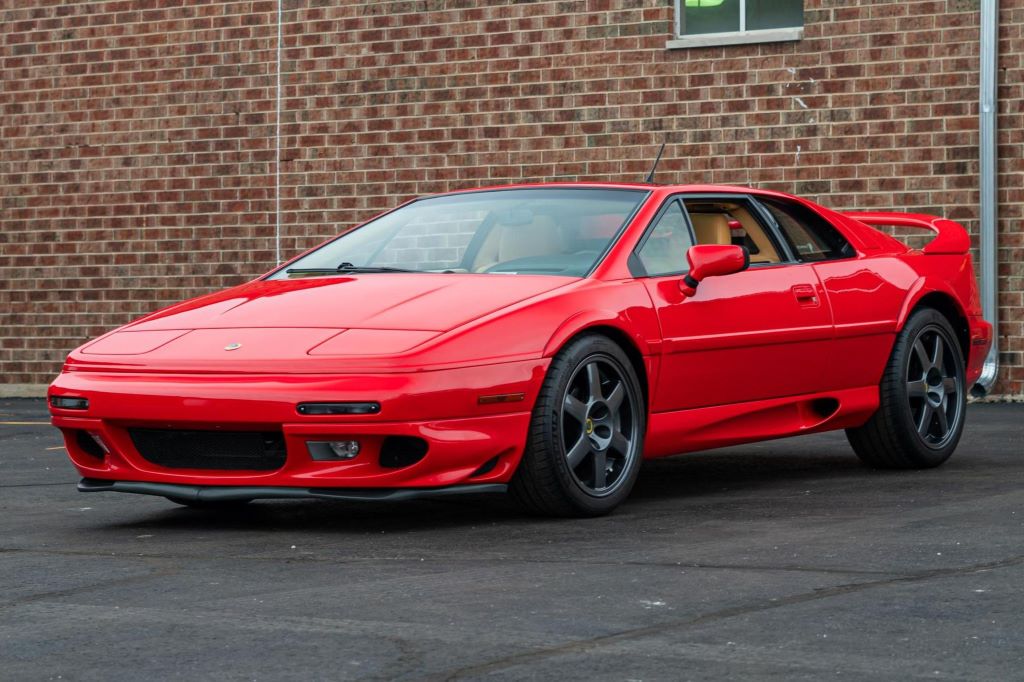
1997 Lotus Esprit V8
Since its debut in Paris in 1975 had always been something of a red-headed stepchild among the world’s supercars. While its Giugiaro-designed wedge shape (inspired by his Maserati Boomerang concept car) was enthusiastically received, the 2.2-liter four cylinder left press and public scratching their heads. It was practically a given that something that looked like a supercar ought to have three times—or at least twice as many—cylinders. And while the Esprit could certainly hold its own on a track or twisty back road thanks to its light weight and superior handling, the stigma of the same kind of motor that could be found in a Dodge Omni addled its cred. It took 22 years, but Lotus finally conceded with a powerplant to silence the critics: eight cylinders, four camshafts, 32 valves, two Garrett T25 turbochargers, and a flat-plane crankshaft. Now putting out 350 horsepower, no one could argue that the Esprit was a legit supercar. It looked like one, talked like one (89 dBA), and with 350 horsepower, a 0 – 60 time of 4.3 seconds and a 1:16.9 lap around Hockenheim, it was on par with the Ferrari F355, it went like one. This 1997 Lotus Esprit V8, is one of a reported 766 that officially made it to the US. Its supercar nature is enhanved ny a Calypso Red finish over tan leather. It shows 25,100 miles on the odometer and aside from some minor age-related wear, remains in very good original condition. Modifications are limited to black-finished wheels, an Arvin exhaust system (catalytic converters removed), aftermarket headlights, smoked turn signals, Hella LED taillights, and a steering wheel from a Lotus Evora. With recent service including differential seals, master and slave clutch cylinders, and flywheel, the Esprit V8 is ready to go on Cars & Bids, where bidding closes in four days.
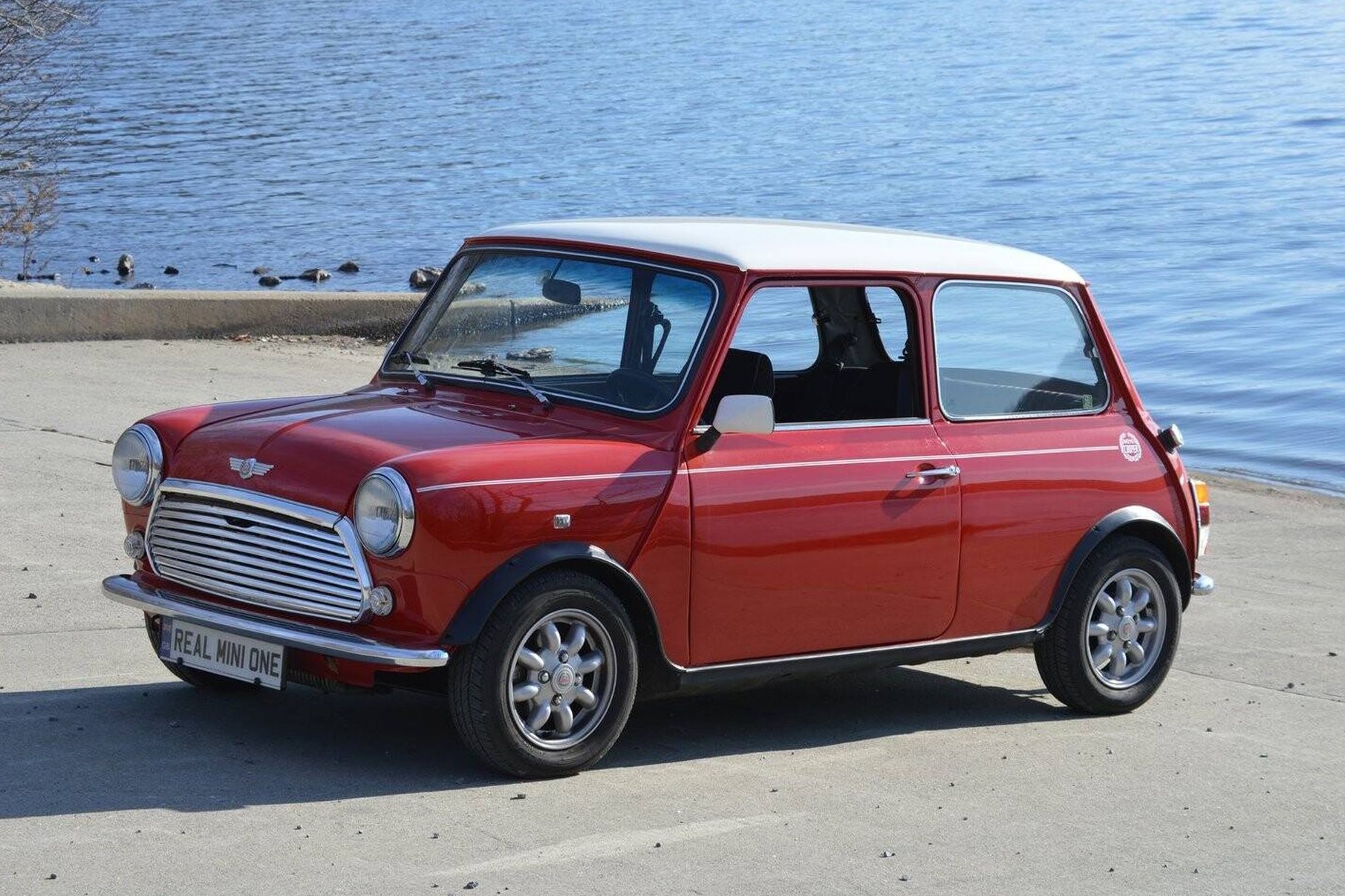
1991 Rover Mini Cooper
As we mark 40 years since one of the —if not the most improbable victory in motorsport history, a win for the Mini Cooper in the 1964 Rallye Monte Carlo (the first of three), let’s appreciate why they were—and continue to be—so beloved. That they’re cute is undeniable, but what it can accomplish with so little is what makes them so remarkable. Putting out 62 hp from its 1,275 cc (in the case of the 1990 – 1996 Mk VI like this one), the roughly 1,400-lb Mini Copper offered go-kart like thrills in what was ostensibly an everyday city car. Delivered new as a LHD Netherlands model, this Rover Group-era Mini Cooper was treated to a body-off restoration by a Dutch marque specialist. With all components removed, its body was restored and repainted in its original Flame Red with a Diamond White roof (not dissimilar to the Tartan Red/White combo of Paddy Hopkirk’s Monte Carlo winner). Every single component was then rebuilt or refurbished before going back on the car, the total process spanning three years. It is said to remain “absolutely immaculate,” with no dents or scratched. After being imported and registered by a private collector in Massachusetts, it was stored indoors and now shows approximately 36,000 miles from new. It is said to be showroom and car show quality and certainly appears to be from the listing photos, both inside out and under the hood. It is an exemplary Mk VI Mini Cooper ready win hearts, awards and perhaps a rally or two. Offers are now being accepted on Hemmings Make Offer, with a buy-now price of $25,795.
Other finds
- Highly original 1973 Ford Capri RS 2600 one of 3,532 – $89,000
- All original 1982 Mercedes-Benz 300 CD two prior owners – $15,900
- NCRS Top Flight 1995 Chevrolet Corvette ZR-1 28,600 miles – $44,500
- 19,200-mile 1978 Mercury Zephyr Z7 all original – $7,500
- One-owner all original 1991 Volvo 240 91,000 miles – $6,900
- 100% original 1957 Ford Thunderbird D-Code – $45,000
- 28,000-mile 1955 Volkswagen Beetle fresh paint, interior – $35,000
- Documented 1967 Chevrolet Impala SS Convertible 4-speed – $59,000
- 54,730-mile 1993 Volkswagen Corrado SLC VR6 – $31,995
- Halted-production 1942 Pontiac Streamliner 8 3-speed synchro – $28,000
- 49,573-mile 1968 Ford Bronco Sport original survivor – $38,000
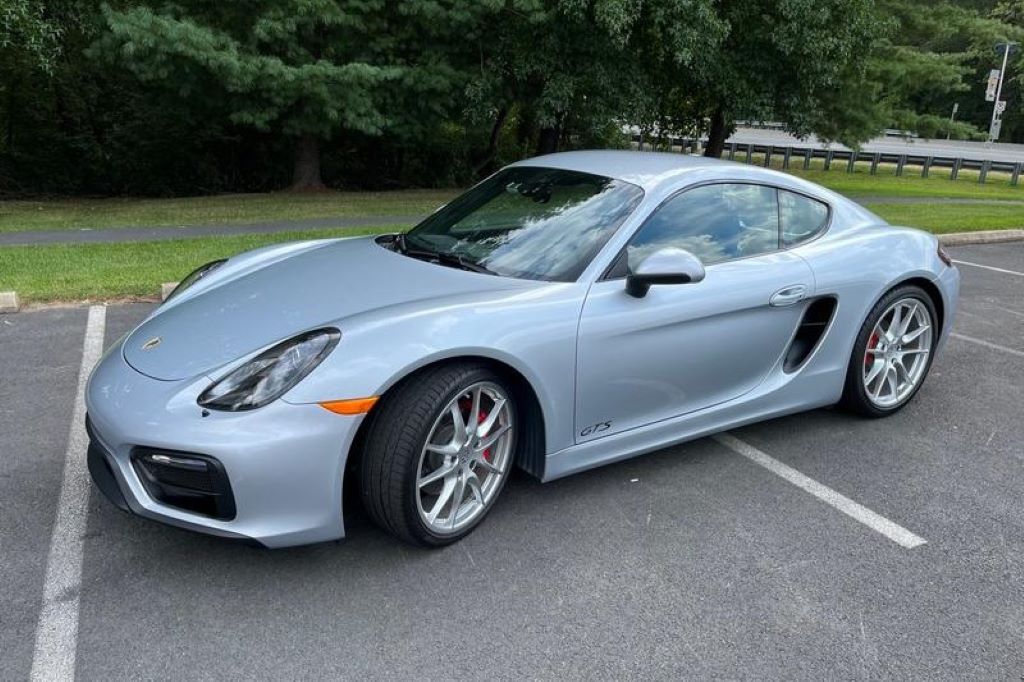
2016 Porsche Cayman GTS
Following the favorable reception of the 911 GTS, introduced in 2009, Porsche applied the concept to the mid-engine 981 Cayman. The GTS package (a set of options grouped together, which while a french-fry sale on the S model, cost less than if those options had been added individually). In the case of the Cayman, it included a marginally more powerful engine (by 14 hp), a body kit (black front spoiler, restyled black air intakes, revised lower rear apron and black GTS badge), 20″ Carrera S wheels, Bi-Xenon headlights, and a sports exhaust system. This 2016 Cayman GTS, finished in a stylish Rhodium Silver Metallic over Black leather, is equipped with the desirable 6-speed manual gearbox as well as Porsche Torque Vectoring (PTV), which adds a limited slip differential. It’s also factory equipped with Bose® Surround Sound Audio, Premium Package Plus (18-way heated adaptive sports seats with memory, 2-zone climate control, keyless entry/ignition, auto-dimming mirrors, and ambient lighting), Porsche Dynamic (directional) Lighting System, Sports Chrono, and sports exhaust. Modifications are limited to PPF film on the front, window tint, and full ceramic coating. New Michelin Pilot 4S tires mounted in 2023. Maintenance is said to be up-to-date, including new spark plugs, engine air filters, annual oil changes and bi-annual brake changes. All service receipts accompany the sale, along with original window sticker, books, and two keys. A two-owner car showing 19,350 miles at the time of listing, this 2016 Porsche Cayman GTS is here on The Mart (Porsche Club of America) with an asking price of $73,500.
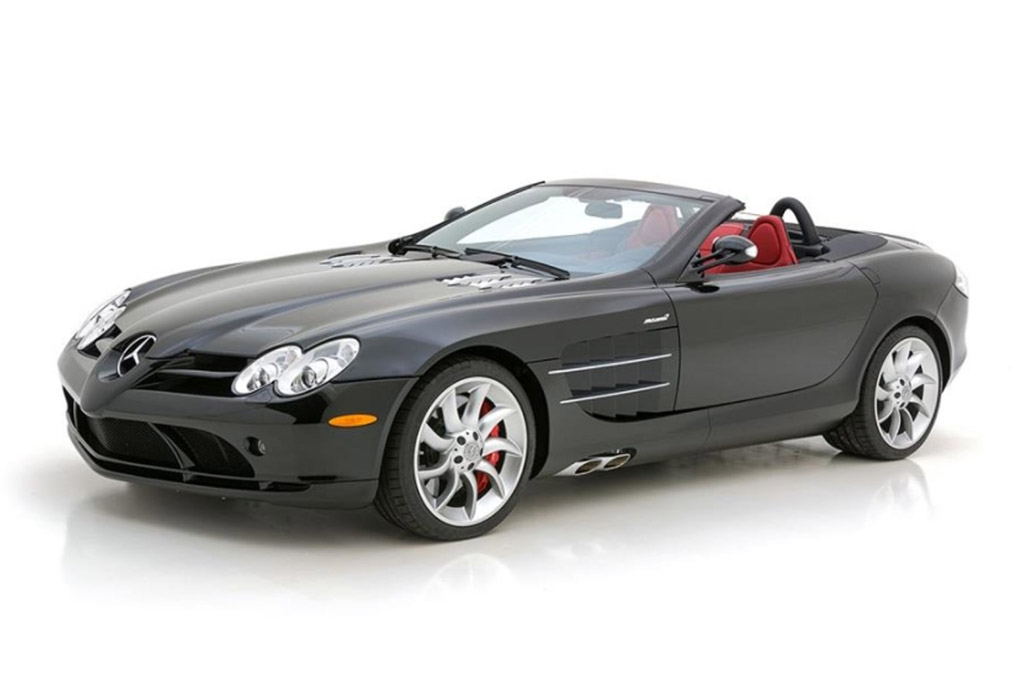
2008 Mercedes-Benz SLR McLaren Roadster
Inspired by hallowed successes in Formula 1®, Mercedes-Benz and McLaren partnered to build an exotic road car. The design melded both the historic Mercedes-Benz W196 S 300 SLR and the then-present-day Adrian Newey-designed McLaren Formula 1 car, campaigned by the likes of Kimi Räikkönen to finish a mere 2 points behind Ferrari’s Michael Schumacher in 2003. It was launched at the same time as Ferrari’s Enzo and the Porsche Carrera GT. Those two have gone onto fetch deep into the millions at recent auctions. Yet the Mercedes-Benz SLR McLaren has lulled below its $495,000 MSRP (for a 2008 R199 Roadster). It seems that as a 2000s Mercedes-Benz it carries a “luxury” brand whereas the others are clearly associated more closely with sports cars and exotics. Perhaps the SLR McLaren could never quite be seen as a supercar that now command the super prices. That makes the Mercedes-Benz SLR something of a bargain, even at its $537,000 record resale price. Its performance was comparable to the Carrera GT, lapping the Nürburgring Nordschleife just over 11 seconds slower, despite a 700-lb (!) weight handicap. Part of that can be attributed to slightly more power (617 vs 604 hp) and significantly more torque (575 vs 430 lb-ft), but they are otherwise identical on paper (3.5 seconds 0 – 60 and 207 mph top speed). This 2008 SLR McLaren Roadster was delivered new in California and was acquired by its second and most recent owner in 2012. It is superbly detailed in its 040 Black finish over Red Leather upholstery (a $9,900 option). Other options include red brake calipers, carbon interior trim, contrasting black stitching, and a two-tone steering wheel. It shows just over 3,600 miles and has been treated to meticulous care in the hands of a devoted Mercedes-Benz enthusiast. It is very well documented, accompanied by a Data Card, original window sticker, wind deflectors, roof linkage covers, car cover, factory battery tender, and service receipts from the current owner showing regular annual maintenance regardless of mileage. At its $377,000 asking price, it’s nearly 10% the average value of the Ferrari Enzo in 2023. It’s listed here on the MBCA Classifieds (Mercedes Club of America) out of Hallandale Beach, Florida.

2020 Chevrolet Camaro Yenko/SC Stage II
Paying tribute to one of the greatest legends in the history of American Muscle; specifically, the1967-1969 Yenko Camaro, the modern Yenko/SC was extensively modified by Speciality Vehicle Engineering and officially sanctioned by GM. The Yenko/SC Stage II Package (custom-built 6.8-liter LT1-based engine with aluminum block, forged 4340 steel H-beam connecting rods, forged aluminum pistons, ported LT4 cylinder heads, upgraded fuel system and injectors, custom performance tune, high-output custom supercharger, custom stainless steel long-tube headers with high-flow catalytic converters, custom stainless steel dual-mode exhaust system, carbon fiber cowl-induction hood, Yenko-badged brake calipers, Yenko graphics and exterior badging, Yenko-embroidered front headrests and floor mats, Yenko door sill plates, numbered dash plaque) puts out 1,000 horsepower and 875 lb-ft of torque in standard form. With its modifications (an upgraded 2023-2024-style SVE supercharger and crankshaft), this 2020 Yenko/SC now produces 1,103 horsepower. Equipment includes the SS 1LE Track Performance Package, LED headlights and taillights, automatic climate control, power windows, locks, and mirrors, a Chevrolet Infotainment 3 Plus system, cruise control, and a rearview camera. Additional modifications include tinted headlamps and window tint. Showing 6,056 miles at the time of listing, the car had its serpentine belt and front crankshaft replaced at 4,653 miles (February 2022) as well as an engine oil and filter change at 1,315 miles (March 2021). Two keys with fobs, as well as two numbered Yenko key chains and a Yenko-embroidered floor mat accompany the sale. It’s a new listing on Cars & Bids out of Fort Pierce, Florida.
Other finds
- Restored 1974 Alfa Romeo GTV 2000 86,124 miles – $48,000
- Two-owner 1988 Pontiac Fiero GT 5-speed – $12,500
- 42,159-mile 2003 Subaru Baja Sport all original two owner – $14,900
- Two-owner 2004 Mercedes-Benz SLK 350 20,144 miles – $14,900
- 26,000-mile 2004 Bentley Arnage T FBSH, books, keys, umbrellas – $47,500
- Fully restored 1955 Nash Metrolpolitan 54,146 original miles – $14,950
- 1,820-mile 2020 Ford Mustang GT Bullitt Edition 1/3000 – $50,500
- One-owner 2012 BMW 740iL 47,200miles – $24,500
- 2,917-mile 2018 Chevrolet Camaro 2SS Hot Wheels Convertible – $51,900
- Two-owner 2004 Chrysler Crossfire 34,260 miles – $12,000
- Mechanically refreshed rust-free 1959 Austin-Healey 3000 Mk I – $50,000
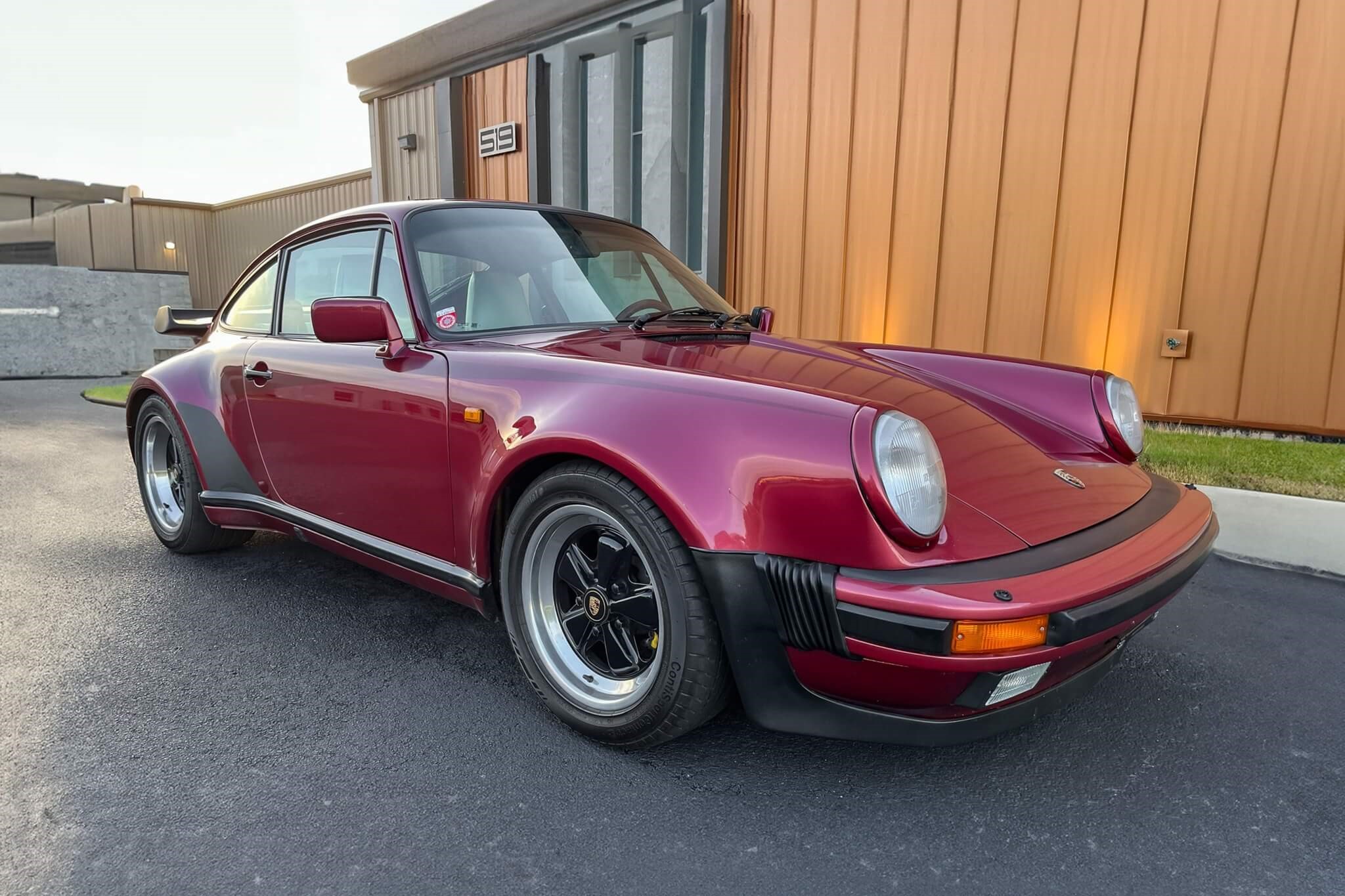
1989 Porsche 911 Turbo Coupe
It’s a good week to be king, or at least acquire some royal carriages. On the heels of the Range Rover once in the Royal Service of Queen Elizabeth II, comes this 1989 Porsche 930 ordered new by Sheikh Khalifa Bin Hamad Al Thani (aka KHK) of Qatar in early October 1988. It is one of 857 Porsche 911 Turbo Coupes produced for markets outside of the U.S. during the model year and was commissioned through Porsche’s Sonderwunsch program (Special Wishes, now Exclusive Manufaktur). Using the Z-code option, “09991,” it was removed from the production line to be hand assembled and painted by a dedicated team of workers (Werk 1). The work took more than three months to complete. It includes a seldom-seen but decidedly attractive (and original) Red Velvet Metallic paint (L81L) with ghosted Turbo graphics. And while the interior may not be to everyone’s taste, it is special in its Pearl White with ample Red Velvet leather trim and wood facias. This 930 retains its original turbocharged and intercooled 3.3-liter flat-six engine mated to the 1989-only 5-speed G50 manual gearbox and a limited-slip differential. The Sheikh’s Red Velvet 930 stayed in the royal family for 10 years, after which it spent time in Austria and the Netherlands, before being imported to the US by Symbolic International in 2022. The Pearl White seats were replaced by Porsche with heated seats (in Black) at some point but have been returned to non-original Pear White, albeit without the Sonderwunsch-specified Red Velvet piping. The Porsche Production Specifications certificate and the Certificate of Delivery both outline the Exclusive options, including the Red Velvet seat piping, leather-trimmed steering wheel, headliner, shift boot, and pillars. The car is said to have been thoroughly serviced and inspected by the Porsche Classic Center in San Diego in 2022. Accompanying documentation, along with Dutch and German-language service records dating back to 2001, as well as importation documents, a tool kit, and manufacturer’s literature accompany the sale. After being acquired by the selling dealer at Broad Arrow’s Porsche 75th Anniversary (June 2023), it is now listed with PCARMARKET where bidding closes in five days.
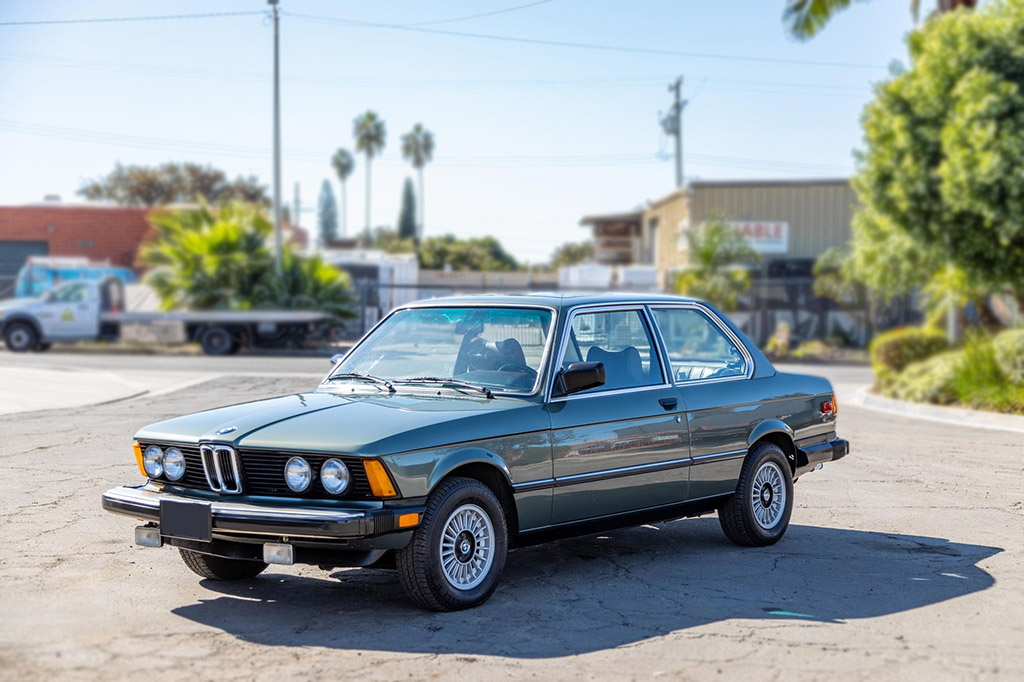
1981 BMW 320i
BMW enthusiasts and the automotive press have long been seeking the spiritual successor to the 2002, with no clear answer. Most often overlooked is its chronological successor, the E21, which we here in the States would know only as the 320i. But with its silky 100-hp 1.8-liter (after 1980) 4-cylinder engine, and precise 5-speed manual gearbox, it wasn’t all that different from the base 2002 (granted, 200 lbs heavier, but also stiffer and stronger). Yet for many years the E21 has been in the shadow of both the 02 and E30, relegated to the “good used car” or “kid’s first car” categories. This one, showing over 160,000 miles, could easily be discounted as one of those, but a closer looks reveals one that has been well regarded. It’s by no means perfect but it is honest. Having been repainted once in its original and gorgeous color (152 Cypress Green), it remains otherwise original (save for an aftermarket shift knob) and in respectable condition. Its Mocca leatherette is holding up well aside from minor wear on the driver’s seat bolster. The dash has some small cracks, typical of this model though not as severe as most. A manual sunroof and manual windows let you know just how analog an early ’80s BMW is. The engine bay, meanwhile, looks ready to serve a meal. Nearly spotless, it’s a good indication of the overall care the car has received. The motor “purrs” by description as well as the accompanying video. As a California car since at least 1992, this one has plenty of life left in it. It’s a new listing on Cars & Bids with active interest and bids currently at $4,500.
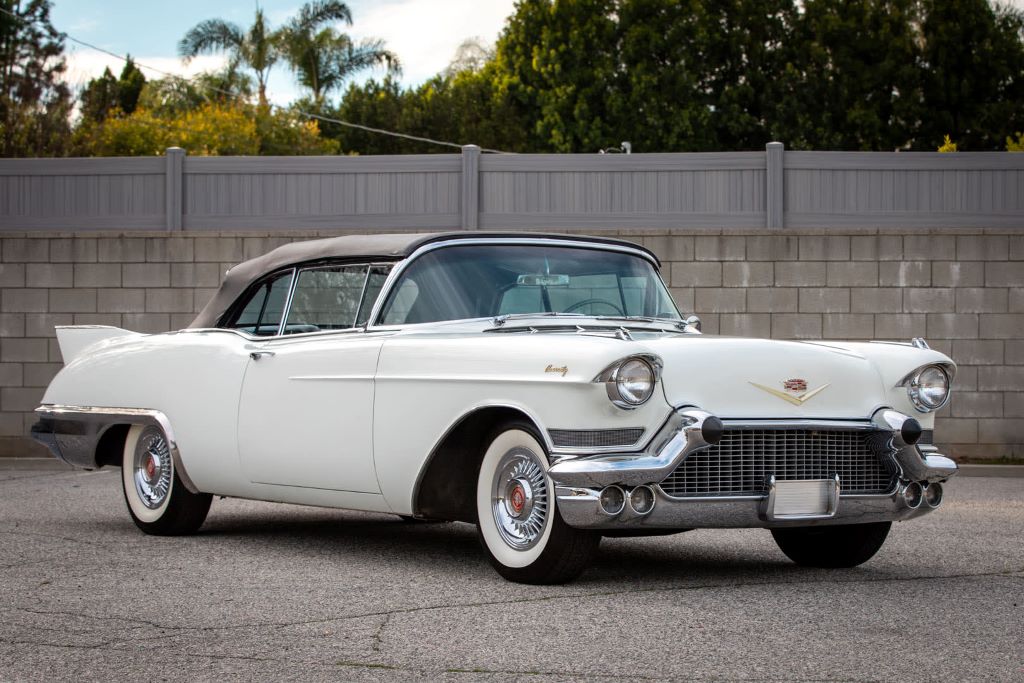
1957 Cadillac Eldorado Biarritz
Entering its third generation, the 1957 Cadillac Eldorado was newly styled. With its rounded sheet metal crowned with knife-edged tailfins, the vast Biarritz (convertible) seemed to drift down the highway with an even quieter, smoother ride than before. It sported a new tubular X-framed chassis, which did away with side rails while providing added structural strength and allowing a lower body placement for reduced overall height. The upgraded interior came with all imaginable power accessories and creature comforts. The Eldorado Biarritz retailed at $7,286 (around $80,000 today). It was one of the more expensive models in the Cadillac lineup and was limited to approximately 1,800 made that year. This 1957 Cadillac Eldorado Biarritz comes from long-time documented west coast ownership and currently shows 59,424 miles, thought to be original. It is finished in its original color of Olympic White Cadillac with a black power-operated convertible top over a black leather interior. 15″ polished aluminum “Sabre” wheels are dressed with whitewall radial tires. It is powered by a 325-hp 365 cu-in V8 engine with dual four-barrel carburetors and a gold-finished “batwing” air cleaner mated to a 4-speed HydraMatic gearbox. This Eldorado Biarritz is highly equipped with the Autronic Eye automatic headlight-dimming system, power steering, power brakes, power windows, gold badging, driver’s side remote outside mirror, under dash mounted upgraded radio, chrome front bumper with rubber-tipped Dagmars, and Biarritz-specific rear bumper styling. The car was treated to a bare-metal restoration in 1994 while in the Newell Coach Collection, and later, a cosmetic and mechanical refurbishment in the early 2000s. Two binders of documents, receipts, and photographs, along with convertible side pieces, a boot cover, spare tire, and original owner’s manual accompany the sale. Bids are being accepted on Hagerty Marketplace, closing in 11 days.
Other finds
- One family owned 2011 BMW M3 63,500 miles – $37,999
- 47,835-mile 2002 Volkswagen Beetle Turbo S 6-speed – $9,990
- Unmodified original 2005 Honda S2000 40,000 miles – $52,000
- 13,236-mile 2006 Pontiac Solstice 5-speed – $17,000
- One of 25 2015 Jaguar XK Final Fifty original owner – $69,000
- 51,440-mile 1996 Volvo 850 one owner to 2023 – $6,450
- Two-owner 1986 Alfa Romeo GTV-6 2.5 82,300 miles – $27,000
- 21,000-mile 1982 Land Rover Defender Santana 2.25L diesel – $14,000
- One-owner 2005 Ford Thunderbird 36,000 miles – $14,900
- 23,000-mile 1967 MG MGB GT two-owner, recent resurrection – $24,000
- One-owner 1984 Volkswagen Rabbit Convertible 22,990 miles – $10,499
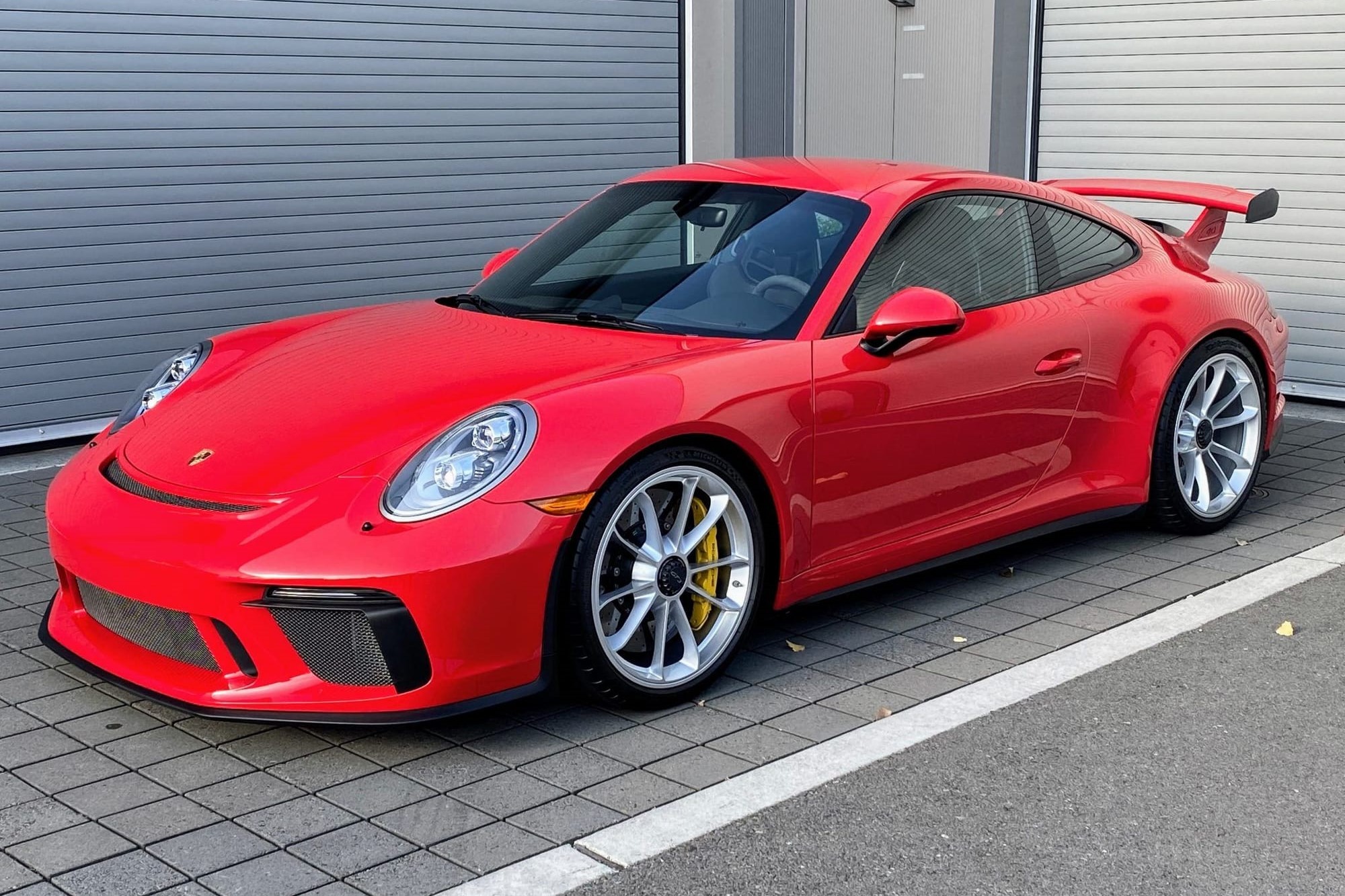
2018 Porsche 911 GT3
Updated for 2018, the 991.2 911 GT3 is a revised version of Porsche’s driver-focused 991 GT3 featuring improved aerodynamics for a 20% increase in downforce. But the big news was the 4.0-liter engine—a powerplant derived from the 911 GT3 R and GT3 Cup race cars—howling up to its 9,000 rpm redline while putting out 500 horsepower and 339 pound-feet of torque. The result is a car that hits 60 miles per hour from a standing start in 3.6 seconds (with the the manual gearbox; its return the other major development over the 991.1 GT3). This 991.2 GT3 looks up for the task, finished in Guards Red, and fitted with the 6-speed short-throw manual. It’s well spec’d with silver LEDs, front axle lift , full bucket seats, PCCBs, and more. It’s shown to be a three-owner car, however the second owner had very little time or miles after migrating to a GT3 RS soon after purchasing this car from its first owner through Ferrari of Seattle. Modifications made since include Ed’s Bolster Covers, Titan Motorsports roll bar (powedercoated silver to match headlights/wheels), and LED sidemarkers (originals retained). Paint Protection Film was applied to the front bumper, hood, fenders, partial rear rockers, and roof. A clear Air80 film was also applied to deflect heat. The whole car was ceramic coated after replacing the PPF upon delivery. This 911 GT3 is said to have never been tracked. Now showing 6,950 miles, it’s priced favorably against manual gearbox 991.2 GT3s that are similarly equipped, at $189,999. Find it here on Rennlist Marketplace in Las Vegas.
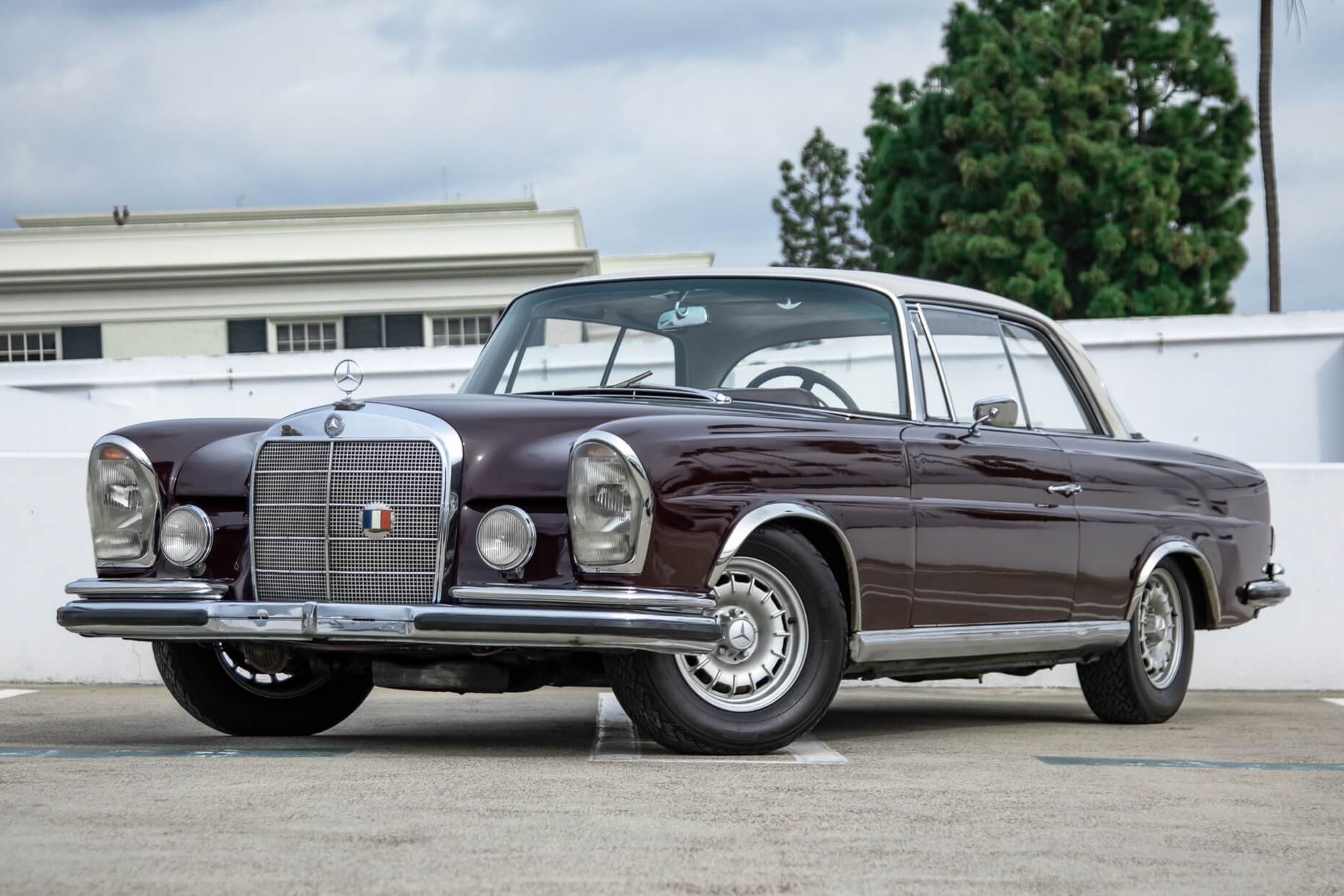
1964 Mercedes-Benz 220 SE 6.3 Coupé
File under Cars We Wish Mercedes-Benz Had Built. To most eyes, this is a lovely example of a 1964 Mercedes-Benz W111 coupé, refinished in stately burgundy with a contrasting light beige roof. It is tastefully trimmed in chrome. It rides on Bundt wheels (an option that wouldn’t be offered for another five years) dressed in 2018-dated Pirellis. A more keen observer will spot the “6.3” badge at the right rear corner and this is where things get interesting. This then is no ordinary 1964 220SE, with its 110-hp 2.2-liter inline 6. That lump had been replaced by a period 6.3-liter M100 V8, first used in the big 600 limousine then famously dropped into a W109 300 SEL to create what many consider to be the world’s first Q-car (much to the objections of Chrysler’s Letter-car owners and enthusiasts). The M100 in this 220SE Coupé was rebuilt then paired with a 4-speed automatic gearbox and rear end of the later W108/109 4.5 model. The front suspension and engine mounts were was modified, as were the the engine offset and transmission tunnel. The fuel injection pump was then rebuilt and recalibrated and additional work included installing new cold start valves and relays, new fuel lines, a new fuel filter, new oil cooler hoses, and fresh power steering pump seals. All new shocks were installed in 2013 along with a refresh of the braking system. A new starter, engine mounts, and driveshaft flex disc were also installed in 2018 as well as new rear brake pads and hoses. Meanwhile, the burgundy leather interior has just been redone (January 2024). The wooden dashboard trim has been refreshed with a gloss finish, and the carpets, package tray, and floor mats were replaced. Accessories include a two-spoke steering wheel with a black leather cover, manual window cranks, a locking glovebox, an analog clock, VDO gauges, a heater, a manual sunroof, and an aftermarket Bluetooth receiver. The later Becker Grand Prix radio was rebuilt in 2018. All gauges and accessories are said to be fully functional. While Mercedes-Benz never built a 220 SE 6.3 coupé, we’re glad someone did and did it right. It’s now being offered on auction through PCARMARKET by Vintage Brokers in Beverly Hills.
2016 Range Rover 4.4 SD V8 Autobiography
The Range Rover has often been sold as “fit for a queen,” and there certainly is something regal about them. But here is one that was actually fit for a queen, that Queen being HM Elizabeth II. This Range Rover (OU16XVH) was first registered on the March 1, 2016 to Jaguar Land Rover Ltd, at their International Fleet Department. It was equipped with covert lighting and police emergency lighting, along with specially adapted fixed side steps and additional grab handles to the rear passenger compartment to enable Her Majesty The Queen more comfortable access (when she didn’t insist on driving it herself). These items have since been removed following the vehicle being taken out of Royal Service, but the grab handles used by Her Majesty were left with the car. The rear entertainment screens have also been refitted after being removed while in Royal Service. The warning sticker for the siren, which was located in the engine compartment also remains, as a hint to this Range Rover’s previous life. It received two services by JLR (as opposed to the Land Rover dealer network) while in service with the Royal Household, the first being its PDI on the March 5, 2016 at 26 miles, followed by a 12-month service on May 18, 2017 at 2,413 miles. This particular example sold through the Land Rover Dealer Network under the Land Rover Approved scheme not long after, having covered only 2,586 miles. OU16XVH made a very high-profile appearance during President Obama’s state visit to the United Kingdom in 2016. On the 22nd of April 2016, Prince Philip, who was accompanied by Her Majesty The Queen, drove it to meet President Obama and the First Lady as they stepped off Marine One upon landing on the grounds of Windsor Castle. All that aside, it’s also a fine example of a Range Rover Autobiography. Finished in Loire Blue Metallic over Ivory/Ebony, it is highly—very highly—optioned and powered by a dependable—very dependable—339-hp 4.4-liter turbodiesel V8. Showing only 18, 206 miles, it is offered by Bramley Motorcars in Surrey, England with an asking price of £224,850.
Other finds
- 23,000-mile 1950 Volkswagen Type 1 museum find – $65,000
- One-owner 2007 Honda S2000 44,908 miles – $33,500
- 80,550-mile 2004 Ford SVT Mustang Convertible Mystichrome – $54,000
- 54,483-mile 1989 Chrysler TC by Maserati 2.2 Turbo II – $6,500
- Original owner 2006 BMW 330i 6-speed 39,000 miles – $19,500
- Time capsule 1987 Toyota Land Cruiser FJ60 zero rust – $34,900
- All original 1981 Volkswagen Rabbit Pickup 1.6L diesel – $21,777
- 3,427-mile 2000 Plymouth Prowler one of 2,746 – $38,500
- One family-owned 1989 Nissan 240SX S13 66,869 miles – $12,500
- Garage find 1961 Mercedes-Benz 190 SL 40 years family owned – $80,000
- Original owner 1997 Dodge Dakota Sport 26,269 miles – $16,500
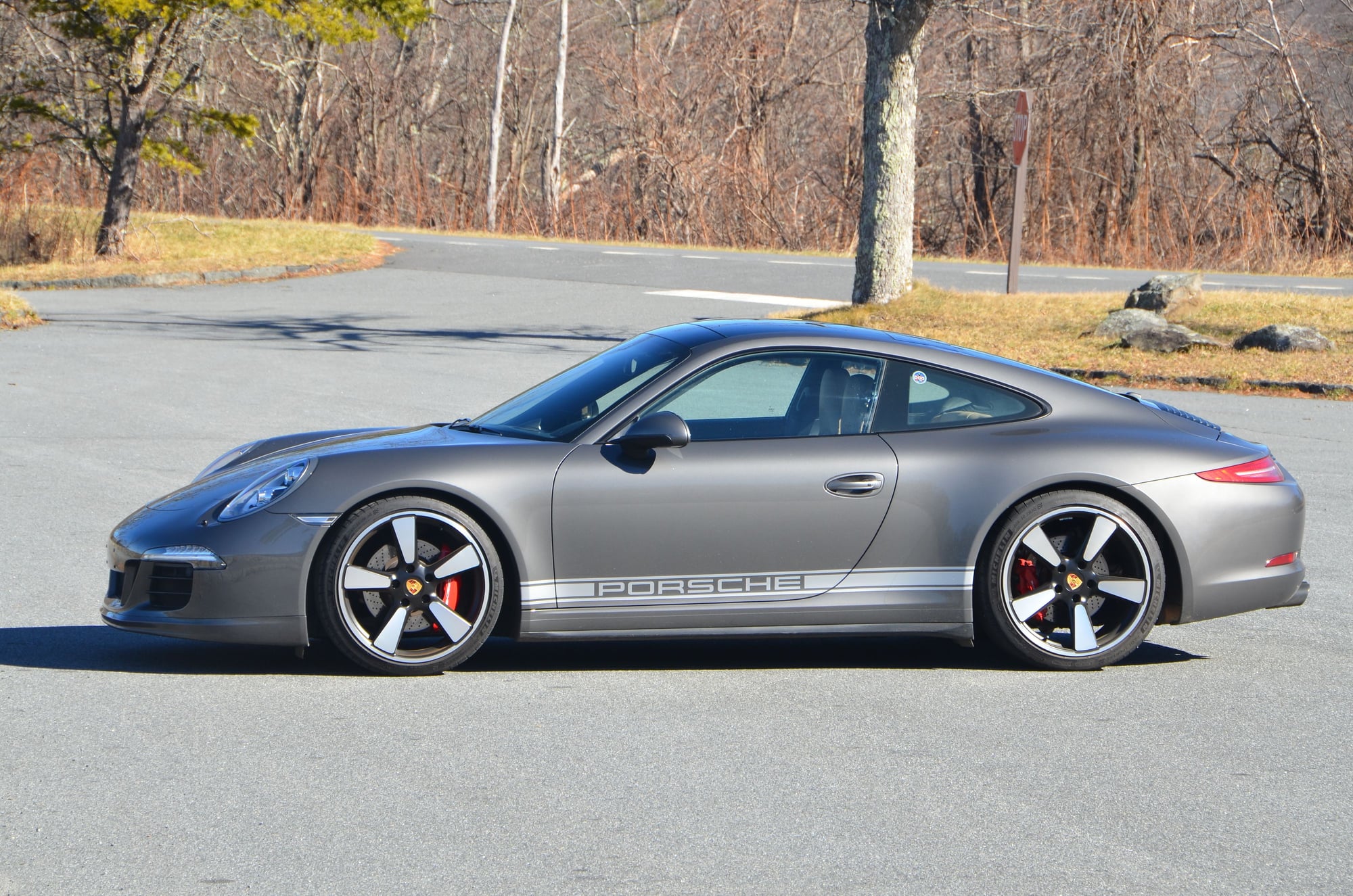
2016 Porsche 911 Carrera GTS
Opening the debate of “Peak Porsche” once again, the 991.1-generation GTS would likely get a lot of support, certainly as a bang-for-the-buck candidate. The GTS concept, first applied to the Cayenne, is essentially an option group of cherry-picked (by Porsche) performance add-ons to a Carrera S (C2S). While the GTS cost about $12,000 more than the S (in 2016), it was considerably less than if each option were ordered ordered individually. Chief among them is the Power Kit, boosting the horsepower up to 424 (vs 400 from the S). Still 50 shy of the GT3 (and nearly 100 less than the Turbo), but plenty of power and the romance of a naturally aspirated flat-6 (a 3.0-liter twin turbo would replace the 3.8 the following year) mated to a manual gearbox along with a tauter chassis than a C2S makes the GTS a perfect blend for those who want to enjoy those rare opportunities to go fast, but still maintain enough civility for daily driving. The seller of this 2016 911 Carrera GTS clearly enjoys the opportunities to go fast and as a result accumulated three Reckless tickets in the span of 13 months (though none in the 911; two in the Cayman and one his wife’s Cayenne). A prudent decision then to transition to a more track focused car. He will leave to its third owner a well-cared for GTS in a handsome Agate Gray over Luxor Beige/Black. It’s well-appointed with Porsche Dynamic Chassis Control with S-PASM, Porsche Dynamic Lighting System Plus, Park Assist, Premium Package Plus (heated/ventilated front seats, auto-dimming rearview mirror, keyless entry/ ignition, etc.), power sport seats, leather dashboard trim, and Bose® Audio. It’s been lightly modified (easily reversible) with ceramic coating, 917-style shifter, Isudar CarPlay module, radiator screen, clear side markers, 911R-style vinyl sticker, and Fuchs replica forged wheels (original wheels Included). A “minor” blemish stems from a piece of Mud/Rock dropped from a landscaping truck. The mud/rock grazed the suspension support and made a scratch on the Oil pan. Both the suspension support and oil pan have been replaced at a Porsche Center. With 40,700 miles showing at the time of listing, it’s a 911 that is true to the GTS idea, which is to enhance the driving experience. It’s being listed on the Rennlist Marketplace prior to trying a broader market through one of the online auctions. Asking price is $115,000 but open to reasonable offers.
1989 Mercedes-Benz 190 E 2.5-16 Cosworth
Having had success in rallying with the 450 SLC 5.0, Mercedes-Benz had hoped to continue that with its small quotidian sedan, the W201 190 E. Those hopes were quickly dashed however by the game-changing Audi Quattro. Rather than throw the baby out with the bath water, Mercedes-Benz turned to what would become the DTM (German Touring Car Championship) competing against the likes of the BMW M3. The competition would carry over to the showroom with the homologated versions. BMW would emerge as the clear winner there, but that’s not to discount the Mercedes-Benz “Cossie,” as in Cosworth, builder of the 2.3- liter 16-valve motors. In 1989 the 190 E 2.3-16 would evolve to the 190 E 2.5-16. Only around 6,000 were made for both competition and road use and while the US did eventually get the 2.3, the 2.5 would remain forbidden fruit. This 1989 Mercedes-Benz 190E 2.5-16v Cosworth was originally delivered to the Canary Islands before being imported to the United States from Germany in 2015 (clear Minnesota title accompanies the sale). It’s now finished in Dark Blue Metallic with matching lower cladding and bumper inserts, a 2005 color change from the original Smoke Silver Metallic. The body kit is specific to the Cosworth specs and includes a deeper aerodynamic chin spoiler, side skirts, rear air dam, fender flares, and trunk spoiler. Other exterior features include a sliding sunroof with tilt function, an electrically adjustable side mirror, and fog lights. 16” Evo I wheels are dressed in relatively new (2023 date code) Yokohama Advan tires. The cabin is upholstered in Anthracite leather (271) with matching door panels and carpeting. It features power-adjustable Recaro front sport seats, individual rear Recaro bucket seats, cruise control, power windows, power locks, and an upgraded head unit. Additional modifications include a new shift knob, new parcel shelf, and upgraded Pioneer speakers. The door panels show shrunken leather around the edges and the A/C and lap timer are noted to be inoperable. The 194-hp 2.5-liter M102 4-cylinder is mated to a dogleg 5-speed manual gearbox. Recent maintenance includes an oil service, transmission service, differential service, and a coolant flush. Now showing 183,000 km (113,000 miles). Though relatively rare, it doesn’t have any garage queen aspirations. It’s looking to give its next owner plenty of enjoyment here on The MB Market with eight days left to bid.
1990 Ford Taurus SHO
The appeal of the Ford Taurus SHO (Super High Output) has always been its diamond-in-the-rough quality. Aside from a few subtle aero touches, it comes off as the humble mid-size Ford sedan that for many years was the best-selling car in America. And while not exactly pretty, it was purposeful. Its beauty rested with the Yamaha 3.0-liter 24-valve 60° V6 (“Shogun”) rated at 220 horsepower mated to a Mazda five-speed manual gearbox. In its day, it was the only sedan in the under-$20,000 price range capable of a 6.6-second 0 – 60 time and 143 mph top speed. In fact, the only production four-door sedans faster or quicker than the SHO were the $71,000 BMW 750iL and $51,000 M5. That diamond-in-the-rough quality is amplified with this 1990 Ford Taurus SHO. Lacking any sense of presentation and offered without reserve, this might turn out to be a super high bargain. While its condition is far from perfect, it’s what can be expected from a 34-year old car, perhaps better. Its flaws are relatively minor and relatively few: broken trim around one of the vents, some clearcoat damage, and inoperable power antenna, right rear power window, fuel gauge, and cruise control. Meanwhile it comes from having two long-time owners who took care in maintaining their baby with Ford Motorcraft parts where possible, while the air conditioning system is still functional using R12 refrigerant (not converted to R34). It’s currently in the prefect preservation climate of Vancouver, Washington, showing only minor surface rust under worn original paint. Plenty of cheap thrills can still be had here. It’s listed on Hagerty Marketplace where bidding closes in seven days.
Other finds
- Unmodified 1968 Volkswagen Beetle 61,341 miles – $10,500
- Two-owner 1978 Ferrari 308 GTS 37,422 miles, fresh service – $65,000
- 8,100-mile 1987 Chevrolet Monte Carlo SS Aero Coupe – $32,500
- 80,550-mile 1994 Alfa Romeo 164 LS California, Texas owned – $18,990
- 63,678-mile 1986 Jeep Grand Wagoneer Wagonmaster resto – $44,995
- Matching numbers 1961 Mercedes-Benz 190 SL older resto – $129,990
- Original unmodified 1987 Toyota Corolla FX16 40,000 miles – $6,000
- Two-owner 1948 Plymouth Special Deluxe Woody survivor – $42,000
- 45,128-km JDM 1999 Honda Accord SiR NJ title in progress – $12,500
- One-owner 1976 Chevrolet Camaro LT 58,500 miles – $16,500
- Original drivetrain 1972 Triumph Spitfire Mk IV x16,888 miles – $7,500
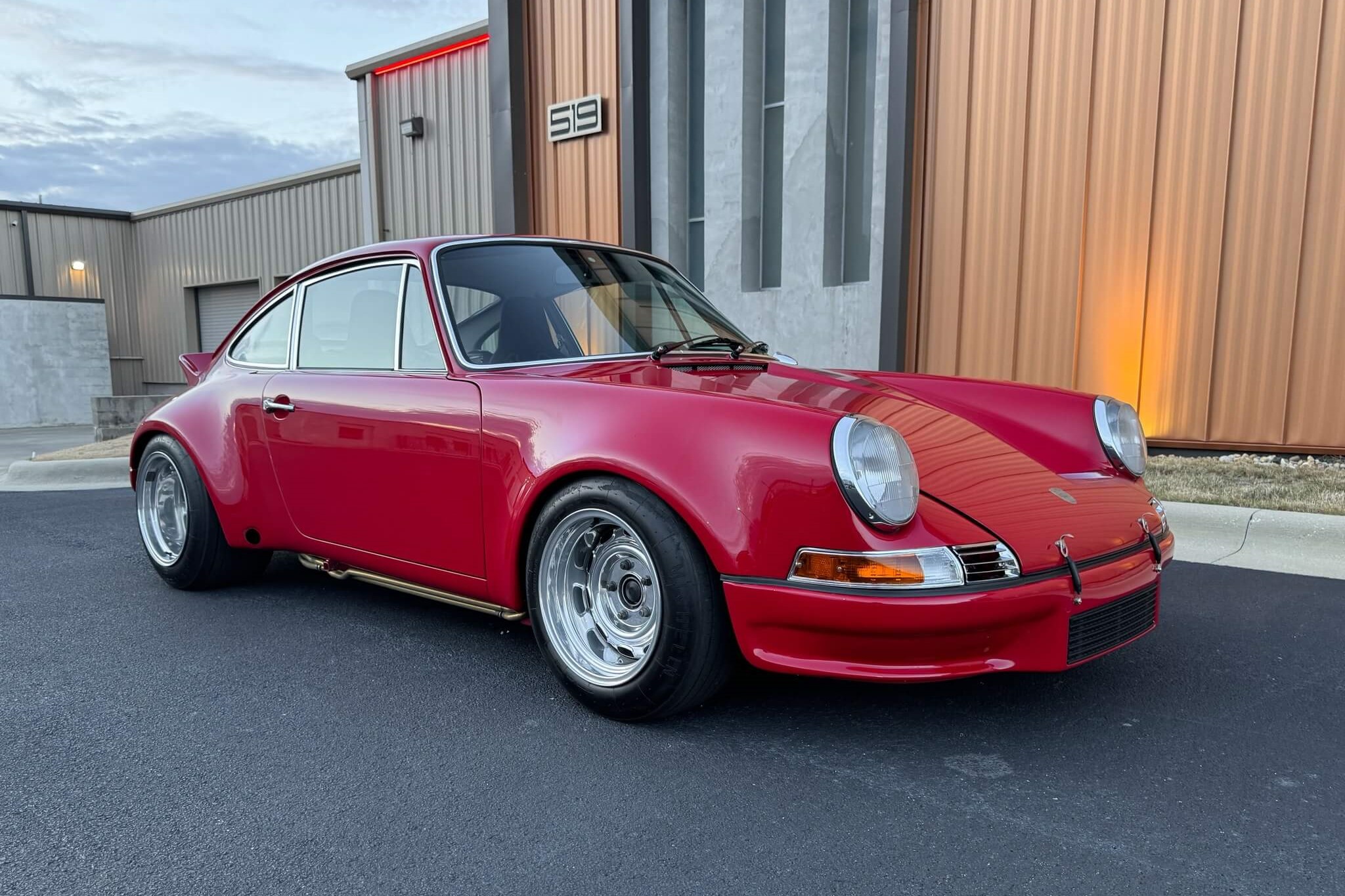
1987 Porsche 911 RSR Tribute
It’s a widely held belief that there is no substitute for originality. It’s hard to argue with that, but certain imaginative minds (Singer, Emory, Magnus Walker, and of course Ruf) have demonstrated that if a Porsche can’t be original, might as well make it outstanding. One approach is going retro, backdating a 911 to the long-nose era with road cars paying homage to the legendary 935 and RSR competition cars. This RSR tribute started life as a 1987 Porsche 911 Carrera. It was commissioned by the highly regarded team at Pat Williams Racing (PWR) under which it was rebuilt from the ground up with RSR-style bodywork refinished in Glasurit single-stage Polo Red, harking back to early 1960s Porsche 911s. Power comes from a custom-built 3.5-liter flat-six engine featuring a twin-plug ignition system, Xona turbochargers by TiALSport, and custom Billy Boat GT2-type headers with heat exchangers, mated to the trusty 5-speed G50 gearbox. Other modifications include Elephant Racing 930 Turbo-type brakes, cockpit-adjustable dual brake bias and turbo boost systems, and much more. Custom Coddington 356-style wheels are wrapped in Michelin TB15 Course tires. With a reported 750 horsepower and a top speed of over 171 mph achieved on a half-mile run (on pump gas!), this 2,566-lb RSR-style 911 promises a driving experience comparable to that of the aforementioned Singers and Rufs. The cabin, meanwhile, features Recaro Sportster GT REC-410GT reclining seats, a MOMO Prototipo steering wheel, a MoTeC CDL3 dash display/logger, and European-specification VDO instrumentation, along with 6-point seatbelts, RS-style door panels, a rear harness bar, and “№ 1 of 1” lettering on the dashboard. Complete documentation with associated part numbers will accompany the sale, along with an extra set of racing tires and the original decklid from the “donor” 911 Carrera. With around 2,000 miles driven by its sole owner since the completion of the build on July 1, 2022, this “№ 1 of 1” PWR 911 RSR-style backdate is now being offered on PCARMARKET out of Alabama with four days left to bid.
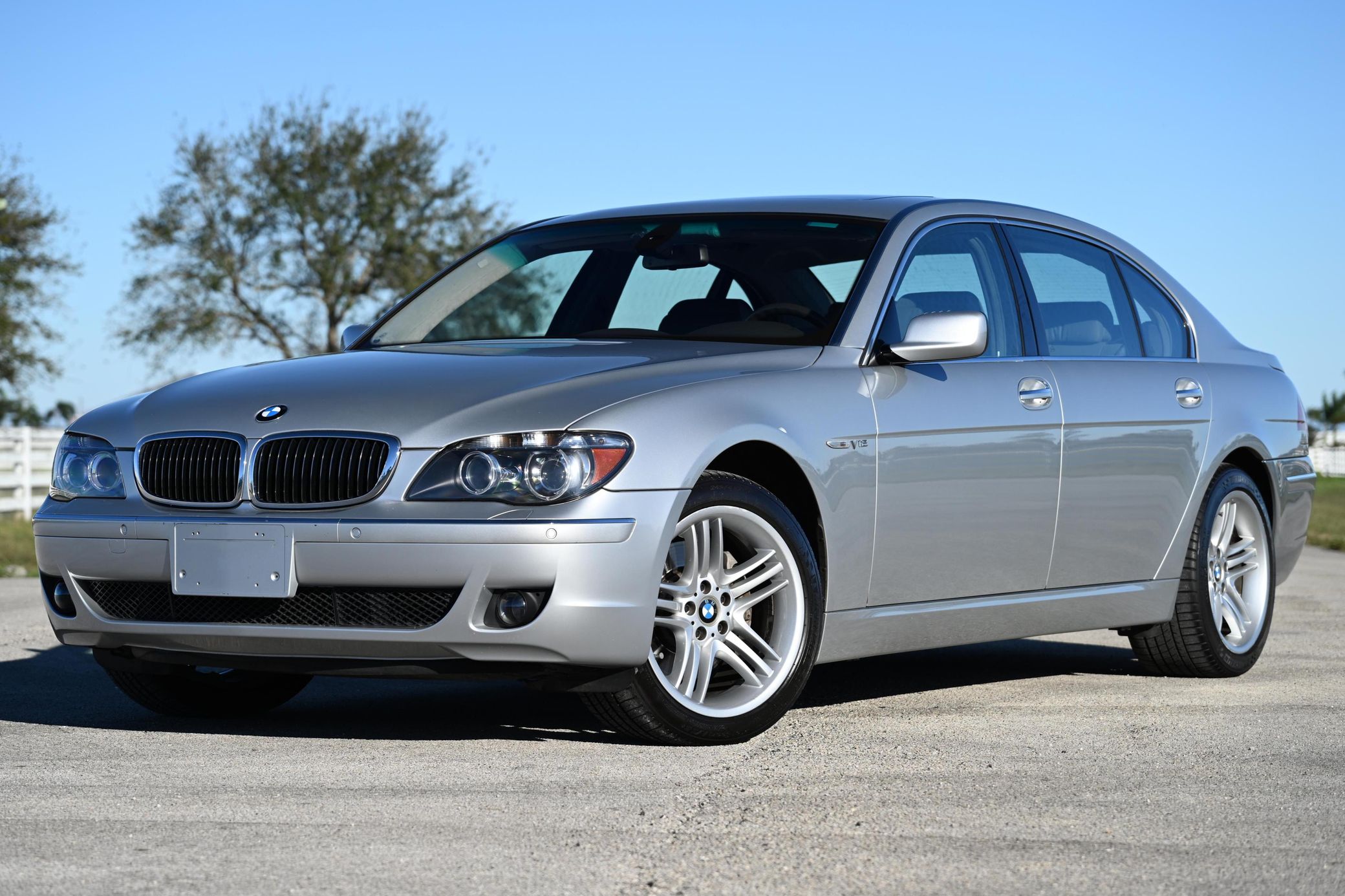
2008 BMW 760Li
Introduced for the 2003 model year, the BMW 760Li was the range-topping variant of the E65 BMW 7 Series, The long-wheelbase E66 was powered by a 6.0-liter N73B60 V12 engine, the first V12 to feature direct injection. Other firsts include a 6-speed automatic gearbox, active anti-roll bars, directional bi-Xenon (HID) headlamps, and an electric parking brake. The 760Li generated 439 horsepower and 443 lb-ft of torque. It also generated a tremendous amount of controversy, most notably for its departure from more traditional BMW styling queues and for its use of advanced (at the time) technology that left luddite journalists dumbfounded. Other automakers, however, seemed impressed as they were quick to copy many of the E65’s elements. Today the design has come into its own without looking as dated as the mimics, while the once baffling iDrive is now almost intuitive. Almost. This is an excellent example of why these cars are finding new appreciation. It was purchased new (for $127,020) at Hendrick BMW in Charleston, South Carolina and has remained in the stewardship its purchaser since, covering a modest 48,795 miles. It’s nicely equipped with 19″ alloy wheels, soft-close doors, and power-adjustable, heated and ventilated seats (both front and back). Options include keyless entry, and an HD/Satellite radio. A well-documented service history includes an April 2023 (at 47,903 miles) oil service. Cabin air filters were changed at the time as well. Earlier (February 2021 at 44,336 miles), the fuel injector pressure sensor and gasket were replaced, the engine oil and filter were changed, the front thrust arms were replaced, and a 4-wheel alignment was performed. The front bumper was replaced in April 2020, perhaps related to an accident reported in 2019. Records/receipts, along with two keys, books, and original window sticker accompany the sale. Find it on Cars & Bids through a dealer in Vero Beach, Florida.
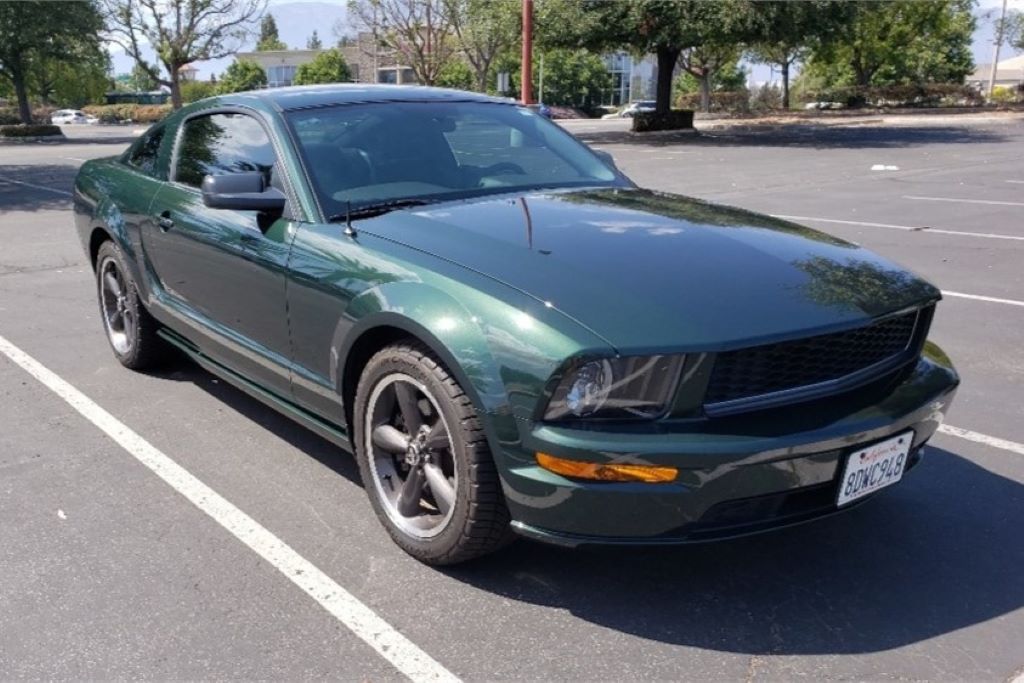
2009 Ford Mustang GT Bullitt Edition
With the sheet metal of the new S-197 platform so closely mirroring the classic 1968 Mustang shape, it’s no wonder that so many people were excited when Ford unveiled the Bullitt edition Mustang GT for 2008, a tribute to the 1968 film. Demand was so extreme that Ford added another year of production for 2009. Essentially a carry-over from the previous year, the 2009 model did have a few unique bits including standard interior ambient lighting and satellite radio. Dark Highland Green remained an exclusive color option. The Bullitt Edition features a 24-valve 4.6-liter V-8 with the Ford Racing Power Upgrade Package and a cold-air induction system putting out 315 hp, as well as a reverse-L independent MacPherson-strut front suspension with a stabilizer bar and Ford Racing strut tower brace, 3-link solid axle rear suspension with coil springs, panard rod, and stabilizer bar, vented disc brakes with four-wheel ABS, and unique 18″ cast aluminum “Euroflange” wheels, finished in Argent Grey dressed in 235/50ZR-18 high-performance rubber. Ford engineers continually referenced Bullitt, the movie, while tuning the Bullitt’s exhaust system, making sure that all the aural magic of the original was present in the modern version. A revised intake, 3:73 gears, unique interior trim, and upgraded brake pads rounded out the 2009 Bullitt package. This 2009 Ford Mustang GT Premium Bullitt is one of 816 produced. It has been California-owned its entire life and driven sparingly to cover 23,625 miles. It comes equipped with a stainless steel exhaust system and newer BFGoodrich tires. The interior is appointed with Dark Charcoal leather and features a satin aluminum shift knob, aluminum door sills, tinted power windows, power door locks, power steering, cruise control, a leather-wrapped tilt steering wheel, a six-way power driver seat, and a Shaker 500 audio system with an in-dash six-disc CD changer. A new factory radio is said to have been installed in 2021. This 2009 Ford Mustang GT Bullitt Edition is now offered for sale here on AutoHunter out of Rancho Cucamonga, California with three days left to bid.
Other finds
- 11,600-mile 2005 Ferrari 612 Scaglietti Blu Mirabeau – $89,500
- One-owner 1997 Porsche Boxster 9,774 miles – $24,500
- Highly original 1991 Nissan Figaro 75,142 km – $23,000
- Family heirloom 1979 Dodge Omni 55,363 miles – $3,500
- Two-owner 1982 Jaguar XJS 35,488 miles – $9,500
- 22,746-mile 1998 Jeep Wrangler Sahara one owner – $22,995
- Two-owner 1965 Volkswagen Beetle 51,000 original miles – $13,000
- 600-mile 2002 Chevrolet Monte Carlo SS Dale Earnhardt Edition – $29,995
- № 1473/3700 2004 Dodge Ram 1500 Rumble Bee 35,173 miles – $17,500
- № 62/100 1979 Lotus Esprit JPS 350 SBC swap – $39,999
- One-owner 7,100-mile 1984 Toyota Celica Supra – $32,500
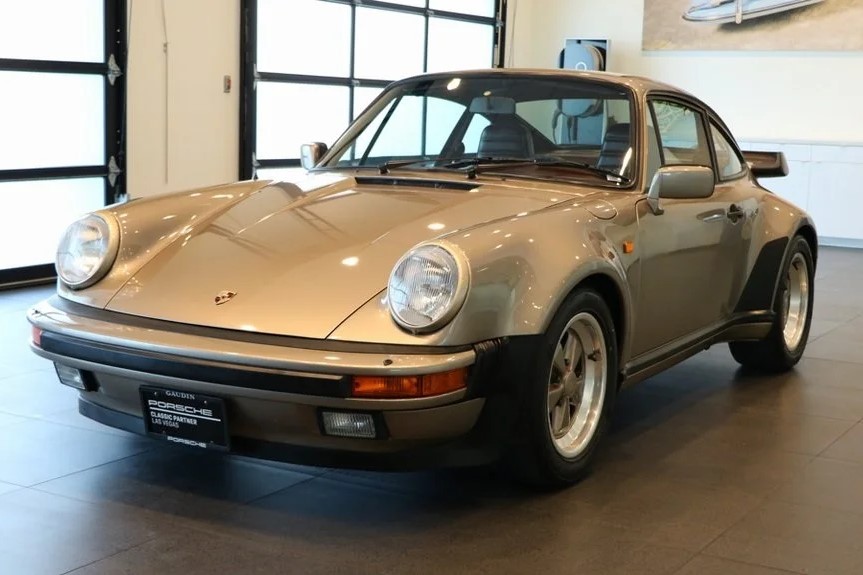
1984 Porsche 911 Turbo
The Porsche 911 Turbo Carrera (or 930 as it’s commonly referred to) was initially supposed to be a homologation special, limited to 400 road cars, but after being well received by enthusiasts, it quickly became the icon it continues to be today. Its path in the US was blocked however, between 1981 and 1986, due to stricter emissions regulations. That did little to stunt the enthusiasm and importers immediately started buying RoW inventory from Germany and shipping them to the US as grey market. The RoW 930s had added benefits over previously produced US models, most notably a 20-horsepower bump. This 1984 Porsche 911 Turbo was initially delivered to a dealer in West Germany and imported to the US shortly after. It is presented in a classic but still striking [L655] Platinum Metallic over [YY] Burgundy Partial Leather. It was ordered with quintessential ’80s options like color-matched Fuchs wheels, a Blaupunkt cassette-radio, factory alarm, climate control, and sun/moonroof. It appears to have been exceptionally well kept and driven sparingly, showing less than 18,000 miles. The condition reflects that and aside from some light wear on the leather and some typical but minor age-related dash warpage, it looks showroom fresh. Appreciation for the 3.3-liter 930 continues to grow, both for its purely analog, unbridled air-cooled driving experience and for its resale value (an average close to 10% year-to-year). This low-mile 1984 Porsche 930 has just been added to the inventory at Gaudin Porsche of Las Vegas. Asking $175,000, there’s likely plenty of room to grow.
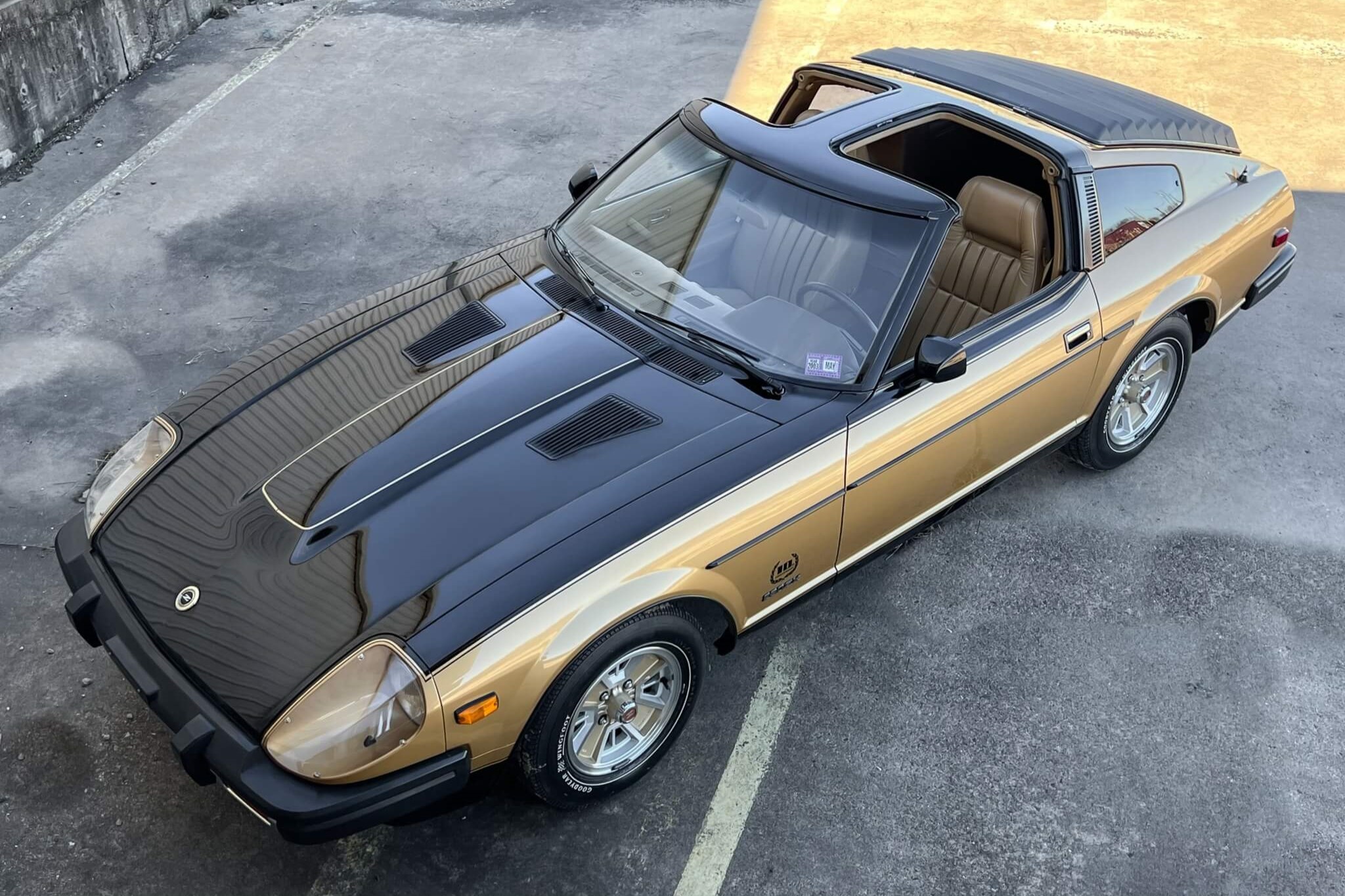
1980 Datsun 280ZX 10th Anniversary
To commemorate the 10th anniversary of the 240Z in the US, Datsun (Nissan) built 3,000 limited edition copies of the 280ZX. Each of the 1,250 US dealers in received two (the top 500 in gross sales received an additional one, painted red and black, now selling for decent Ferrari money). These 2,500 10th Anniversary models are distinguished by a special black and gold paint scheme, commemorative decals, 14″ alloy wheels with gold accents, and a numbered interior plaque, along with a T-top roof, dual power mirrors, a retractable antenna, chrome body moldings, rear window louvers, and leather seats. This Datsun 280 ZX 10th Anniversary (№ 2212/3000) was one of the two allotted to Crown Datsun of St. Petersburg, Florida. From there it accompanied its original owner to Oregon and then later to Connecticut where it remained until 2016. Its cross-country journeys must account for most of the mere 12,340 miles. It was next owned by prominent Z-Car collector Larry Stepp and was featured in the recent book Nissan “50 Years of Exhilarating Performance” as part of his collection. This Datsun later changed hands with another Z-Car collector who displays it in the climate-controlled showroom of the selling dealer. It retains its original Goodyear Wingfoot tires (the only time American tires were standard on a Z car) along with its original factory assembly line red, blue, and yellow inspection markings, and working AC system that is untouched and still running its factory R12 Freon. The car has spent its life in climate-controlled storage and its remarkable condition reflects that. To further preserve the finish, a layer of ceramic coating was applied in recent years. The sale includes the original owner’s manuals, toolkit, and spare tire. It’s a new listing on PCARMARKET out of Madill, Oklahoma.
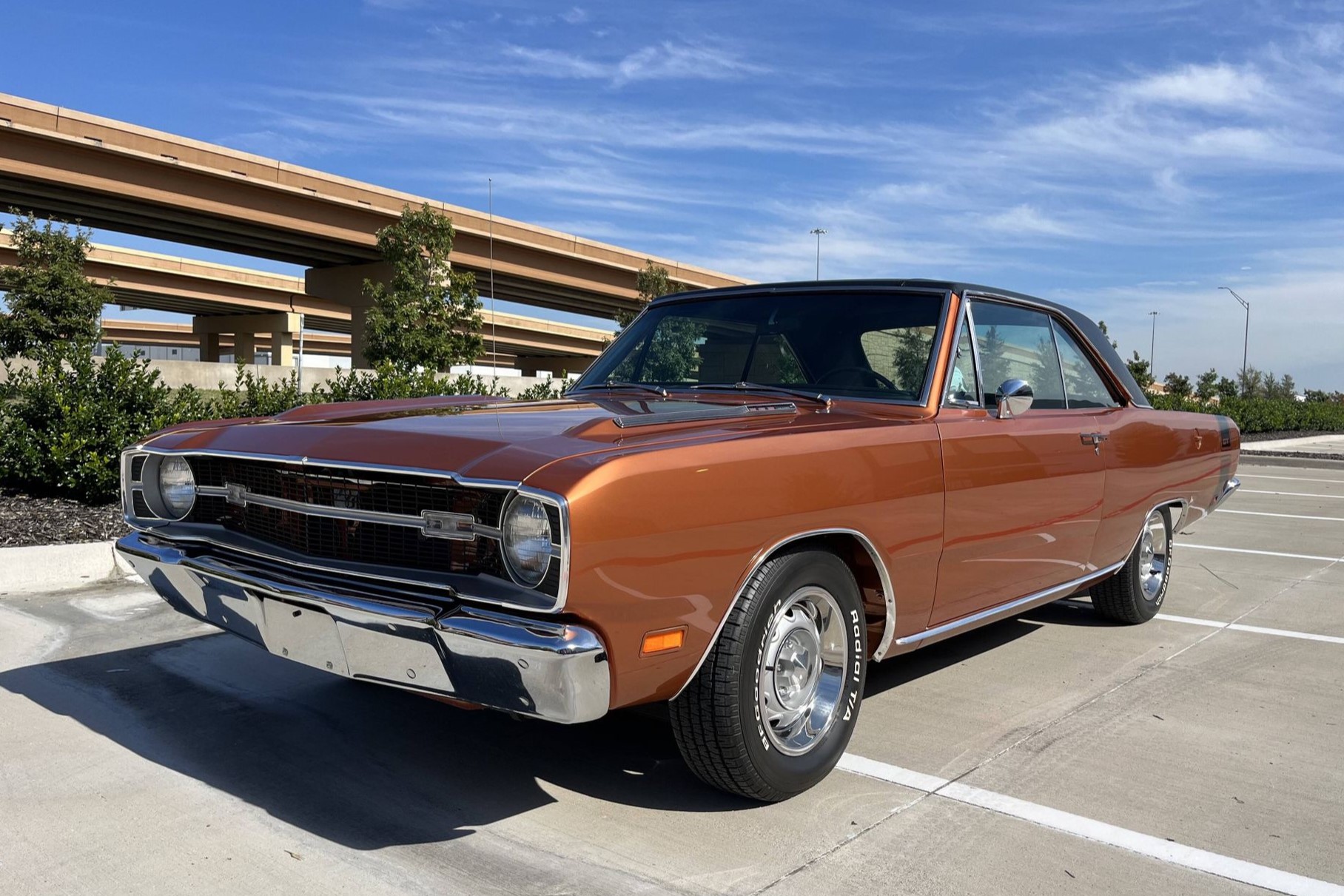
1969 Dodge Dart GTS
Entering its fourth generation in 1967, the Dodge Dart got a significant redesign, and with its new bodylines, Dodge also added the GTS option, though built in limited quantities that year. 1968, however saw the introduction of the 330-hp 383-c.i HiPo four-barrel V-8, making it more competitive with the likes of the Chevrolet Nova. This example, from 1969, retains its original and relatively rare H-code 383, rebuilt with 400 miles clocked since. It underwent a thorough, four-year rotisserie-type restoration, refinished in its original T5 Copper Metallic while incorporating many OEM components and replicating factory production methods, including specific drip lines in certain areas. The interior too has been completely restored to factory spec (save for a modern Pioneer head unit) and is reflective of the mileage since, essentially from the wrapper. Long considered a sleeper, the Dodge Dart GTS has quietly been gaining in appreciation. This one is ready to preserve or enjoy as like new. Find it on Hemmings Auctions out of Fort Worth, Texas with 11 days left to bid.
Other finds
- 30-years owned 1952 Jaguar XK120 DHC numbers match – $105,000
- One-owner 2004 Volkswagen R32 38,000 miles – $51,500
- Blue-plate 1970 Chevrolet Chevelle SS LS6 numbers match – $93,000
- One-owner 1995 Toyota Supra SE 63,400 miles – $59,000
- 21,625-km 1965 Autobianchi Bianchina 4-speed – $12,400
- Two-owner 1993 Cadillac Allanté 28,600 miles – $15,995
- 24,027-mile 2004 Ford F250 XLT 4×4 18 years owned – $31,500
- One-owner 2001 Nissan Xterra SE 5-speed, 52,303 miles – $13,495
- 25,000-mile 2004 Volkswagen Beetle 1.8T 5-speed – $12,995
- One-owner 1978 Porsche 924 54,637 miles – $15,970
- 15,200-mile 1985 Chevrolet Corvette all original – $16,000
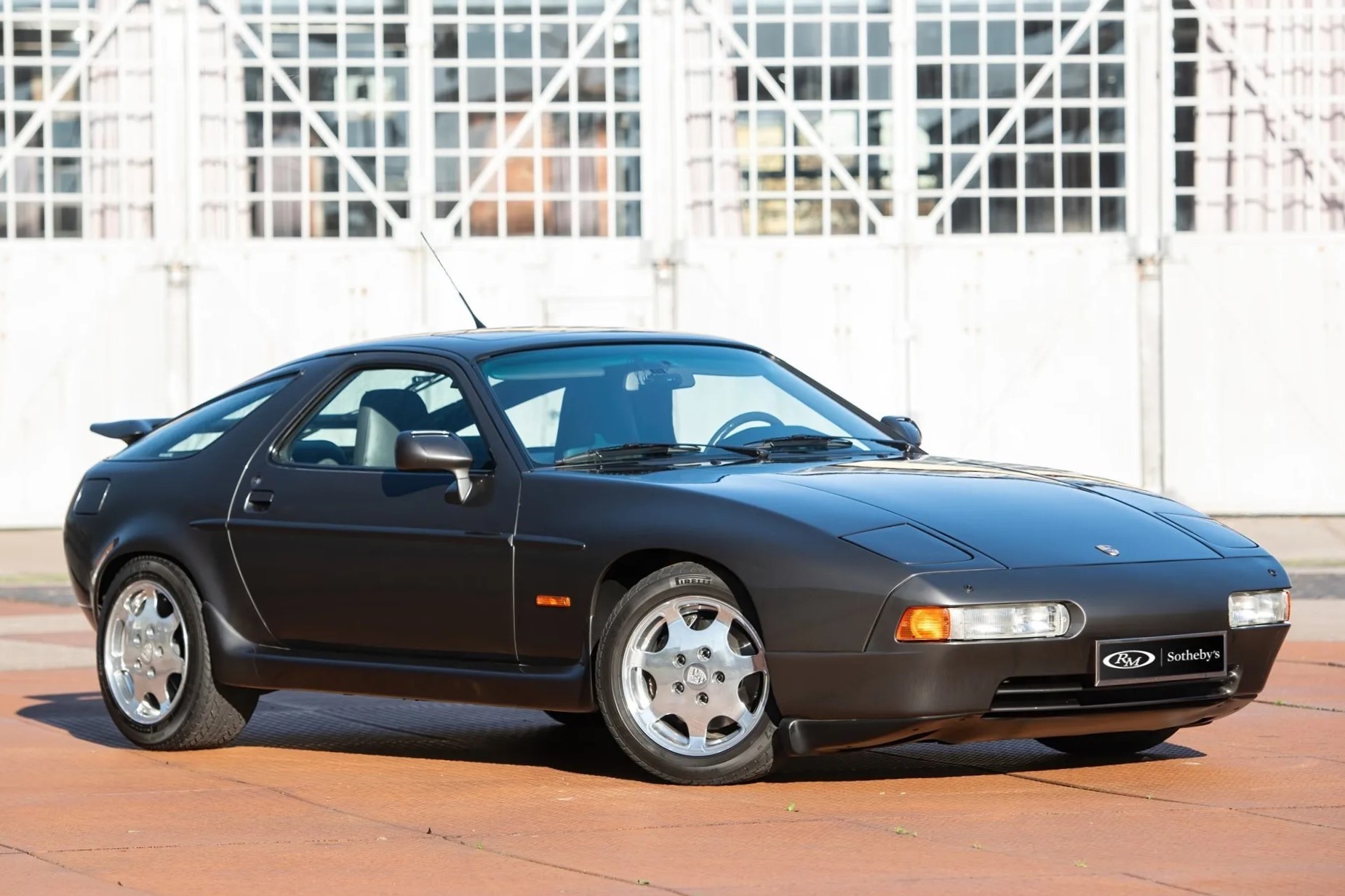
1989 Porsche 928 “Flachbau”
At its introduction at the 1977 Geneva Motor Show, the Porsche 928 captivated onlookers for its space-age design. It continues to do so today and likely will long after future generations will be driving actual spacecraft. Its design evolved with changing aesthetic tastes, but it was always unique. For some however—one in particular—the exposed pop-up headlamps and sleek flanks were not unique enough. Beginning with the new-for-1989 GT, a sportier, more powerful (330 hp) variant of the 928 S4, the vendor then customized the car through the Porsche “Sonderwunsch,” or special wishes team. They did away with those iconic exposed pop-up headlamps in favor of more traditional pop-ups like those found on the 944 (Sonderwunsch option code XA2). Other features include wider body skirts [XB2] and wider rear wheel arches [XC1], along with deep-dish wheel spacers and aerodynamically improved wing mirrors. It was truly made according to special wishes and as such has remained a prized object d’art with in the care of its original owner since new. It has been regularly maintained by Porsche service centers and specialist workshops, as verified by an accompanying service book and other invoices in its impressive history file. At the time of cataloguing the odometer read 56,636 kilometers, though this is believed to be higher than stated due to the replacement of the original odometer unit in 2003, performed by Porsche Center Saarland. Documentation on file verifies that at the time of replacement, the original unit had recorded no more than 11,500 kilometers. After failing to meet its reserve at RM Sotheby’s Paris sale last weekend, it is now offered for immediate sale, asking $200,000.
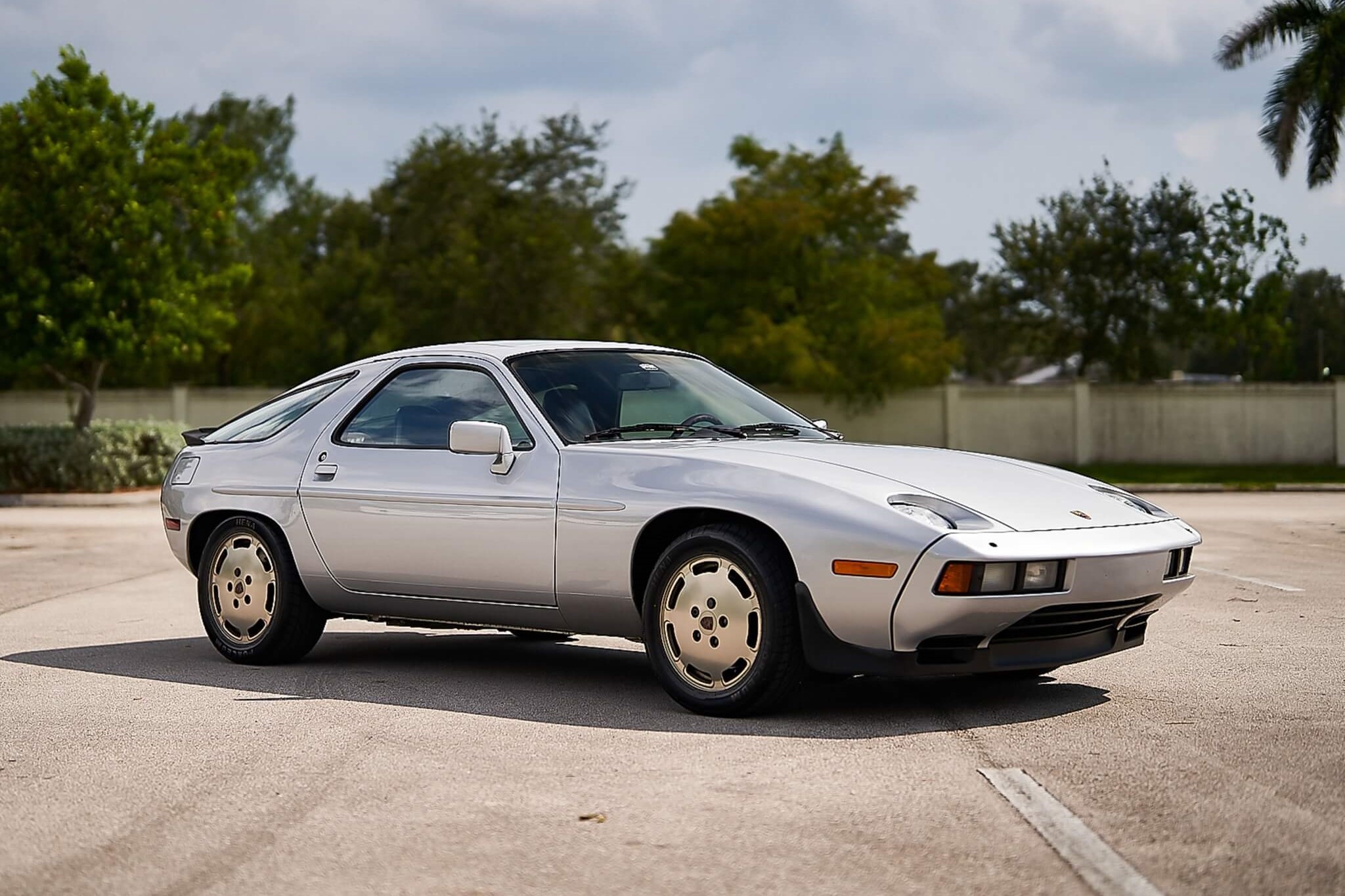
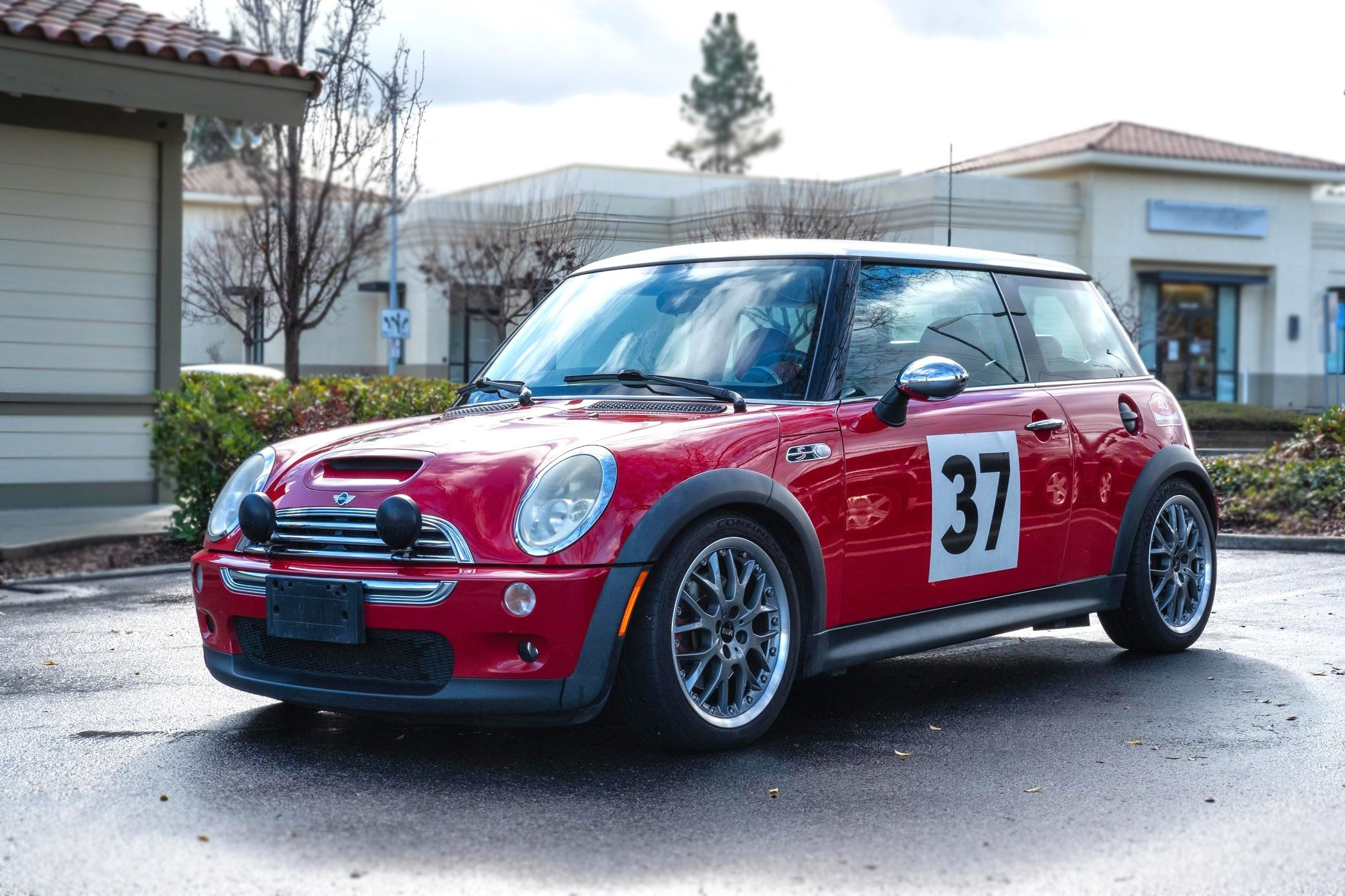
2004 Mini Cooper S MC40
Since its inception in 1911, the Rallye Monte Carlo has tested both drivers and their cars for their focus and endurance, not to mention their ability to stay on the road. Spurred on by some recent victories in day races thanks to the workings of Formula 1 team owner John Cooper, then Mini parent BMC announced it would enter the event with a Works Mini Cooper S in 1964. It was met with skepticism at best and more often taken for a publicity stunt. It was unthinkable that a “cute” city car would cope with the rigors of a long and arduous rally such as Monte Carlo against entrants with three to four times the power. Undeterred, the newly created tartan red Mini Cooper S (assigned № 37 at the hands of Paddy Hopkirk) not only endured, but prevailed. To mark the occasion of that first win (there would be two more, in 1965 and 1967), Mini (now under BMW) built 1,000 special 40th anniversary editions in 2004: the Mini Cooper S MC40. The MC40 is a dressup package (the Cooper S’s already punchy 1.6-liter supercharged inline four and 6-speed gearbox left unmodified) with a Chili Red body topped by a white roof, 17″ inch anthracite cross-spoke wheels, Dynamic Stability Control, front and rear fog lights, xenon headlights with power washers, chrome side mirrors and exterior trim, along with commemorative decals and graphics, magnetic “37” numbering on the doors, vinyl decals on the hood and a (GB) boot badge. The interior features red and black leather rally seats, 3-spoke leather sport steering wheel, aluminum pedals, John Cooper Works (JCW) carbon fiber dash, MC-40 shift knob, auxiliary gauges, on-board computer, and the numbered plaque signed by Paddy Hopkirk (who died in 2022). This example (№ 263/1000) has retained all of its MC40 add-ons (often stripped on these) and has been respectfully modified with a factory JCW intake, an aftermarket cat-back exhaust, H&R springs, and a Hotchkis rear sway bar. It has been routinely maintained including an oil service in April of 2023. Now showing 94,400 miles, it’s a new listing on Cars & Bids out of Campbell, California.
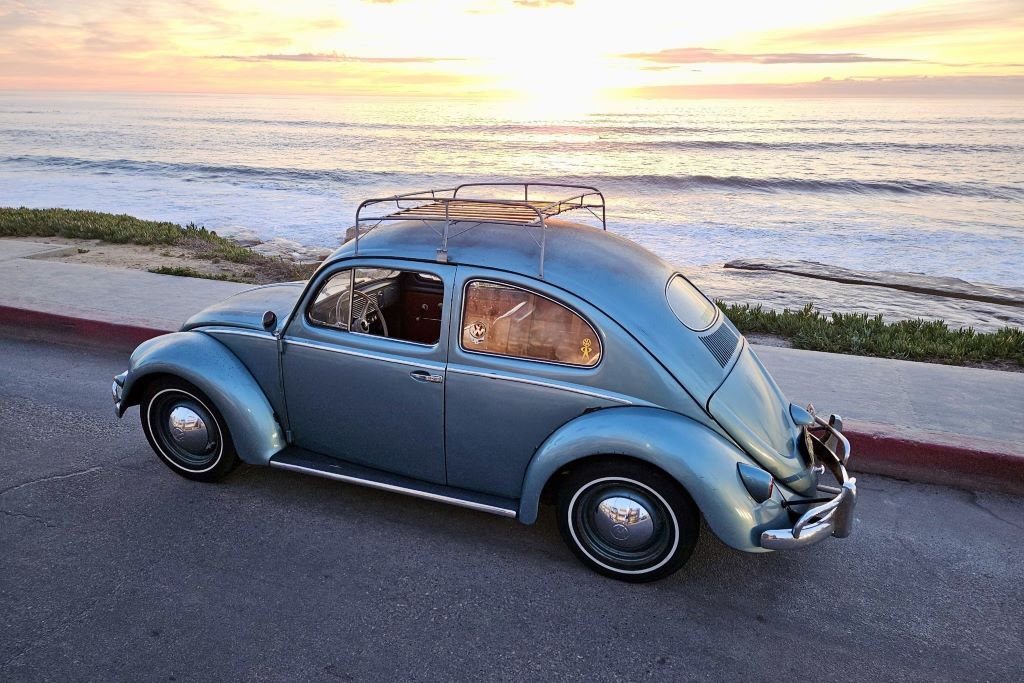
1955 Volkswagen Beetle
While arguably the least suitable for the highways of 2024, the early Volkswagen Beetles tend to get the most attention from collectors, particularly those with the split or oval rear windows. And while values have plunged considerably since their pandemic highs, they still fetch about twice that of a later and far more civilized Super Beetle. 1955 saw a number of changes and while still propelled by the 36-hp 1200, a few ergonomic adjustments were made to give volks more of what they vanted in their wagen. Perhaps the biggest change was the use of blinkers accessed by a stalk on the steering column. While that seems like ubiquity today, it was no doubt welcomed by those having to signal their turns by use of semaphores mounted behind the door frame. Of course, the semaphore models are highly coveted now, but in 1955 they were totes oldskool. That said, this 1955 Beetle is covetable for other reasons. Mainly for its originality. Its engine may be wimpy but its the one it came with. So too is the interior, which remains in surprisingly good condition. The carpets and headliner are threadbare and torn in spots, the glovebox looks to have been replaced but it is otherwise as it left the factory, down to the original Blaupunkt radio. While nothing is said about the originality of the exterior paint, the car wears its patina proudly enough where it might be. It too is far from perfect, with dings and some rust accumulated over its nearly 70 years, but that too just adds to its honesty. Showing around 57,000 miles, (undocumented and who cares), it is said to run well and all lights, controls and instruments appear to be functional. There is plenty to be taken with on this one. It’s now live on Barn Finds Auctions where bidding closes in just under five days.
Other finds
- 50-year family owned 1966 Jaguar XKE 4.2 Coupé 61,812 miles – $81,000
- 43,353-mile 1991 Nissan 300ZX Turbo fresh service – $49,995
- CPO 2003 Honda S2000 21,060 miles – $34,995
- 1,897-mile 2002 Chevrolet Camaro Z28 35th Anniversary – $39,995
- 77,000-mile 1991 BMW 318i 5-speed – $17,888
- One of 100 2004 Jaguar XKR Portfolio 58,900 miles – $16,250
- One-family 1984 Ford Mustang G.T. 350 Convertible 44,888 miles– $18,995
- 28,470-mile 1993 Chevrolet Corvette ZR-1 40th Anniversary – $35,000
- All original 1993 Mitsubishi 3000GT VR-4 48,360 miles – $33,000
- 8,802-mile 2010 Subaru Impreza WRX STI Special Edition 1/500 – $38,700
- Numbers-match Cottonwood Green 1971 Chevrolet Camaro Z28 – $42,900
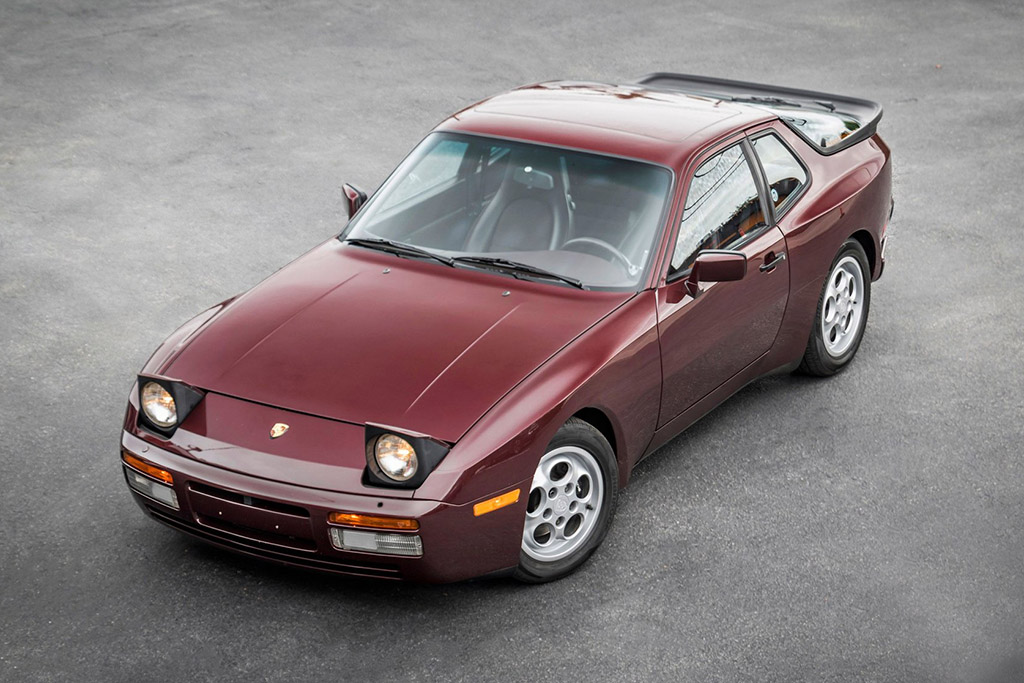
1987 Porsche 944 Turbo
Having lurked in the shadow of 911s and 928s of the era for decades, the Porsche 944 has started to come into the light, led by the 944 Turbo (951), introduced in 1985 for the 1986 model year. While the 944 had always been lauded for its balanced and precise handling, its straightline performance was … meh. The 951 was a big step in legitimizing the “transaxles” as true Porsches. Producing up to 220 horsepower from its turbocharged and intercooled 2.5-liter inline four, it now topped its 911 Carrera sibling’s performance (slightly more horsepower and 50 more lb-ft of torque). Yet not that long ago, an excellent (№ 3+) 944 Turbo could be acquired for under $10,000. And while that number has tripled (or more), it’s still well less than half a like-condition 911. This 1987 Porsche 944 Turbo is said to be a highly original car. Having been garage kept, its condition appears to be in better than expected condition for a 57,769-mile (at the time of listing) example. Its very rare and alluring Maraschino Red Metallic [LY3V] finish appears to have only the slightest chips and scuffs from use, while the interior (Burgundy sport cloth/leather) remains remarkably fresh. Coming from a private collection, it is now being offered here at The Barn in Miami for $49,900.
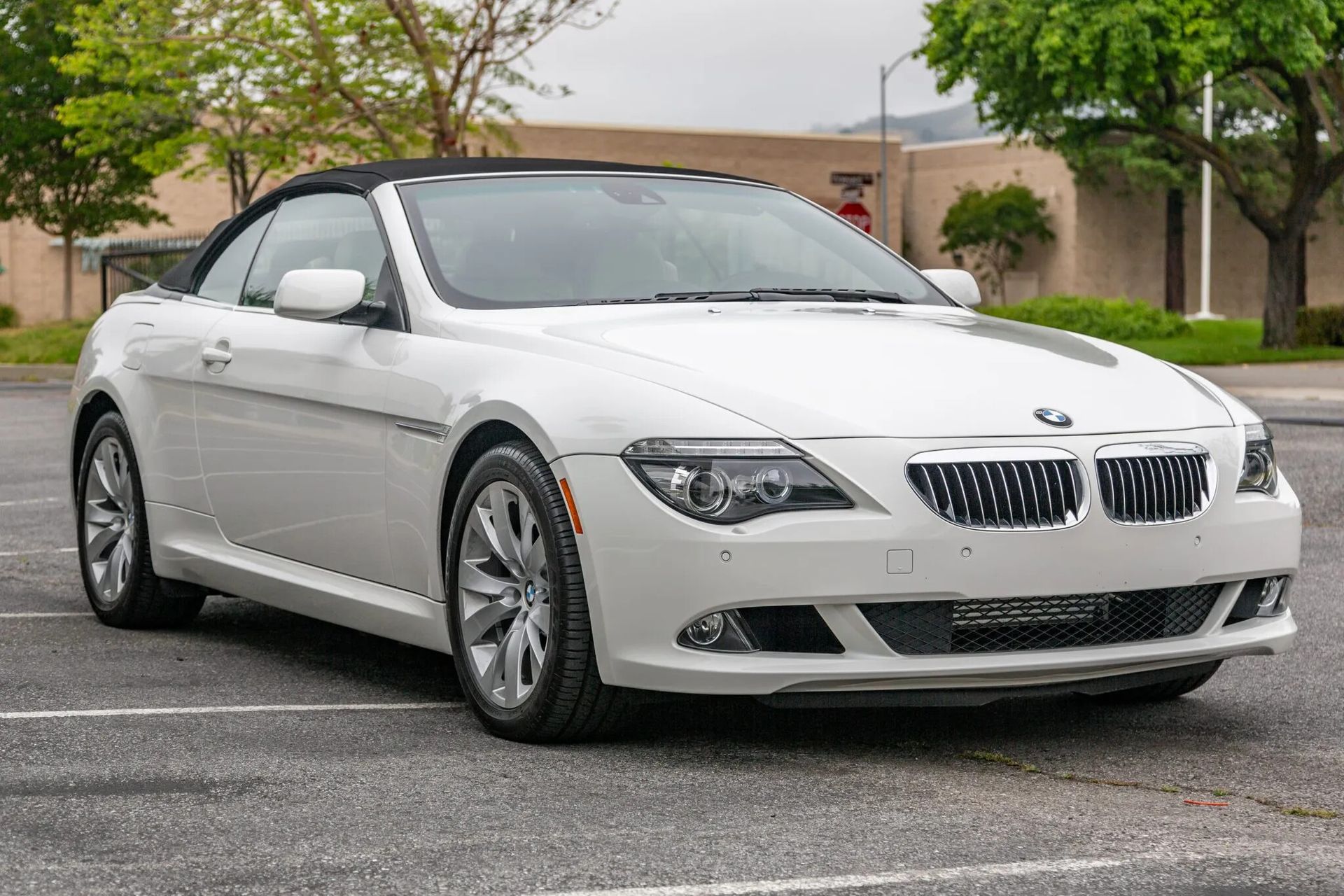
2008 BMW 650i Convertible
At its introduction, the automotive press was not kind to the return of the BMW 6-Series after a 14-year absence. Chief complaints surrounded the design language first employed on the E66 7-Series. An update in 2008 brought a considerably less offensive aesthetic with a more brand faithful return to understated elegance. The front end received a subtle tweak to the bumper while the air intake is significantly wider than before, emphasizing the car’s extra wide stance. The much-ridiculed Dame Edna headlamps gave way to a more austere look. Equally—if not more so—ridiculed was the “Bangle butt” rear end treatment. It too had been slightly sculpted to bring an element of shape and style to what was once a blunt and hideous tail. As a result, the entire car gains coherence and loses affectation which holds up16 years on. And while they may have lost much of the purity of earlier BMWs in favor of technological advancements, the 650i still does the Ultimate Driving Machine Justice, with a 362-hp 4.8-liter V8 (N62B48) capable of hurling the 3,800 pound two-door from rest to 60 mph in 5.4 seconds. It remains a thoroughly modern GT, albeit one that’s been relegated to the “good used car” column, having fallen from its $92,000 cost before options when new (~$130,000 today) to an average just under $20,000 for the more desirable convertibles. But with the Ur-6 (E24) having doubled in value over the last five years, and its successor, the E31 8-Series (itself no stranger to complaints) not far behind, it isn’t illogical to think the E63 (coupé) and E64 (convertible) 6-Series will follow suit … someday. There may be no better candidate than this 2008 BMW 650i Convertible. Said to be in like-new condition, there’s little to doubt that as it has barely emerged from break-in mileage with 7,085 miles at the time of listing. The Alpine White exterior shows only the slightest of flaws (a chip under the nose Roundel and surface rust on the keyhole) while the Cream Beige Dakota leather interior shows only a few wrinkles on the driver’s seat. It still wears its original Goodyear Eagle RS-A tires (recommended to preserve but not for driving). This 650i offers it next owner the choice: continue to preserve as a future collectible or drive as a like new $100,000 GT at a good used car price. That dilemma can be answered at Hemmings Auctions, where bidding closes in 14 days.
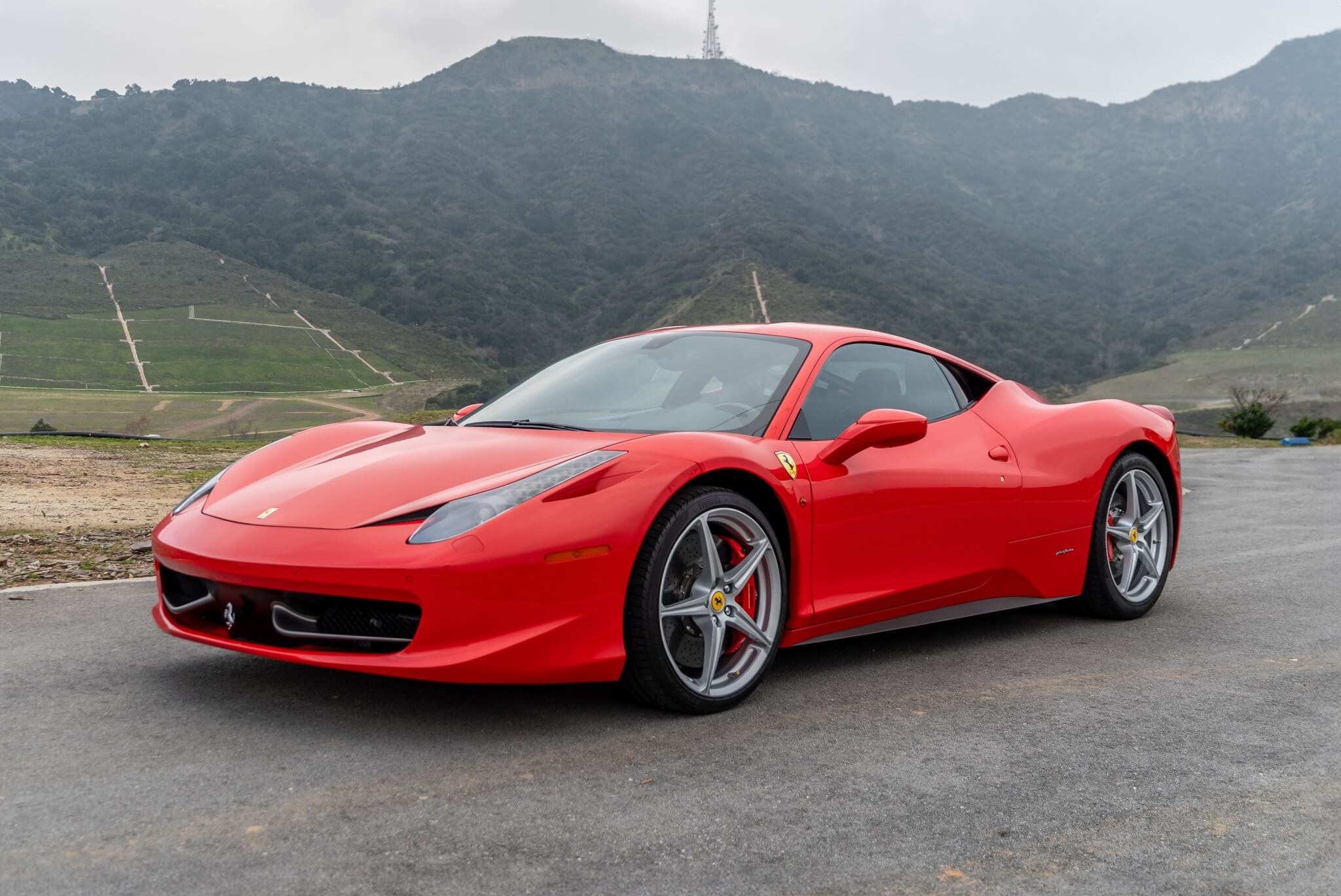
2011 Ferrari 458 Italia
Ask a dozen automotive journalists which modern (post Enzo-era) Ferrari they would keep in the garage and 10 of them would likely answer this: the 458 Italia. It’s been widely praised and recognized with over 30 international awards including International Engine of the Year Awards when its V8 was voted “Best Performance Engine” and “Best Engine Above 4 Liters”. Designed by Pininfarina, the 458 Italia represented a major leap from its predecessor, the F430, featuring carefully engineered air intakes, deformable winglets on the front grille, prominent side skirts, and a large F1-inspired rear diffuser. It is powered by a naturally aspirated 4.5-liter V8 engine featuring a flat-plane crankshaft, variable intake timing, and direct fuel injection. Up to 562 horsepower and 398 lb.-ft of torque is sent to the rear wheels through a Getrag 7-speed dual-clutch transmission and E-Diff electronic limited-slip differential. Other details include a transparent engine cover, LED taillights and daytime running lights, automatic HID headlamps, and triple center-mounted tailpipes. This 2011 example is finished in the traditional Ferrari color of Rosso Corsa and includes optional red brake calipers, Scuderia fender shields, and 20” forged 5-spoke wheels. It was involved in a collision to the direct center of the front end. The damage stopped at the front rebar and as a result the front bumper, hood, front rebar, radiator trellises, radiators, and tub were replaced along a few minor brackets and pieces. The front bumper, hood, and fender were refinished using genuine PPG paint. As a result, this 458 is being sold on a salvage title (surprisingly common with Ferraris), but that also presents an opportunity to acquire a daily-driver Ferrari at $50,000 or more below average. Inspect it closely, check the restrictions in your state and find it in the PCARMARKET Deal Tank, with a buy-now price of $139,000.
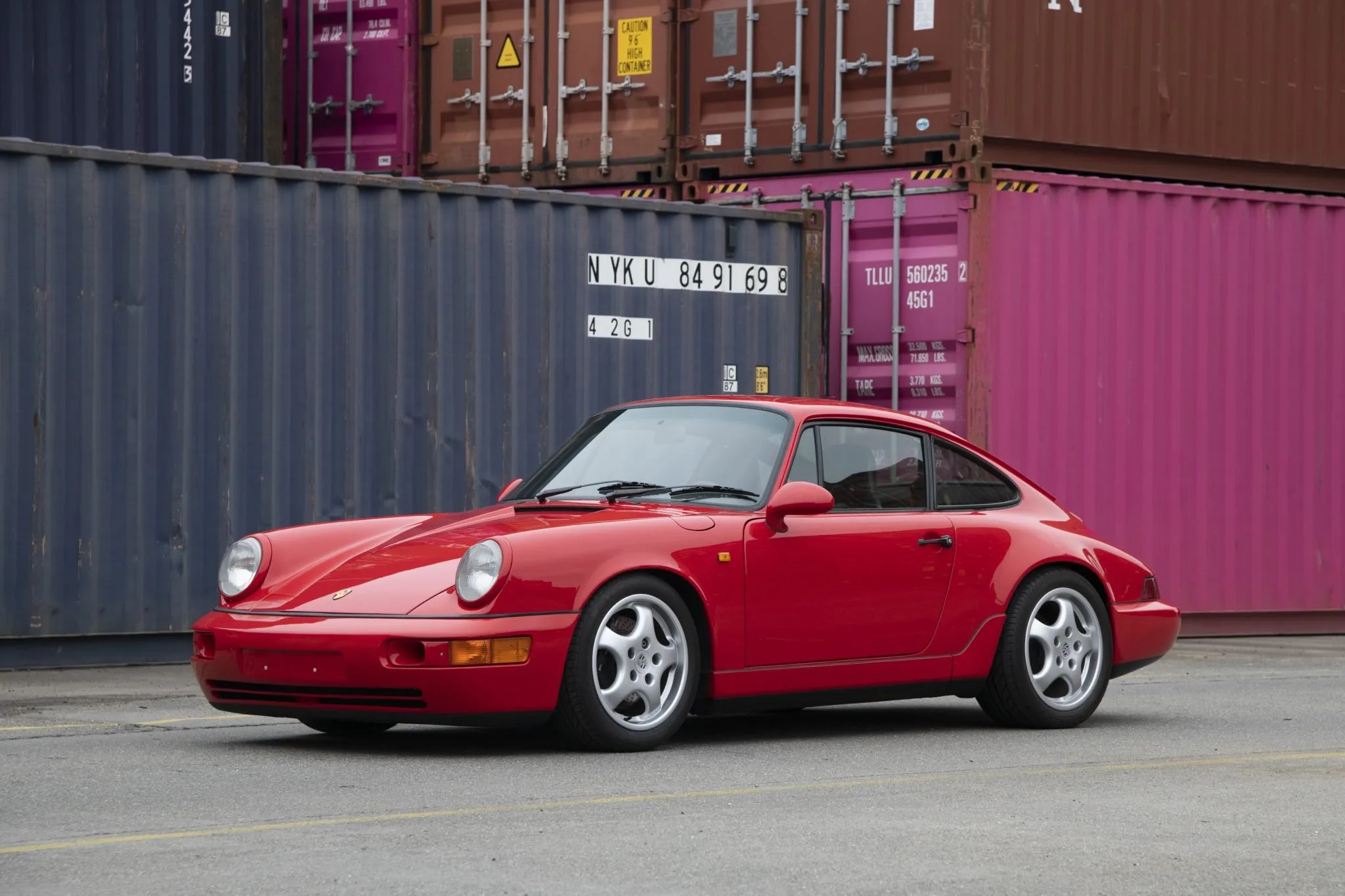
1992 Porsche 911 Carrera RS
A spiritual successor to the original 1973 Porsche 911 Carrera RS 2.7, the Carrera RS was reintroduced with the 964 chassis and featured a stiffened chassis, a seam-welded bodyshell, an aluminum hood, rolled fenders, shortened gear ratios, unassisted steering, magnesium wheels, and thinner side and rear windows than those used on the standard Carrera. The interior was more spartan with a pair of Recaro bucket seats. Perhaps its greatest asset, however, was a hand-built M64/03 flat-six engine producing up to 260 HP. Features include brake cooling ducts in place of the front fog light blanks as well as amber side marker lamps, dual manually adjustable side mirrors, and a speed-activated rear wing. This 1992 Porsche 911 Carrera RS was sold new in Germany and was reportedly modified to displace 3.8 liters under previous ownership. The car has been repainted in its original in Guards Red (80K) over black leather upholstery. It’s equipped with a G50 five-speed manual transaxle, a limited-slip differential, and aftermarket Bilstein coilovers. A major engine-out service was completed in 2023 including new bearings, piston rings, timing chains, seals, spark plugs, filters, a new battery, DME relay, flywheel, clutch fork, and re-grinding the crankshaft. Additional maintenance records dating back to 2004, along with manufacturer’s literature is included in the sale. It’s a fresh listing on PCARMARKET out of Poperinge, Belgium.
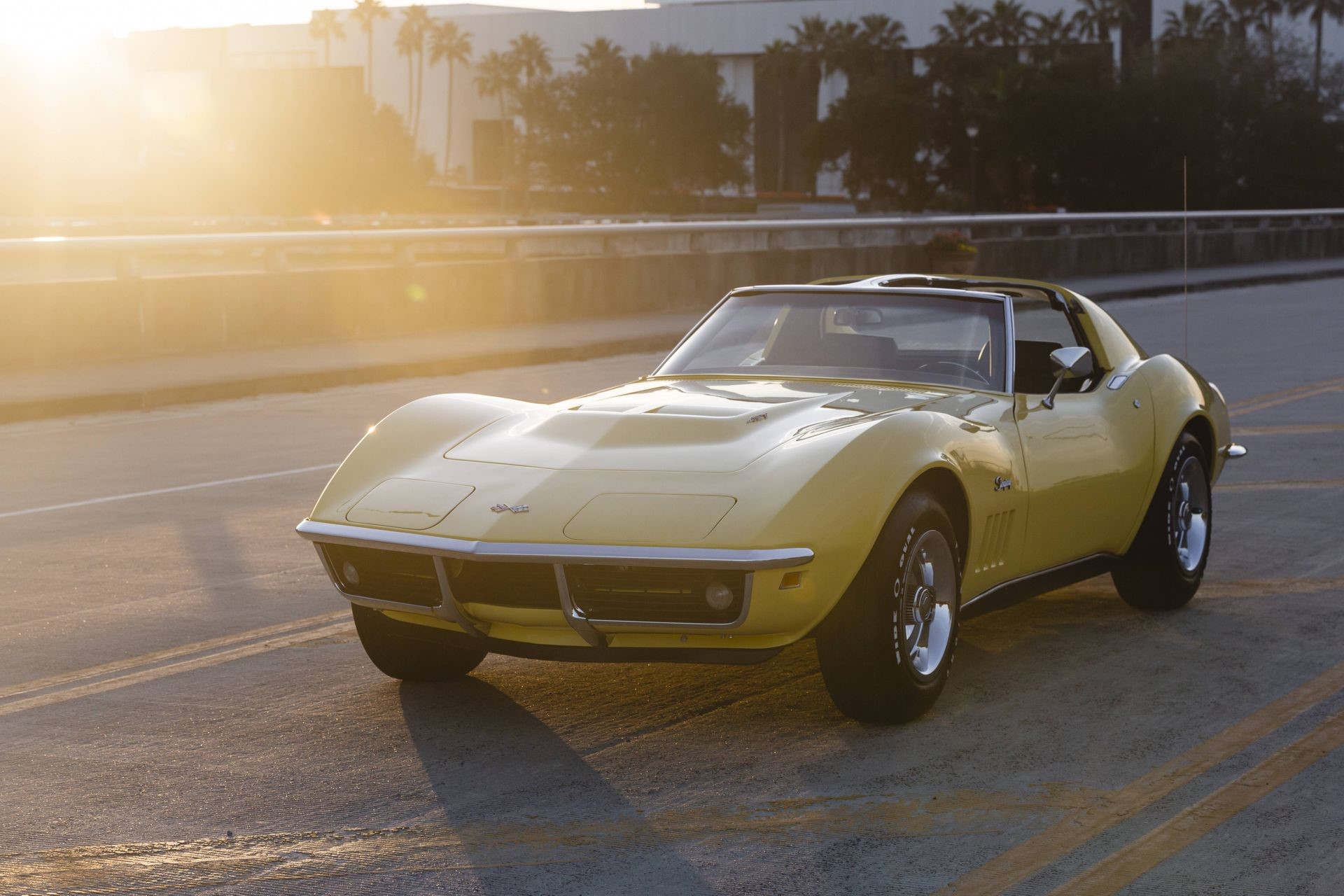 1969 Chevrolet Corvette L-71
If you ask a Corvette enthusiast what “peak ‘Vette” was, you’ll get as many responses as there were generations, often broken down to spec. Overlooked for years as the disco-era Corvette, the C3, like disco, has come into its own in the last decade or so and a case can certainly be made. The early C3s, 1968 – 1972 in particular, with their chrome bumpers and kamm tail, have given the mid-years a run for their money of late. Drilling down further, the 1969 Stingray (now one word after a one-year absence) is to many “peak C3,” having sorted out a number (more than 200) of the body and fitment problems plaguing the 1968s on an all-new stiffer chassis (’68s carried over from 1967), while retaining a more pure sharklike appearance with simple horizontal blade grille inserts and unadorned gills. With 38,762 built that year, it’s not all that hard to find a decent one, but then there are those that are outstanding. This 1969 Corvette is one such. It was purchased new by NHRA drag racing champion Dale Funk on March 31, 1969 at Mt. Washington Motor Co. in Kentucky. Àpropos for a champion drag racer, the car was outfitted with the 427 c.i. L-71 engine putting out 435 bhp by way of a triple-2-bbl intake setup. It’s one of 102 produced with MA6 Heavy Duty clutch. Other specs include a K66 full-transistor ignition system, M21 four speed close ratio transmission, G81 posi-traction axle with 336 ratio, and F41 special purpose front and rear suspension. The car received a frame-off rotisserie restoration that was completed in 2017. A full pictorial binder of complete step-by-step progress comes with the car documenting all numbers matching parts. Since 2022, it has received new brake calipers (correct Delco casting with upgraded o-ring seals) and stainless brake lines, a new correct fuel pump, new tires, and a new “factory look” radio featuring built-in Bluetooth microphone. It is finished in correct [984] Daytona Yellow and all correct numbers matching parts with rally wheels. The car retains its original Protect-O-plate, window sticker, tank sticker and factory literature. Now with 63,063 original miles, it’s for sale on Hemmings Make Offer with a buy-now price of $125,000.
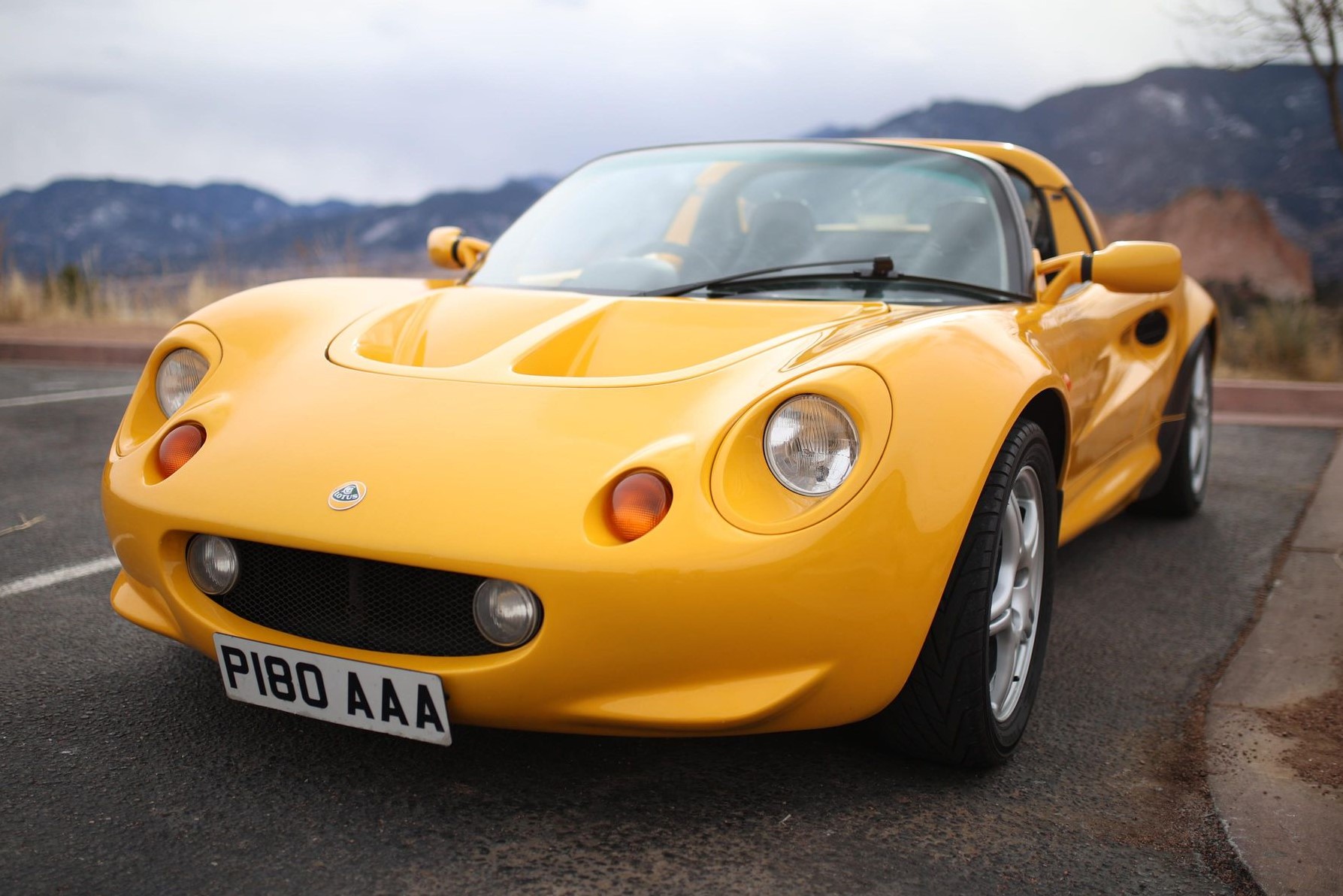 1996 Lotus Elise S1
Following Lotus founder Colin Chapman’s mantra of “simply, then add lightness,” the Elise S1 proved that one of the world’s greatest driving experiences could be achieved with a light-but-stiff aluminum chassis and just 118 horsepower from a Rover-sourced 1.8-liter engine. Remarkable in the corners, a spirited motor and a relatively affordable price cemented it as a legend among enthusiasts. Naturally, we in the Sates would have to wait until the still-fun-but-not-as-pure Series 2 “Federal Elise” in 2005. But with the 25-year rule, the S1 (introduced in 1995 as a 1996 model) now turns up for sale here on rare occasions. This particular Elise S1 is a European-spec, right-hand drive roadster finished in a hard-to-miss Norfolk Mustard with a black soft top and a Charcoal interior. The Elise S1 is factory equipped with 15″ front and 16″ rear wheels, fog lights, leather upholstery on fixed-back racing-style seats, carbon-fiber interior trim. Windows, however are roll your own. Minor flaws, in line with a 61,550-mile sports car, are reported. Modifications include an SFS Performance air intake system, carbon fiber door panels, a Sparco steering wheel, a Sony head unit, and a trunk-mounted fire extinguisher. Recent service includes clutch and brake work as well as a major service included replacement of rear shocks, rear outer and inner ball joints, drive belts, and throttle cable. Service records are included in the sale, along with the original owner’s manual, one key, and a Certificate of Provenance. It is now offered on Cars & Bids with a clear Tennessee title.
Other finds
- One-owner 1980 Porsche 928 34,777 miles – $20,000
- 5,900-mile 1993 Ford Mustang GT all original – $39,000
- All-original 1947 Lincoln Zephyr Coupe 35,690 miles – $22,500
- 48,000-mile 1992 Chevrolet Corvette LT-1 6-speed – $13,900
- One-owner 1999 Chevrolet Suburban LT 55,397 miles – $17,999
- 62,359-mile 1990 Volkswagen Vanagon Westfalia original paint – $35,000
- One-owner 1972 Volkswagen Karman Ghia Convertible – $21,500
- 48,800-km 1971 Alfa Romeo GT 1300 Junior Florida title – $51,000
- One -owner 1977 Oldsmobile Cutlass Supreme 22,759 miles – $22,000
- 21,468-mile 1990 Mazda MX-5 Miata unmolested – $15,000
- 71,071-mile 1971 Fiat 124 BC Sport Coupé Euro-spec 5-speed – $28,500
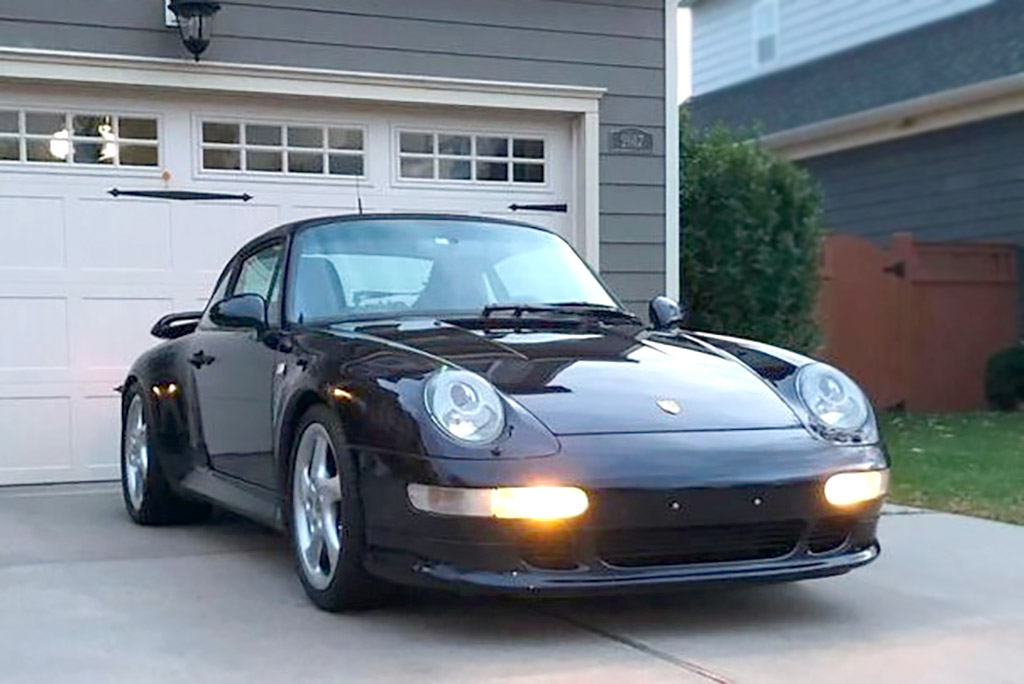
1996 Porsche 911 Turbo
In many ways, it’s a shame that the 993-generation Porsche 911 Turbo has become such a valued collectible. It’s a safe bet that the engineers in Zuffenhausen didn’t have a 250% appreciation over MSRP in mind. While that is great news for those who bought—and continue to buy—them, it may instill a pause as to whether it’s worth taking out for a drive, clocking more miles on their investment. But few cars have ever had driving in mind more than a 993 Turbo. So it’s nice to see one that wasn’t spared the thrill of taking one out on the Autobahn or a twisty Alpine road. Having logged around 67,000 miles, mostly around Europe and mostly by its previous owner for 23 years, this has undoubtedly provided a lot of grins. All the more so for having come equipped from the factory with the rare X50 Power Kit (WLS 1), along with Dark Rootwood interior trim with supple leather appointments, heated seats, and aero front and rear spoilers, among a host of other Porsche Exclusive Manufaktur options. What makes this one truly unique is that in 2000, this 993 Turbo was sent to RUF Automobile GmbH,. There it was fitted with the RUF Turbo R engine modification (RUF turbochargers, RUF exhaust system, RUF optimized ECU, and RUF camshafts). Later, in 2020, the engine was overhauled by former RUF engine builder Ali Acarsoy. Only about 300 miles have been added since. A full history and complete service records accompany the sale. It is beautifully presented in Midnight Blue Pearl Effect with refreshed Turbo Twist wheels and is now ready for its next driver. Find it here on The Mart (Porsche Club of America Classifieds), asking $265,000
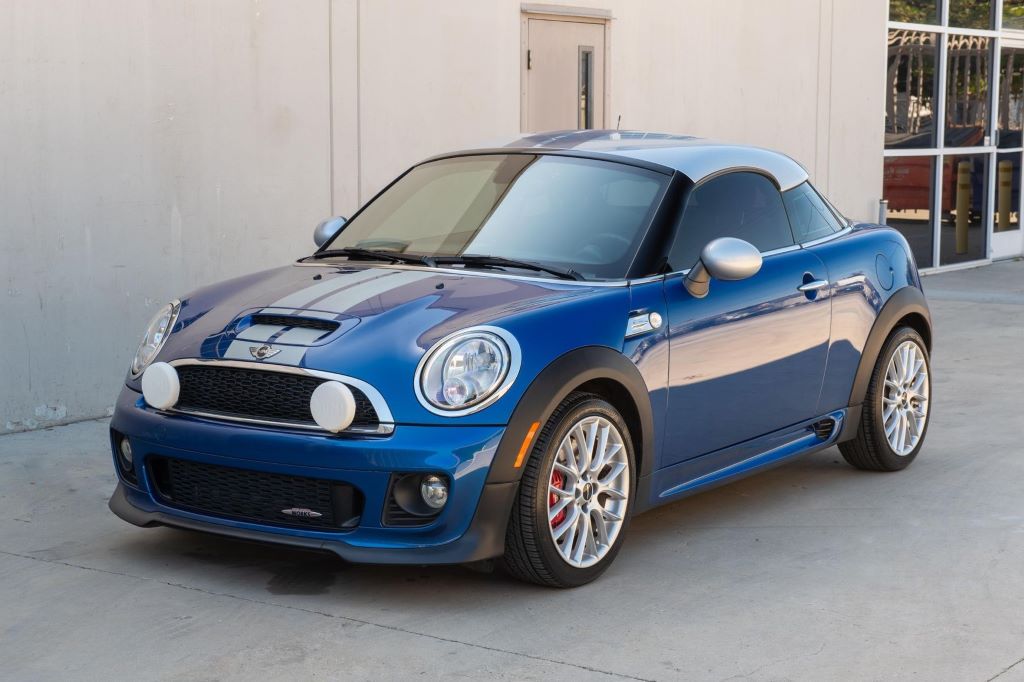
2013 Mini Coupe John Cooper Works
It may be one of those automotive answers to a question no one was asking, but given the response when the Mini Coupe was presented as a concept at the 2009 Frankfurt Auto Show, parent BMW felt they had a hit on their hands. It was meant to build on the enthusiasm generated by the enthusiast Mini brand, essentially a sports car version of the Cooper, reintroduced under BMW in 2001. With its raked windscreen and sloping roofline, it was sleeker and lower than the Cooper while also lighter with the deletion of things like, say, a back seat. And while the automotive press fell in love with its spirited and tossable nature—particularly spec’d in John Copper Works ((JCW) trim—but admittedly wouldn’t buy one. The affordable sports car was dominated by the Mazda MX-5 Miata while there were dozens of excellent hot hatches to choose from. The Mini Coupe was meant to be the best of both worlds, but ended up in no-man’s land. What that translates to today however, is that it’s relatively rare to see one come on the market (relative to a Miata or VW GTI for example). This one, from 2013 (the Mini Coupe was only sold between 2012 and 2015 before being put out of its misery) is a JCW, with the more powerful engine, a tighter suspension, bigger brakes, and an aero kit specific to the JCW, along with 17″ alloy wheels, silver sport stripes, Brembo front brake calipers with ventilated discs, fabric upholstery, sport seats, and air conditioning. It’s 208-hp 1.6-liter turbocharged inline-4 is mated to a 6-speed manual gearbox. Currently showing 52,400 miles, it was commissioned to a multi-point inspection along with an oil/filter and air filter change in 2020, and driven only around 200 miles since. Minor flaws are reported, in line with age and mileage. There’s little doubt that for better or worse, 11 years later, it will turn more heads than a Miata or GTI and be just as fun to drive around. Perhaps that was the answer all along. It’s a recent listing on Cars & Bids out of San Diego.
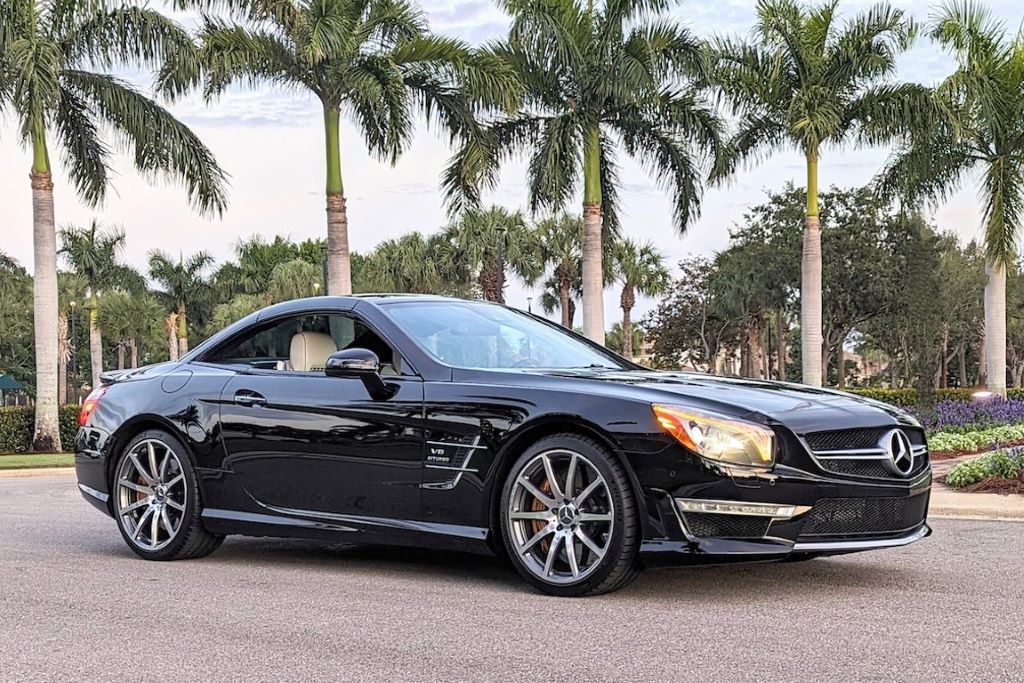
2016 Mercedes-Benz SL 63
It would be hard to rectify that when the SL-Class was introduced in 1954, based on the W198 race car, that a 4,400-lb. hardtop roadster would share the “Super Leight” designation. But by its sixth generation (R231), introduced in 2012, that was the case. And while far from its racing roots, the SL was still an imposing performance car, particularly at the hands of AMG with and the SL 63. The seller of this SL 63, from 2016, describes the car as an “assassin in a tuxedo.” It’s an apt description, given its Black (040) finish over Porcelain and Black Nappa Leather (tuxedo). It’s powered by a hand-assembled 5.5-liter Biturbo V8 engine paired with an AMG SpeedShift 7G-Tronic automatic transmission (assassin). It’s reasonable to think that with 577 horsepower and 561 lb-ft of torque on hand, this would be a car that got driven at any given opportunity. But with 14,269 miles showing at the time of the listing, some admirable restraint had been exercised. And while the original SL, the 300 SL, might be at heart a more pure sports car, it’s hard to argue against amenities like heated and ventilated multicontour front seats with AIRSCARF, Burred Walnut veneer, Park Assist, Ambient Lighting, a Wind Deflector, a Panoramic folding roof, and optional Carbon Ceramic Brakes. Two keys and the original manufacturer’s literature accompany the sale. It’s a new listing on The MB Market, on consignment in Fort Myers, Florida.
Other finds
- One-owner unmodified 1996 Volvo 850 R 66,202 miles – $24,888
- 60,600-mile 1985 Toyota Land Cruiser FJ60 – $25,000
- 20 years owned 1969 Oldsmobile Vista Cruiser 25,650 miles – $29,900
- One-owner 1995 Mercedes-Benz C 220 67,476 miles – $6,995
- Two-owner 15,480-mile 1986 Ford Mustang SVO – $19,500
- Backdated original paint 1979 MG MGB 61,400 miles– $24,500
- One of 217 1979 Pontiac Trans Am Y84 4-speed – $55,000
- 6,860-mile 2004 Chrysler Crossfire Coupe 6-speed – $19,998
- One-owner 2002 Nissan Sentra SE-R Spec V 57,153 miles – $9,995
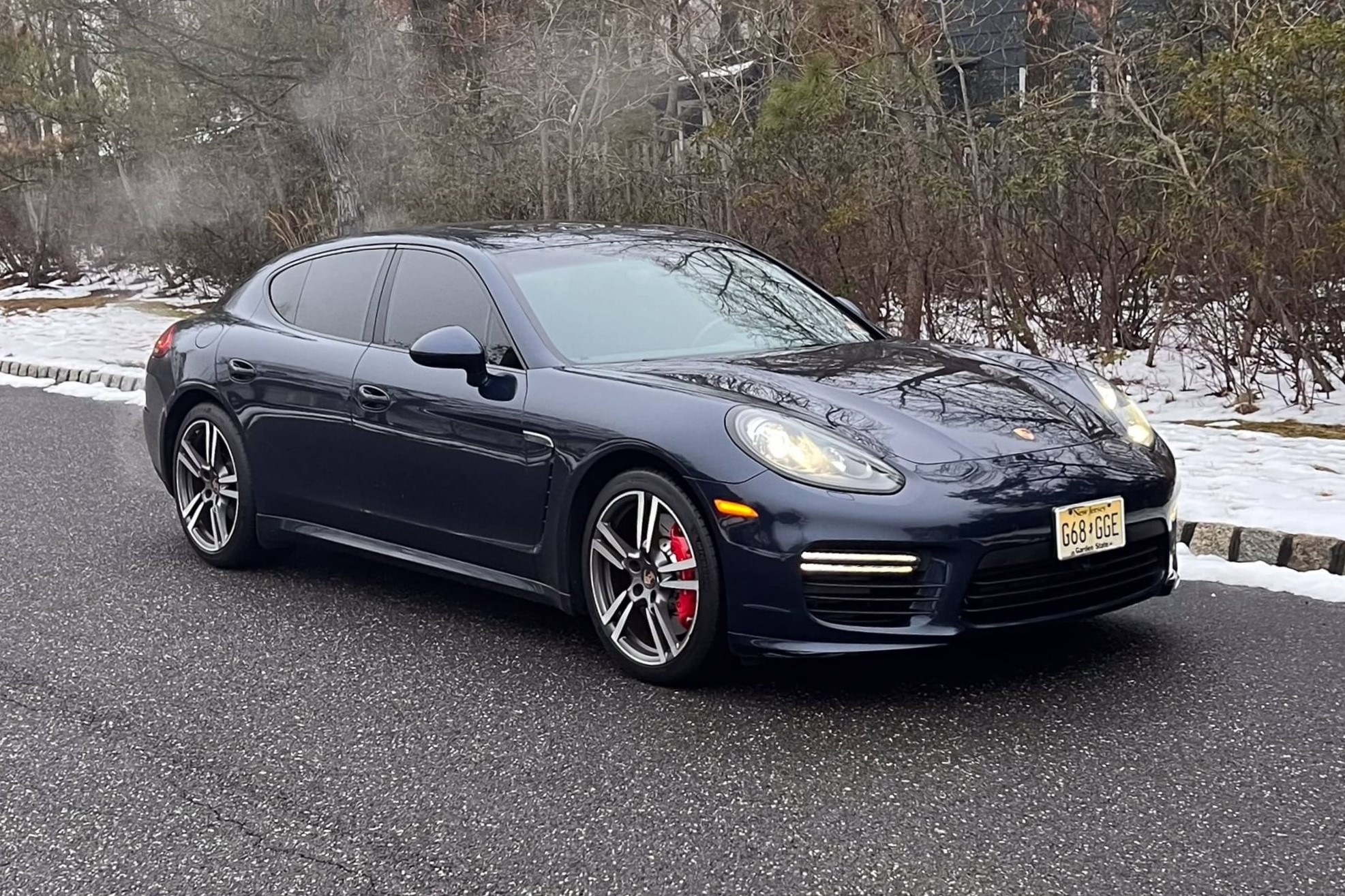
2014 Porsche Panamera GTS
As we watch the Porsche supercars and hypercars cross the block today at the Bonhams and RM Sotheby’s Arizona sales, let’s look at something that’s far better suited for everyday, yet remains every bit a Porsche. When the Panamera was first introduced in 2009, Porsche traditionalist saw it as insult to injury in that it, along with the Cayenne introduced seven year earlier, diluted what for decades was a maker of sports cars exclusively. It was the fulfillment of long-held fears of a four-door GT. But it, along with the Cayenne, were ultimately what provided the revenue for the development of some of the supercars crossing the block today. By 2014, the Panamera had become more accepted and, having undergone a facelift, its styling was less “challenging” and “unusual” (or as Jeremy Clarkson called it, “ugly as an inside-out monkey”). And while its performance had always made up for its less-than-desirable looks, the GTS trim put on an emphasis on it. With the V8 no longer available in the S or 4S versions, the GTS was essentially a Turbo without the turbo. Along with that 430-hp V8 and all-wheel drive, the GTS packaged many performance-focused options (Turbo spoiler and side skirts, Sport Chrono, sport exhaust, bi-xenon headlights with the Porsche Dynamic Lighting System, 18-way active front seats, a sport steering wheel with paddle shifters and more) together as standard. This 2014 Panamera GTS adds Premium Package Plus, which includes adaptive air suspension, Power Steering Plus, Park Assist, Lane Change Assist, quad-zone automatic climate control, and ventilated front seats, along with carbon-fiber interior trim, a surround-view camera, 20″ 911 Turbo II wheels, and a Bose Audio Package. Its Dark Blue Metallic over Black leather is at once stately and sensual, while at under 50,000 miles, this Panamera GTS is well suited to give its next owner a thrilling yet practical Porsche experience. It’s newly listed on PCARMARKET out of Medford Lakes, New Jersey.
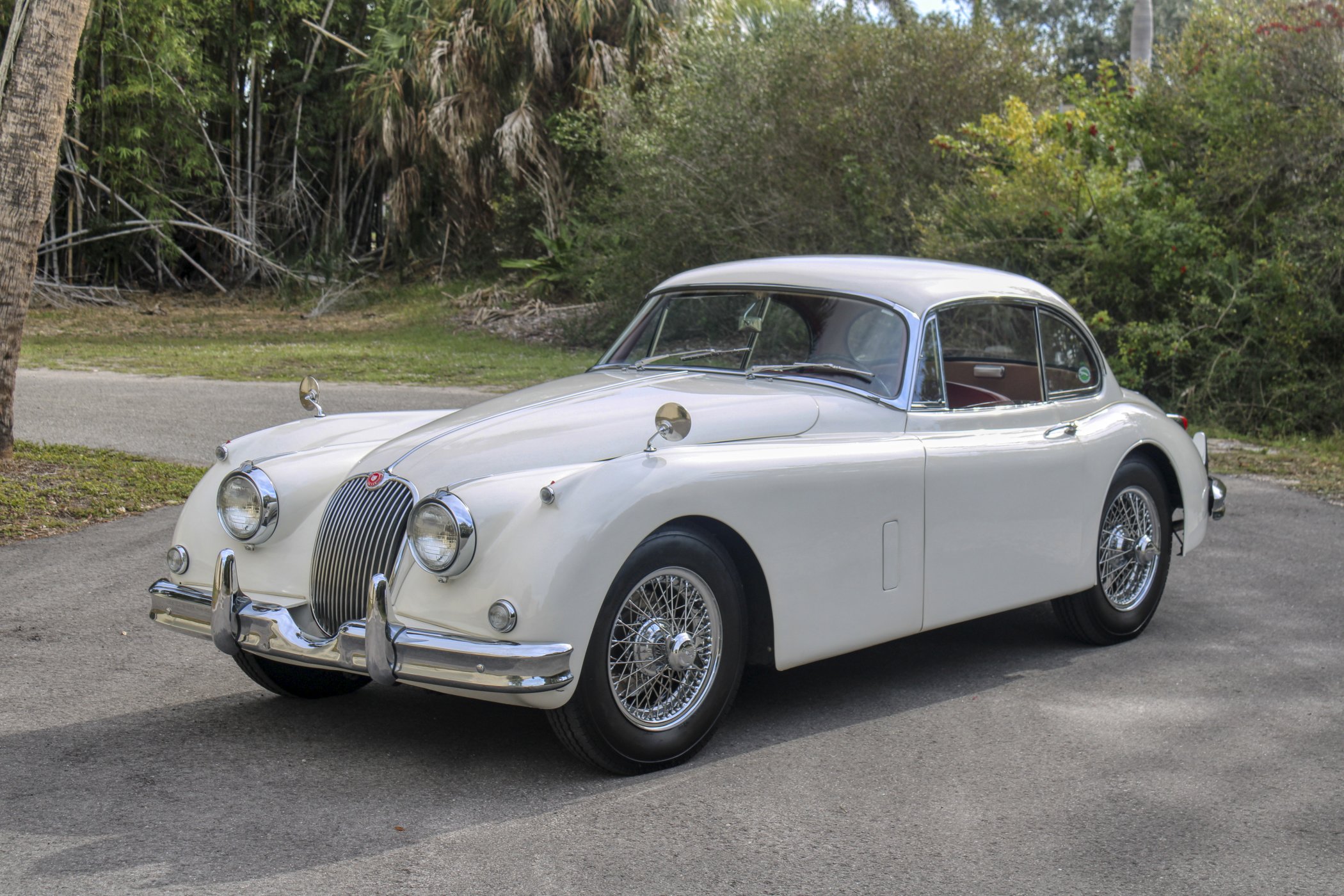
1958 Jaguar XK150 FHC
The XK150 was the third and final stage in the evolution of the Jaguar XK concept. Its styling was modernized, becoming more muscular. There were other updates as well: a wider body, thinner doors and a wraparound windscreen brought forward allowed for more interior space; a much larger rear window considerably improved visibility; and Dunlop disc brakes, developed by Jaguar and race proven at Le Mans in 1953 on the C-Type, were fitted on all four wheels, which made the XK150, along with the XKSS, the first Jaguar production car so equipped. This XK150, from 1958 comes from 43 years of sole ownership. It was treated to an extensive ($99,572) restoration that included a bare-metal repaint in its original Old English White, while the interior was completely dissembled and reupholstered in its original fabrics and Red leather. At the same time, a new air conditioning system with heater was installed. The original 3.4-liter motor was rebuilt and mated to its original 4-speed gearbox, which the available Laycock de Normanville overdrive. It’s clearly ready to show, but was also reconditioned with pleasant driving in mind. It’s a recent addition to the inventory at Vintage Motors of Sarasota with an asking price of $99,500.
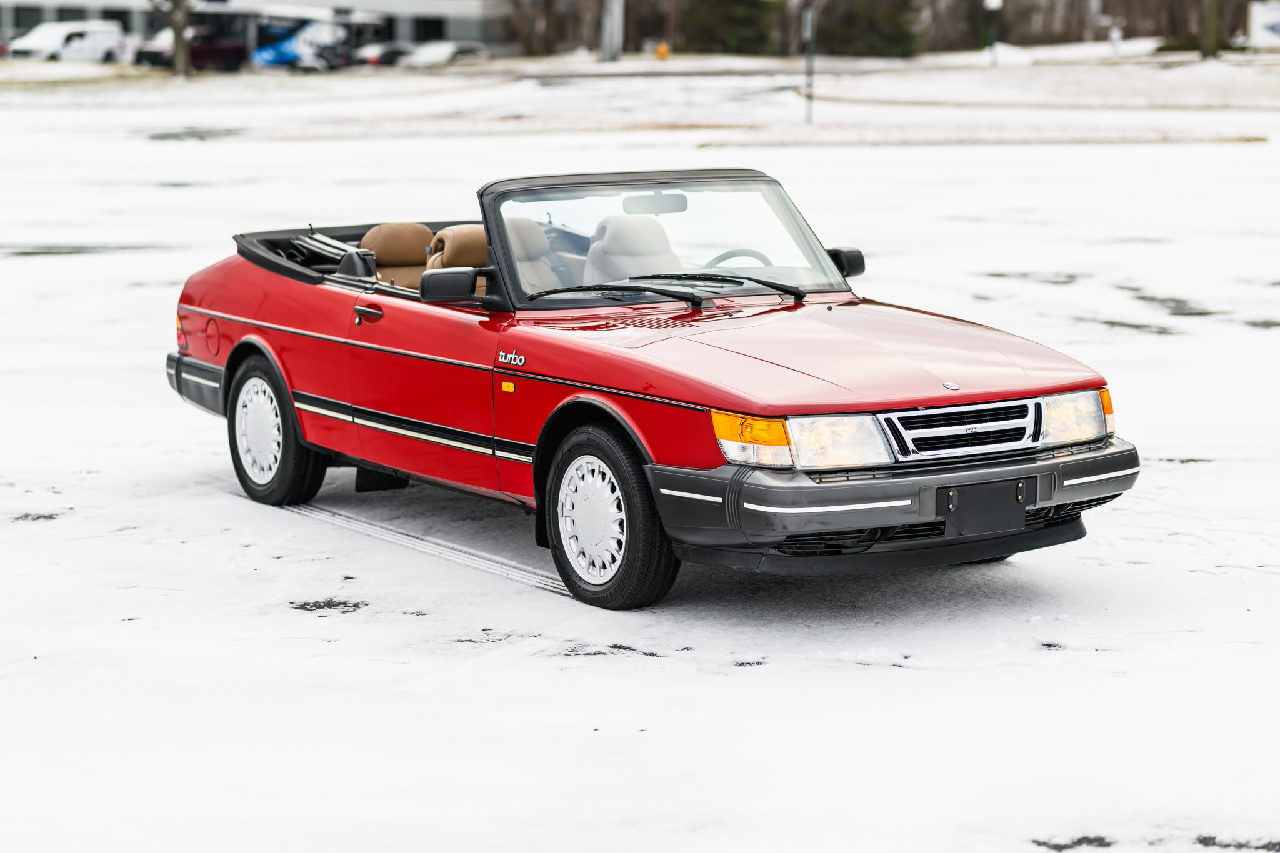
1988 Saab 900 Turbo Convertible
It’s a curious thing when you think about it. One of the world’s most loved convertibles came out of a country that averages nearly three feet of snow in any given year. But Saab was never about following norms and the quirks are a big reason they have enjoyed such a loyal following a decade after the last one rolled off the line (but watch this space for its descendent, the NEVS Emily GT). That enthusiasm has grown beyond marque enthusiasts to a broader collector market (see the Hagerty Bull Market List 2023). This one appears to be exemplary of why they have caught on like they have. Find it here on The Saab Network Classifieds for $21,500.
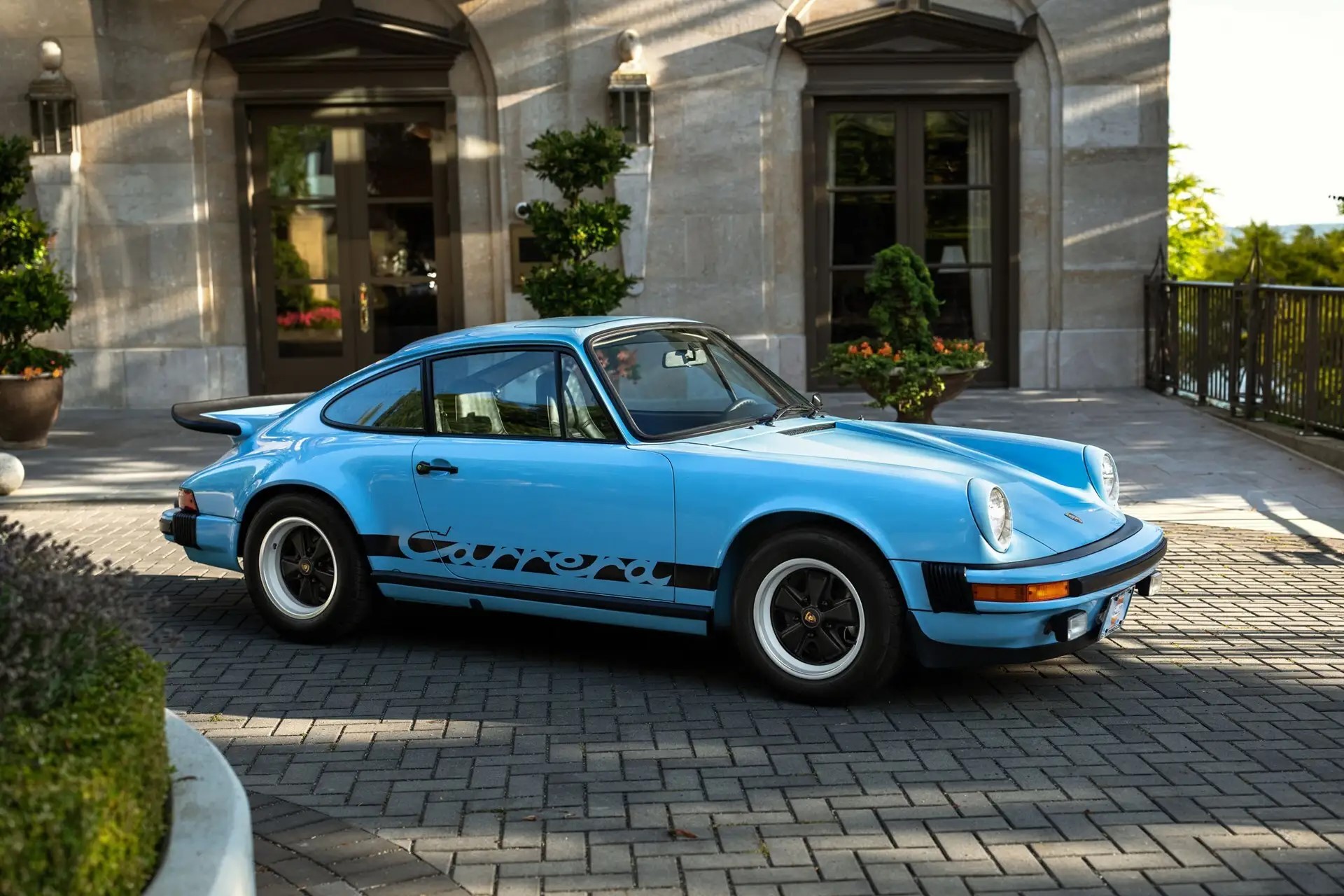
1975 Porsche 911 Carrera 2.7
The 1973 Porsche 911 Carrera RS continues to be regarded as one of the greatest motorcars ever made. Not messing with a good thing, Porsche carried the concept into its G-modell impact-bumper 911 Carrera. Other than the bumpers, it was nearly identical to its predecessor, distinguished by flared fenders and using the same 2.7-liter with Bosch Mechanical Fuel Injection (MFI) producing 207-hp while weighing roughly the same (2,370 lbs). So far so good, but like the Carrera RS, the Carrera 2.7 MFI was off limits to emissions-restricted North American buyers. We did however get most of that package in the Carrera 2.7 CIS, albeit with a lot less power (173 hp, same as in the 911 S). Perhaps most significant though was that, for 1975 models, we saw the first production use of the iconic whale tail. We would lose any drag race to our RoW counterpart, but it would look just as racy in defeat. This was especially true with the more eye-catching colors and there may be nothing more eye-catching than Gulf Blue. This 1975 Carrera 2.7 CIS wears most of its original Gulf Blue (J9) paint, paired with a largely original Black partial leather interior. It was completed in April 1975 and factory built with air conditioning, an electric sliding sunroof, and Dunlop tires. The car was first sold by De Maria Porsche Audi of Miami, Florida to Paul Ships Jr. of Coral Gables on September 25, 1975. Mr. Ships used his new Porsche extensively while maintaining it with De Maria Porsche for time and mileage servicing. In 2021, the car was treated to a full engine rebuild that included new pistons, camshafts, main and rod bearings, timing chains, overhauling the oil-cooling system, SSI stainless-steel heat exchangers, and a Dansk muffler. A Porsche Production Specification report, owner’s manual and warranty booklet with entries, service records, and tool kit accompany the sale. With 1973 911 Carrera RS values now exceeding $2M, its descendants, even the wimpier American cousins, are following suit. This well-sorted and striking Gulf Blue example is set to cross the block at RM Sotheby’s Arizona 2024 sale this weekend, with a house estimate of $200,000 – $250,000.
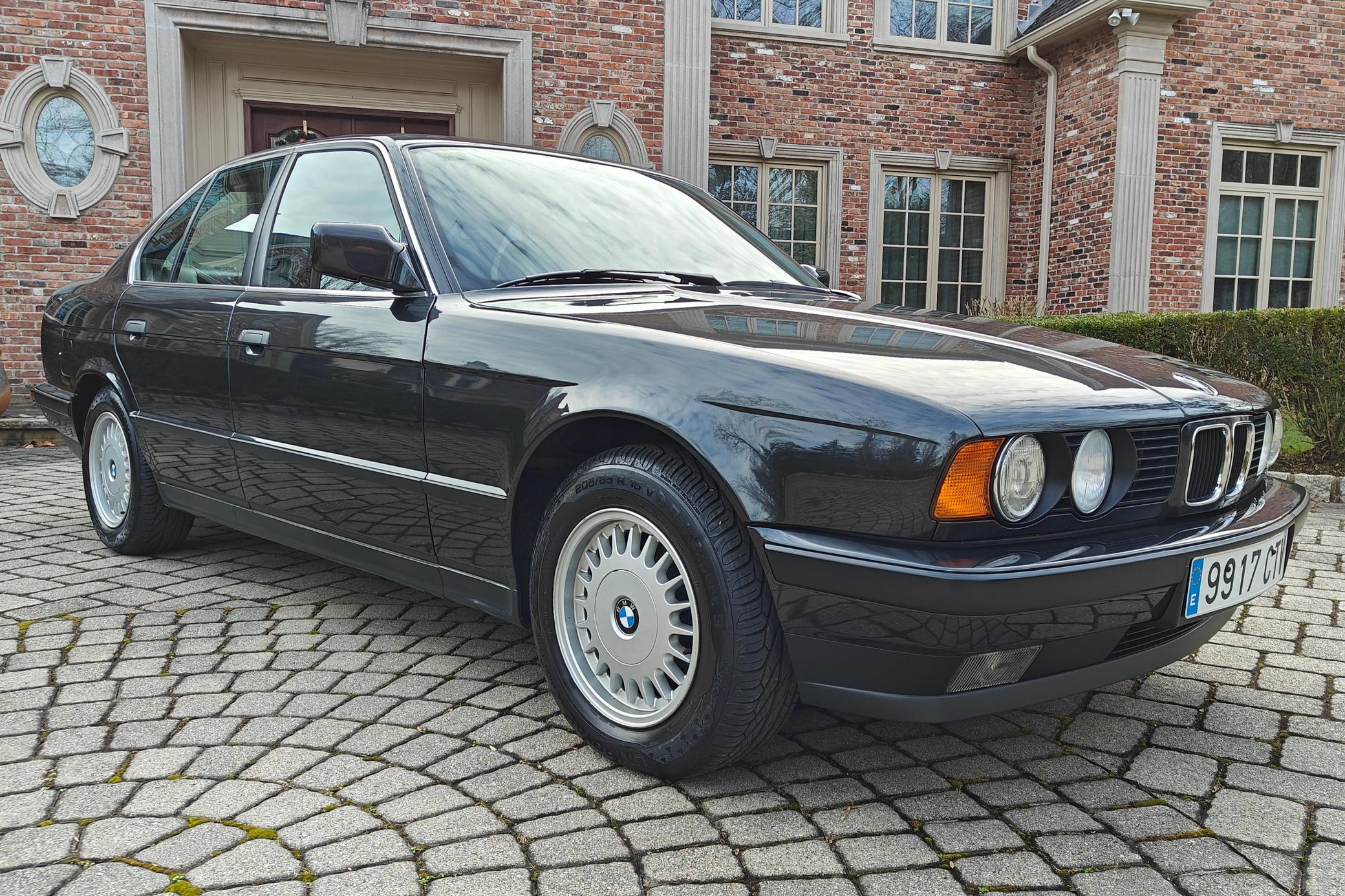
1992 BMW 525 tds
Many consider the E34 to be the most handsome of all BMW 5-Series generations and it’s hard to argue that. And with 18 engine choices, ranging from 1.8-liter 4-cylinder to the 4.0-liter M60 V8 to the 335-hp inline-6 found in the M5, it met a wide range of consumer needs and wants for a mid-sized German car. We in the States of course, didn’t have access to the breadth of offerings and were limited to petrol engines, which is a shame as the 2.5-liter turbocharged M51 is regarded by the rest of the world as one of Bavaria’s greatest powerplants, particularly with the addition of an intercooler in 1992. These motors are known for racking up hundreds of thousands of trouble-free kilometers. It is quite special then to have one come on the market in the US and a further rarity to find one with less than 47,000 kilometers (just over 29,000 miles). This one, imported from the Netherlands in January 2022, appears to have been well taken care of in its 30+ years, with only minor flaws indicative of its low mileage reported. With the exception of Bluetooth functionality added to the original BMW Bavaria Business radio, it remains as it left the factory. Diesels have never caught on in the US, but therein is the opportunity to own and drive something unique while in the timeless surrounds of an E34. It’s a recent listing on Cars & Bids out of Woodcliff Lake, New Jersey.
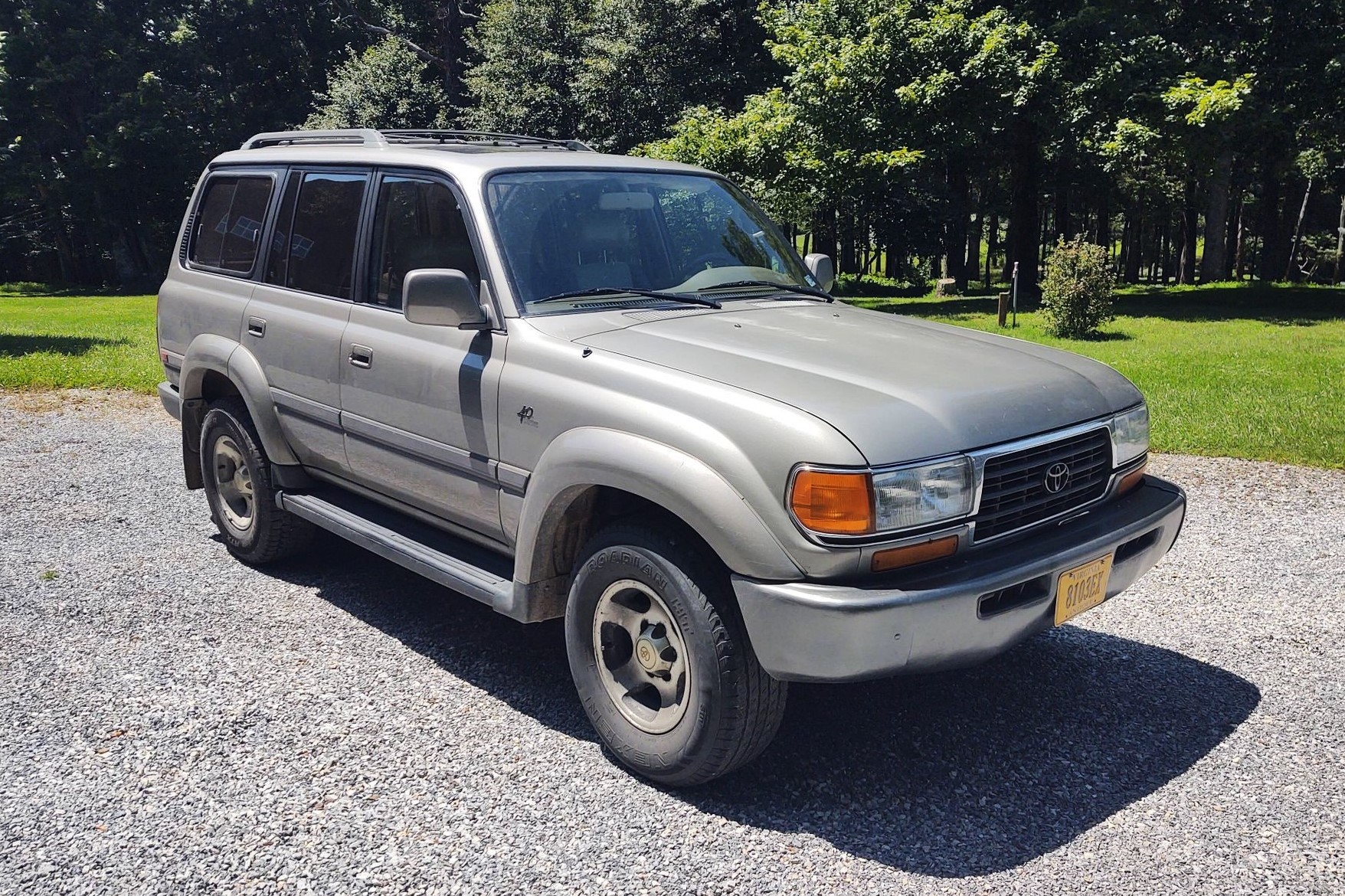
1997 Toyota Land Cruiser 40th Anniversary
In 1997, as both a celebration of four decades of the Land Cruiser and the end of F(Z)J80 production, Toyota made 4,744 40th Anniversary Editions. Sold only in the US, the 40th Anniversary models featured apron badges, a serial number badge on the center console, black pearl exterior badges, “40th Anniversary Limited Edition” embroidered floor mats, automatic climate control, two-tone tan and brown leather interiors, and wheels with the “D” windows painted dark gray. This one, in Antique Sage Pearl (one of two colors offered on 40th Anniversary editions, along with Emerald Green), features the coveted locking front and rear differentials. It comes from 13-year ownership by a licensed aircraft mechanic and mechanical engineer, who maintained the car to a high standard. Though thinning on the hood, the paint is original, as is the interior, which shows age related wear but no tears or cracks. The FJ80 Series Land Cruisers—particularly the 212-hp 24-valve 4.5-liter-equipped FJZ80s—were in high demand when new and continue to be so, seen as the last of the truly rugged FJs despite their opulent amenities. And while 153,519 miles would be considered tired for many vehicles, it’s not unusual to see examples with 300,000 miles or more commanding around 50% of their original MSRP. This one appears ready for the next 150,000 more. It’s a recent listing on Hemmings Auctions out of Copper Hill, Virginia.
Other finds
- 25 years owned 1979 Pontiac Firebird Trans Am 26,714 miles – $36,500
- 74,000-mile 1971 Volvo 1800E 4-speed O/D – $30,000
- One of >500 US market 1949 MG TC EXU matching numbers – $26,500
- 19,245-mile one-owner 1980 Honda Accord – $12,000
- Less than 1,000 left 1954 Mercury Sun Valley fully restored – $35,500
- One owner 1993 Acura Legend Coupe 83,000 miles – $12,995
- 56,000-mile 1993 Mercedes-Benz S 600 AMG Euro SWB – $42,500
- All-original 1985 Volkswagen Quantum GL Turbo Diesel 5-speed – $12,000
- Reputable replica 1971 Ferrari 365 GTS/4 Daytona Spyder – $49,900
- 40,713-mile 1964 Ford Galaxie 500 R-code 427 – $87,500
- One-owner unmolested 1989 Toyota Corolla SR-5 61,825 miles – $7,500
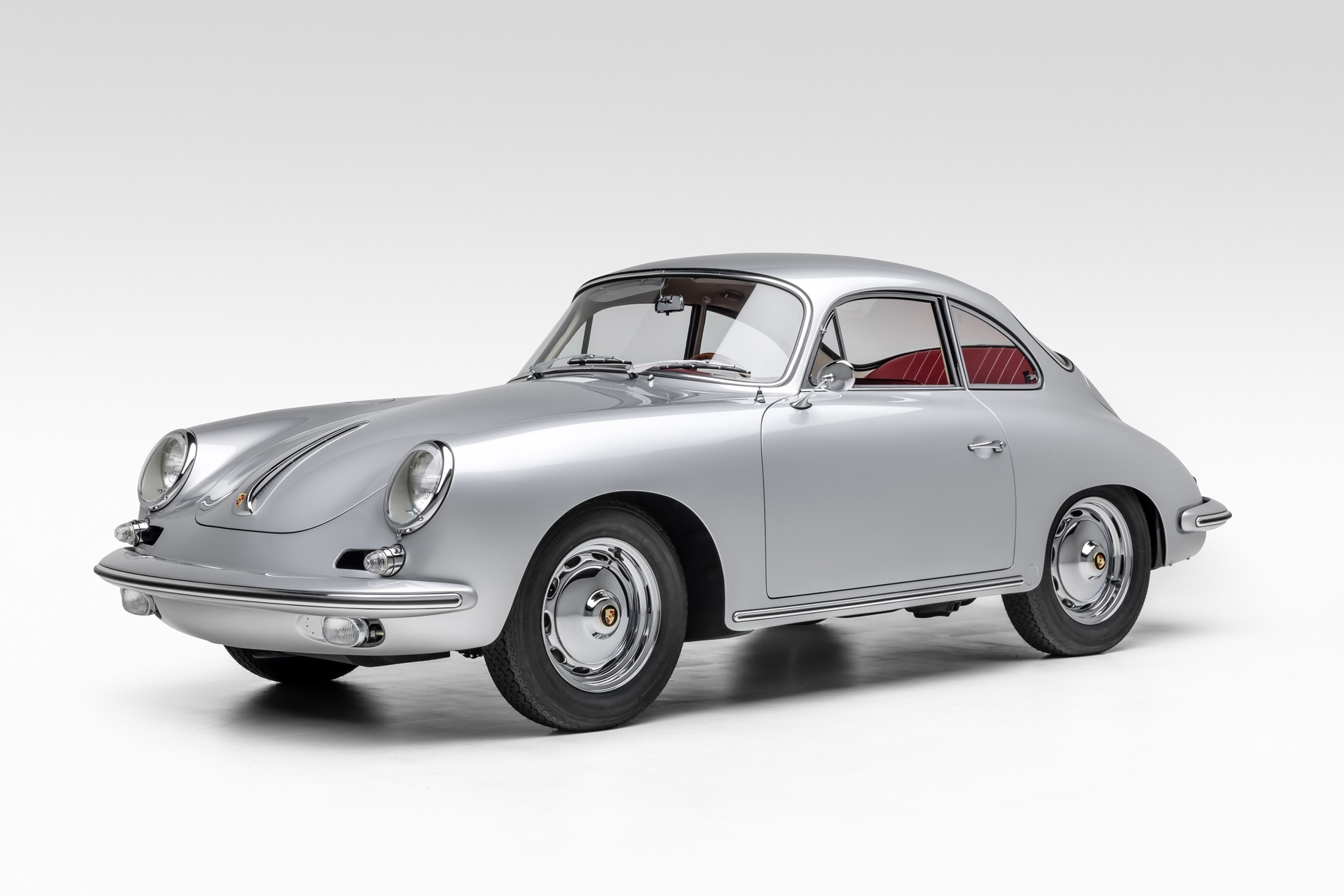
1962 Porsche 356 B Carrera GS
This Porsche 356 B Carrera GS was assembled for the European market on May 16, 1962 before becoming part of a long-term private collection in California. dates back to May 16, 1962, when it was assembled for the European market as a Carrera GS. As 20-year restoration came later in life, during which the body was taken down to bare metal and repainted from its original Ivory to Silver Metallic (code 6206). The Wine Red (code 9274) leather upholstery replaced the original black leather. The lap belts and carpeting are color-matched. Additional appointments include a wood steering wheel with an ebony inlay made by Bruce Crawford at Hardwood Classics. A 155-hp Type 587/2 GT-specification 2.0-liter Fuhrmann engine replaced the original 587/1 GS-spec motor. While far from a Zuffenhausen museum piece, this is a show quality, genuine GS that has been reimagined by some of the most highly regarded craftsmen in the Porscheverse. It’s here on AutoHunter with 7 days left to bid.
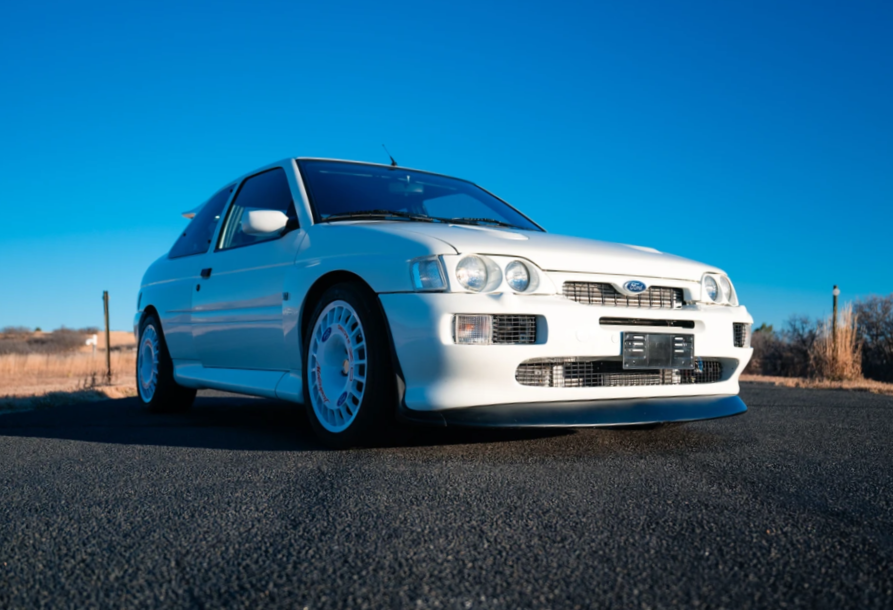
1992 Ford Escort RS Cosworth
When you mention Ford Escort to an American—and how often is that?—we think of the economical “world car” that was an evolution of the Pinto. But to the rest of the “world,” the Escort had earned some serious performance cred—particulalrly in the World Rally Championship—by the time of the 1981 North American introduction. In 1992, the European Escort’s fifth generation, the RS Cosworth was created for Group A rallying. These highly tuned Escorts were based on the Ford Sierra RS Cosworth’s underpinnings, and featured the venerable Cosworth YB turbocharged 2.0L inline four engine along with its a distinctive whale-tail spoiler and flared wheel arches. A total of 7,145 examples were built. This “Cossie” comes from Luxembourg where its former owner selected world-renowned Cosworth specialist, Oppliger Motorsports, to source the car and complete an extensive build, targeting at least 550 horsepower. Modifications included a Borg Warner EFR 7670 twin-scrool turbocharger, a T4 stainless-steel and ceramic-coated exhaust manifold, a forged bottom end, an ECUMaster ECU, a larger intercooler, and a radiator with silicon hoses. The increased power was complemented by a Tarox Big Brake kit, while the Intrax suspension and a complete Powerflex bushing kit were added to keep things tidy under heavy cornering. Once the build was complete, however, it was determined to be too much for the owner (though he is reportedly moving onto an ex-works WRC-spec Escort that’s currently being reconditioned by Oppliger). It was then sold to its current owner in central Tennessee where it has been driven approximately 500 miles since the Oppliger rebuild. Now consigned with Cult Cars in Denver, Colorado, it is being offered at $89,950.
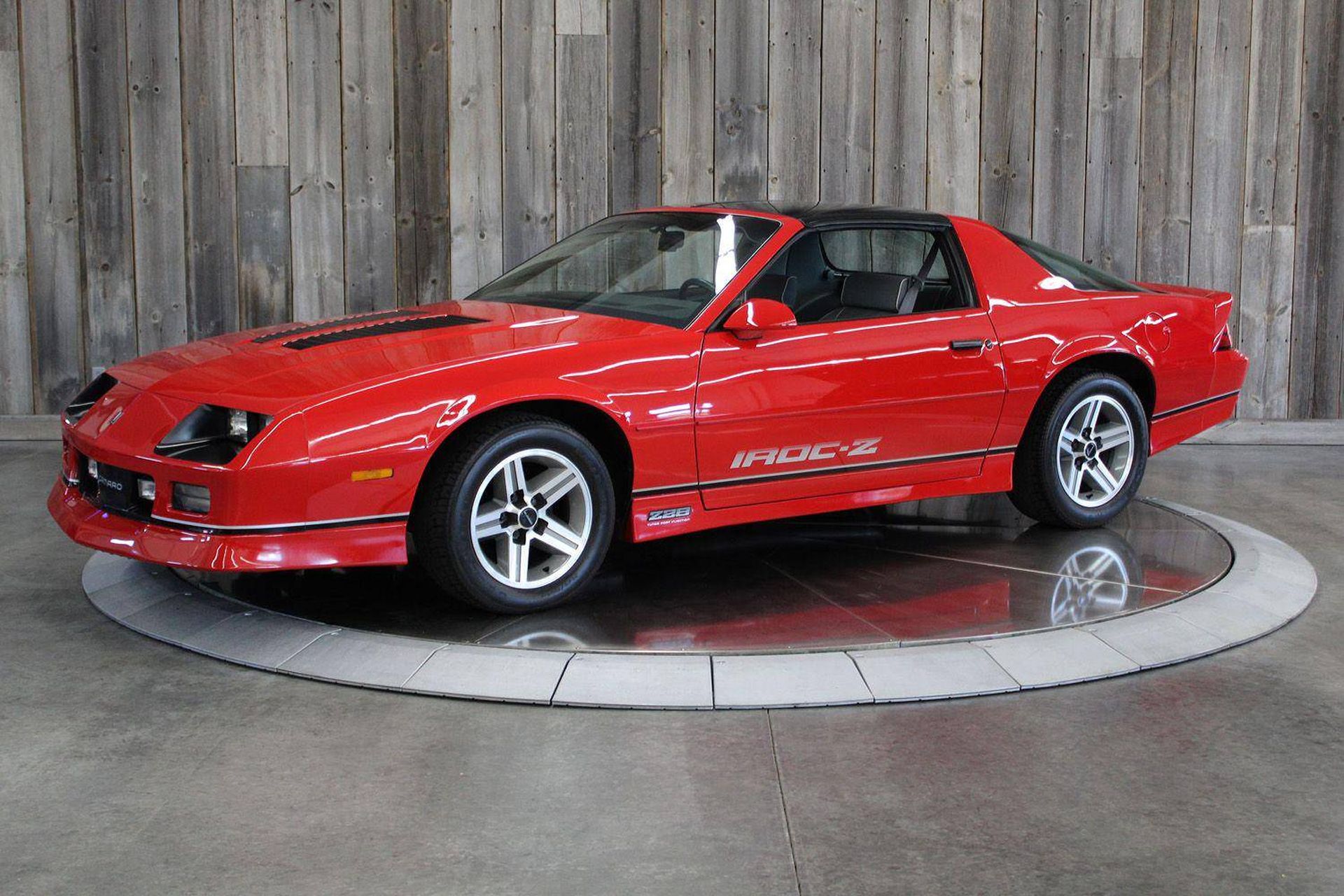
1987 Chevrolet Camaro IROC-Z
As we bid farewell to the Camaro—again—many in the automotive press have paid tribute to the greatest Camaros from its off-and-on 57-year run, from the 1969 COPO ZL-1 to the 2017 ZL1. But it’s hard to think of a Camaro that is more iconic than the third-generation IROC-Z. It often conjures images of gold chains and wafts of Drakkar Noir, but it was also the first Camaro to do 0 – 60 in under seven seconds, COPO included, thanks to the L98 tuned-port-injected 350 V8 shared with the C4 Corvette. Despite 167,000 of them made, depreciation—and the kind of teenage hoonbait that that brings on—have left relatively few exemplary IROCs. This one may be as close as we’ll see to what made them attractive when new. While it has the midrange 5.0-liter LB9 and not the L98, it has a lot going for it. With 8,739 miles covered by two owners, it is said to have been stored indoors since new. It retains its original paint, badging, and stickers, while the gray cloth interior features retains its original, Delco AM/FM/cassette stereo with graphic equalizer, said to be working, as do the power locks, power windows, power locks, power drivers seat, power mirrors, power antenna, power rear hatch release, and cruise control. Accompanying the sale are the original owners manual, Goodyear Limited Warranty booklet, General Motors Maintenance Schedule booklet, original window sticker with its original “Additional Added Equipment By Dealer” sticker, original delivery and warranty documentation, and an unexecuted owner transfer card, and lost key registration card with its specific key number identified on the card, along with a recall notice from 1990 regarding the seat belt buckles. It’s the kind of preservation that even those who had mocked the IROC-Z in the day would have to tip a Wayne’s World ballcap to. It’s on Hemmings Make Offer with a buy-now of $52,995.
Other finds
- Two-owner 58,100-km 1982 BMW 525i M30 PA title – $35,000
- 9,300-mile 2002 Honda S2000 original owner – $44,000
- Numbers matching 1967 Chrysler Town & Country Wagon – $27,000
- One of 129 2004 Toyota Tacoma S Runner 14,436 miles $29,995
- 64,700-mile Rover Mini Cooper Classic 35 Edition LHD – $19,000
- One of 1,778 2000 Jaguar XKR Coupe 80,000 miles – $18,900
- 35,000-mile 2002 Ford Mustang Roush Stage 2 two owners – $16,500
- Two-owner 1973 Ford Capri Mk I original paint, drivetrain – $7,800
- 26,400-mile 1985 Maserati Quattroporte – $14,800
- One-owner 57,000-mile 1966 Ford Mustang Convertible – $33,900
- 43,400-mile 1959 Peugeot 403 La Berline Gran Luxe – $15,000
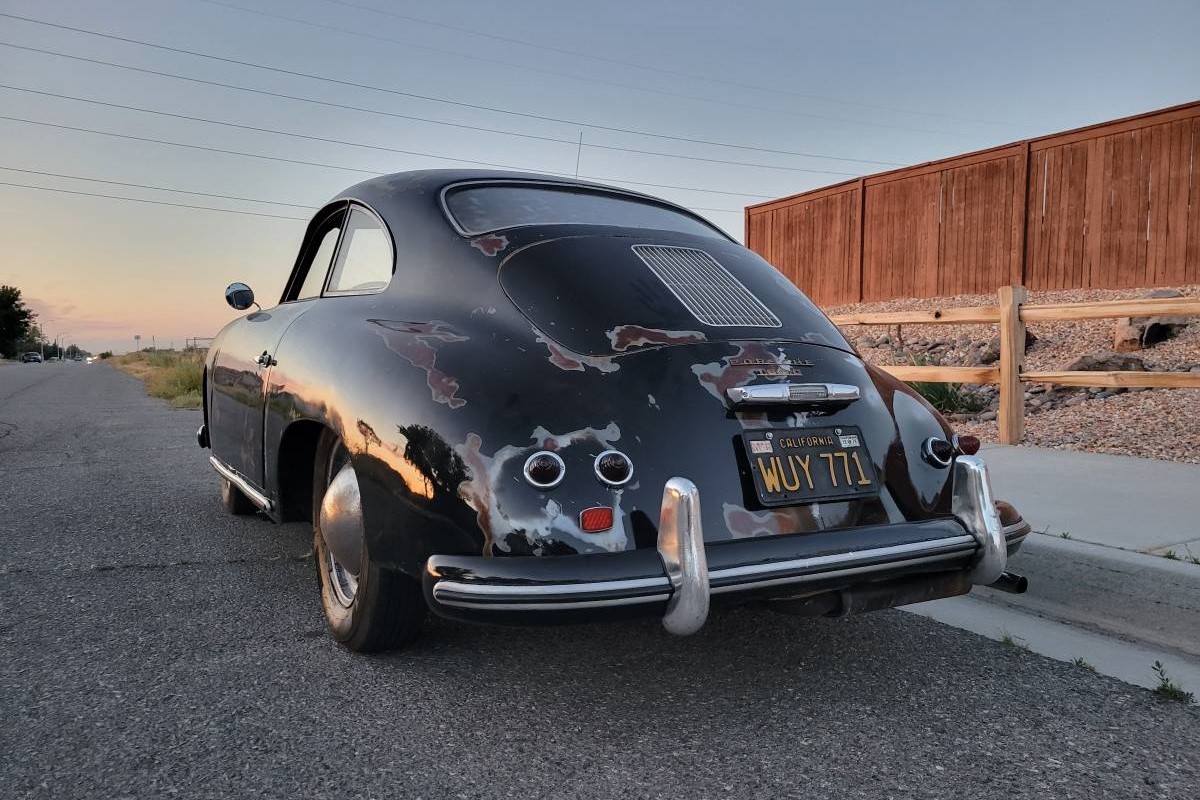
1956 Porsche 356 A
Here’s another example of how well patina suits a Porsche 356. In this case, it’s a Type 1 (T1), easily identifiable by its round “beehive” taillamps. It appears to be from later in 1956, when the 356 returned to its numeric designation in the US (after a brief period in late 1955/early 1956 when importer Max Hoffman felt the names “Continental” and “European” would be more marketable to American buyers). This 1956 356 A was subject to an earlier color change (to yellow, visible in the door frame and inside A pillars) but its current owner returned it to its Kardex-correct black. Judging from the black plates, it has spent much of its life—if not all of it—in California. It is said to retain its original 75-hp 1600 cc Super engine, which has been rebuilt with big-bore Solex carburetors. It has also received new brakes, a new master cylinder, shocks, and battery (correct 6-volt). Seats have likely been reupholstered and the square-weave carpet looks relatively fresh but looks to be original otherwise, including its radio. It looks to be an excellent driver with plenty of character or a straightforward restoration for its next owner. It is priced just below the average over the last five years at $120,000. Find it here on Craigslist in Temecula, California.
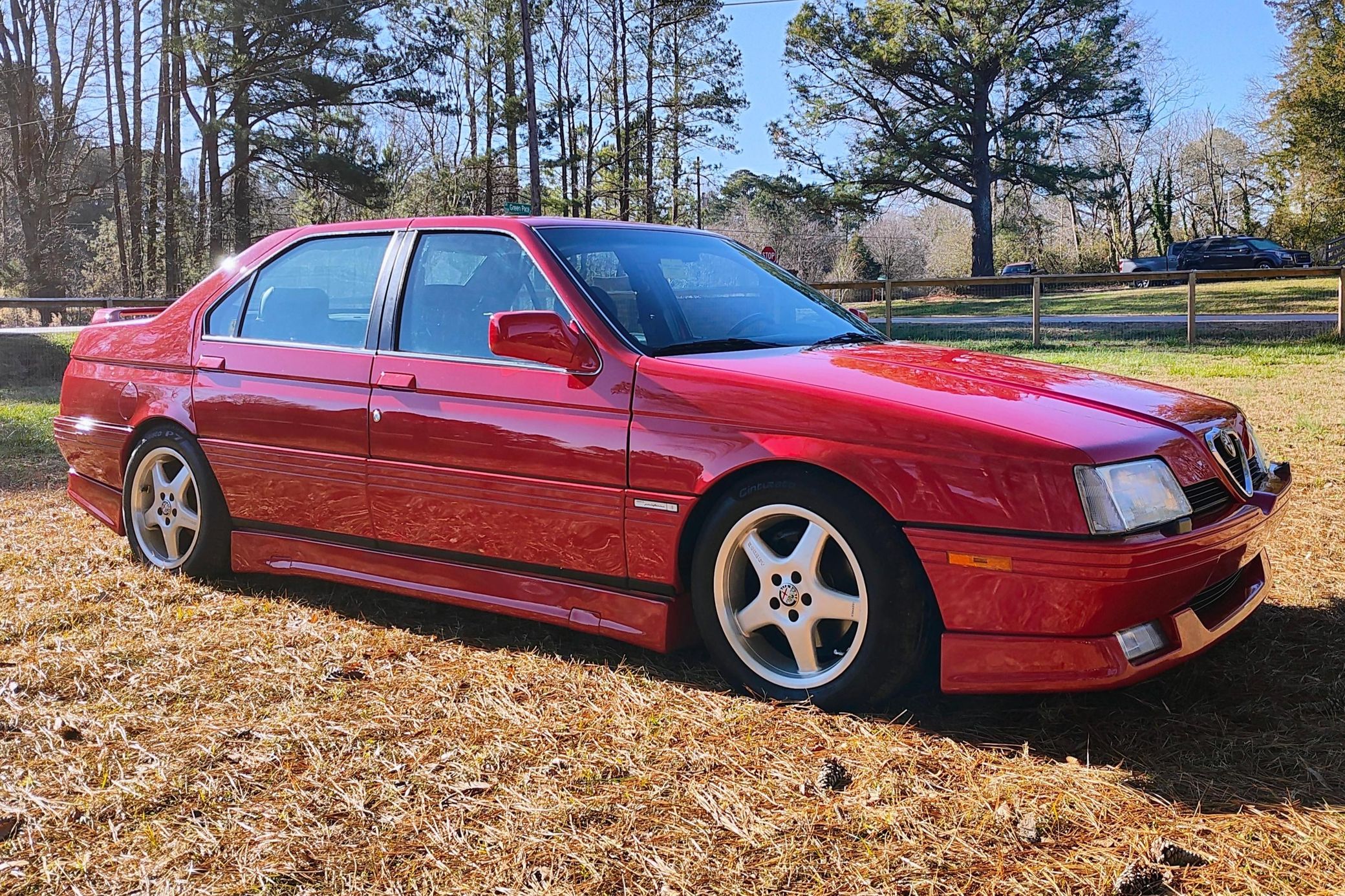
1991 Alfa Romeo 164 S
The Alfa Romeo 164 represents a series of lasts. It was the last Alfa model to be developed while Alfa Romeo was still a fully independent company, launched a few months after the takeover by Fiat (1987). It was the last of the “Type Four” platform cars (shared with the Lancia Thema, Fiat Croma and Saab 9000) to enter production. And it was the last Alfa model to be sold in the US, before parent Fiat would withdraw all its offering from the market. But it was also the first: the first Alfa model to incorporate computer-aided-drafting in its Pininfarina design, resulting in the aerodynamic (.30 Cd) wedge shape that would influence the rest of the Alfa Romeo range. And it was the first to employ extensive use of galvanized steel for the frame and various body panels, vastly improving build quality. That sexy and slippery body was then draped over the legendary Busso V6, often cited as the greatest V6 ever made. In the case of the 164, it displaced 3.0 liters, good for 183 horsepower in the US ‘L’ model, while the 164S put out 200. This one, from its first year in the US, 1991, is an ‘S’ model, distinguishable by its side skirts and spoilers. For reasons not disclosed the engine was swapped for the base ‘L’ motor, however the original engine is included in the sale. Other modifications include an aftermarket muffler, 16″ Borbet Type E wheels, SF Racing Super Gold coilovers, and color-matched (130 Rosso Alfa) side skirts (originally Graphite Gray on S models). Its condition is otherwise in line with what we can expect from a 75,297-mile driver, which is to say good but not perfect, most notably a cracked overhead console, sagging headliner and some minor warping on the instrument binnacle. And, being an Alfa, it won’t be without its gremlins. The front seats’ heating function, trip meter, sunroof, rear windows, and cruise control don’t work; the heater works “intermittently;” the blower motor is “squeaky;” brake light and low washer fluid warning lights in the instrument cluster; the engine “occasionally runs rough for about 45 seconds” on a cold start; and the trip odometer is not operational however the odometer functions as intended. All part of Alfa ownership, but the driving experience, particularly with the Busso V6 and precise, smooth 5-speed gearbox, allows us to overlook its flaws. This 164S has at least been maintained well mechanically, with extensive records to show for it. It’s a new listing on Cars & Bids out of Zebulon, North Carolina.
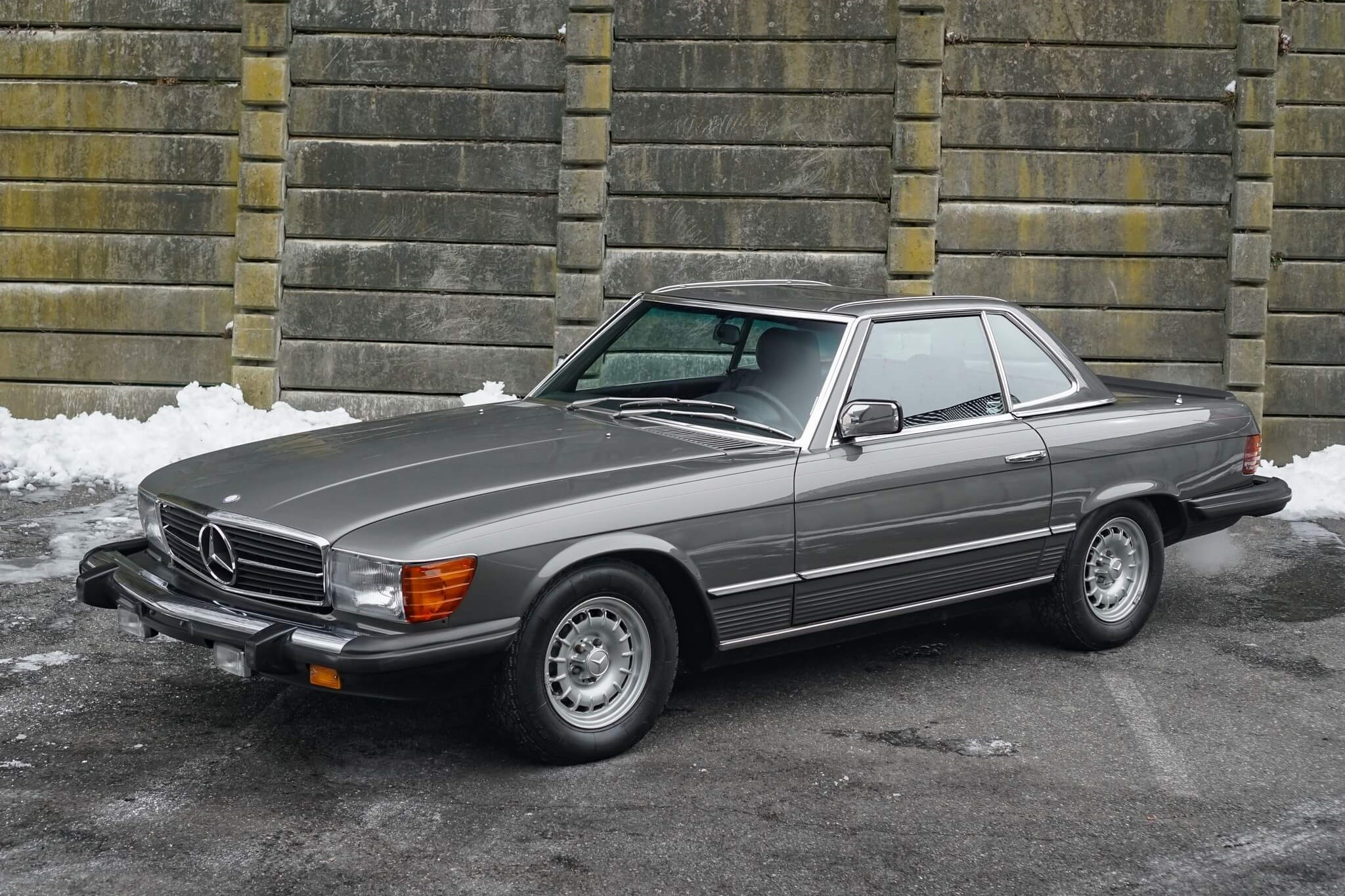
1983 Mercedes-Benz 500 SL
Introduced for the 1980 model year, the Mercedes-Benz R107 500 SL featured a 237-hp 5.0-liter V8 engine. Naturally US emissions regulations kept the 500 SL from North American customers. In its placed, Mercedes-Benz NA offered the 560 SL and while the engine was larger, it couldn’t match the 500 SL’s performance. That, and less than 12,000 made (compared to over 49,000 560 SLs), are why they are so coveted today. This 1983 Mercedes-Benz 500 SL was originally produced for the Canary Islands before being imported from Europe to the United States as a “gray market” car in 1983. The car had been maintained by the same owner in Connecticut from 1984 up until 2024 when it was purchased by the selling dealer. It retains its European-market headlamps and distinctive rear trunk lid spoiler, but bumpers were converted to USDoT-spec, along with the instrument cluster, which shows 21,324 miles, attested as true mileage. The 500 SL rides on 14” Bundt alloy wheels shod in proper 205/70 Michelin XWX tires. Inside, the Black leather upholstery is mated to matching carpets and zebrano wood trim. A Blaupunkt Aspen SQR27 AM/FM cassette stereo appears to be original. The 500 SL represents to top of the steadily appreciating R107 range and while they do come on the market occasionally, there are not many one-owner 21,000-mile cars left. This one’s now on PCARMARKET out of Oyster Bay, New York.
Other finds
- One-owner 1999 Audi A8 32,341 miles – $11,980
- 54,403-mile 1982 BMW 323i Euro M20 inline 6 – $49,500
- First time offered 1975 Lincoln Continental Mk IV 19,350 miles – $29,500
- 35,869-mile 2000 Toyota Solara SLE original owner – $12,500
- Two-owner 1987 Audi Coupe GT Special Build 65,000 miles – $9,500
- 68,508-mile 1986 Buick Regal Turbo T-Type – $34,995
- One of 2,897 1932 DeSoto Standard SC Coupe all-original – $24,500
- Original owner 1967 Alfa Romeo Giulia Super 68,000 miles – $74,000
- Black-plate 1965 Morgan Plus 4 LHD 84,904 miles – $29,000
- 69,000-mile 1988 Suzuki Samurai 95% original– $15,000
- All-original 34,835-mile 2004 Cadillac XLR Xenon Blue – $23,000
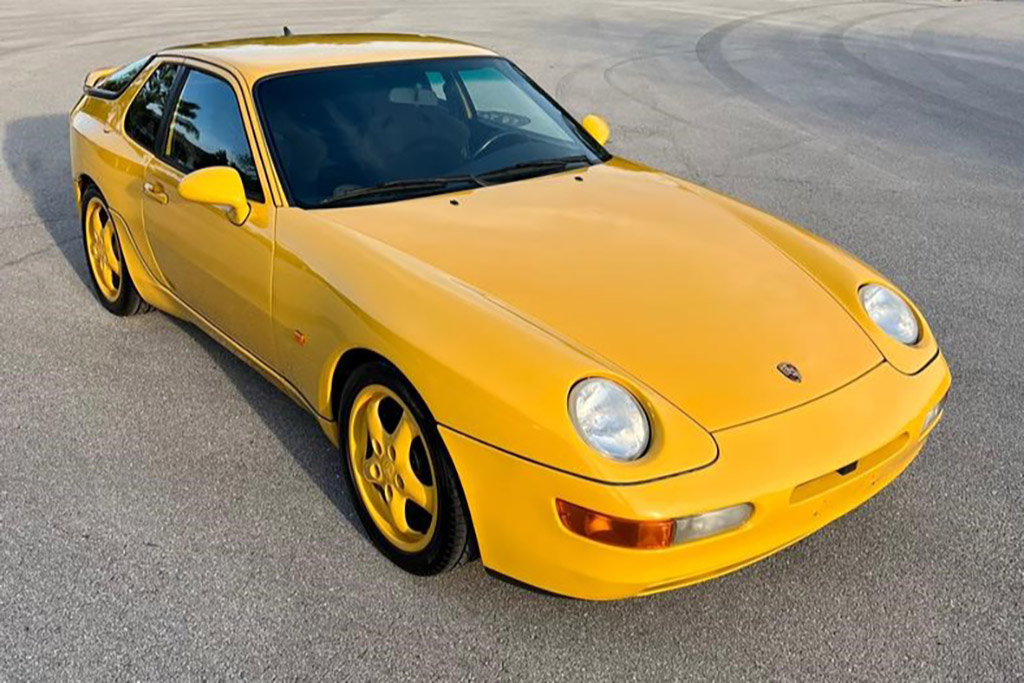
1993 Porsche 968 Club Sport
While there were no complaints around the Porsche 968’s native performance and handling, some enthusiasts were looking to be more competitive on track days and that much more exhilarated on twisty back roads. Porsche answered with the 968 Club Sport. Continuing with the building blocks of lightweight, high performance and superb engineering quality that brought us the first Club Sport, the 1984 911 SC/CS and later the 1987 911 Carrera CS, the 968 was stripped of around 220 lbs. worth of things like the sunroof, rear wiper, rear seats, external tailgate access, center console, sound deadening, power windows, AC and stereo (though they could be added back in as no-cost options), while also firming up the suspension, lowering the ride height (by 20 mm), and fitting 17″ Cup wheels as standard (color-matched as an oft-selected option). Inside, hard-back Recaro racing seats (color-matched here too) and a lap timer (early Sport Chrono) distinguish the Club Sport from the daily-driver 968. Given its enthusiast focus, not many were made: 1538 with 306 of those registered as UK-only “968 Sport.” This 1993 Porsche 968 Club Sport was imported from Canada in 2019 and now shows 47,500 miles with a current Florida title and registration. It has had the AC, Porsche CR-1 radio, and power windows added back in for a somewhat more civilized driving experience but is also equipped with the optional limited slip for even crisper handling. Perhaps biased more toward the twisties than the track. The common pinion gear issue was addressed in 2020 and while the transaxle was open, any worn parts (including synchros) were replaced. Now sorted and ready to go, the car is said to run and drive superbly. It’s for sale here on The Mart (Porsche Club of America classifieds) out of Palm Beach Gardens, Florida with an asking price of $85,999.
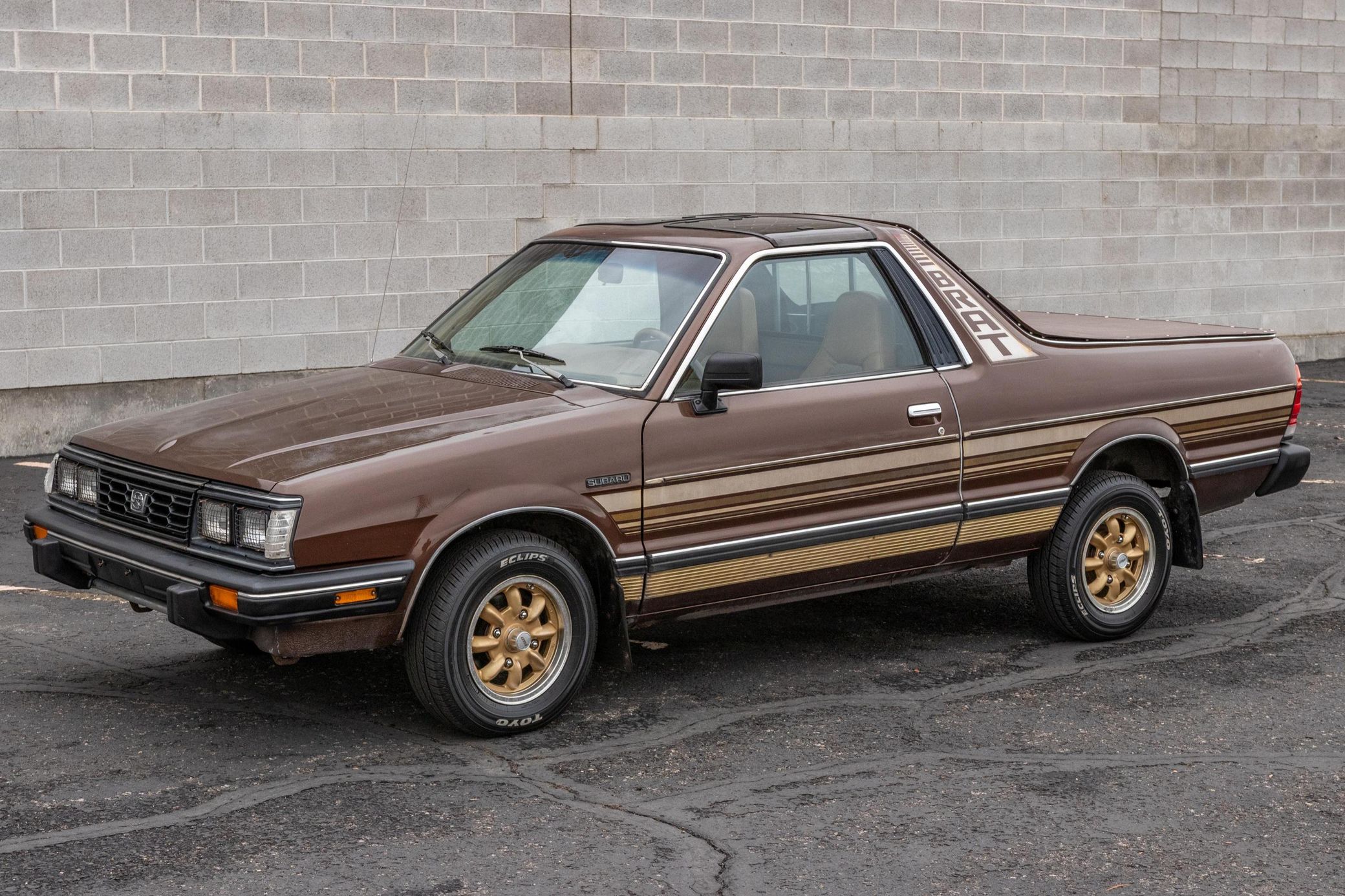
1986 Subaru BRAT GL
In the aftermath of the mid-’70s oil crisis, small trucks from Toyota and Datsun grew exponentially in popularity. Everyone wanted in. Ford (by way of Mazda), Chevrolet (by way of Isuzu), and Dodge (Mitsubishi) were eager to get a piece of the market. Subaru (specifically Subaru of North America), then a relatively small player among Japanese carmakers in the US, saw this as a way of expanding the brand. Using their 4WD Leone as a basis, it relatively quickly developed what we know as the BRAT (Bi-drive Recreational All-terrain Transporter), a passenger car-pickup in the vein of the El Camino and Ranchero. With an emphasis on fun, the BRAT’s marketing featured less cargo hauling and more recreating, best known perhaps for passengers making joyful use of the rear facing seats fixed to the bed (in actuality, the seats were a circumvention of the hefty 25% “chicken tax” tariff on light trucks, allowing the BRAT to be categorized as a passenger car). Sitting in those seats for any distance was anything but joyful and they were discontinued for its final two years in the States. This BRAT comes from the penultimate year, 1986, and remains largely original in its Crest Brown Metallic with the dealer-installed graphics. Aftermarket headlamp grilles and gold Enkei wheels are a nice ’80s 4WD touch, while a custom tonneau cover keeps cargo dry. Inside, the beige cloth-and-vinyl seats have been recently reupholstered while an aftermarket head unit and cruise control have been added (the original AM radio has been retained, along with a spare center console). Though hand-cranking the windows is required, the pop-up Halo Twin Roof and optional air conditioning keeps things cool. Showing just under 85,000 miles at the time of listing, this Subaru BRAT has been sorted with a new battery, windshield, rear shocks, exhaust muffler, and front brakes, while the carburetor has been rebuilt and the gas tank has been cleaned and lined. There can’t be too many of these left and opportunities for finding one in decent shape will only become fewer. Find this one on Cars & Bids in Ontario, Oregon with five days left to bid.
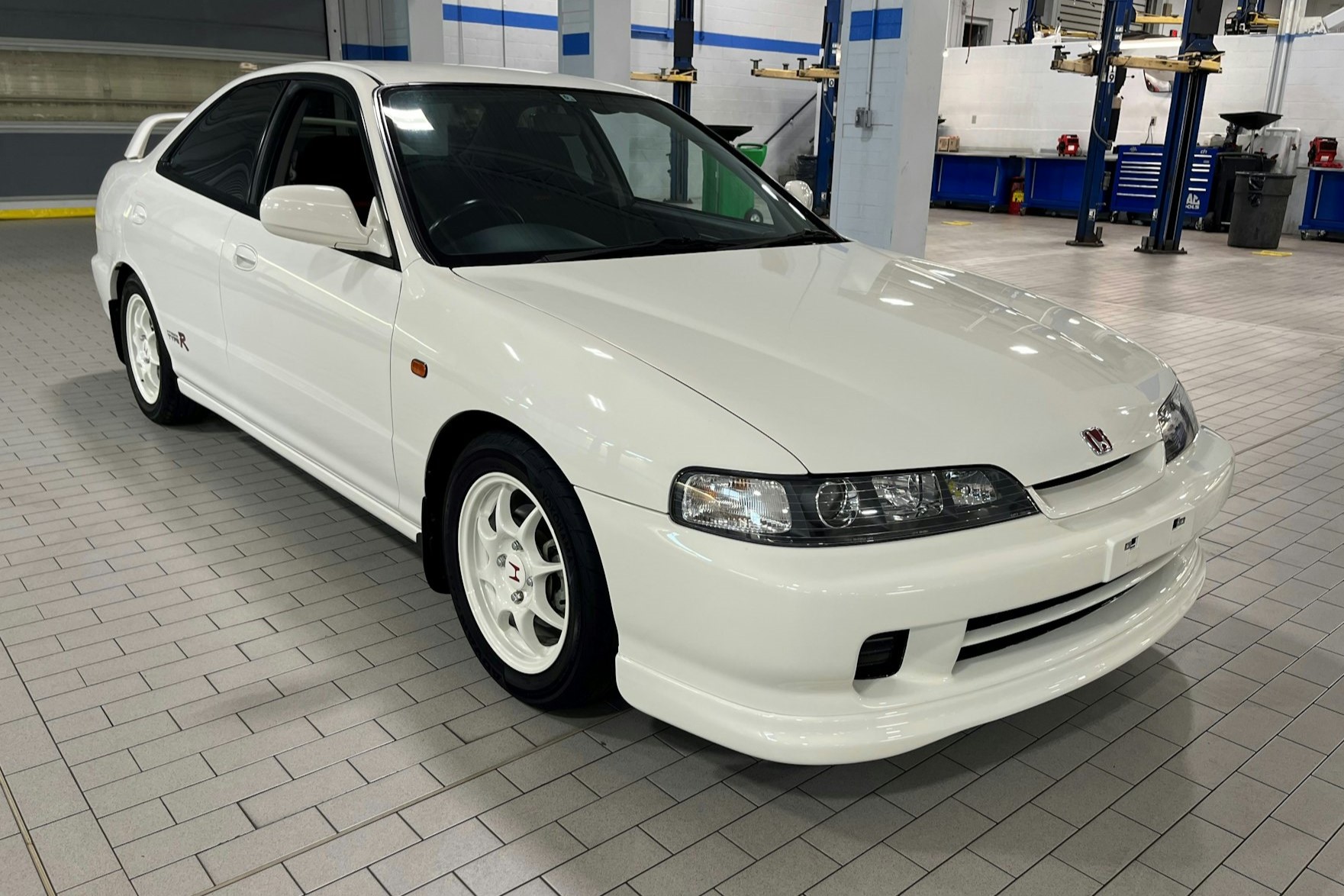
1995 Honda Integra Type R
Fresh off winning Road & Track’s 2024 Performance Car of the Year award, the Acura Integra Type S can trace its roots to this. Introduced in 1995 to the Japanese domestic market, the Honda Integra Type R continues to be revered as one of the best sports cars of the ’90s. With its hand-built 197-hp 1.8-liter B18C VTEC inline-four mated to a five-speed manual gearbox and limited-slip differential, it punched well above its weight against formidable competitors like the Nissan Skyline GTR and Subaru WRX STi. When it arrived on US shores (as the Acura Integra Type R), it was no less acclaimed, with journalists calling it “the best front-wheel-drive car ever.” Not lost on investors, a 1997 Acura Integra Type R sold at last year’s Amelia for $151,200 (plus fees). This Championship White 1995 Honda Integra Type R is one of approximately 292 DB8 sedans produced for the inaugural model year (while 483 DC2 coupés were made). It was imported to the US from Japan in February 2021. It features air conditioning, a Pioneer CD stereo, factory Recaro seats, factory Momo 3-spoke steering wheel, power windows, and four-wheel disc brakes. Now showing 33,147 Kilometers (~20,600 miles,) recent maintenance has included installation of a replacement timing belt, battery, and tires. Find it here on Hagerty Marketplace for $55,000.
Other finds
- 2,307-mile 2011 BMW M3 highly optioned – $79,950
- One-owner 1990 Toyota Celica GTS 5-speed – $16,500
- 50,400-mile 1999 Mercedes-Benz C 43 AMG two owners – $26,500
- One of 1,806 1971 Ford Mustang Boss 351 4-speed – $87,900
- All-original 1987 Land Rover Series III 109 77,000 miles – $11,000
- 71,825-mile 1993 BMW M5 Avus Blue – $49,000
- № 542/615 1999 Pontiac SLP Trans Am Firehawk 17,623 miles – $36,900
- 20,000-mile 2004 Lamborghini Gallardo gated 6-speed – $150,000
- One of 3,326 2002 Lincoln Blackwood 23,698 miles – $23,950
- 49,464-mile 1990 Honda Accord LX Coupe – $9,450
- 73,300-mile 1988 Saab Turbo Convertible full service history – $8,500
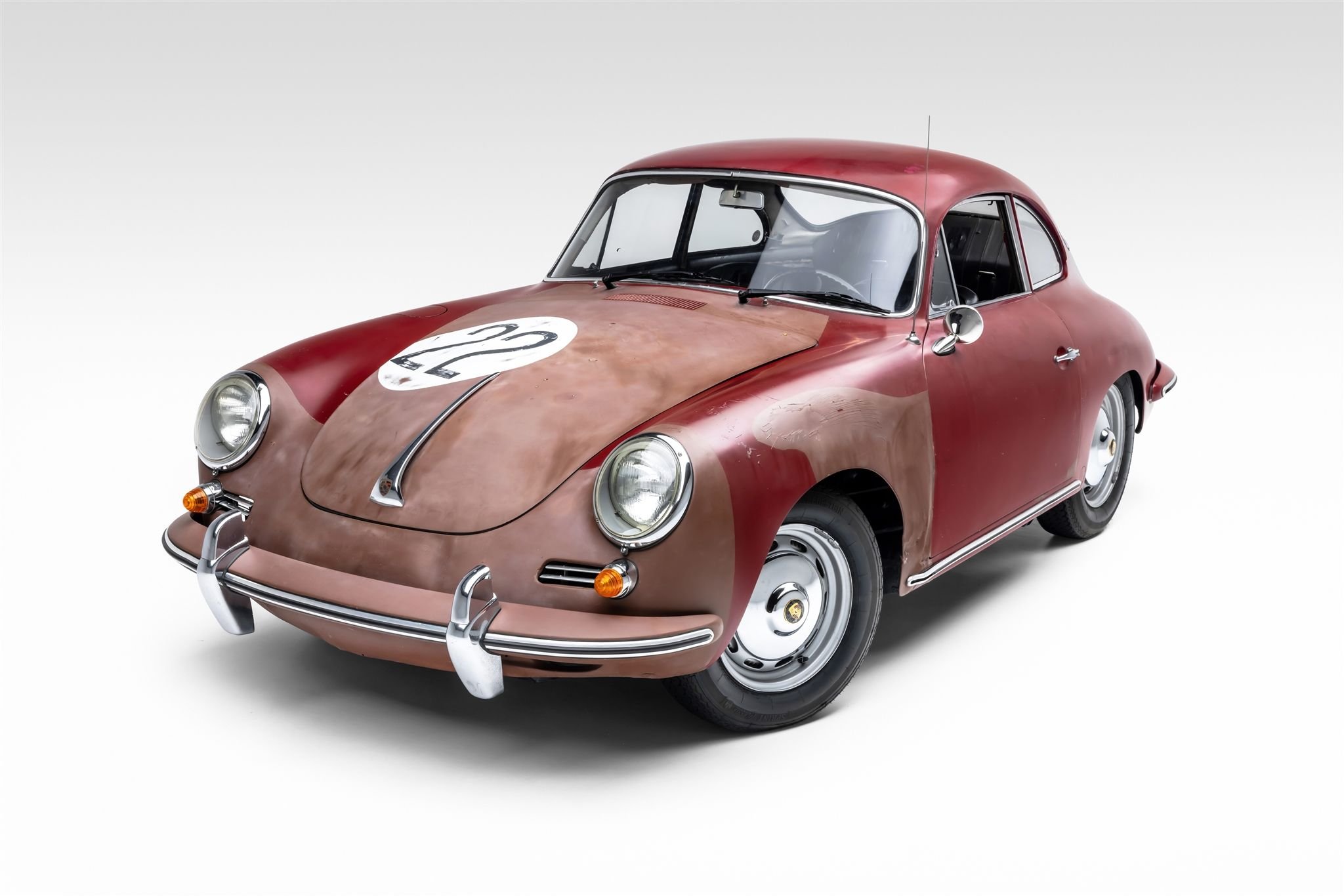
1962 Porsche 356 B
Patina suits some cars better than others. It suits the Porsche 356 as well as—or in many cases better than—a concours-quality paint job. This is a great example of that. A story is told in it, expressed better than words. It tells of being imported by Brumos Porsche and making its way down I-4 to the showroom floor at AJ Pearson Sales & Service in Orlando, Florida, sitting pretty in its shiny new Ruby Red coat. After four years with its original owner in Orlando, it would move to Dallas with its new owner in 1972, who would hand the car down to his son a year later. It would stay with him for the next 50 years, making the move to California where it remains today. It received a thin coat of paint in its original color in the ’80s but is otherwise original, with its Kardex-verified 1600 Normal and 4-speed gearbox. This 356 tells of meticulous care through service records dating back 55 years, including an engine and transmission rebuild, along with a 200mm clutch and a Bursch exhaust system in May 1980. In 2014, the 356 received a new fuel tank, new engine mounts, rebuilt carburetors, new shocks, rebuilt front-end suspension, Willhoit shift coupler, ignition bypass, and a dual master cylinder. On November 1, 2022, North Hollywood Speedometer rebuilt all of the gauges. Most recently, on May 30, 2023, it received a service from Scott’s Independent, which included replacing the spark plugs, points, oil filter, valve cover strainer gaskets, and oil, along with adjusting the valves, carbs, and timing. It’s now offered for sale at European Collectibles in Costa Mesa, California for a reasonable asking price of $61,500. The Porsche Kardex, the original California black plate, the original California blue plate, a purchase order from 1966, the aforementioned service records, and photos of the car over the years accompany the sale.
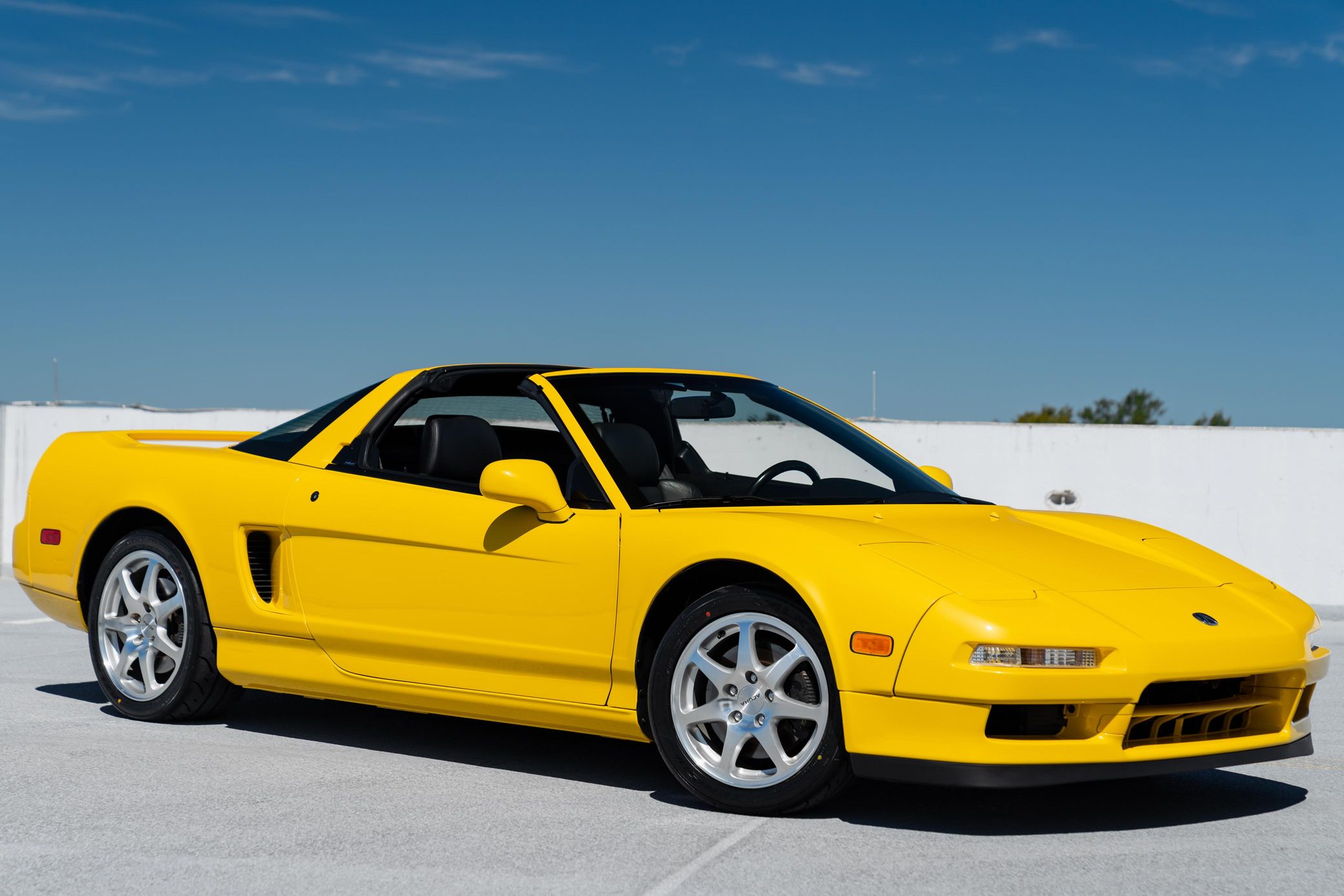
1999 Acura NSX-T
The first-generation Acura NSX (1990 – 2005) is one of those cars which seems almost to define the category in which they sit. Combining prestige, performance, refinement, driveability and reliability, the NSX was designed to represent an entirely new definition of the exotic sports car. As the NSX has evolved during the 1990s, it has been continually hailed as a technological showcase. The NSX-T, introduced in 1995 featuring a removable Targa roof, took a giant step forward in 1997 with performance with several major enhancements – the most notable of being a larger, more powerful 3.2-L, 290 hp, V-6 engine with a 6-speed manual transmission. Other significant updates included application of new aluminum alloys for lighter-weight, high-rigidity body panels, larger brakes and an improved Antilock Braking System, among others. This NSX-T comes from 1999 and is especially desirable for having relatively low mileage (28,800), a 6-speed manual transmission and a striking Spa Yellow Pearl finish. It has been lightly modified with a Comptech Sport cat-back exhaust system, aftermarket rear toe links, and carbon fiber trim complementing the Onyx leather interior. Its known flaws include an accident, though airbags were not deployed. In addition, the underside floor was damaged and repainted. While repairs look to have returned the car to factory conditions, these reports may keep this NSX-T inside the stratosphere that has seen several sell for well over six figures. It’s a new listing on Cars & Bids out of West Chester, Pennsylvania.
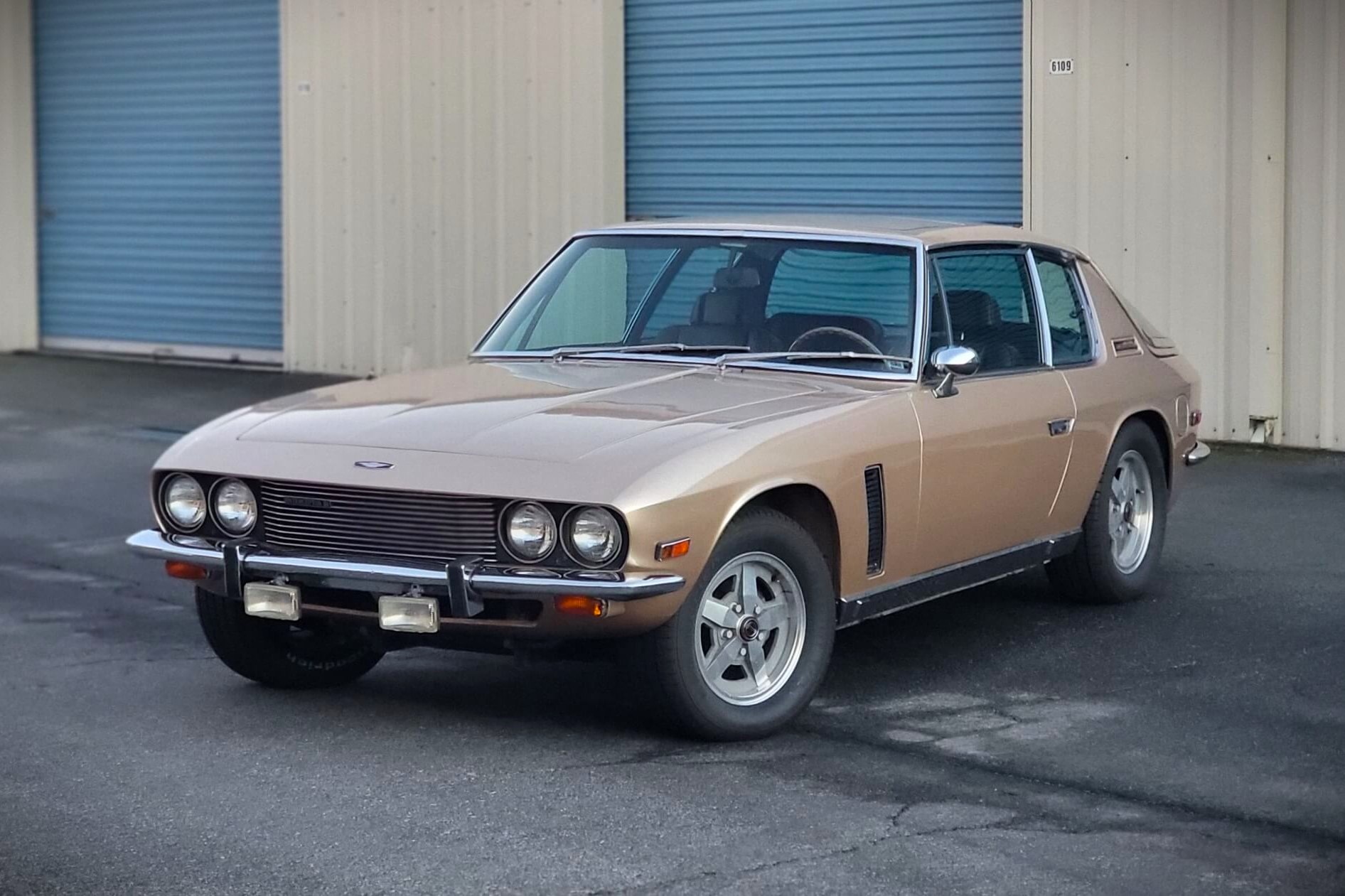
1973 Jensen Interceptor III
With what might be the coolest car name ever, the Jensen Interceptor continues to attract a dedicated following of enthusiasts. A big (440 c.i.) Chrysler V-8, styling by Carrozzeria Touring (Aston Martin DB4/5/6, Lamborghini 350/400 GT), and built by Vignale adds to the name, promising exhilarating speed and deftness. And while certainly no slouch, the Jensen Interceptor is more refined but practical GT than British muscle car, “like a Dodge Coronet that went to college at Oxford,” as Jay Leno called it. It’s a viable alternative in many ways to an Aston Martin but it tends to be characterized as sort of a hot-rod MGB GT by the broader automotive hobby. It gets a bad rap for poor build quality and rightfully so. Fit and finish aren’t on par with an Aston. Then again it can be. It depends on who and what mood the individual who hand-built it was in on a particular day. That too is part of the appeal of a Jensen. This 1973 Jensen Interceptor Series III comes from 32-year ownership. It was restored with paintwork (color change from its original oatmeal to Frost Beige Metallic) carried out to a very high standard. The finish is said to remain deep and lustrous. It features a rare dealer-installed sunroof, along with reupholstered brown Connolly leather front seats, a Koa wood center console, replacement carpets, GKN alloy wheels, modern speakers, and refurbished rear suspension. Under prior ownership, the car was serviced with a new transmission (3-speed Torqueflite) pan gasket, differential (limited-slip) pinion seals, rear leaf springs, and rear shock absorbers. More recently, a carburetor service was performed along with the installation of new spark plugs and wires, a new headlight module, fan adjustments, and a new Interstate battery. It’s ready to go or to show—as it has been, displayed at events like The Quail and Concorso Italiano—and it’s now in the PCARMARKET Deal Tank with a buy-now price of $50,000 or offers above a final bid of $28,300 being accepted.
Other finds
- One-owner 1982 Toyota Celica Supra original paint, interior – $18,000
- 16,000-mile 1988 Buick Reatta two owners – $13,850
- All original 1992 Mercedes-Benz 300 SL 12,201 miles – $29,995
- 56,076-mile 2003 Subaru Baja 5-speed – $12,990
- Original 1970 Volkswagen Type 3 Fastback owner history – $11,000
- 54,415-mile 1994 BMW 525i Touring service records – $12,400
- 22 years owned 1999 Range Rover 4.6 HSE 80,872 miles – $27,950
- 6,500-mile 1979 Ford Thunderbird all-original rust-free – $14,900
- Two-owner 2004 Volkswagen R32 25,679 miles – $45,000
- 4,323-mile 2001 Ford Mustang Bullitt one of 3,041 – $29,500
- 43,500-mile 1999 BMW 540i Orient Blue – $25,500
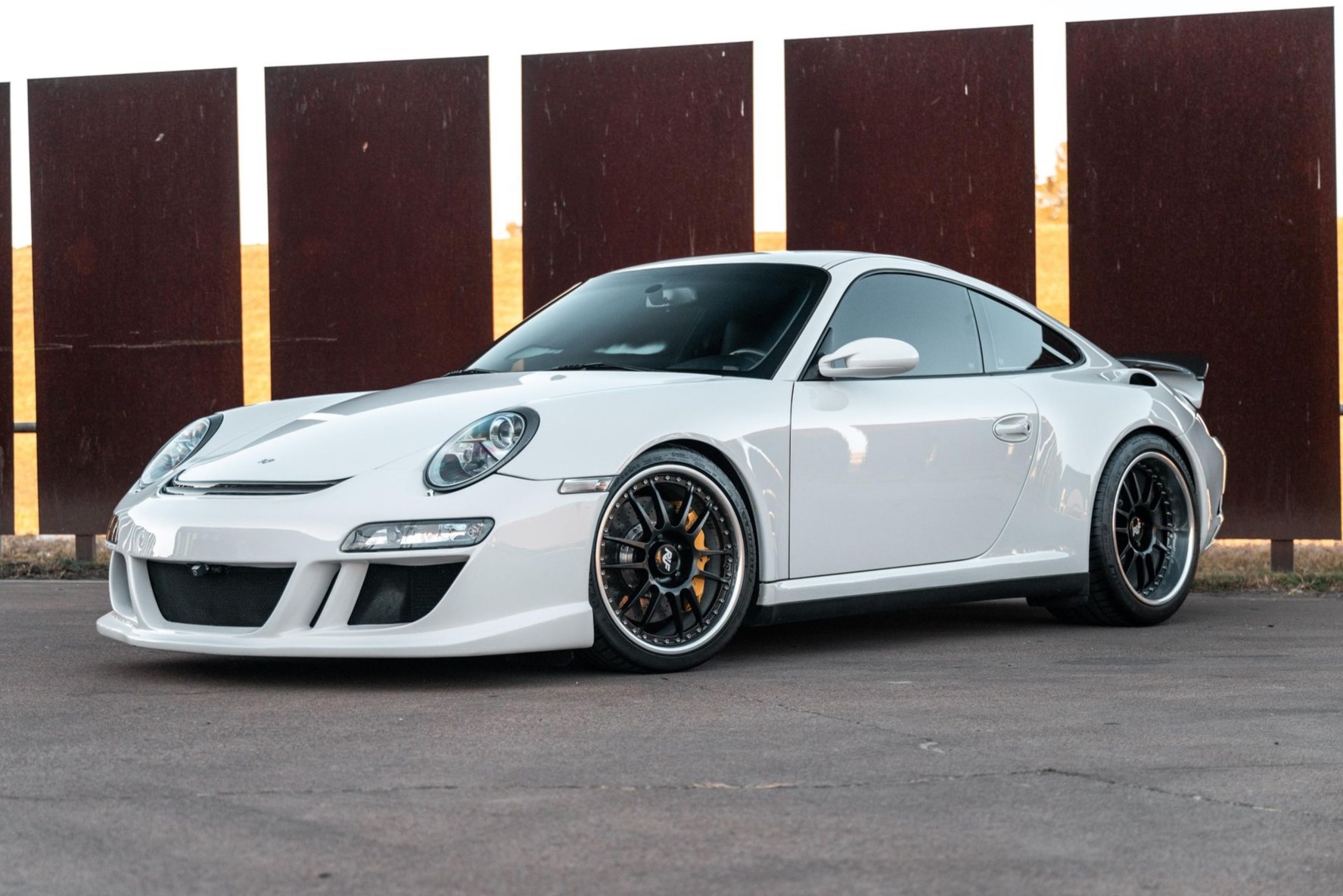
2007 RUF Rt 12
For those for whom a factory Porsche is just too common, there are those that will “reimagine” (Singer) or “remaster” (Gunther Werks) one for you, once you’ve bought the donor car of course. The there is RUF, an independent German manufacturer that takes half-built Porsches off the line and completes them at their factory in Pfaffenhausen using their own motors, paint, trim, and interiors, much of it to a customer’s wishes. They can be considered the precursor to the Singers and Gunthers, dating back to their first project, the 1977 Turbo 3.3. The RUF Rt 12 was introduced in 2004 and built on Porsche’s then-new 997 platform. The Rt 12 utilized the previous era 996 Turbo’s Mezger-designed engine, albeit in significantly upgraded form, including a bored and de-stroked 3.8-liter option, putting out 650 horsepower and 642 lb-ft of torque capable of a claimed 220 mph. This Rt 12 carries a W09… VIN, meaning it was entirely built by and at Ruf Automobile GmbH (as opposed to a conversion done by RUF). It comes from lifelong Texas ownership after covering around 31,500 miles. A November 2022 service (at 31,069 miles) included: a coolant hose leak repair; replacement of the right-front inner axel boot, front-left fender liner, trunk and hood switches, hood struts, engine and cabin air filters, and windshield; refinishing of the carbon fiber rear wing and seat bolster; new spark plugs, new Michelin Pilot 4S tires, XPEL paint protection film, and an oil service. Sorted and ready for its next owner, it’s here on Cars & Bids with three days left to bid.
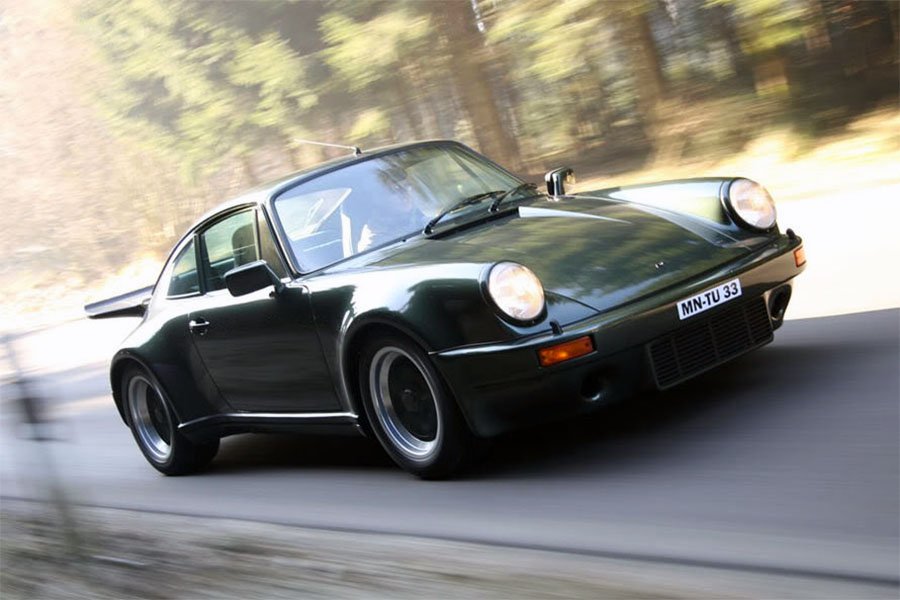
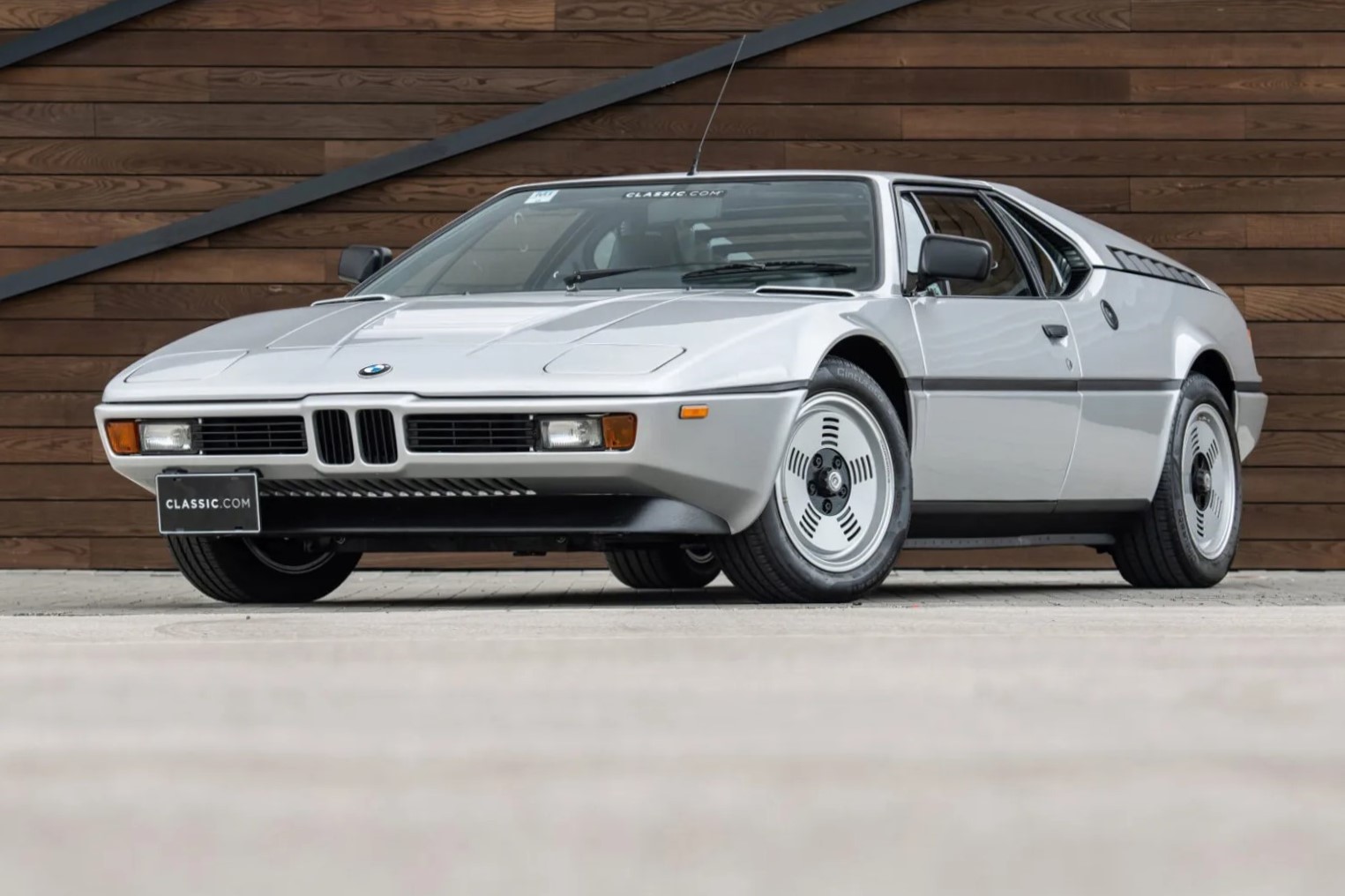
1981 BMW M1
Although BMW’s Motorspsort (M) subsidiary had been around since 1972 with projects like the 3.0 CSL, it wasn’t until the M1, revealed at the Paris Auto Show in 1978, that the public would be offered the M car that has since become esteemed as the ultimate Ultimate Driving Machine. The M1 was developed by BMW Motorsport GmbH for homologation in FIA Group 5 sports car racing and was initially slated to be constructed in partnership with Lamborghini before the latter’s financial woes derailed the agreement. The Gianpaolo Dallara-designed spaceframe was instead built by Italian firm Marchesi, while Giorgetto Giugiaro-styled fiberglass bodywork was manufactured by Trasformazione Italiana Resina. After the bodies were completed by Turin’s Italdesign, final hand assembly was carried out by Baur in Stuttgart. Approximately 450 examples of the model were manufactured in total, including 399 road-going variants. The M1 was a pragmatic supercar: exotic, yet effortless to drive. This well-documented 1981 BMW M1 is one of only three in the special order color of Polaris Silver (another, with over 10 times the mileage, sold at RM’s 2022 Munich sale for €792,500). Its original 3.5-liter M88/1 inline-6 is mated to a ZF 5-speed manual gearbox with a limited-slip differential. It was cosmetically restored in 2014 while the leather and cloth interior remains original. Amenities include air conditioning and power windows. Its 6,047-kilometer (3,757-mile) history includes stewardship in France, Japan, Belgium, and most recently Miami. It has been certified by BMW and is now offered for sale with its original luggage, tool kit, manuals, and promotional materials on Classic.com with an asking price of $950,000
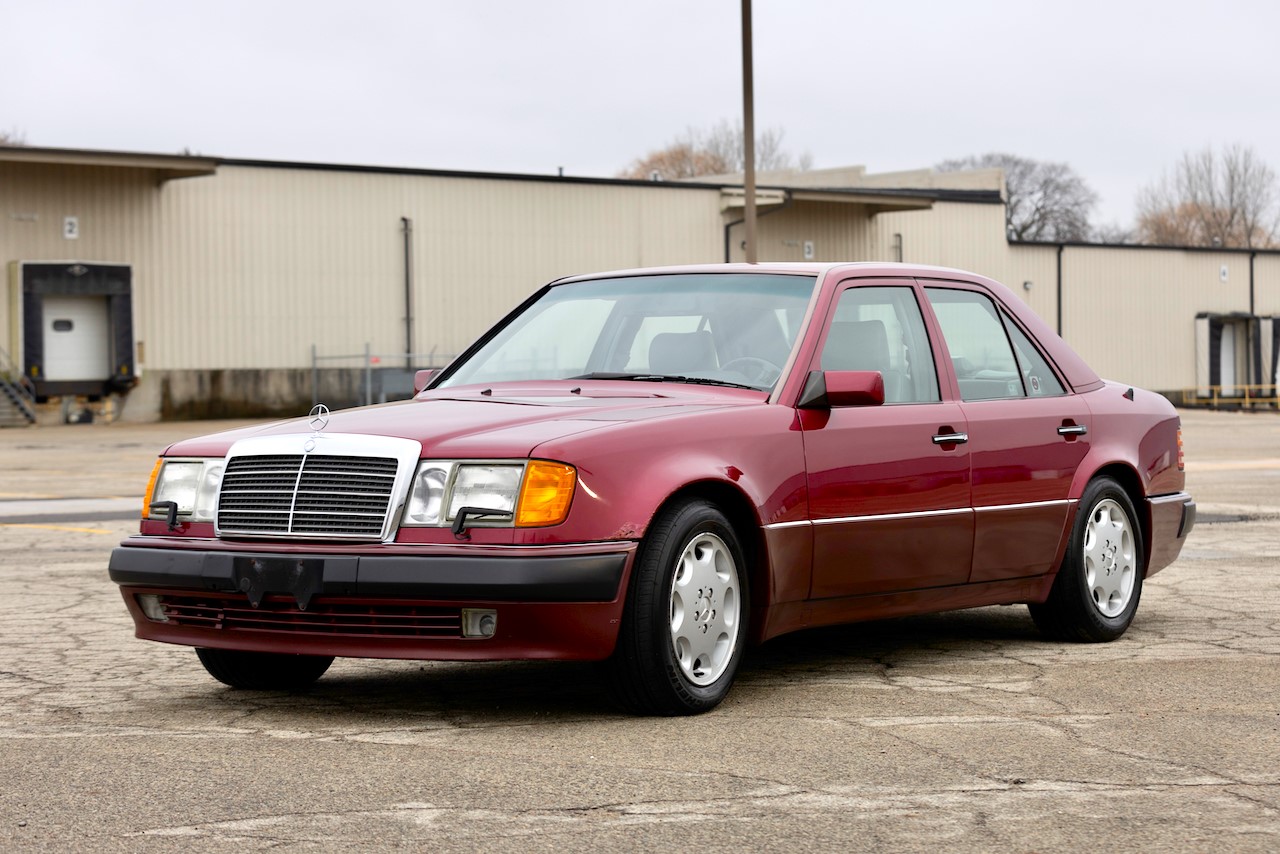
1992 Mercedes-Benz 500 E
The Mercedes-Benz 500 E has always been esteemed as the product of something we’re very unlikely to see again: the collaboration of two German motoring icons to create one remarkable performance sedan. With (then) DaimlerChrysler’s acquisition of AMG and Porsche now firmly successful with the Panamera, there’s no reason. The 500 E, was, after all, expensive to build with all the back-and-forth between the two Stuttgart facilities, a process that took 18 days per car. This resulted in a nearly $82,000 sticker price in 1992 (around $178,000 today) for a car that most couldn’t tell from a Tübingen taxi cab. Nevertheless, those who could spot the wider, lower stance and muscular wheel arches knew that this was no ordinary W124, but 320-hp 5.0-liter V8 powered Q-ship tuned and partially built by Porsche. Dealer allocations were limited with a total of 1,528 cars in the US between 1991 (37) and 1994. While that makes any 500 E (or later redesignated and facelifted E 500) special, this 1992 500 E is all the more special for its single family ownership, along with a rare and striking original color combination of [512] Almandine Red Metallic over [278] Gray Leather. It has covered just under 90,000 miles with a major service in 2019 and new control arms in 2020. This 500 E is not without flaws however, chief among them the “smell of exhaust when operating,” rust around the wheel wells, a missing headrest switch on the door, and a broken lock pull tab on the driver door (also reported to require a hard pull to latch). There is some sorting to be done, but that also presents an opportunity to obtain a piece of automotive history in a unique original color at a potential bargain price. Find it on The MB Market with eight days left to bid.
Other finds
- Blue-plate 1968 Saab 96 49,500 miles – $12,500
- One-owner 1997 Jaguar XK8 Convertible 42,325 miles – $8,477
- 38,855-mile JDM 1996 Honda Prelude SiR 4WS clear title – $24,995
- One of 384 1995 Alfa Romeo 164 Q service records – $17,000
- One-owner 1984 Mazda RX-7 GSL 33,864 miles – $10,989
- Unmolested original 1990 Mazda MX-5 Miata 15,941 miles – $14,320
- 2,168-mile 2001 Ford SVT Mustang Cobra № 550/3867 – $31,999
- Two-owner 1988 BMW 320i 19,650 miles – $28,500
- Original 1981 Triumph TR-8 46,753 miles – $9,500
- Unmolested original 1990 Mercury Cougar XR7 28,773 miles – $16,000
- 5,738-mile all-original 1979 Pontiac Firebird Trans Am WS6 – $71,000
Leave a Reply
You must be logged in to post a comment.